
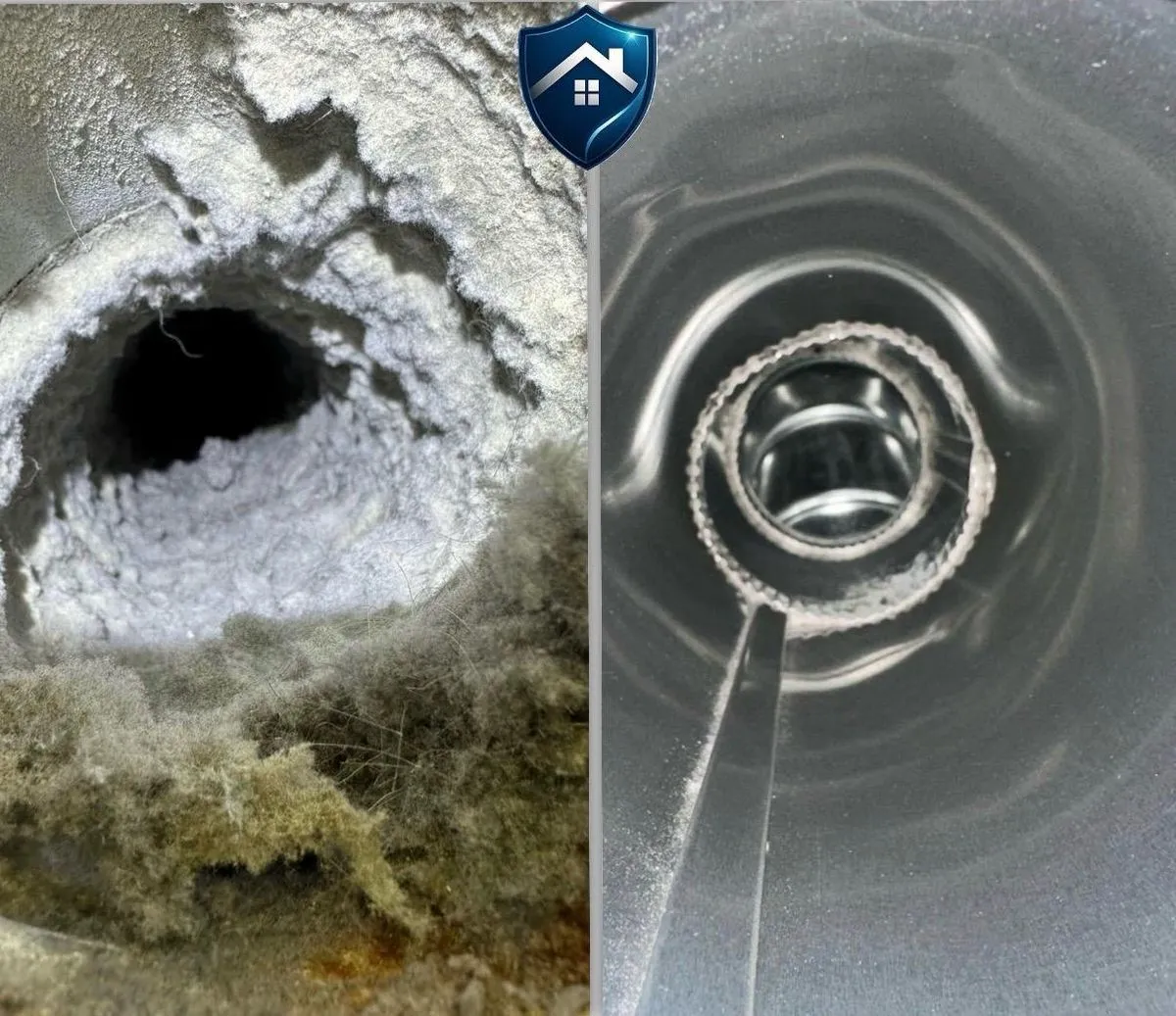
Quick answer
The clearest signs of a clogged dryer vent are laundry that needs more than one cycle to dry, a dryer or laundry room that feels unusually hot, a burning smell during a cycle, lint collecting around the dryer door or the outside hood, and weak or no airflow at the exterior vent while the machine is running. A burning smell means stop using the dryer now. The rest mean book a cleaning, because failure to clean is the leading factor behind home clothes dryer fires, according to the U.S. Fire Administration.
The most common signs of a clogged dryer vent are clothes that take more than one cycle to dry, a dryer or laundry room that feels unusually hot, a burning smell, and lint collecting around the dryer or the outside vent. A clogged vent isn’t just inconvenient, it’s the leading contributing factor in dryer fires. Here’s what to watch for and what to do about it.
The most obvious signs of a clogged dryer vent include clothes taking multiple cycles to dry, an unusually hot laundry room, heavy lint accumulation around the door seal, and a faint burning smell during operation. Addressing these physical warning signs early, along with scheduling routine HVAC services, prevents dangerous residential fires and keeps your exhaust system functioning safely.
Many homeowners ignore restricted airflow until the appliance stops working completely. That delay causes thermal damage and creates a severe fire risk. Identifying these early warning signs gives you a straightforward way to protect your property and extend the lifespan of your machine.
What Are the Top Signs of a Clogged Dryer Vent?
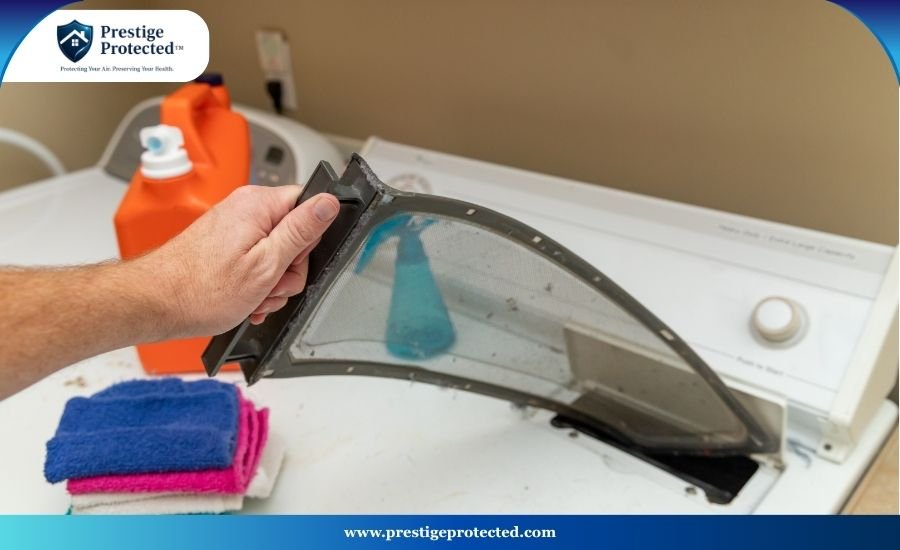
A restricted exhaust system leaves clear physical evidence. You will notice lint building up around the door seal or feel extreme heat radiating from the top of the dryer housing. Often, the exterior vent flap fails to open properly while the machine forces air outward.
Review the table below to identify the most common warning signs. Catching these mechanical issues early helps you avoid costly component repairs and serious safety hazards.
| Warning Sign | Physical Evidence |
| Extended drying cycles | A standard load requires multiple cycles to dry because moisture cannot escape. |
| Excessive room heat | A blocked duct forces exhaust heat back into the room, raising the temperature. |
| Burning smells | Trapped lint overheats and begins to smolder due to severely restricted airflow. |
| Heavy lint accumulation | Lint gathers around the door seal or behind the machine instead of venting outside. |
| Stuck exterior flap | The outside exhaust flap fails to open fully when the dryer operates. |
How Does a Clogged Dryer Vent Cause a Fire?
A blocked dryer vent traps heat and moisture inside your home. This obstruction leads to overheating inside the appliance chassis, creating a dangerous environment where internal temperatures rise beyond safe limits.
According to the U.S. Fire Administration, clothes dryers cause roughly 2,900 home fires each year, and failure to clean the vent is the leading cause. Lint acts as a highly flammable kindling. When it accumulates inside the exhaust duct, it ignites rapidly at high temperatures.
Modern dryers include a safety component called a thermal fuse. This fuse shuts the heating element down if internal temperatures climb too high. However, repeated overheating degrades this component over time. Once the thermal fuse fails, the risk of a structural fire increases immediately. Organizations like the National Fire Protection Association provide specific fire prevention guidelines to help homeowners manage these hazards.
Why Should You Hire a Professional Dryer Vent Cleaner?
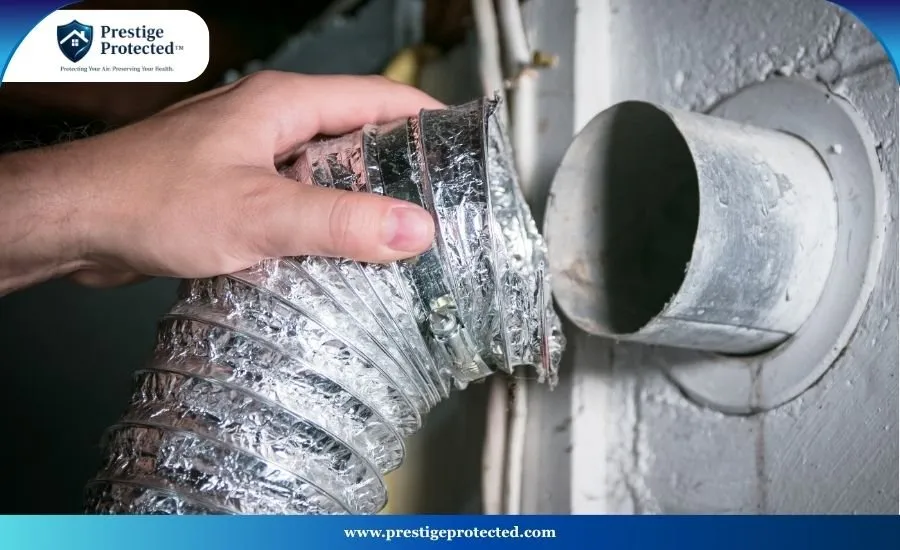
You can manually clean the internal lint trap and the short transition hose behind your dryer. However, clearing deep obstructions requires specialized diagnostic tools. A professional technician utilizes anemometers to measure airflow, high-powered negative air vacuums, and flexible rotary brushes to scour the entire duct run.
Long vent runs that stretch more than ten feet trap heavy debris deep inside the walls. Vents with multiple 90-degree elbows or tight bends collect wet lint much faster than straight runs. Cleaning these hidden areas without commercial-grade tools is difficult and leaves dangerous buildup behind.
Safety remains the primary factor. Exterior exhaust terminals located on steep roofs or second-story siding are dangerous to access. A trained technician handles these elevated points safely and ensures the external flapper operates without restriction.
What Are the Building Code Requirements for Dryer Vents?
Proper installation dictates how safely your exhaust system operates. Building codes exist to ensure dryer vents exhaust toxic gases and flammable lint efficiently.
Most municipalities follow the International Code Council’s guidelines for dryer vent installation. These standards require rigid, smooth-walled metal ducting instead of ribbed plastic or foil transition hoses. Smooth metal walls reduce lint friction and maximize exhaust velocity.
In multi-story homes, builders must install fire-resistant barriers where the ducting penetrates between floors. These physical barriers slow the spread of oxygen and flames. For landlords and property managers, code compliance is mandatory. Housing habitability laws require all supplied appliances to operate safely. Ignoring warning signs leads to strict liability issues and heavy financial penalties.
How Can Regular Vent Maintenance Protect Your Home?
Keeping your exhaust duct clean remains the most effective method to protect your home from appliance fires. Routine maintenance restores proper exhaust velocity, lowers monthly energy costs, and prevents thermal damage to your dryer’s internal sensors.
Prestige Protected is a professional indoor air quality company serving the Cary, NC area, specializing in air duct cleaning, dryer vent cleaning and HVAC cleaning for local homeowners. Schedule your dryer duct cleaning today to keep your home safe and your exhaust system operating at peak efficiency. Our technicians verify proper airflow and ensure your equipment meets all residential safety standards.
Related guides & next steps
- Dryer vent cleaning service
- Dryer vent fire risk & prevention
- How often to clean your dryer vent
- Signs of a clogged dryer vent
- How much does dryer vent cleaning cost?
- Local: Raleigh · Cary
The seven signs, ranked by how much they actually tell you
Not every symptom carries the same weight. Some are near proof of a restriction, others have three or four possible causes. Ranked from the most diagnostic down, here is how we read them on a call.
| Sign | How reliable | What else it could be |
|---|---|---|
| No airflow at the outside hood with the dryer running | Highest. This is a direct measurement of the problem | A stuck or painted flap, which is still a blockage |
| Burning smell during a cycle | Very high, and urgent | A failing motor or belt, also urgent |
| Two or more cycles for a normal load | High | Overloading, a failed heating element, a failed thermostat |
| Hot laundry room or a hot dryer casing | High | A closed laundry door with no return air |
| Lint around the door seal or on the floor behind the dryer | Moderate. It shows lint is escaping, not where it stops | A torn lint screen or a bad door gasket |
| Clothes coming out hotter than usual | Moderate | A high heat setting, a full load |
| It has been more than a year, or you do not know | Not a symptom, but the single best predictor | Nothing. This is just the interval |
What to do today, in order
- If there is a burning smell, stop. Unplug the dryer or close the gas valve and leave it off.
- Pull the lint screen and hold it up to a light. If water beads on it rather than running through, wash it. A film of fabric softener residue restricts airflow on its own.
- Run a heat cycle and go outside to the hood. Hand six inches away, look for a steady warm push and a flap held fully open.
- Look behind the machine. If the transition hose is crushed, kinked, or made of white plastic or thin foil, that is a replacement and not a cleaning.
- Note how long a normal load has been taking lately versus a year ago. That number is what tells a technician where to look first.
- Book a full-line cleaning. Everything you can reach from the laundry room is the first few feet of what is usually a much longer run.
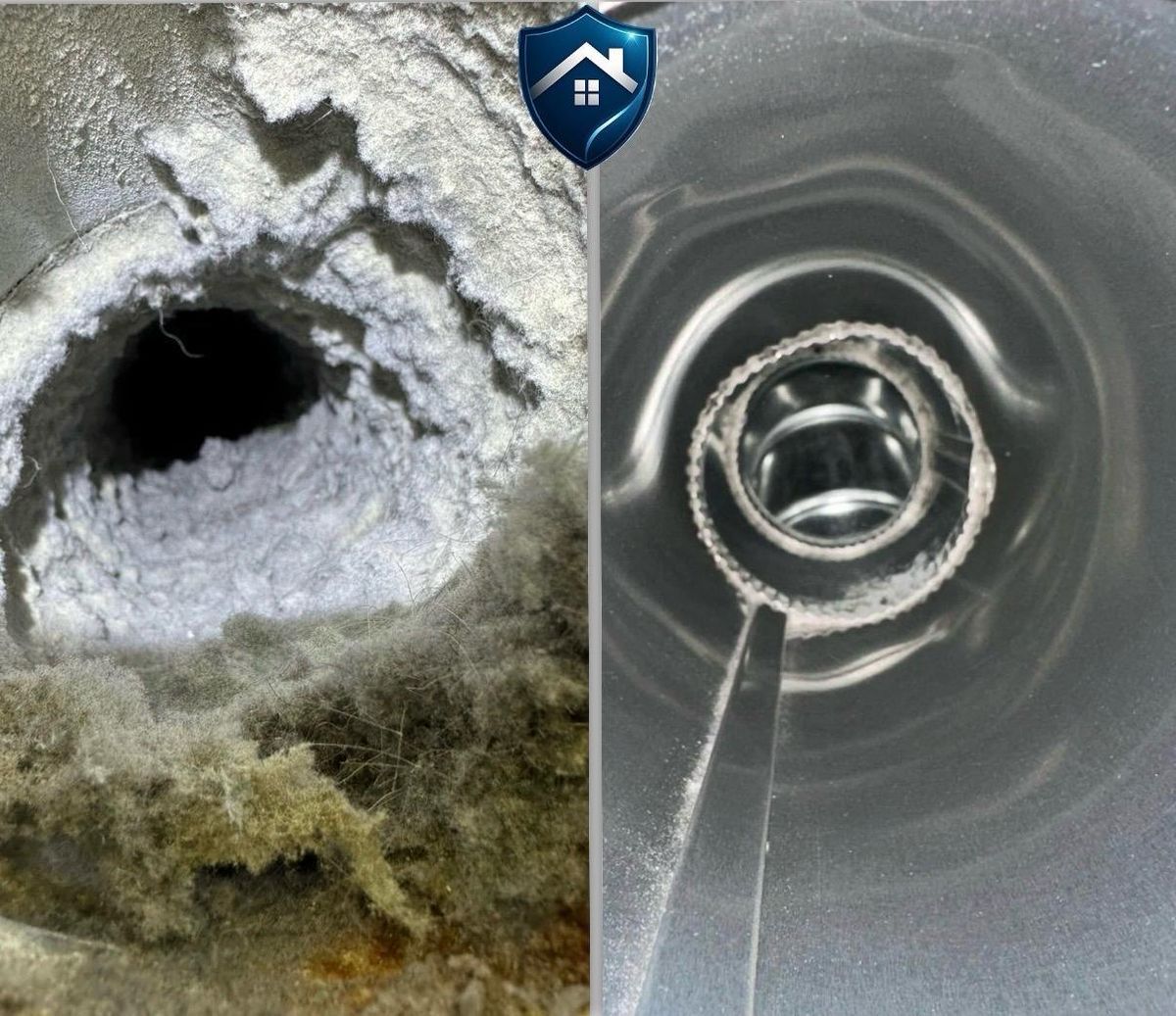
Why a hot laundry room is the sign people ignore longest
A dryer works by pushing heated air through the drum and out of the house, carrying the water with it. Every load puts something on the order of a couple of quarts of water into that airstream. When the line is restricted, that heat and moisture have nowhere to go, so they come back into the room through the machine casing and the door seal. People notice the warmth, decide the laundry room has always been warm, and carry on.
The problem is that the same restriction is doing two other things at once. It is holding the appliance at a higher temperature than it was designed for, which is hard on the thermostat and the heating element, and it is depositing humid air into a closed room, which is how you end up with a musty cupboard or mold on a laundry room wall in a Carolina summer. The EPA notes that water damaged areas and items should be dried within 24 to 48 hours to prevent mold growth, and a room that is being humidified for an hour a day never gets that window.
The fire risk, without the scare copy
Failure to clean (31%) was the leading factor contributing to the ignition of clothes dryer fires in homes from 2018-2020.
U.S. Fire Administration, citing National Fire Incident Reporting System data, Appliance and Electrical Fire Safety
The U.S. Fire Administration's topical report on the subject puts the annual count at an estimated 2,900 clothes dryer fires in residential buildings, with an average of 5 deaths, 100 injuries and about $35 million in property loss a year, from 2008 to 2010 data. That is not a large number against the number of dryers in the country, and we are not going to pretend it is. What makes it worth acting on is that the leading contributing factor is the one part of the system a homeowner can simply remove.
Next steps: why a dryer takes too long to dry, how often to clean a dryer vent, how to clean one yourself, dryer vent fire risk, or book dryer vent cleaning in Cary or Raleigh.
Frequently asked questions
Is dryer vent maintenance legally required for landlords?
Yes. North Carolina habitability laws dictate that landlords must maintain all provided appliances, including the dryer exhaust systems. Ignoring these safety risks results in legal liability and financial penalties.
What are the penalties for dryer vent code violations?
Insurance providers regularly deny fire damage claims if they discover a history of poor maintenance. Landlords also face civil lawsuits or fines from local code enforcement agencies for permitting unsafe housing conditions.
How often should you get a dryer vent professionally cleaned?
Most residential homes require annual vent cleaning. Larger households or homes running multiple loads daily should schedule diagnostic service every six months to prevent heavy lint accumulation.
Can a clogged dryer vent increase your energy bills?
Yes. Restricted exhaust flow forces the dryer’s heating element to run twice as long. This extended run time increases electricity or gas usage and drives up your monthly utility costs.
Why is my laundry room unusually hot?
Excessive ambient heat indicates that the exhaust duct is failing to vent hot air outside. Turn off the dryer immediately and check the exterior vent for blockages. Operating the machine in this condition creates an immediate fire hazard.
Which sign means stop using the dryer right now?
A burning smell during a cycle. That is scorching lint, not warm laundry, and it means heat is building somewhere it cannot escape. Turn the machine off, unplug it or shut the gas valve, and do not run another load until the line has been cleared and checked. Everything else on this list can wait until the appointment.
Can a dryer vent be clogged with no visible lint anywhere?
Yes, and it is common. If the blockage sits in the middle of the run or at an elbow, nothing shows at the machine and nothing shows at the hood. The tell in that case is behavior rather than lint: cycle times creeping up, the drum staying hot after the cycle ends, and weak or no airflow at the outside hood while the dryer is running.
How do I check the airflow at the outside vent myself?
Set the dryer running on a heat cycle, then go outside and hold your hand about six inches from the hood. You should feel a steady push of warm, humid air and see the flap held open. A weak trickle, a flap that only twitches, or air escaping around the edges of the hood rather than through it all point at a restriction in the line.
Does a new dryer rule out a vent problem?
No, and a new dryer can make it more obvious. Newer machines have moisture sensors and shut down early when they cannot exhaust, so instead of running hot forever you get a cycle that ends with damp clothes. People read that as a faulty sensor. Usually it is the sensor working correctly on a restricted line.
Book a dryer vent inspection
Tell us how long a load has been taking and where the dryer sits in the house. We will tell you what the visit involves before we come out.
Last updated by the Prestige Protected service team.