Quick answer
An air purifier and air duct cleaning work at opposite ends of the same problem. Duct cleaning removes built-up dust and allergens at the source inside your HVAC system; a purifier filters the air in one room as it runs. The EPA calls source control the most effective step, so clean the ducts first, then add a purifier for ongoing relief. Call Prestige Protected at (888) 404-8321.
They target the problem from different ends. Air duct cleaning removes the dust, debris and allergens built up inside your HVAC system at the source. An air purifier continuously filters the air in a room. The U.S. EPA’s guidance on indoor air is clear that source control is the most effective strategy, which is where duct cleaning fits, with filtration as a helpful complement.
Quick comparison
| Air Duct Cleaning | Air Purifier | |
|---|---|---|
| Approach | Removes buildup at the source | Filters air continuously in a room |
| Coverage | Whole HVAC system / home | The room it sits in |
| One-time or ongoing | Periodic service | Runs daily; filters need replacing |
| Best for | Dust from vents, post-reno debris, odors | Ongoing allergens, smoke, pet dander |
The bottom line
If dust is visibly coming from your vents or the system hasn’t been cleaned in years, start with air duct cleaning, a purifier can’t fix contamination sitting in your ductwork. For ongoing allergy or asthma relief, a purifier is a good addition after the source is clean. For allergy-specific advice, see air duct cleaning & allergies.
They do different jobs. One empties the system that moves your air; the other filters the air in one room while it is switched on. Most of the disappointment we hear about air purifiers comes from buying one to solve a problem that lives inside the ductwork.
What each one actually removes, and from where
The clearest way to think about it is location. A duct cleaning is a one-time removal of material that has already settled inside a closed system. A purifier is a continuous capture of material that is currently floating in one room.
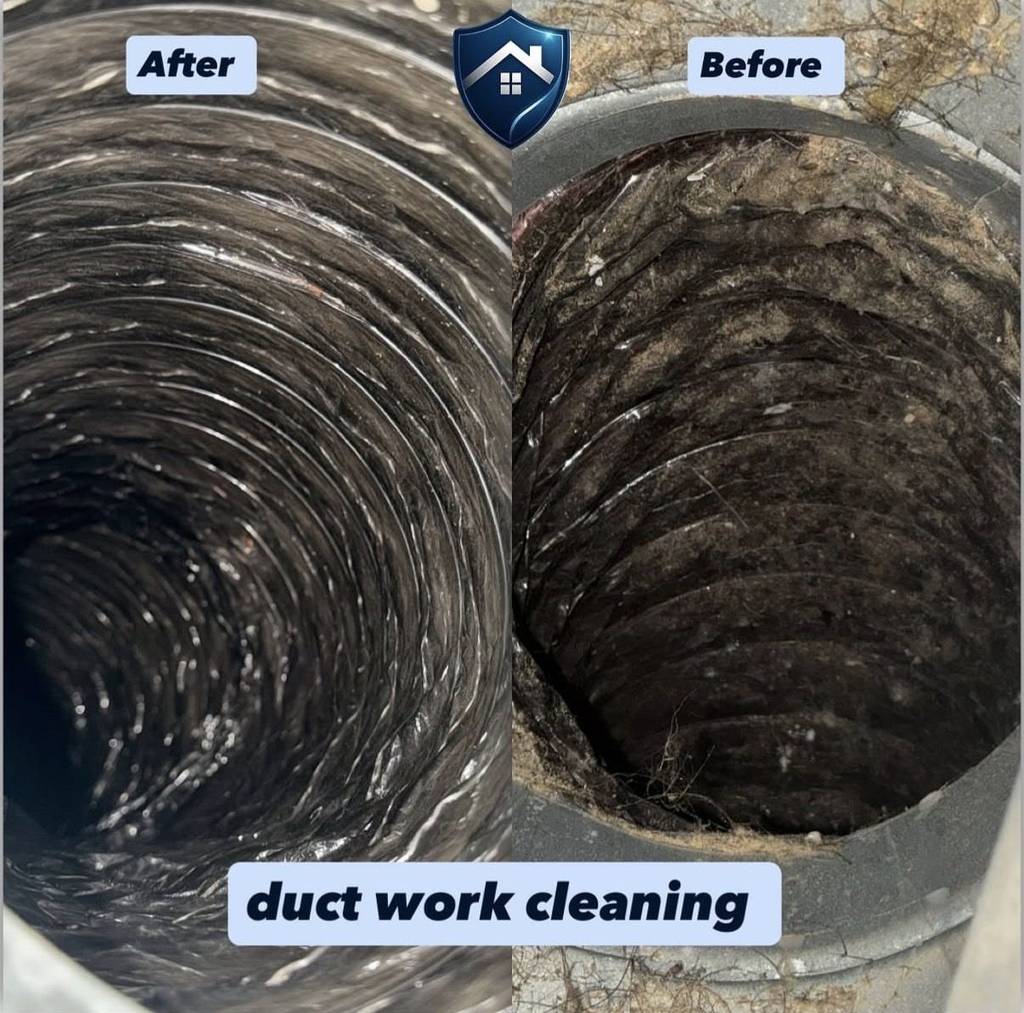
- A duct cleaning removes: settled house dust in the trunk and branch runs, pet hair matted at the register boots, drywall sanding dust and insulation offcuts left by a build or renovation, debris sitting in the bottom of a return plenum, nesting material, and growth on the interior surfaces of the coil and pan where the surface is cleanable.
- An air purifier removes: airborne particles in the room it sits in, while it is running, and only the air that physically passes through it. Pollen, dander and cooking smoke are its natural targets. A unit with an activated carbon stage also adsorbs some odors and gases, which a duct cleaning cannot do.
- Neither removes: a moisture problem, a filter that does not fit its frame, a leaking return that is pulling attic or crawlspace air into your house, or a dryer vent discharging into the structure. Those are all things we find in Cary homes weekly, and buying a purifier for any of them is money spent on the wrong end of the problem.
The order the EPA recommends, and why it matters here
The U.S. Environmental Protection Agency groups indoor air strategies into three, and the ranking is the useful part: source control, then improved ventilation, then air cleaning. On source control the agency is blunt that it is “usually the most effective way to improve indoor air quality,” because eliminating a source costs less to run than filtering its output forever.
Air cleaners come third for a reason. In its guide to air cleaners and filters in the home, the EPA notes that portable air cleaners and HVAC filters can help reduce airborne particles but cannot remove all pollutants, and that they are not a substitute for controlling the source or getting fresh air into the house. Buy one second, not first.
The EPA guide homeowners quote at us most often, Should You Have the Air Ducts in Your Home Cleaned?, cuts the other way too, and we would rather say it than hide it. On duct cleaning specifically, the EPA states that it “has never been shown to actually prevent health problems.” The reasons the agency does recognize for cleaning are concrete and checkable: substantial visible mold growth inside the ducts, vermin, or ducts so clogged with dust and debris that particles are actually being released into the room. If your house does not meet one of those, we will tell you, and a purifier may genuinely be the better spend.
Decoding the numbers on the purifier box
Three specifications decide whether a unit will do anything noticeable, and the marketing on the front of the carton rarely mentions any of them.
- True HEPA. A genuine HEPA filter captures 99.97 percent of particles at 0.3 microns, the size that is hardest to catch. Phrases such as “HEPA-type,” “HEPA-like” or “99 percent” are not the same standard and are usually a good deal less capable.
- CADR. Clean Air Delivery Rate tells you how much filtered air the unit actually delivers. The Association of Home Appliance Manufacturers publishes a two-thirds rule of thumb: the smoke CADR should be at least two-thirds of the room’s floor area in square feet. A 300-square-foot bedroom wants a CADR of about 200 or better. A small unit in a great room is decoration.
- MERV, if you are filtering at the system instead. The whole-home alternative to a portable purifier is a better media filter in the air handler. MERV 8 catches ordinary house dust, MERV 11 picks up finer pollen and dander, and MERV 13 goes finer again. Higher is not automatically better: a filter that is too restrictive for the blower reduces airflow, and reduced airflow creates its own problems. If you are unsure, MERV 11 in a one-inch slot is the safe answer in most Triangle homes.
A pollen-season plan for a Triangle house
Pine and oak load the air here from roughly late February through May, and no equipment choice changes that. What changes is how much of it ends up circulating through your rooms. This is the sequence we would follow in our own homes.
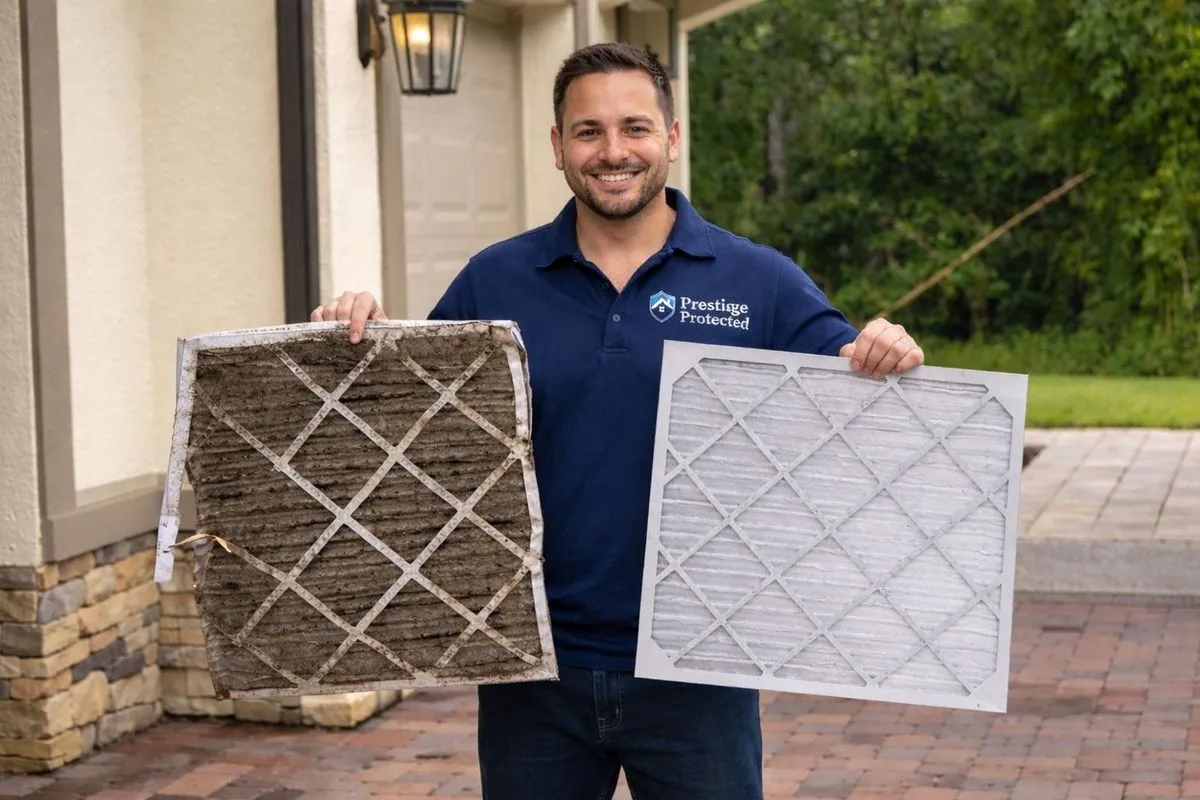
- Get the filter right first, because it is nearly free. ENERGY STAR recommends inspecting, cleaning or changing air filters once a month. Then wiggle it in its frame. A finger-width gap at any edge is a bypass that sends unfiltered air straight to the coil, and foam tape fixes it for a few dollars.
- Close the windows during the worst three weeks. Ventilation is strategy two on the EPA list, but in a pollen bloom outdoor air is the source. Run the system fan instead.
- Deal with the source inside the ducts if it is genuinely there. Pull one supply register in the dustiest bedroom and look at the first two feet with a phone light. Grey film is normal. Fuzz, hair mats or construction debris is not, and that is an air duct cleaning conversation.
- Then add a purifier where you sleep. Eight hours of continuous filtration in the bedroom does more for symptoms than an underpowered unit running in a big open living room.
- Book the professional check-up in a shoulder season. The ENERGY STAR maintenance checklist recommends an annual professional check-up, and spring or autumn is when you can actually get on a schedule.
Three cases where the purifier is the better first purchase
- You have a diagnosed allergy and clean ducts. If a register inspection shows a normal grey film and nothing more, the material in your air is coming in from outside or off your pets, not out of the ductwork. Filter the room you sleep in.
- You rent. A portable unit goes with you. Duct work is the owner’s decision, and in most rentals we cannot get authorization anyway.
- Someone in the house smokes, or you cook heavily. These are continuous, room-level sources. Carbon plus HEPA in that room is the right tool, and duct cleaning will not touch a source that regenerates daily.
Three cases where the ductwork is the problem
- Dust comes back within days of dusting, in one part of the house. A localized, repeating dust pattern usually points at a specific run or a leaking return rather than at the air in general.
- You smell something when the system starts, then it fades. That signature is a system smell, not a room smell. It is normally the coil, the drain pan or the first few feet of the return. The EPA notes water-damaged areas and items should be dried within 24 to 48 hours to prevent mold growth, and a coil that runs wet for a Carolina summer is damp for months. Our guide to mold in air ducts covers what is cleanable and what is not.
- The house was built or renovated recently. Drywall sanding dust in the runs behaves like an indoor pollen season that never ends. A purifier will hum along capturing it for years while the supply keeps coming. See our new construction page for what that looks like on camera.
What we will and will not tell you
We clean air ducts and dryer vents, we sanitize, we clean coils, we test indoor air quality, and we remediate mold. We do not sell air purifiers, and we take no commission on any air purifier brand. That is why we are comfortable saying that for a fair number of the houses we walk into, a well-sized bedroom purifier and a filter that actually fits its frame would have solved the complaint that prompted the call. When that is the case, we say so on the visit rather than after the invoice.
Last updated by the Prestige Protected service team.
Frequently asked questions
Will an air purifier clean my ducts?
No. A purifier filters room air; it has no effect on debris already inside your duct system. Only cleaning removes that.
Which should I do first?
Address the source first with duct cleaning, then add a purifier for continuous filtration if you have ongoing allergy or air-quality needs.
How to get the most from both
If you decide to run both, sequence and sizing matter. Clean the ductwork first so the purifier is not fighting a constant supply of debris blown in from a dirty system. Then choose a purifier sized for the room where you spend the most time, usually a bedroom or main living area, and look for one with a true HEPA filter, which captures 99.97 percent of particles at 0.3 microns. A whole-home option is a high-MERV media filter built into the HVAC system, which complements clean ducts without needing a separate unit in every room.
Signs your ducts, not just the air, need attention
A purifier can mask a duct problem for a while, but some signs point straight back to the ductwork: dust that reappears on surfaces within a day or two of cleaning, a puff of debris when the system first kicks on, visible buildup on the register grilles, or allergy symptoms that ease when you leave the house and flare when you come back inside. When those show up, filtering room air only treats the symptom while the source keeps feeding it. A duct cleaning followed by a purifier for maintenance is the combination that actually holds.
Do I still need to change my filter after a duct cleaning?
Yes. A duct cleaning is a periodic reset; the filter is the ongoing defense that keeps new dust from accumulating. Check it monthly and replace it on the schedule your system manufacturer recommends. We install a fresh filter as part of every cleaning visit so you start from zero.
Where should I put an air purifier if I only have one?
The bedroom, run around the clock with the door mostly closed. You spend roughly a third of your life there, and a single portable unit is sized for one room, not a whole floor. Buying one properly sized unit for the room that matters most beats an undersized unit trying to treat the entire house.
Will an air purifier reduce the dust on my furniture?
Some of it, in the room where it runs, and less than most people expect. Settling dust is mostly heavier particles that drop out of the air before they reach the unit. If the dust keeps coming back in one part of the house within a couple of days of cleaning, that pattern points at the duct system or a leaking return rather than at the air, and filtering the room will not stop the supply.
Is a whole-home purifier better than portable units?
It depends on what you are trying to fix. A better media filter in the air handler treats every room the system serves, which is the efficient answer for general house dust. A portable unit treats one room properly, which is the better answer for a bedroom with an allergy sufferer in it. The trap with whole-home filtration is restriction: a filter too dense for your blower reduces airflow, and the U.S. Department of Energy notes that reduced airflow at the coil hurts the system’s ability to absorb heat. Ask what MERV your blower can handle before you buy the thickest thing on the shelf.
How many hours a day should an air purifier run?
Continuously, or at least through the hours you are in the room, because filtration only works on air that passes through the unit while it is on. A purifier switched on for an hour before bed has cleaned roughly an hour of air. Most people get better results from a quieter unit running all night on a low setting than from a loud one used in bursts.
Will duct cleaning help my allergies?
We will not promise that, and neither will the EPA, which states that duct cleaning has never been shown to actually prevent health problems. What we can say is what we remove and what changes: if your ducts hold visible debris that is being pushed into the room, taking it out means it is no longer being pushed into the room. Several customers with pollen sensitivity tell us the difference they notice most is in how quickly dust returns after they clean, not in their symptoms.
Do in-duct UV lights replace either one?
No. An ultraviolet lamp treats the small area it illuminates, typically the coil surface, for as long as the lamp is in service. It does nothing about settled debris further down a duct run, and it is not a filter, so it captures no particles at all. If you have an odor that starts at the coil, the coil is what needs attention. Our coil cleaning page explains what that visit involves.
Does the dryer vent affect indoor air quality?
More than people expect, and it is the item most often overlooked in this whole conversation. A vent that has come apart inside the house discharges warm, wet, lint-laden air into a wall cavity, a crawlspace or an attic, which is both a moisture problem and a safety problem. The U.S. Fire Administration identifies failure to clean as the leading cause of home clothes dryer fires, at 31 percent. No purifier and no duct cleaning addresses it. Our dryer vent page covers the check.
Cleaner air starts at the source
Ask us whether cleaning, testing, or both makes sense for your home.