Quick answer
Yes, if your home is constantly dusty or your allergies flare indoors, dirty ductwork can be part of the problem. The EPA advises cleaning ducts when there is visible mold, vermin, or dust actually blowing out of the vents. Our professional air duct cleaning removes built-up dust, pollen, and pet dander at the source, across Cary and Raleigh.
Can air duct cleaning help with allergies and a constantly dusty house? It depends on what is in your ducts. The U.S. Environmental Protection Agency notes duct cleaning has not been shown to prevent health problems on its own, but is worthwhile when there is visible mold, vermin, or substantial debris being pushed into your home. If dust resettles a day after you clean, or allergies flare when the HVAC runs, your ductwork is a likely culprit, and a source-removal cleaning, paired with a good filter, can meaningfully cut the dust and allergens you breathe.
Why is my house constantly dusty?
If you dust and it is back within a day, the air handler is likely recirculating it. Common sources in the humid, pollen-heavy NC Triangle:
- Built-up dust, dander, and pollen inside the supply and return ducts
- A low-grade or overdue air filter letting fine dust through
- Spring pollen pulled into the return system
- Construction or renovation debris left in the ducts
- Humidity feeding dust mites and mild microbial growth
Can duct cleaning help allergies or asthma?
For allergy and asthma sufferers, the goal is lowering the overall load of irritants indoors. Clean ducts are one lever; the research-backed approach combines several:
| Step | Why it helps |
|---|---|
| Source-removal air duct cleaning | Removes the dust, dander, pollen, and debris recirculating through the system |
| A better filter (higher MERV, within your system rating) | Captures more fine particles each pass, see ENERGY STAR guidance |
| Controlling humidity | Reduces dust mites and the conditions for mold |
| Addressing visible mold at the source | The EPA’s key trigger for cleaning |
Signs your ducts are affecting your indoor air
- Allergy, asthma, or sinus symptoms that worsen when the HVAC runs
- Visible dust puffing from the supply vents
- A musty smell when heating or cooling kicks on
- Dust resettles within a day of cleaning the house
- Recent renovation, water damage, or visible mold
If you suspect mold or want to pinpoint the cause first, see mold in air ducts or our air quality testing. For pet households, see air duct cleaning for pet owners.
Ready to clear it at the source? See certified air duct cleaning in Cary and our full air duct cleaning service.
Before the rest of this page, the uncomfortable part. We sell duct cleaning, and we are going to quote the federal agency that declines to promise it will help your symptoms, because you should hear that from us rather than find it later.
What can duct cleaning actually do for allergy symptoms?
The U.S. Environmental Protection Agency states that duct cleaning “has never been shown to actually prevent health problems,” and that studies do not conclusively demonstrate that particle levels in homes increase because of dirty air ducts. That is the agency’s language, not a competitor’s. Anyone selling you a duct cleaning as an asthma treatment is going further than the evidence goes.
What the same EPA document does say is when cleaning is warranted, and the list is short and checkable. Ducts should be cleaned if there is substantial visible mold growth inside the ducts or on other components of the heating and cooling system; if the ducts are infested with vermin such as rodents or insects; or if the ducts are clogged with excessive amounts of dust and debris, with particles actually being released into the home from the supply registers.
So here is the honest position. If you meet one of those three conditions, cleaning removes a real reservoir of dust, pollen and dander that your system is otherwise recirculating several times an hour, and that is a sensible thing to do for a household with allergies. If you meet none of them, duct cleaning is not the lever that will change how you feel, and we will tell you that on the phone rather than after taking your money.
The four levers that actually lower indoor allergen load
Symptom relief indoors comes from reducing total exposure, and there are four places to push. Ranked by how much difference they usually make:
- Source removal. Get the reservoir out. That means the obvious housekeeping ones, and it means the ductwork when the ductwork is genuinely loaded. The EPA’s own framing is that controlling the source is the most effective approach to indoor air, ahead of filtering or ventilating.
- Filtration you maintain. A mid-range pleated filter changed on time beats a premium filter left in for six months, every time. ENERGY STAR recommends inspecting, cleaning or changing air filters once a month. Stay within the filter rating your blower was designed for; an over-dense filter starves airflow and creates new problems.
- Humidity between roughly 30 and 50 percent. This is the underrated one in the Triangle. Dust mites need sustained humidity to thrive, and the EPA is explicit that moisture control is the key to mold control. A dehumidifier in a damp crawlspace or a correctly draining condensate line often does more for symptoms than anything sprayed inside a duct.
- Ventilation and keeping outdoor pollen out. During the Triangle’s February-to-April tree pollen run, windows open for one evening undoes a lot. Bath and kitchen exhaust fans that actually vent outside handle the moisture side.
The EPA’s asthma trigger guidance covers the same ground for households managing asthma, and it is worth reading alongside anything a contractor tells you.
Why is the Triangle a hard place to have allergies?
Cary and Raleigh combine a long pollen season with months of high humidity, and the two problems compound rather than alternate. Late February through April is tree pollen, the fine yellow-green film that coats every surface and gets pulled into any return near an exterior door. May and June add grass pollen and mowing dust. Late August into October is ragweed. Then there is the humidity: four months a year with outdoor dew points in the seventies, which keeps interior surfaces, crawlspaces and duct exteriors damp enough for dust mites and mild microbial growth.
That is why the same complaint sounds different in different seasons here. A spring flare-up is usually pollen that is being recirculated. A midsummer flare-up with a musty note is usually moisture. A winter flare-up that starts the week the heat comes on is usually settled dust being cooked off a heat exchanger and blown around. The season you feel worst in is a real diagnostic clue, and it is the first thing we ask about.
How do I tell duct dust from a different problem?
- Symptoms start within minutes of the blower running and ease when it stops. That pattern points at the system. Nothing else in the house turns on and off like that.
- Dust resettles within a day of a thorough clean. Something is putting it back, and the air handler is the only thing in the house that moves that much air.
- Only one or two rooms are affected. That is usually a branch run or a specific register, not a whole-system problem, and it is worth a camera look at that branch before cleaning everything.
- A musty smell in the first minute after startup. That first minute is the ductwork and the coil talking. Our musty smell diagnostic walks through the differential.
- Symptoms are worst in bed, and unchanged by the HVAC. That points at mattress and bedding dust mites, not ducts. Buying a duct cleaning will not fix it and we would rather say so.
- Visible mold anywhere on the system. Stop and deal with that first, either through mold in air ducts or a proper remediation. This is the EPA’s clearest trigger, and treatment without fixing the water source will not hold.
What should I do in the first week if allergies flare indoors?
- Change the filter today and write the date on the frame. Half the calls we get end here.
- Check the humidity with an inexpensive hygrometer in the room you feel worst in. Above 55 percent for days at a time is a finding, not a detail.
- Look inside one supply and one return with a phone light. You are checking for the EPA’s third condition with your own eyes.
- Look at the coil and the drain pan if you can reach the access panel, or ask for photos of both. Standing water in the pan is a source.
- Keep windows closed through the pollen peak and run the system on the fan setting rather than opening up for fresh air.
- Then decide about cleaning, with evidence rather than a sales call. If you want the evidence gathered for you, an inspection or indoor air quality testing is the neutral first step, and pet households should read the pet owners guide as well.
Last updated by the Prestige Protected service team.
Frequently asked questions
I think my dusty vents are making my allergies worse. What should I do?
If dust returns quickly and symptoms flare when the system runs, a source-removal air duct cleaning plus a higher-MERV filter usually helps. Call (888) 404-8321 for a reliable cleaning in the Cary area.
Does air duct cleaning really help with allergies?
It helps most when ducts contain mold, pests, or heavy debris (the EPA’s criteria). Combined with a good filter and humidity control, it lowers the irritant load for allergy and asthma sufferers.
How do I find a reliable air duct cleaning company near Cary?
Look for an insured company with trained technicians, a written itemized quote before the work starts, and before-and-after photos of your own system, like Prestige Protected. Call (888) 404-8321.
Will cleaning my ducts stop my house from being so dusty?
If the ductwork is recirculating dust, a cleaning makes a clear difference. Pair it with a fresh, higher-MERV filter for the best result.
Experiences & Results
What Our Clients Are Saying
Recent reviews left by homeowners on our Google Business Profile.
Had a great experience with Prestige Protected for air duct cleaning in Raleigh, NC. The team showed up on time, were very professional, and explained everything clearly before getting started. They used powerful equipment and even showed before-and-after photos, which was really impressive. I’ve used other companies in the past and it’s not even close to the level of service I got here. Highly recommend them in Raleigh, Cary, or nearby areas!
The guys did a fantastic job and were very, very nice to work with. Made the necessary fixes in a reasonable time. Thank you very much!
Nathan and Nieve came out and did a wonderful job cleaning the vents in our home. They were very nice and respectful. Great customer service!
I had a great experience with them! I had mold in my ductwork and unit and they got everything taken care of. The technicians were thorough and amazing, on time and very professional. Highly recommend their service in Raleigh!
Great dryer vent cleaning in Durham. The technicians were professional and cleaned my clogged dryer vent out thoroughly. Would use them again.
Very thorough cleaning and got good advice for safety. Friendly, professional service from start to finish.
Hear It From Our Customers
Clear the dust and allergens at the source
Call (888) 404-8321 or get a quote for air duct cleaning in the Cary area.
Does duct cleaning cure allergies or asthma?
No, and we will not claim it does. The EPA states plainly that duct cleaning has never been shown to actually prevent health problems. What it can do is remove a reservoir of dust, pollen and dander that the system is recirculating, which lowers total exposure. That is worth doing when the ducts are genuinely loaded and not worth doing when they are not.
How do I know if my ducts meet the EPA conditions for cleaning?
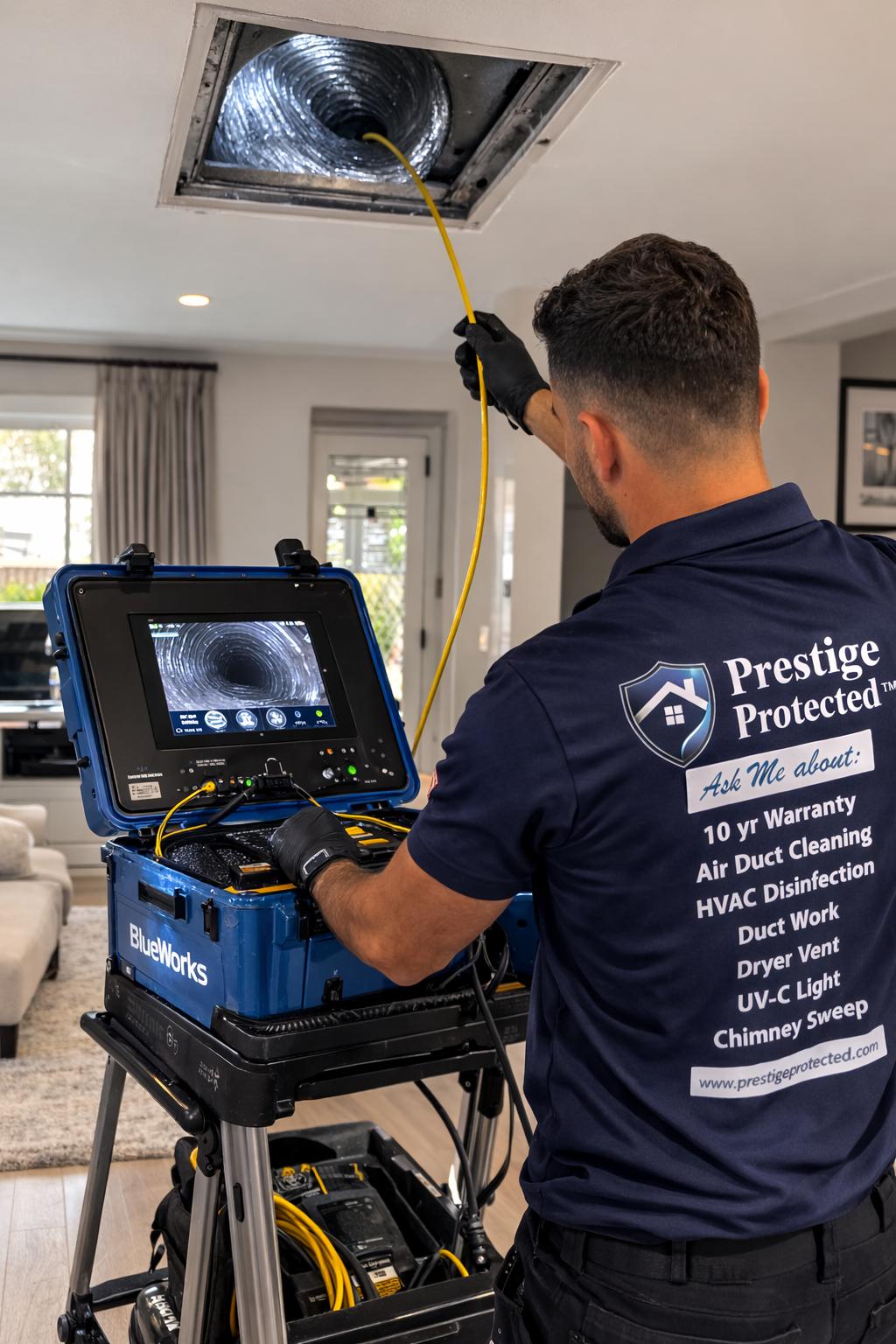
Take one supply register and one return grille off and look in with a phone light. Substantial visible mold, evidence of rodents or insects, or heavy dust and debris with particles visibly coming out of the registers are the three conditions. A camera inspection confirms the runs you cannot see, and we will show you the footage rather than describing it.
Which matters more for allergies, a better filter or cleaning the ducts?
For most households, filtration maintained on schedule, because it works on every pass of every cycle all year. Cleaning is the bigger lever only when there is a real reservoir in the system to remove. If you can only do one thing this month, change the filter and set a monthly reminder.
Should I control humidity as well?
Yes, and in the Triangle it is often the step people skip. Sustained indoor humidity feeds dust mites and, per the EPA, moisture control is the key to mold control. Roughly 30 to 50 percent is the target range, and a damp crawlspace or a slow condensate drain is usually the reason a house sits above it.
Can duct cleaning make my allergies worse in the short term?
Done badly, yes, which is the whole argument for source-removal equipment. Agitating dust without the system sealed and under negative pressure pushes it into the rooms instead of into a HEPA-filtered vacuum. If someone in the house is sensitive, plan to be out during the work and ventilate afterward.
Will you tell me if my ducts do not need cleaning?
Yes, and we do it regularly. The inspection photos either show a reason or they do not, and a customer who was told to keep their money is worth more to us than one job. If nothing is warranted we will say so and suggest what to spend the money on instead.
For the filtration side of this, see our guide to which HVAC filter to use in a Cary or Raleigh home, including the EPA position on MERV 13 and when a system cannot take it.