TL;DR (quick answer): Preventative HVAC maintenance is scheduled care, inspection, cleaning and small fixes, that keeps your system efficient and heads off breakdowns. ENERGY STAR recommends professional service at least once a year, and the U.S. Department of Energy notes that dirty coils and restricted airflow force equipment to work harder for the same comfort. A visit takes about an hour; recurring plans get priority scheduling and a written record of every visit.
HVAC Services · Maintenance
Preventative HVAC maintenance is routine, scheduled care, inspection, cleaning, and tune-ups, that keeps your system efficient, reliable, and longer-lasting. ENERGY STAR recommends having your system professionally serviced at least once a year, because neglected systems lose efficiency and fail sooner. Prestige Protected offers maintenance for Triangle homes, including optional recurring plans.
- Fewer breakdowns & lower energy bills
- Extends equipment life
- Optional recurring plans with priority service
Reviewed by the Prestige Protected Team · Updated June 2026 · Serving Cary, Raleigh & the NC Triangle
HVAC preventative maintenance checklist
A complete maintenance visit typically covers:
- Replace or clean the air filter
- Inspect and clean coils and condensate drain
- Check refrigerant indicators and airflow
- Tighten electrical connections; test the thermostat
- Inspect ductwork and the dryer vent
- Verify safety controls and overall operation
Benefits of a maintenance plan
Regular maintenance pays for itself: it lowers energy bills, prevents most surprise breakdowns, extends the life of expensive equipment, and keeps your warranty valid (many manufacturers require documented annual service). Plan members also get priority scheduling and reminders so nothing slips.
Seasonal HVAC maintenance for NC homes
In North Carolina’s climate, time it to the seasons: in spring, prep the AC and clean coils before humid summers drive heavy use; in fall, service the heating side before the first cold snap. Our humidity also makes condensate drains and duct moisture worth checking twice a year to prevent mold.
HVAC Preventative Maintenance in the NC Triangle
FAQ
HVAC Preventative Maintenance: FAQ
How often should I do HVAC maintenance?
At least once a year per ENERGY STAR; many homeowners do spring and fall visits to cover both cooling and heating seasons.
Does maintenance really save money?
Yes, it preserves efficiency, prevents costly breakdowns, and extends equipment life, and is often required to keep manufacturer warranties valid.
Sources: ENERGY STAR and U.S. Department of Energy (energy.gov) maintenance recommendations.
What a maintenance visit includes
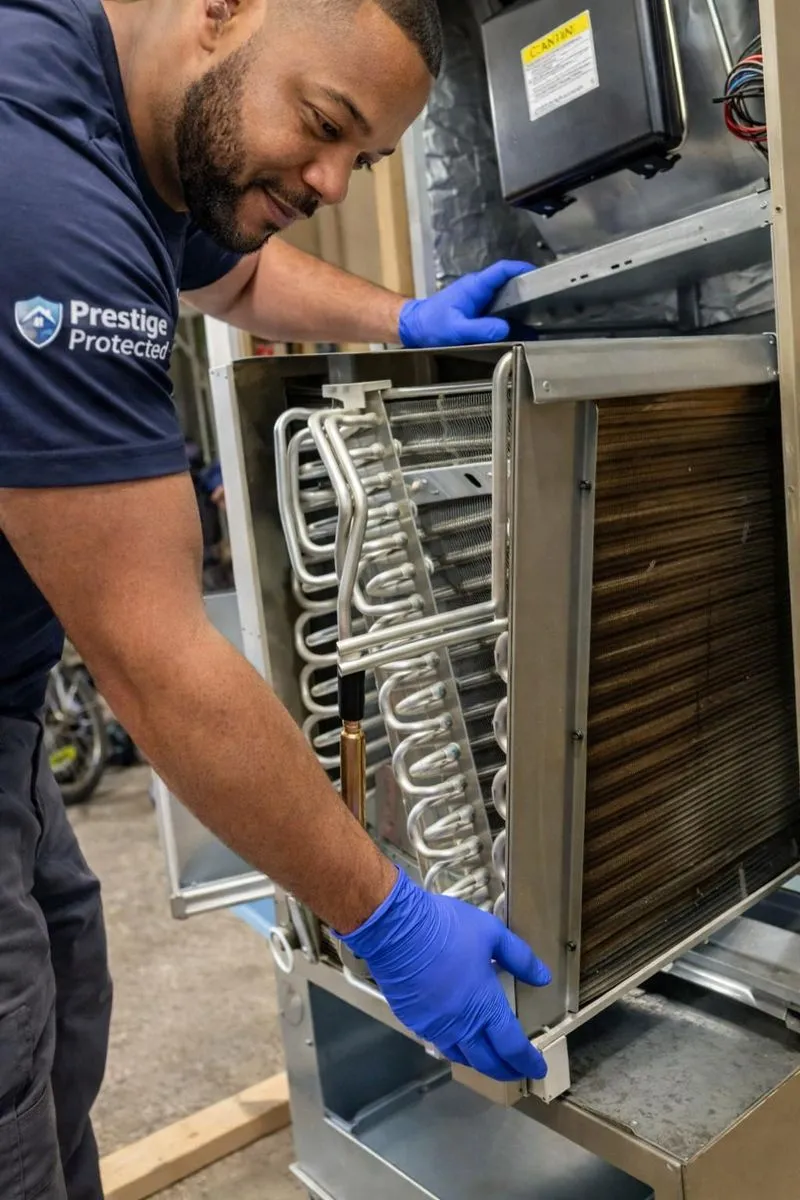
- Coil check and cleaning, the damp evaporator coil collects dust year-round and is where most efficiency loss and musty smells start.
- Filter check, right size, right rating, and a plain answer on how often yours actually needs changing given pets and pollen.
- Airflow check at every register, weak rooms get diagnosed, not ignored.
- Condensate drain clearing, the clogged drain line is the classic mid-July surprise that shuts a system down.
- Duct condition look-over, a quick camera check so you know whether a cleaning is worth discussing, per the EPA’s condition-based guidance.
- Dryer vent check (on request), since the crew is already on site.
Why it pays for itself
The economics are boring and real. The U.S. Department of Energy notes that restricted airflow and dirty coils make HVAC equipment run longer to deliver the same heating or cooling, you pay that difference every month on the power bill. ENERGY STAR’s guidance is annual professional service plus regular filter changes, which it lists among the highest-value habits for home energy use. And the failure math is lopsided: the parts that fail expensively in August, capacitors, motors, frozen coils, usually telegraph the problem months earlier to anyone who looks.
Timing it around Triangle seasons
Spring, before the first real cooling stretch, is the ideal slot for the cooling-side check; fall, before the first cold snap, for heating. Our pollen season adds a local wrinkle, by June, filters and coils in Cary and Raleigh homes have absorbed months of pine and oak pollen, so an early-summer filter change is worth adding even on a maintained system. Plans are quoted in writing per home, no surprise add-ons, and every visit ends with a written record. See also what a full inspection covers, how a duct cleaning works, and our Cary and Raleigh service pages.
More questions we get asked
How often should HVAC maintenance be done?
ENERGY STAR recommends professional service at least once a year. Homes that run cooling hard from May through September, that is, most Triangle homes, do best with a spring cooling check and a fall heating check.
Is maintenance worth it on a newer system?
Yes, for two reasons: most equipment warranties expect documented regular service, and a new system that starts life with clean coils and correct airflow keeps its efficiency instead of losing a little every year. Skipping care on a new system is how five-year-old units end up performing like fifteen-year-old ones.
Does maintenance include duct cleaning?
No, and it should not by default. The visit includes a duct condition check, and per EPA guidance we only recommend a cleaning when there is visible buildup, mold or pest evidence. Bundling an automatic duct cleaning into a maintenance plan is one of the padding tricks we advise homeowners to watch for.
What does a maintenance plan cost?
It depends on the home and the number of systems, so we quote it in writing after seeing the setup. What we can promise is that the quote is itemized, the price is the price, and there is no obligation to continue year to year.