
Quick answer
Your HVAC system has two coils, the evaporator inside and the condenser outside, and a layer of grime on either one acts like insulation, forcing longer run times for the same cooling. The U.S. Department of Energy notes a dirty coil measurably increases energy use. Professional cleaning restores heat transfer, and because the damp evaporator coil is where most duct mold and musty smells start, it pays for itself in more than just the power bill.
HVAC Services · Coil Cleaning
Evaporator and condenser coil cleaning removes the dust and grime that insulate your HVAC coils and force the system to work harder. Dirty coils are a leading cause of high energy bills, weak cooling, and premature compressor failure, the U.S. Department of Energy notes that a dirty coil can significantly increase energy use. Prestige Protected cleans coils as a standalone service or with a tune-up across the NC Triangle.
- Restores cooling power & airflow
- Lowers energy use and protects the compressor
- Evaporator (indoor) & condenser (outdoor) coils
Reviewed by the Prestige Protected Team · Updated August 2026 · Serving Cary, Raleigh & the NC Triangle
What is coil cleaning?
Your system has two coils: the evaporator coil indoors (which absorbs heat) and the condenser coil outdoors (which releases it). Both collect dust, pollen, and grime over time. A layer of buildup acts like insulation, so the system runs longer and harder to reach the same temperature. Cleaning restores heat transfer and airflow.
Signs your AC coils need cleaning
- Weaker cooling or the system runs constantly
- Rising energy bills with no other explanation
- Ice forming on the indoor coil or refrigerant line
- Visible dust/debris caked on the outdoor unit
- Longer cooling cycles in summer heat
Benefits and cost of coil cleaning
Clean coils mean better efficiency, stronger cooling, and a longer-lasting compressor. Standalone coil cleaning typically runs about $100–$400 depending on access and condition, and it’s often bundled with an HVAC inspection or maintenance plan. Ask us for an itemized quote.
AC Coil Cleaning in the NC Triangle
FAQ
Coil cleaning: the question we get first
Can dirty coils really raise my energy bill?
Yes. Buildup on the coil forces longer run times. The Department of Energy notes that a clogged filter restricts airflow through the unit, decreasing its efficiency, and a coil carrying the same load behaves the same way.
Source: U.S. Department of Energy / ENERGY STAR HVAC maintenance guidance (energy.gov).
Related services
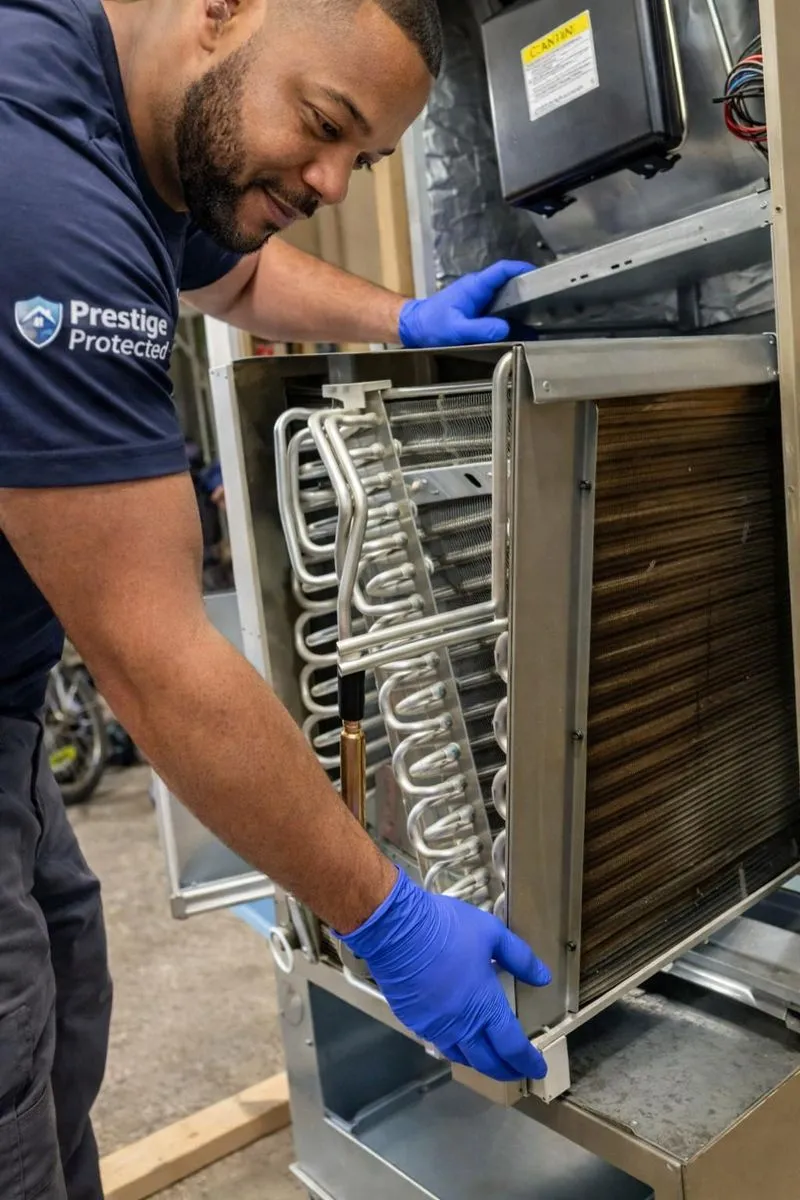
How professional coil cleaning is done
The two coils fail differently, so we clean them differently. The indoor evaporator coil is delicate, thin aluminum fins that bend easily, and sits in the dampest spot in your system, so it collects a paste of dust and moisture that a garden hose or a hardware-store spray cannot safely remove. The outdoor condenser coil takes the opposite abuse: grass clippings, cottonwood fluff and the Triangle’s spring pollen mat the fins from the outside.
- Evaporator (indoor): we access the coil at the air handler, apply a coil-safe cleaner that foams the buildup out of the fins, rinse into the condensate pan, and confirm the drain is clear so the runoff cannot overflow.
- Condenser (outdoor): we clear debris, straighten bent fins where possible, and wash the coil from the inside out so the matted layer is pushed off the way it came in.
- Drain pan and condensate line: cleaned and flushed, a clogged drain is the most common source of water damage and microbial growth at the air handler.
- Airflow check before and after, so the improvement is measured rather than promised.
Why the evaporator coil matters beyond energy
Because the evaporator stays wet whenever the A/C runs, it is the natural starting point for the microbial problems that end up smelling like a “dirty duct” system. Many musty-smell calls we take trace to the coil, not the ductwork, which is why coil inspection is part of our mold-related work and pairs naturally with duct sanitizing when growth is confirmed. If your smell appears the moment the air kicks on, start with our guide to musty smells from vents. Coil cleaning is available standalone or bundled with an air duct cleaning across Cary, Raleigh and the Triangle.
A dirty coil is not a cosmetic problem. It is a layer of insulation sitting on the one surface in your system whose entire job is to move heat, and everything downstream of that gets worse: run times, capacity, humidity control and, eventually, smell.
What a dirty coil actually does to your system
The clearest description of this comes from the U.S. Department of Energy rather than from anyone selling the service. In its Energy Saver guidance on maintaining an air conditioner, the department writes that the evaporator coil “will still collect dirt” even behind a clean filter, and that “A clogged filter restricts airflow through the unit, decreasing its efficiency and reducing its ability to effectively cool the air.”
Follow that through and the symptoms you notice at home stop being mysterious. Less heat absorbed per minute means the system has to run longer to reach the same thermostat setting, which is the higher power bill. Reduced airflow across a cold coil means the coil runs colder than designed, which is how a system ends up freezing over in August. A longer run at lower airflow also pulls less moisture out of the air per hour, which is why a house with a filthy coil can hit 74 degrees and still feel clammy. And a coil that stays wet longer is a coil with a longer window for biological growth, which brings us to the smell.
None of that is reversed by a new filter. The filter protects the coil going forward; it does nothing about what is already felted into the fins.
Evaporator or condenser: which one is your problem?
There are two coils and they fail differently. Matching your symptom to the right one saves a wasted service call.
- Weak, lukewarm air from the registers with normal fan noise points at the indoor evaporator coil, or at airflow upstream of it.
- The outdoor unit runs constantly and the air coming off the top of it is not very hot points at the outdoor condenser coil, which is usually matted with grass clippings, cottonwood, pollen or dryer lint blowing from a nearby vent.
- Ice or frost on the refrigerant line or the indoor coil is an airflow problem: dirty filter, dirty evaporator, closed registers or a failing blower. Turn the system off, let it thaw, then look.
- A musty or sour smell on start-up that fades after a minute is almost always the wet evaporator coil and its drain pan, not the ducts. This one is worth reading alongside our musty smell guide.
- Water where water should not be around the indoor unit means the condensate is not draining, and a coil packed with debris is one of the reasons a pan overflows.
- A steadily climbing summer bill with no change in habits fits either coil, and often both, because they degrade on the same timeline.
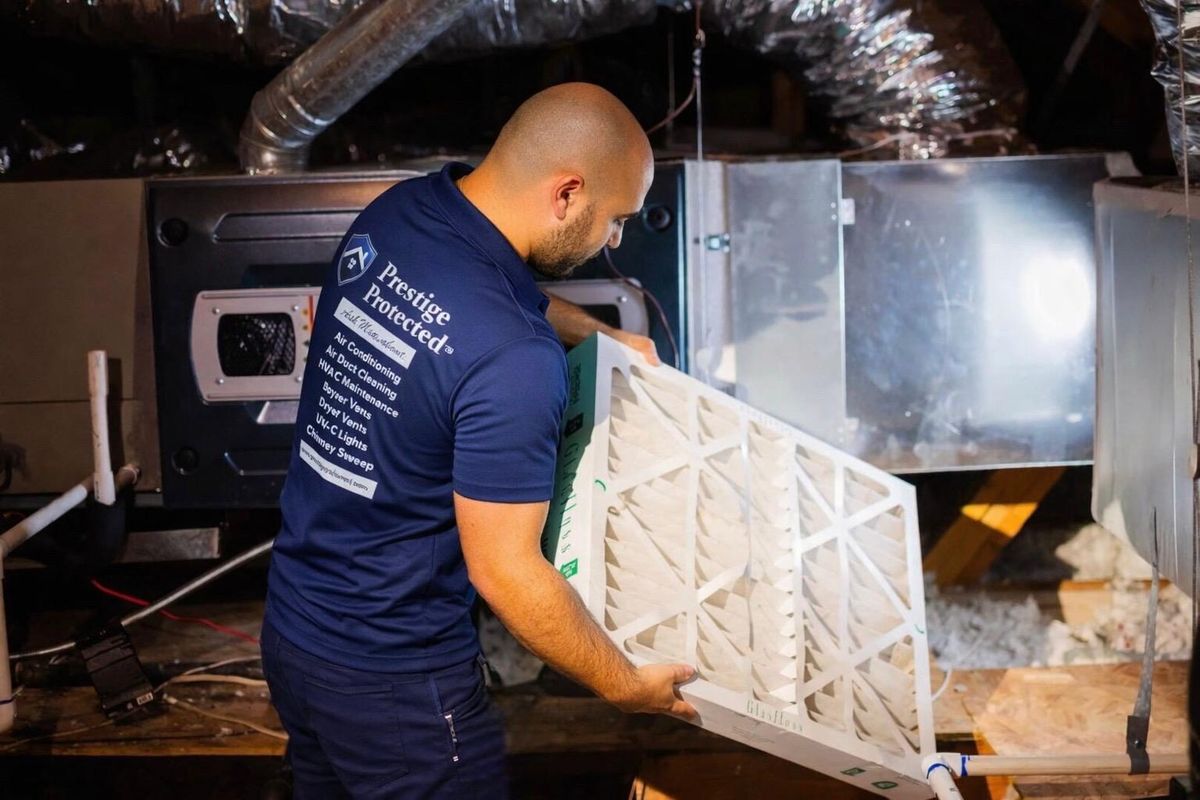
How we clean a coil, step by step
- Kill the power and open the unit. Disconnect at the switch, pull the access panel, and photograph the coil before anything touches it. You get that photo.
- Protect what is below. The blower compartment, the electrical and the ceiling underneath get covered. On an attic unit this is the step that separates a clean job from a stained ceiling.
- Dry removal first. Soft brushing and HEPA-filtered vacuuming take off the loose felt mat. Doing this before any liquid is what stops the debris turning into a paste that packs deeper into the fins.
- Then a coil-appropriate cleaner, applied correctly. A foaming cleaner rated for the coil type, worked from the clean side toward the dirty side so material is pushed out of the fins rather than through them. No pressure washer on an evaporator, and no acid.
- Clear the pan and the drain. A clean coil dumps more water than a dirty one did. If the pan is sludged or the drain line is partly blocked, cleaning the coil without clearing the drain creates a leak.
- Reassemble, restart, and verify. We check that the supply air is meaningfully colder than the return, confirm the condensate is running to the drain, and take the after photo next to the before.
What coil cleaning will not fix
This matters as much as the list of benefits, because a coil cleaning sold as a cure-all is how people end up spending money twice.
- Low refrigerant. If the charge is low there is a leak, and cleaning fins does nothing about it. That is licensed HVAC work.
- A failing capacitor, contactor, compressor or blower motor. Electrical and mechanical failures need an HVAC contractor, not us.
- An undersized or oversized system. If the equipment was never right for the house, a clean coil just makes a poor match run slightly better.
- Leaky, crushed or undersized ductwork. We do not seal ducts and we do not replace ductwork. We will document what we see with camera photos so you can hand an HVAC contractor evidence rather than a hunch.
- A thermostat or control problem. Cheap to diagnose, and worth ruling out before anyone opens the air handler.
Why the coil is where duct smells usually start
Every cooling cycle, warm humid air passes over a surface held below the dew point. Water condenses, runs down the fins, and collects in a pan. That is the design, and it works, right up until the coil carries enough organic material to hold moisture between cycles.
The EPA notes that water-damaged areas and items should be dried within 24 to 48 hours to prevent mold growth, and a coil in a Carolina August is damp far longer than that. The result is the smell people describe as dirty socks: strongest in the first minute after the system kicks on, faint or gone by the end of the cycle. If that is your symptom, cleaning the ducts and skipping the coil is treating the wrong end of the system.
Between visits, the ENERGY STAR maintenance checklist recommends an annual professional check-up and keeping the outdoor unit clear of debris and plantings. And the cheapest habit is still the filter: check it monthly, change it at least quarterly. A coil we clean today stays clean roughly as long as the filter discipline holds.
Last updated by the Prestige Protected service team.
More coil cleaning questions
How often should AC coils be cleaned?
For most Triangle homes, an inspection once a year, ideally before cooling season, with cleaning as the condition warrants. Homes near heavy tree pollen, on dusty lots, or with shedding pets typically need the evaporator cleaned more often than the textbook interval.
Can I clean the coils myself?
The outdoor condenser tolerates careful DIY (power off, gentle rinse from the inside out). The indoor evaporator is a different matter: the fins bend under finger pressure, the coil sits over a drain pan that overflows if mishandled, and harsh cleaners corrode aluminum. Most of the damaged coils we see were damaged during cleaning.
Will coil cleaning fix my weak cooling?
If the cause is buildup on the coils, yes, the improvement is usually noticeable the same day. If cooling stays weak after cleaning, the issue is elsewhere (refrigerant charge, blower, ductwork restriction) and we will tell you plainly rather than sell you another cleaning.
Does coil cleaning require touching the refrigerant?
No. Cleaning is a mechanical and chemical job on the outside of the coil surface, and nothing we do opens the sealed refrigerant circuit. If someone tells you the coil cannot be cleaned without recovering refrigerant, they are describing pulling the coil out entirely, which is a different and much larger job that is rarely necessary.
What do you actually spray on the coil?
A foaming cleaner rated for the coil type, after the loose debris has already been vacuumed off dry. We do not use acid on an evaporator, we do not use a pressure washer on aluminum fins, and we do not fog a disinfectant through the system and call it a coil cleaning. If you want the product name before we start, ask and we will tell you.
How can I tell whether the outdoor condenser coil is dirty?
Turn the system off first. Then look through the fins on the side of the outdoor unit from a low angle with a flashlight. Grass clippings, seed fluff, pollen crust or a lint mat blowing over from a dryer vent are all visible from outside without removing anything. If you cannot see daylight through the fin pack, it is restricted.
Can a dirty coil really freeze the system in summer?
Yes, and it is one of the most common causes we see. Restricted airflow across a cold coil lets the coil surface drop below freezing, condensation turns to ice, and the ice blocks even more airflow. Once that starts it snowballs within a couple of hours. Shut the cooling off, run the fan only to thaw it, and check the filter and coil before restarting.
Should the coil be cleaned before or after the ducts?
Ducts first, coil second, in the same visit. Cleaning the ductwork loosens material that the airflow will carry to the coil, so finishing at the coil means the last thing cleaned is the thing that catches everything else. If you can only do one, and your complaint is smell or a high bill rather than visible dust at the registers, do the coil.
Is this the same as an HVAC tune-up?
No, and it is worth being clear about the difference. A tune-up is an HVAC contractor checking charge, electrical, controls and safeties. We clean the coil, the drain pan and the air path, and we document them with photos. The two jobs complement each other. If you want the air side checked before you commit to anything, our inspection page explains what that visit covers.