
Quick answer
A dryer vent that has come apart in the attic pumps hot, moist, lint-filled air into the attic instead of outside. Lint on insulation is a fire risk, and the moisture feeds mold and wood rot. Stop using the dryer, then have the line reconnected with proper metal duct and the airflow verified at the exterior hood. In Raleigh and the Triangle we can usually get to a disconnected vent same-day.
A dryer vent that has come disconnected in your attic is an urgent problem. Instead of venting outside, the dryer pumps hot, moist, lint-filled air straight into your attic, a real fire risk and a fast path to moisture damage and mold. If you suspect this, stop using the dryer and get it looked at right away. In the NC Triangle, call Prestige Protected at (888) 404-8321 for same-day service.
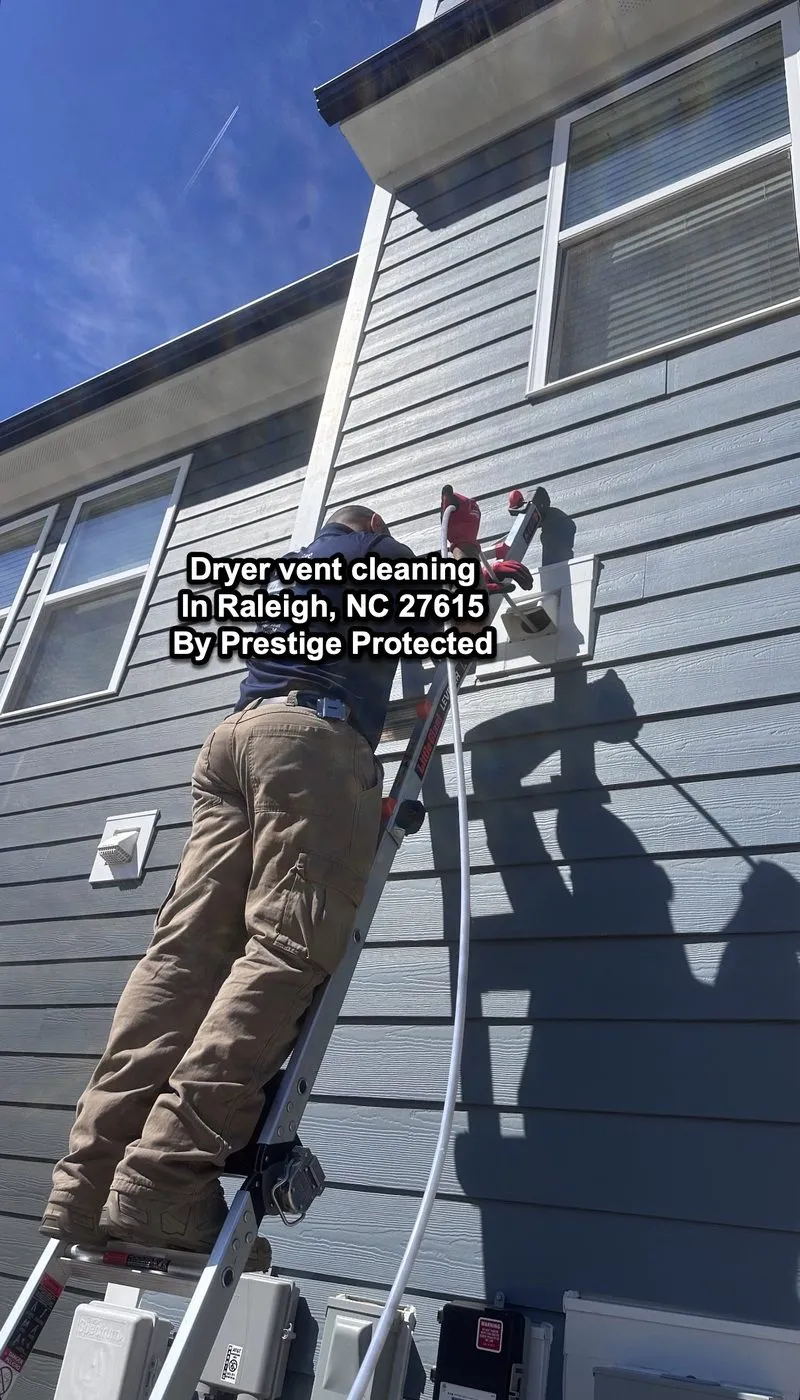
Why a disconnected attic vent is dangerous
Clogged and disconnected dryer vents are a leading cause of home dryer fires, the U.S. Fire Administration reports roughly 2,900 dryer fires a year. A vent dumping into the attic adds lint to insulation and framing and loads the space with humidity that can rot wood and grow mold.
- Lint piling up on attic insulation and framing (fuel for a fire)
- Damp, humid attic air leading to mold and wood rot
- Longer drying times and an overheating dryer
- A burning or musty smell when the dryer runs
What to do right now
- Stop using the dryer until the vent is fixed
- Don’t try to reconnect it in a hot attic yourself
- Call for same-day service to make the system safe
How it gets fixed
We locate the disconnection, make the system safe, and replace the damaged or disconnected line with code-compliant rigid metal duct so it vents fully to the outside. See dryer vent repair & replacement in Cary or in Raleigh.
For the cleaning itself, see Cary or Raleigh.
Frequently asked questions
Is a disconnected dryer vent in the attic an emergency?
It should be treated urgently. It is a fire and moisture hazard. Stop using the dryer and call (888) 404-8321 for same-day service.
Can you fix a dryer vent disconnected in the attic?
Yes. We make the system safe and replace the disconnected or damaged line with rigid metal duct that vents outside.
Dryer vent disconnected in your attic?
Call (888) 404-8321 for same-day service across the NC Triangle.
Can I just push the duct back together myself?
You can get it reconnected, and if you are comfortable in an attic it is better than leaving it apart tonight. Two cautions. First, a joint pushed together without tape and support is exactly how it failed the first time, so treat it as temporary. Second, do not use fabric-backed duct tape, which dries out in attic heat and lets go: foil tape is the product. Also work out why it separated, because if the run is unsupported or over length, reconnecting it just resets the clock.
Who fixes the wet insulation and the stained sheathing?
It depends what we find. Surface growth on framing and the lint deposit are within our mold remediation work. Insulation that has been repeatedly wetted usually needs removing and replacing rather than drying, and if roof sheathing or structural timber has deteriorated, that is a roofer or a builder. We photograph all of it, tell you which category each item falls into, and hand you the file. We do not quote work we do not perform.
Will my homeowners insurance cover the damage?
We are not able to answer that for your policy, and we would be careful with anyone who claims to. What we can tell you is that claims tend to turn on documentation and on whether the damage was sudden or gradual, so photograph everything before any work is done and keep the invoice and the written findings. We supply both as a matter of course. Your insurer or an independent adjuster is the right party to ask about coverage.
How do I check my attic safely?
If you are not confident on a ladder or moving around on joists, do the outdoor check instead: start a load and watch the exterior hood, which tells you most of what you need to know from ground level. If you do go up, go with a good light, step only on joists or decked areas, watch your head near roofing nails, and do not disturb anything that looks like vermiculite or old pipe wrap. Never go up while the dryer is running if the duct is apart.
Does a disconnected vent raise my energy bill?
Indirectly, and in more than one way. Loads that need two cycles are the obvious cost. Less obvious is that damp insulation performs worse than dry insulation, so the attic above your ceilings does less of its job through the cooling season, and a dryer working against a restricted duct runs hotter and longer than it needs to. None of that will show up as a single line on a bill, but people often mention the laundry room feeling cooler after the repair.
What if the vent terminates into a soffit instead of the attic?
Same problem, sometimes worse. A soffit termination often sits directly beneath the intake vents that ventilate your attic, so the moist, lint-laden air gets drawn straight back in. The code requires the duct to terminate outdoors, and discharging into a soffit cavity does not count. The fix is a proper wall, gable or roof termination with a working damper and no screen.
This is the one dryer vent fault we treat as urgent. A vent that has come apart in the attic is putting heat, lint and a laundry-load of water vapor into the part of your house nobody looks at, and the dryer keeps running normally the whole time, which is why it goes unnoticed for years.
What is actually happening above your ceiling
Three things leave a dryer through that duct: hot air, lint, and water. The water is the part people underestimate. A load of wet laundry gives up several pounds of moisture, and all of it is supposed to end up outside. When the duct is apart, it ends up on roof sheathing, on the top of your insulation and on the framing.
The U.S. Environmental Protection Agency notes that water-damaged areas and items should be dried within 24 to 48 hours to prevent mold growth. An attic that receives moisture from every laundry load has surfaces that never get the chance to dry, which is why a vent that came apart in March smells like a wet basement by July, and why wet insulation loses much of its R-value while it stays damp.
Then there is the lint. It accumulates in a pile under the open end of the duct, next to whatever wiring and stored boxes are up there, in a space that gets very hot in a Carolina summer. The U.S. Fire Administration reports that failure to clean is the leading factor contributing to the ignition of home clothes dryer fires, at 31 percent of them. A disconnected duct is that hazard with the lint deposited outside the duct instead of inside it.
If your dryer is gas, treat it as more urgent again, because the combustion products from the burner are going into the attic along with everything else.
Why it comes apart in the first place
This is almost never random. In the attics we have been into around Raleigh and Cary, the cause is one of six things, and knowing which one applies tells you whether the repair will hold.
- The joint was only pushed together. No tape, no fastening, relying on friction. It survives the first few years and then a temperature cycle or a vibration lets it go.
- Foil tape was used badly, or the wrong tape was used. Fabric-backed duct tape dries out in attic heat and releases. It is the single most common thing we peel off a failed joint.
- The run was never supported. An unstrapped duct sags between joists, and the weight of the sag pulls at the nearest joint until it separates.
- Someone else was up there. HVAC replacement, a cable or internet install, an insulation top-up, or a roof repair. The duct gets knelt on, moved aside, or disconnected and not reconnected.
- Blown insulation buried it. If a joint separates under a foot of blown cellulose, nothing is visible from the hatch, and the moisture goes straight into the insulation.
- Rodents. Less common, but a flexible duct chewed through, or a duct pulled apart to get at the warmth, does happen, and it tends to come with other evidence.
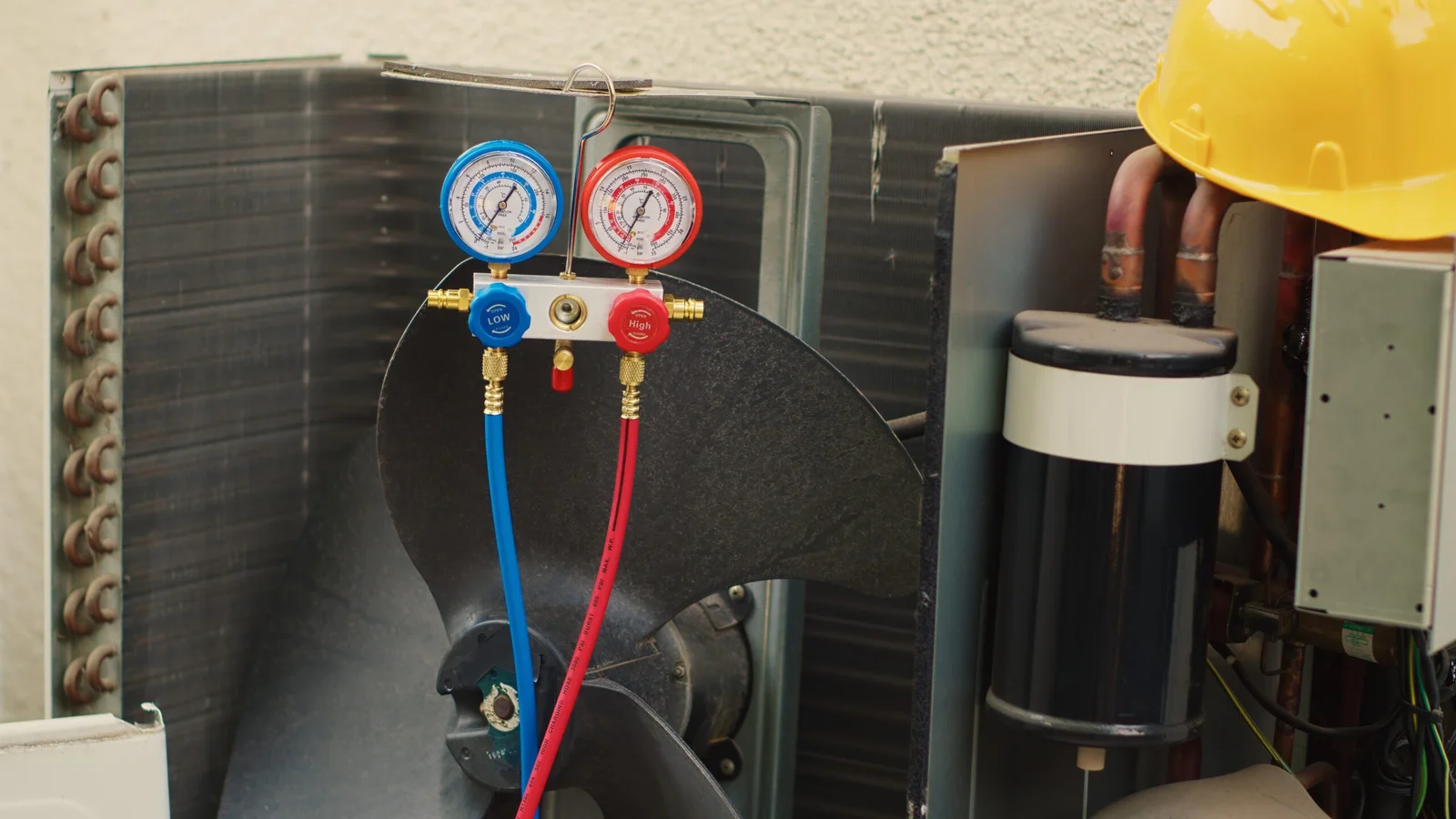
What the code requires of an attic run
The International Residential Code is specific about clothes dryer exhaust, and a disconnected attic duct fails several of its requirements at once. Worth knowing, because it is the standard any repair should be held to.
- It has to terminate outdoors. Not into an attic, a crawlspace, a soffit cavity, a garage or a wall void. This is the one being broken.
- The termination needs a backdraft damper and no screen. A flap that opens with airflow, and nothing meshed across it to catch lint.
- Joints must not be fastened with screws or anything else that projects into the duct. Foil tape over a joint assembled in the direction of airflow.
- The duct must be supported. At the intervals the manufacturer specifies, so it cannot sag into a low spot.
- Maximum developed length of 35 feet, less 5 feet for each 90-degree bend and 2 feet 6 inches for each 45. Attic runs are where this gets exceeded, so it is worth measuring while the duct is open. Our cleaning versus replacement guide works through an example.
The five signs, ranked by how much they actually tell you
Not all of the warning signs are equally useful, and the ones people quote most are the weakest. In order of reliability:
- The exterior hood does not move while the dryer runs. This is close to conclusive. If the flap is still and cool with the machine on, that air is going somewhere else. Check it yourself in two minutes.
- Warm, humid air or a laundry smell in the attic. Stand at the hatch during a cycle. An attic that smells like fabric softener is receiving your exhaust.
- Lint visible near the duct run or on the insulation. Lint does not travel there on its own.
- Ceiling stains, or nail heads rusting on the underside of the roof sheathing. These are the later, more expensive symptoms, and they mean it has been going on a while.
- Clothes taking two cycles. The weakest sign, because it is also what a simple lint blockage does. Useful as a prompt to check the other four, not as a diagnosis.
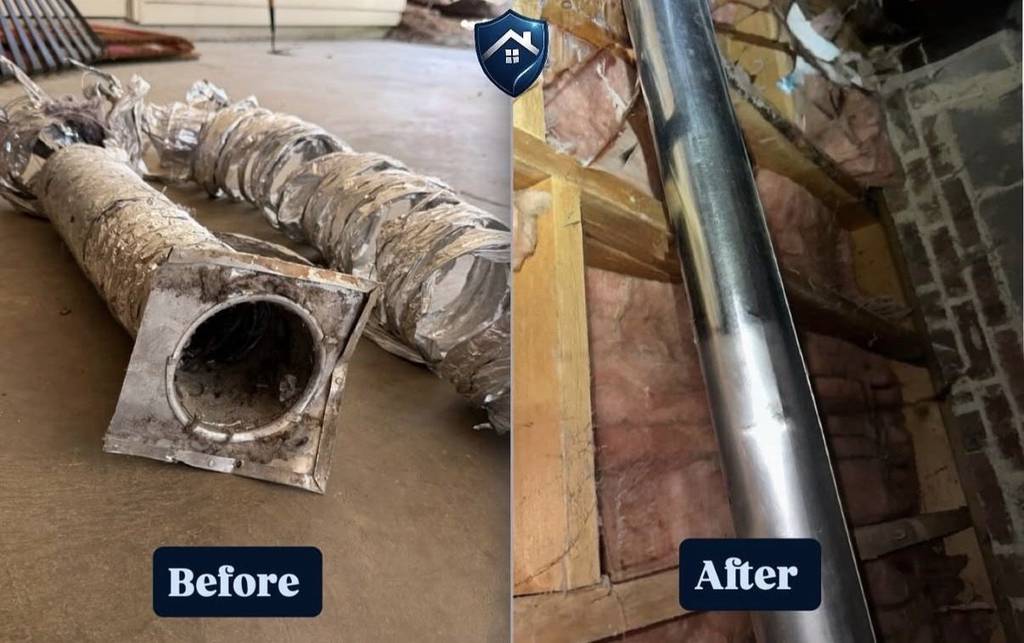
What the repair visit includes
Same-day where we can get to you, and the sequence is the same every time.
- Confirm it from both ends. Dryer running, one of us at the exterior hood and one at the attic hatch, so there is no guessing about where the air is going.
- Photograph the separated joint, the lint deposit and any wet insulation or staining before anything is touched. That file is yours, and it is what you need if an insurer or a builder gets involved.
- Reconnect with rigid or semi-rigid metal duct, joints assembled in the direction of airflow and sealed with foil tape rather than screws.
- Strap and support the run so the failure cannot repeat, and measure the developed length while it is accessible.
- Clean the full line from the machine to the termination, because the restriction that has built up is part of why the joint was under pressure.
- Check the termination: damper working, no screen, no crushed hood, and clear discharge with the dryer on.
- Remove the accessible lint deposit, and tell you plainly if there is wet insulation or growth that needs more than a cleanup.
If it has been apart a long time: the mold question
Sometimes the duct is the easy part. If the vent has been discharging into the attic for a season or more, there may be staining on the sheathing, damp or compressed insulation, and growth on the framing. We do remediate mold, so we can handle that side of it, and we will tell you honestly which of the three you are looking at: surface staining that cleans, growth that needs remediation, or wet insulation that needs removing and replacing.
What we will not do is guess at the extent from the hatch, and we will not tell you a cleanup is enough if it is not. If structural timber or sheathing is affected, that is a builder or a roofer, and you get the photographs to take to them. Our mold remediation page covers the process, and if you want the air tested afterwards we do that too.
For Raleigh and the surrounding Triangle, call while the dryer is off. This is the one we move things around for.
Last updated by the Prestige Protected service team.
How we fix it
The repair is usually straightforward once someone actually gets into the attic. We locate the separation, check whether the joint failed because it was assembled with the wrong tape, or never sealed at all, or crushed, or pulled apart by the duct’s own sag, then rebuild the connection with rigid or semi-rigid metal duct, assembled in the direction of airflow and sealed with foil tape rather than screws, which catch lint inside the duct. Sagging runs get supported so the joint does not pull apart again. Then we clean the lint out of the line, verify strong airflow at the exterior hood, and photograph the finished run so you can see it without climbing up there yourself.
If the failed joint is a symptom of a badly routed line, too long, too many bends, sagging flexible duct where rigid should be, we will tell you plainly and quote a reroute or full line replacement as a separate written option. The U.S. Fire Administration reports roughly 2,900 home dryer fires a year, with failure to clean the leading factor; a vent that has been dumping into the attic needs its whole run cleaned as part of the fix, not just the joint patched. We repair disconnected vents across Raleigh, Cary and the Triangle.
More questions about attic dryer vents
Can I keep using the dryer until it is fixed?
We advise not to. Every load adds lint to the attic and pushes a bathroom’s worth of moisture into the framing. If you must run a load, keep it to one and check the attic afterward, but a disconnected vent is typically a same-day or next-day fix, so the safest answer is to wait.
How does a dryer vent come apart in the attic?
Usually a joint that was only taped with cloth duct tape (which dries out and lets go), a run of flexible duct that sagged until a connection pulled apart, or damage from someone working in the attic. Long vertical runs to a roof exit are the most common victims.
How long does the repair take?
Most reconnections take one to two hours including cleaning the line and verifying airflow outside. A full reroute or replacement, if the run itself is the problem, is typically a half-day job quoted separately in writing.
Will you clean up the lint in the attic?
We remove the accumulated lint around the repair area, because it is fuel sitting on your insulation. Widespread moisture damage or mold in the attic is a separate remediation conversation, which we will document with photos if we see it.