Quick answer
Prestige Protected repairs and replaces dryer vent lines across Raleigh, NC, from disconnected attic vents and crushed hoses to full line reroutes and replacements. We find the fault, quote it line by line, and get the airflow working again. The U.S. Fire Administration reports that failure to clean is the leading factor in home clothes dryer fires, so a blocked or broken vent is worth fixing quickly. Same-day and emergency service is often available. Call (888) 404-8321.
A disconnected, crushed, or clogged dryer vent is a safety problem as well as a slow one. The U.S. Fire Administration report Clothes Dryer Fires in Residential Buildings (2008-2010) found that “An estimated 2,900 clothes dryer fires in residential buildings are reported to U.S. fire departments each year and cause an estimated 5 deaths, 100 injuries, and $35 million in property loss.” On more recent data the agency reports that failure to clean, at 31 percent, was the leading factor contributing to ignition from 2018 to 2020. When a vent line is broken or blocked, hot, lint-laden air has nowhere to go, which is exactly the condition that leads to overheating. Getting a damaged Raleigh vent line repaired or replaced quickly restores safe airflow and removes that risk. See our main Raleigh air duct and dryer vent cleaning page for our full service area.
Need dryer vent repair in Raleigh, NC? Prestige Protected offers same-day / emergency dryer vent service and full dryer vent line replacement across Raleigh and the Triangle. If your vent is disconnected, crushed, blocked, or venting into your attic, we assess it and rebuild the affected run in smooth rigid metal, which is what the code requires. Call (888) 404-8321 or request a quote.
Emergency dryer vent service in Raleigh
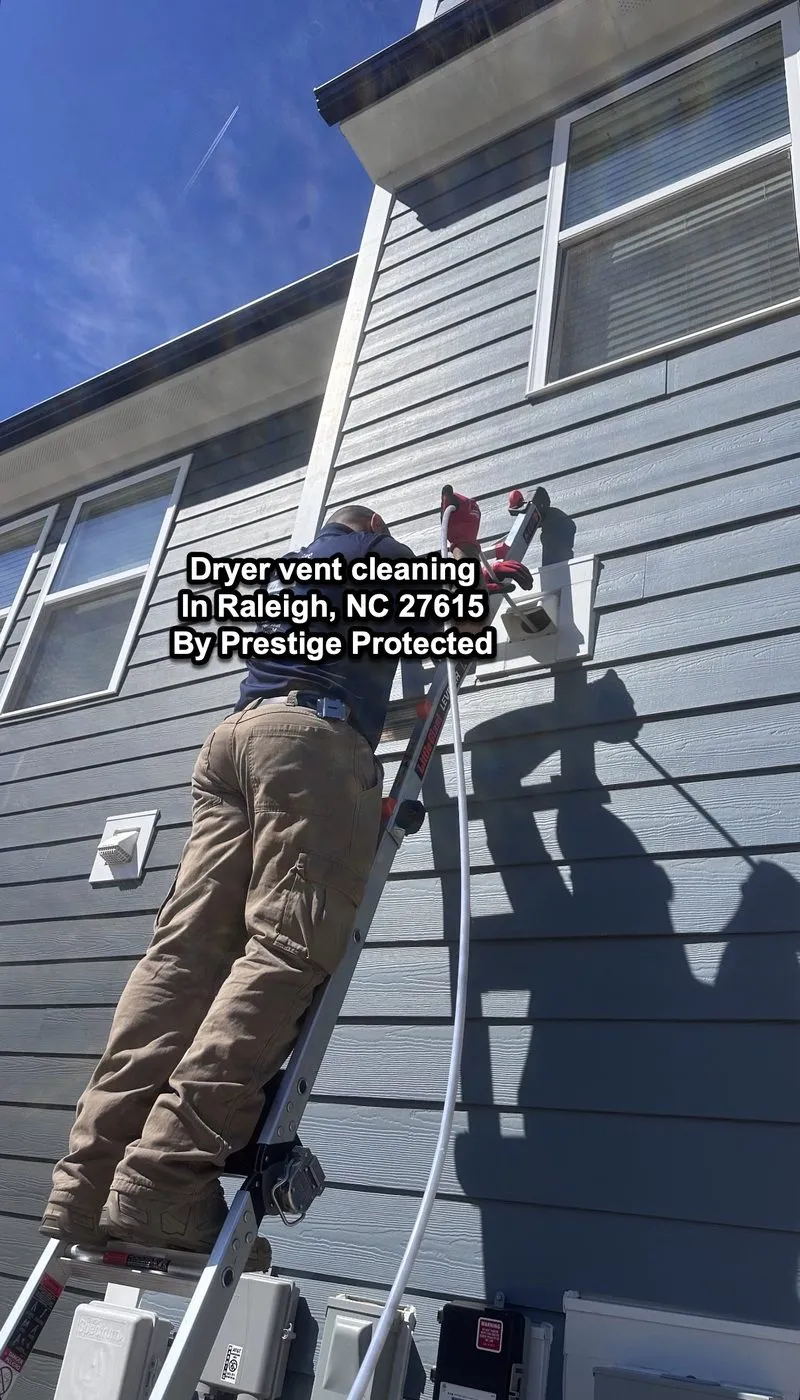
A disconnected dryer vent venting into an attic or wall is a fire and moisture hazard. We respond same-day across Raleigh: locate the break, make the system safe, and replace the damaged or disconnected line so it vents outside again.
Full dryer vent line replacement
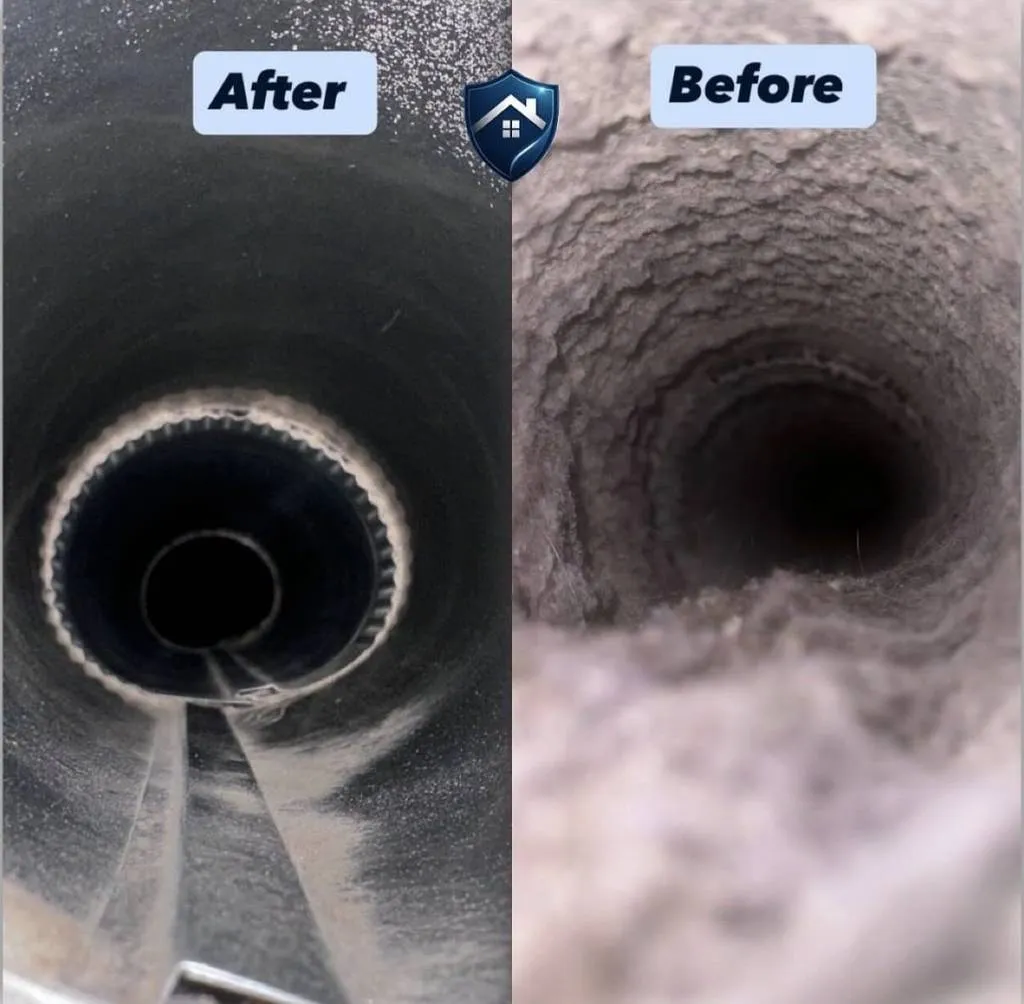
When a run is crushed, kinked, too long, rusted, or built from unsafe foil or plastic, replacement is the right fix. We replace the full line with rigid or semi-rigid metal duct, routed the shortest safe path to the exterior.
- A disconnected vent in the attic or wall dropping lint inside the home
- A damaged or crushed line needing rigid-metal replacement
- A long, winding run that traps lint and stops the dryer drying
- Aging or rusted ductwork on older Raleigh homes
Transparent, itemized pricing
Cost depends on the run length, number of bends, wall vs. roof exit, and materials. We quote it itemized up front, no flat-rate bait. Get a quote for your home.
Just need a cleaning instead? See dryer vent cleaning, the fire-risk guide, or our Raleigh service area. In Cary? See dryer vent repair in Cary.
Experiences & Results
What Our Clients Are Saying
Recent reviews left by homeowners on our Google Business Profile.
Had a great experience with Prestige Protected for air duct cleaning in Raleigh, NC. The team showed up on time, were very professional, and explained everything clearly before getting started. They used powerful equipment and even showed before-and-after photos, which was really impressive. I’ve used other companies in the past and it’s not even close to the level of service I got here. Highly recommend them in Raleigh, Cary, or nearby areas!
The guys did a fantastic job and were very, very nice to work with. Made the necessary fixes in a reasonable time. Thank you very much!
Nathan and Nieve came out and did a wonderful job cleaning the vents in our home. They were very nice and respectful. Great customer service!
I had a great experience with them! I had mold in my ductwork and unit and they got everything taken care of. The technicians were thorough and amazing, on time and very professional. Highly recommend their service in Raleigh!
Great dryer vent cleaning in Durham. The technicians were professional and cleaned my clogged dryer vent out thoroughly. Would use them again.
Very thorough cleaning and got good advice for safety. Friendly, professional service from start to finish.
Hear It From Our Customers
Dryer vent emergency or replacement in Raleigh?
Call (888) 404-8321 for same-day service, or get a quote.
Last updated by the Prestige Protected service team.
Serving Raleigh and the Triangle, explore our full air duct & dryer vent cleaning in Raleigh, NC.
Dryer vent repair questions, answered
What actually breaks on a Raleigh dryer vent
Almost every repair we do in Raleigh falls into one of six categories. Knowing which one you have tells you whether this is a twenty-minute fix or a morning of work.
- A crushed or torn transition hose. The flexible hose between the machine and the wall. It gets flattened when the dryer is pushed back, or it tears at the clamp. This is the single most common fault and the cheapest to put right, and it is also the one most often missed because it is hidden behind the appliance.
- A line disconnected inside the attic, wall or crawlspace. A joint pulls apart and the dryer starts venting into the structure instead of outside. You often notice it as a humid upstairs, a musty smell, or a ceiling stain before you notice it as a drying problem. See a vent disconnected in the attic.
- A failed exterior hood or damper. The flap breaks off, seizes shut, or gets propped open by packed lint. Seized shut means no airflow. Stuck open means an unscreened hole into your house, which is how the nesting starts.
- A nest or animal damage. Birds in spring, rodents in crawlspaces. Nesting material is a complete blockage and has to be physically removed, not brushed past.
- Crushed or sagging duct in the run. Flexible duct that has been stepped on in the attic, compressed above a joist, or left sagging in long loops. Sags collect lint and moisture at the low point, which then becomes the blockage.
- A run that is simply wrong for the appliance. Too long, too many elbows, undersized, or terminating somewhere it should not. That is a design fault, not a maintenance fault, and cleaning it will never fix it. It needs rerouting or shortening.
Flexible or rigid: what belongs where
Most of the argument about dryer vent materials comes from people comparing the wrong two things. Here is how the three you will actually be offered behave.
| Material | Where it belongs | How it fails |
|---|---|---|
| Smooth rigid metal (galvanized or aluminum) | The permanent run through walls, attics, crawlspaces and chases | Rarely. Joints can separate if they were never fastened, and it dents if something falls on it |
| Semi-rigid or foil flexible | Short transition only, behind the machine, as short as will reach | Crushes flat against the wall, tears at the clamp, and every ridge holds lint |
| Plastic or vinyl flexible | Nowhere. It should not be in a dryer vent at all | Sags, holds lint in every ridge, and is combustible. If we find it we recommend replacing it that day |
Where a run has to be rebuilt we use smooth rigid metal for the permanent portion and keep the flexible transition as short as the layout allows. Our page on transition hose replacement covers just that piece, and cleaning versus replacement covers the choice between them.
Repair, reroute, or replace the line: how we decide
These are three different jobs at three different prices, so it is worth understanding which one you are being quoted.
- Repair is right when the run itself is sound and one component has failed. A new hood, a new damper, a reseated joint, a new transition hose. Same visit, in most cases.
- Reroute is right when the run is sound in construction but wrong in geometry, or terminates in the wrong place. Shortening a thirty-foot path, removing two unnecessary elbows, or taking a line that dumps into the attic and carrying it out through the roof or wall. See dryer vent rerouting.
- Replace the line is right when long sections are crushed, torn, or made of material that should not be in a vent. There is no point patching a length of vinyl.
We inspect before quoting, and we say which of the three we think it is and why. If we are wrong once the panel is off, we tell you before we carry on rather than after.
Roof and sidewall terminations in Raleigh, and why it matters
Raleigh has a lot of two and three-story housing with upstairs laundry rooms, and that pushes builders toward roof terminations. A roof cap is a legitimate way to vent a dryer, but it changes the maintenance picture. The line runs vertically, so lint that comes loose falls back down instead of blowing out. The cap sits in full sun and weather, so its flap degrades faster. And it is on a roof, which means the homeowner never inspects it and neither does anyone else.
A sidewall or soffit hood at ground level is easier to keep an eye on, but its own failure mode is being painted shut, or having insect screen added to it by a well-meaning owner. Screen mesh in a dryer hood clogs almost immediately and should not be there. If your hood has mesh in it, that alone can explain a slow dryer.
Either way, if the exterior termination is the failed part, that is a repair and it is a cheap one relative to what it prevents.
Is a damaged vent really urgent?
Two of the six faults above are genuinely worth acting on quickly rather than at your convenience.
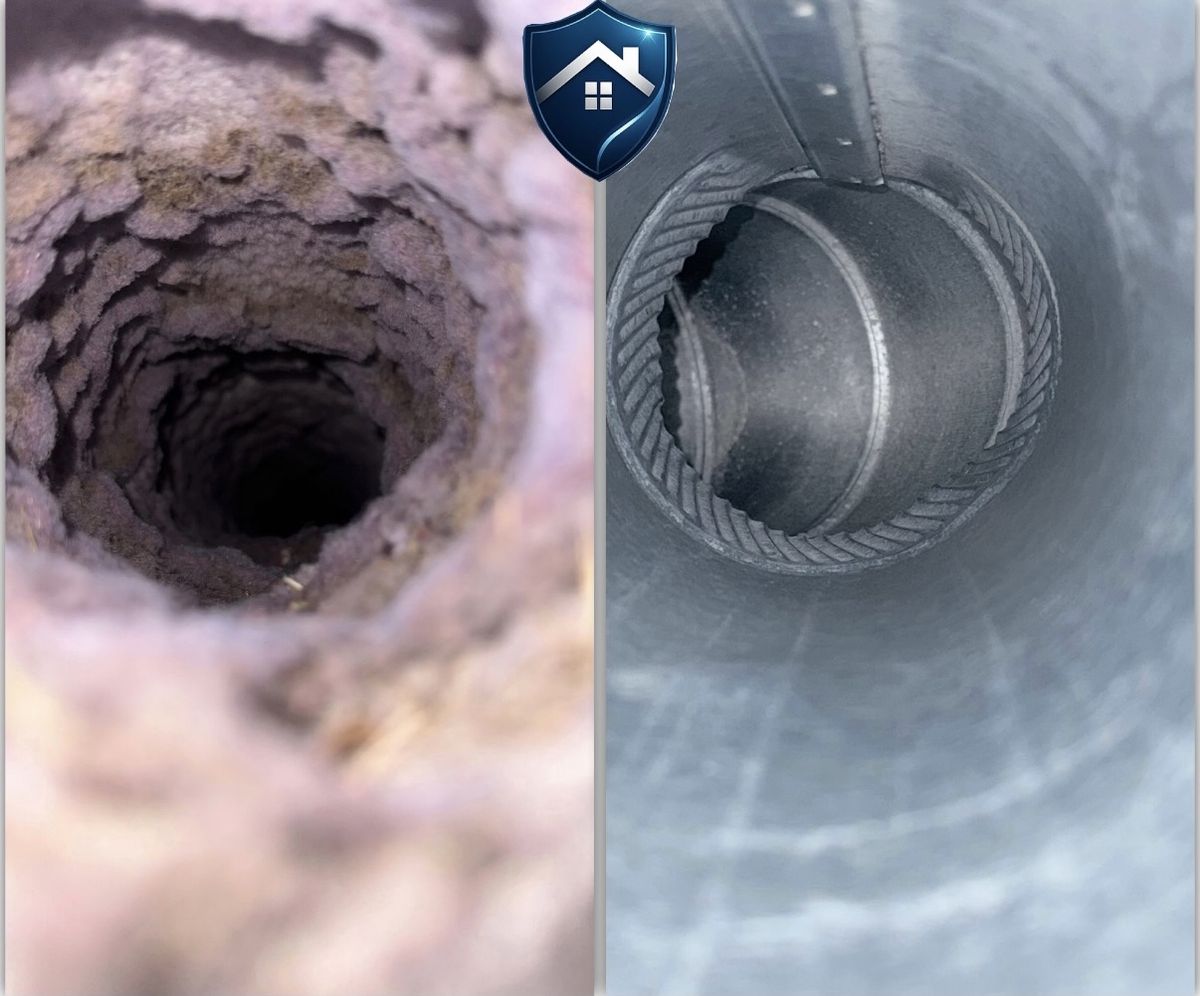
Failure to clean (31%) was the leading factor contributing to the ignition of clothes dryer fires in homes from 2018-2020.
U.S. Fire Administration, Appliance and Electrical Fire Safety
A blocked or collapsed line is functionally the same condition as an uncleaned one: the lint stays hot inside the duct with nowhere to go. The second urgent case is a line venting into an attic or crawlspace, where the problem is not fire but water. A dryer puts out a large volume of warm moist air, and directed into an enclosed space that becomes condensation on cold framing, then mold, then rot. Neither of these gets better by waiting. Our page on dryer vent fire risk explains the mechanism, and if you have a burning smell, stop using the dryer now and read overheating and burning smells.
What we do and do not repair
We repair and replace dryer vent lines, transition hoses, exterior hoods and dampers, we reroute badly designed runs, and we clean the whole line as part of the work. We also clean air ducts, inspect HVAC systems, clean coils, sanitize duct systems, test indoor air quality and carry out mold remediation. We do not repair dryers themselves, we do not replace HVAC ductwork, and we do not sell duct sealing. If the vent is sound and the appliance is at fault, we will tell you that instead of selling you a repair you do not need.
If your line is intact and simply dirty, you want dryer vent cleaning in Raleigh rather than a repair, and it costs less. Related: what dryer vent repairs cost, common dryer vent problems, and everything we do in Raleigh.
A repair visit is also a good time to look at the rest of the system. Air duct cleaning in Raleigh explains the HVAC side of the work, and if a dryer line has been venting into an attic or crawl space for any length of time, mold removal in Raleigh covers what usually has to happen next.
Frequently asked questions
Do you offer emergency dryer vent repair in Raleigh?
Yes. Call (888) 404-8321 for same-day/emergency service, common for a disconnected vent dumping lint into an attic. We make it safe and replace the affected line.
Do you do full dryer vent line replacement in Raleigh?
Yes. When a line is crushed, too long, rusted, or unsafe, we replace the entire run with code-compliant rigid metal duct.
What does dryer vent repair cost in Raleigh?
It depends on length, bends, wall vs. roof exit, and materials. We provide an itemized quote up front for your specific vent.
Is a damaged dryer vent really a fire risk?
Yes. The U.S. Fire Administration reports roughly 2,900 home clothes dryer fires each year, and failure to clean is the leading factor. A crushed, disconnected or lint-packed line is exactly the condition that lets heat and lint meet, which is why we treat disconnected and blocked vents as same-day work when we can.
What are the signs a Raleigh dryer vent needs repair rather than cleaning?
The clearest sign is that a cleaning did not fix it. Beyond that: air is not coming out of the exterior hood even with the dryer running, the flap does not move, you can see a crushed or torn hose behind the machine, there is a damp or musty smell in the room the vent passes through, there is a ceiling or wall stain along the run, or the laundry room is humid while the upstairs feels muggy. Any of those point to a broken line rather than a dirty one.
Can you repair just the hose behind my dryer, or does the whole line have to be redone?
Just the hose, in most cases. The transition hose is a separate component and replacing it is a small job. We only recommend redoing the permanent run when long sections are crushed, torn, disconnected in several places, or made of plastic or vinyl.
My dryer vent goes out through the roof. Can you still repair it?
Yes. Roof terminations are common in the newer three-story neighborhoods around Raleigh and we work on them regularly. Replacing a failed roof cap or damper needs ladder access and takes longer than a wall hood, which is reflected in the quote, but it is routine work.
A bird built a nest in my dryer vent. What is involved in fixing that?
The nest has to be physically removed, not pushed through, and then the reason it got in has to be fixed, which is almost always a hood with a missing or seized flap. Replacing the hood is the actual repair. Clearing the nest without fixing the hood just means it happens again next spring.
Do you replace dryer vents in Raleigh condos and townhomes?
Yes, and they are some of the more involved jobs because the run usually goes through a chase or a shared wall. Where a building or homeowners association controls the exterior wall or roof, the exterior portion may need their approval before we touch it, and we will tell you that up front rather than after the fact.
How long does a dryer vent repair take?
A transition hose or an exterior hood is usually under an hour. A disconnected joint in an accessible attic is typically one to two hours. A reroute or a full line replacement is a half-day job, and occasionally longer if drywall access is needed. We give you the realistic figure when we quote, not the optimistic one.
What does the code actually require of a dryer vent?
A lot of the argument about dryer vent materials and routing is already settled in writing, and it is worth knowing the four rules before you accept anyone’s quote. These are from Section M1502 of the 2015 International Residential Code, which the North Carolina Residential Code is built on.
- It has to go outside, and only outside. Section M1502.2: “Dryer exhaust systems shall be independent of all other systems and shall convey the moisture to the outdoors.” Section M1502.3 is shorter still: “Exhaust ducts shall terminate on the outside of the building.” The U.S. Fire Administration puts the same point as a prohibition, noting that “Venting a dryer into attics, soffits, ridge vents, or crawl spaces is expressly prohibited.” If your line discharges into the structure, rerouting it is the fix.
- Smooth metal, four inches. Section M1502.4.1: “Exhaust ducts shall have a smooth interior finish and be constructed of metal having a minimum thickness of 0.0157 inches (0.3950 mm) (No. 28 gage). The duct shall be 4 inches (102 mm) nominal in diameter.” That is why we rebuild permanent runs in smooth rigid metal. Replacing plastic or vinyl is not an upsell, it is bringing the vent back to what the code already requires.
- The flexible piece is the transition only, and it is limited. Section M1502.4.3 requires transition ducts to be a single listed and labeled length, “a maximum of 8 feet (2438 mm) in length”, and adds that they “shall not be concealed within construction.” A flexible hose buried in a wall or ceiling is a fault regardless of its condition.
- A damper, and no screen. Section M1502.3: “Exhaust duct terminations shall be equipped with a backdraft damper. Screens shall not be installed at the duct termination.” The USFA gives the reason directly: do not use wire screen or cloth, “as these can collect lint and clog areas of the dryer vent.” If someone has added mesh to your hood, removing it is part of the repair.
And on length, Section M1502.4.5.1 caps the exhaust duct at 35 feet from the transition duct to the outlet terminal, with Table M1502.4.5.1 charging every fitting against that figure. A 4 inch radius mitered 90 degree elbow counts as 5 feet. That is the calculation behind our saying a run needs shortening or rerouting rather than another cleaning.