Quick answer
Duct sanitizing applies an EPA-registered antimicrobial to duct surfaces after a source-removal cleaning, to inhibit regrowth and neutralize odors. It is the right call after confirmed mold, water intrusion, or a persistent musty smell, and unnecessary on a clean, dry system. It never substitutes for cleaning: treating dirty ducts just coats the debris.
Air Duct · Sanitizing
Air duct sanitizing applies an EPA-registered antimicrobial after a thorough cleaning to address mold, bacteria, and lingering odors in the HVAC system. It’s a follow-up to source removal, not a substitute for cleaning, and is most useful when there’s confirmed mold or a persistent musty smell.
Reviewed by the Prestige Protected Team · Updated August 2026 · Cary, Raleigh & the NC Triangle
What is duct sanitizing and when does it help?
Sanitizing treats the cleaned duct surfaces to inhibit microbial regrowth and neutralize odors. It makes sense when an inspection finds mold, after water intrusion, or when a musty smell persists. On a clean, dry system with no contamination, it’s usually unnecessary.
Does sanitizing replace cleaning?
No. Applying a treatment over dirty ducts just coats the debris. The EPA advises that any product used inside ducts be EPA-registered for that use and applied per label directions, and only after the system is properly cleaned. We remove the contamination first, then sanitize if it’s warranted, and we fix the moisture source so mold doesn’t return.
Register and grille cleaning
We also clean the visible registers, grilles, and diffusers, which collect dust and can spread odor. It’s a small step that noticeably improves how vents look and smell after service.
Talk to a Triangle specialist
FAQ & related
Frequently asked questions
Is air duct sanitizing necessary?
Only when there’s mold, water damage, or a persistent odor. For a clean, dry system it’s typically not needed, cleaning is what matters.
Are duct sanitizing products safe?
When they’re EPA-registered for in-duct use and applied per directions, yes. We use compliant products and clean before treating.
Source: U.S. EPA guidance on biocides/sanitizers used in HVAC duct systems.
How we decide whether your system needs it
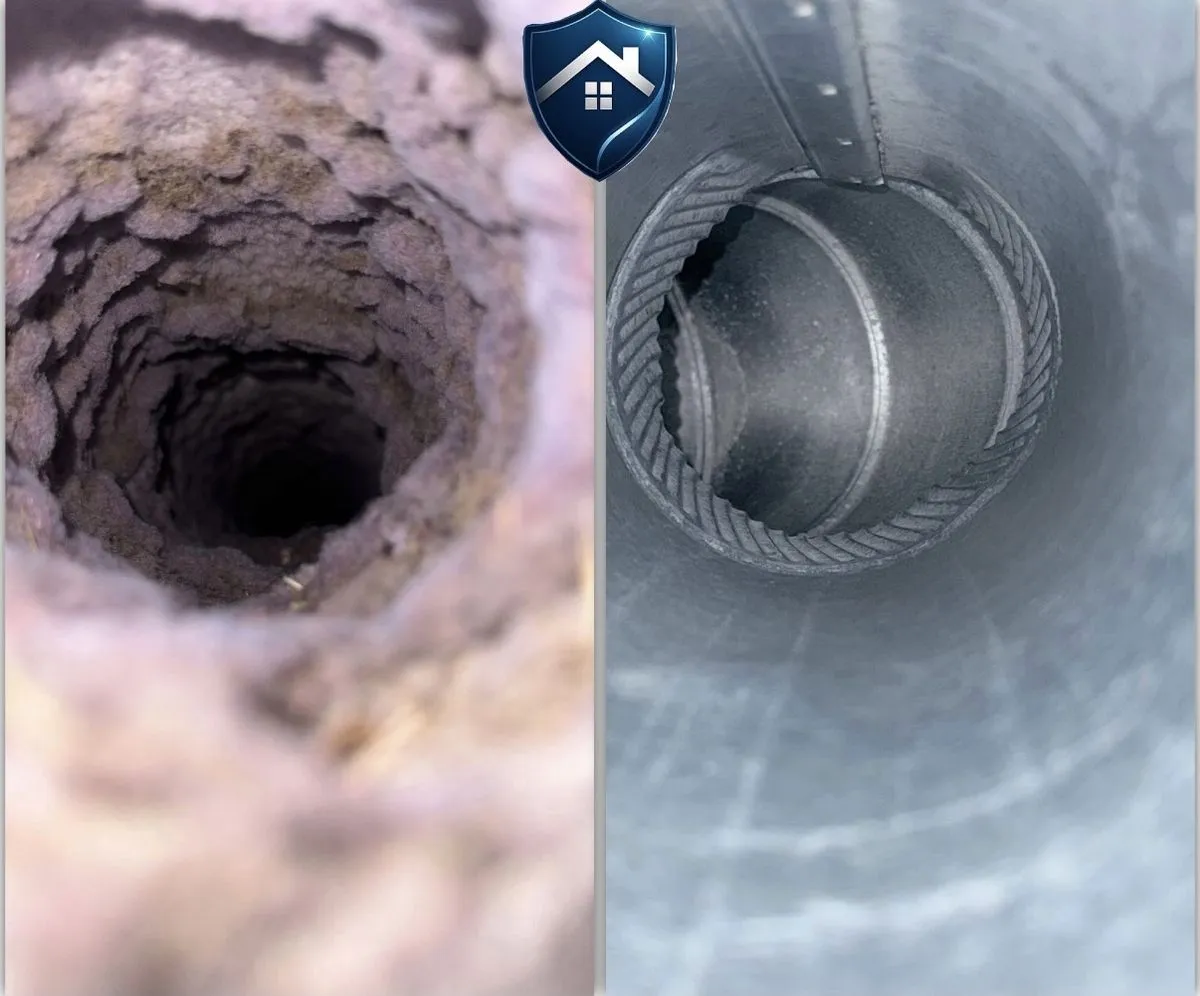
Sanitizing is one of the most oversold services in this industry, so we hold it to a simple standard: there has to be something to treat. During the inspection we look for the three situations where a treatment earns its cost: visible microbial growth, a history of moisture in the system (a leaking coil pan, condensation on duct runs, past water damage), or an odor that persists after the dust and debris feeding it are removed. If none of those apply, we tell you to keep your money.
- Confirmed mold or microbial growth: treatment inhibits regrowth on the cleaned surfaces while you fix the moisture source that caused it.
- After water intrusion: a roof leak, plumbing leak or condensate overflow near ductwork is exactly when a preventive application makes sense.
- Persistent musty odor: if the smell survives a thorough cleaning, treating the duct surfaces and cleaning the evaporator coil usually resolves it.
What the treatment involves
We only apply products that are EPA-registered for use inside HVAC systems, per label directions. The EPA is explicit that no product should go into ductwork unless it is registered for that purpose. The application is a fine, even fog through the cleaned duct runs, reaching the same surfaces the cleaning did. It dries quickly and has no lingering chemical smell. Critically, we pair it with finding the moisture source: the EPA’s mold guidance is that treatment without moisture correction is temporary by definition. If your musty smell traces back to the coil area, our coil cleaning service addresses the dampest spot in the system; if you suspect a bigger problem, start with mold removal in Cary or Raleigh, or confirm what is in your air with indoor air quality testing. We serve Cary, Raleigh and the Triangle.
The fastest way to understand duct sanitizing is to be clear about what it is not. Most of the disappointment with this service comes from expecting it to do a job it was never able to do.
What duct sanitizing is not
- It is not mold remediation. If there is substantial mold growth in the system, the growth has to be physically removed and the water source corrected. A treatment sprayed over living growth is cosmetic. That work belongs on our Cary mold remediation or Raleigh mold remediation page, not here.
- It is not a substitute for cleaning. Treating dirty ductwork coats the debris rather than the duct. Cleaning first is not an upsell sequence, it is the only order that works.
- It is not a fix for a moisture problem. A leaking condensate pan, a crawlspace at eighty percent humidity or a duct sweating in an unconditioned attic will re-seed the surface within weeks.
- It is not an ozone or fogger gimmick. We do not run ozone generators in occupied homes, and we do not use consumer bug-bomb style foggers.
- It is not a health claim. We will not tell you a treatment will improve anyone’s symptoms. What it does is inhibit regrowth on cleaned surfaces and neutralize odor sources on those surfaces.
How does the EPA treat products used inside air ducts?
This is the part of the subject where being specific matters. The U.S. Environmental Protection Agency addresses chemical treatments in ductwork directly and its guidance is narrow rather than blanket. The agency notes that only a limited number of biocide products are currently registered by the EPA for use in bare sheet metal air ducts, and that “no products are currently registered by EPA as biocides for use on fiberglass duct board or fiberglass lined ducts.” Its accompanying advice to homeowners is equally plain: do not permit the use of sealants or biocides unless you fully understand the pros and cons.
What that means in practice at your house is a two-part rule we hold ourselves to. First, we only apply products that carry EPA registration for use inside HVAC systems, and we apply them per label directions. Second, the duct material decides whether a treatment is appropriate at all. Bare metal ducts and cleaned metal plenums are candidates. Fiberglass duct board and internally fiberglass-lined runs are not, and on those systems we clean, we photograph, we address moisture, and we skip the treatment. If a company offers to fog your fiberglass-lined ductwork, that is a reason to ask for the product label.
The same logic applies to mold. The EPA’s mold cleanup guidance states that the key to mold control is moisture control and that mold will keep coming back if the moisture problem is not fixed. Treatment is the last step in that sequence, never the first.
The moisture problem behind almost every musty duct in the Triangle
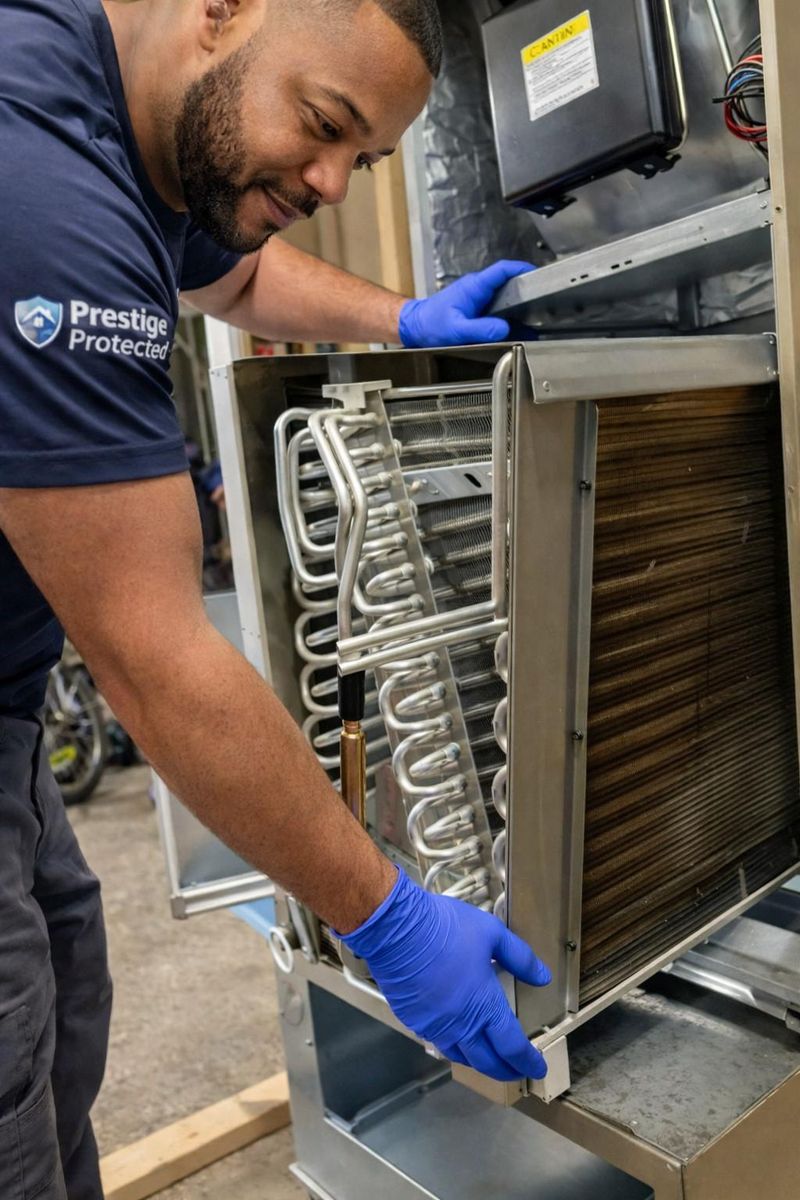
Cary and Raleigh spend four months a year with outdoor dew points in the seventies. That single fact explains most of the musty duct calls we get, and it explains why treatment alone rarely holds.
- The condensate pan and drain. A partly blocked drain line leaves standing water directly under the coldest, dustiest part of the system. This is the single most common source we find, and it is a plumbing-scale fix rather than a chemical one.
- Short-cycling from an oversized system. An air conditioner sized too large for the house cools the air fast and shuts off before it has removed much humidity. The coil stays wet, the house stays clammy, and the ducts never dry between cycles.
- Crawlspace and attic humidity. A duct running through a damp crawlspace or an unconditioned August attic can sit below the surrounding dew point and sweat on the outside. Wet insulation on the outside of a duct produces exactly the smell people blame on the inside.
- Return leaks pulling unconditioned air. A leaky return in a crawlspace pulls humid, musty crawlspace air into the system and delivers it to every room. No treatment inside the duct changes that.
- Genuinely wet events. Roof leaks, supply-line failures and overflowing pans. The EPA notes that mold can begin to grow on a damp surface within 24 to 48 hours, which is why the response window after water intrusion is short.
We look for all five during the inspection, tell you which one you have, and are honest that some of them need a plumber or an HVAC contractor rather than us. Our system inspection and indoor air quality testing are the tools for narrowing it down.
What happens on a sanitizing visit, step by step
- Inspect and photograph. We look at the duct material, the coil, the drain pan and the accessible runs, and we show you what we found before recommending anything.
- Decide honestly. If the duct is fiberglass-lined, if there is no growth, no moisture history and no surviving odor, we tell you a treatment is not warranted and stop here.
- Clean first. Source-removal cleaning with the system sealed and under negative pressure, debris captured through HEPA filtration. The treatment only ever goes onto a cleaned surface.
- Address the wet spot. Coil and drain pan cleaning where that is the source, and a clear written note where the fix is outside our scope.
- Apply per label. An even application through the cleaned metal runs at the rate the product label specifies, with the system off.
- Air out and hand back. We run the system, walk the house with you, and give you the before-and-after photos. Most families are using the system normally the same day.
Do we have to leave the house during a sanitizing treatment?
For a standard application on cleaned metal ductwork, no. We ask that people and pets stay out of the immediate work area while the application is running and until the treated surfaces have dried, which is normally a short window, and we ventilate as we go. Anyone with asthma, a respiratory condition, or a chemical sensitivity should tell us in advance and plan to be out of the house for the application and for an hour afterward; that is a reasonable precaution rather than a warning about the product. We will hand you the product label on request, before we apply anything, and if you would rather we skipped the treatment and just cleaned, that is always an acceptable answer.
Last updated by the Prestige Protected service team.
Common questions
Is duct sanitizing safe for kids and pets?
Yes, when done correctly. We use only products EPA-registered for use inside HVAC systems, applied per label directions to cleaned surfaces. The application dries quickly; most families are back to normal use of the system the same day.
How much does sanitizing add to a duct cleaning?
It is priced by system size and quoted in writing alongside the cleaning, after the inspection. Because the equipment and crew are already on site, adding it to a cleaning costs far less than a standalone visit, but we only quote it when the inspection shows a reason to.
Will sanitizing get rid of the musty smell for good?
If the smell comes from microbial growth on duct or coil surfaces and the moisture source is corrected, yes. If the moisture problem remains, a clogged condensate drain, a duct leak in a humid crawl space, the smell returns. That is why we identify the cause, not just treat the symptom.
Can you sanitize fiberglass-lined ductwork?
No, and you should be cautious of anyone who offers to. The EPA notes that no products are currently registered as biocides for use on fiberglass duct board or fiberglass-lined ducts. On those systems we clean thoroughly, deal with the moisture source, document it with photos, and leave the treatment out.
Does sanitizing kill mold in my air ducts?
It is not the right tool for existing growth. Substantial mold has to be physically removed and the water source corrected, which is remediation work. A treatment applied afterward helps inhibit regrowth on the cleaned surfaces, but on its own it is temporary, because the EPA is explicit that mold returns if the moisture problem is not fixed.
Do you use ozone or fogging machines?
No. We do not run ozone generators in occupied homes and we do not use consumer-style total-release foggers. Applications are made with equipment appropriate to HVAC surfaces, at the rate the product label specifies, on ductwork that has already been cleaned.
How long does a duct sanitizing treatment last?
That depends entirely on whether the moisture that caused the problem was fixed. On a dry system with a clear condensate drain and a filter changed on schedule, the effect holds for a long time. On a system with a wet crawlspace or a leaking pan, expect the smell back within weeks, which is why we insist on finding the water first.
Can I ask to see the product label before you apply anything?
Yes, and we would rather you did. Ask any company for the label of the product going into your ductwork and check that it is EPA-registered for use inside HVAC systems. If a label cannot be produced, that answers the question.
Is sanitizing worth adding to a routine duct cleaning?
On a clean, dry system with no odor and no moisture history, no. We will tell you to keep the money. It earns its cost after confirmed growth, after water intrusion, or when an odor survives a thorough cleaning, and those are the only three situations we quote it in.