Air Duct Cleaning · Pet Owners
Quick answer
If you have shedding pets, having your air ducts cleaned every 2–3 years, paired with fresh filters, helps cut the pet hair, dander and odor that recirculate through your home. It won’t replace good filtration or grooming, but for allergy-sensitive, pet-friendly homes in Cary and Raleigh it is a sensible part of the routine.
Dogs and cats are wonderful housemates, but their hair and dander end up in places you never see, including your ductwork. Every time the system runs, some of that settles on duct walls, the filter and the coil, then gets pushed back into the rooms you breathe in. Here is what pet owners in the NC Triangle should know about keeping ducts (and air) cleaner.
By the Prestige Protected Team · Updated August 2026 · Cary, Raleigh & the NC Triangle
Why pets make ducts dirtier faster
Pet hair and dander are light and easily pulled into return grilles. Once inside the system they collect along duct walls, on the blower and on the evaporator coil. Cats and dogs also track in pollen and outdoor dust that adds to the load. The more animals you have, and the heavier the shedder, the faster it builds up.
- Pet hair and dander are drawn into return vents and settle along the ducts
- Dander is a recognized indoor allergen that recirculates each time the system runs
- Pet odors can linger in the ductwork and the coil
- Filters clog faster, which reduces airflow and makes the system work harder
What the research actually says
The U.S. Environmental Protection Agency (EPA) does not recommend cleaning air ducts on a fixed schedule for its own sake, but it does say cleaning is warranted when there is substantial visible debris, mold, or vermin, and heavy pet hair buildup falls into that “substantial debris” category for many homes. The EPA also identifies pet dander as one of the common biological pollutants found in indoor air. In short: if you can see hair collecting at the registers and your filters are clogging early, cleaning is reasonable.
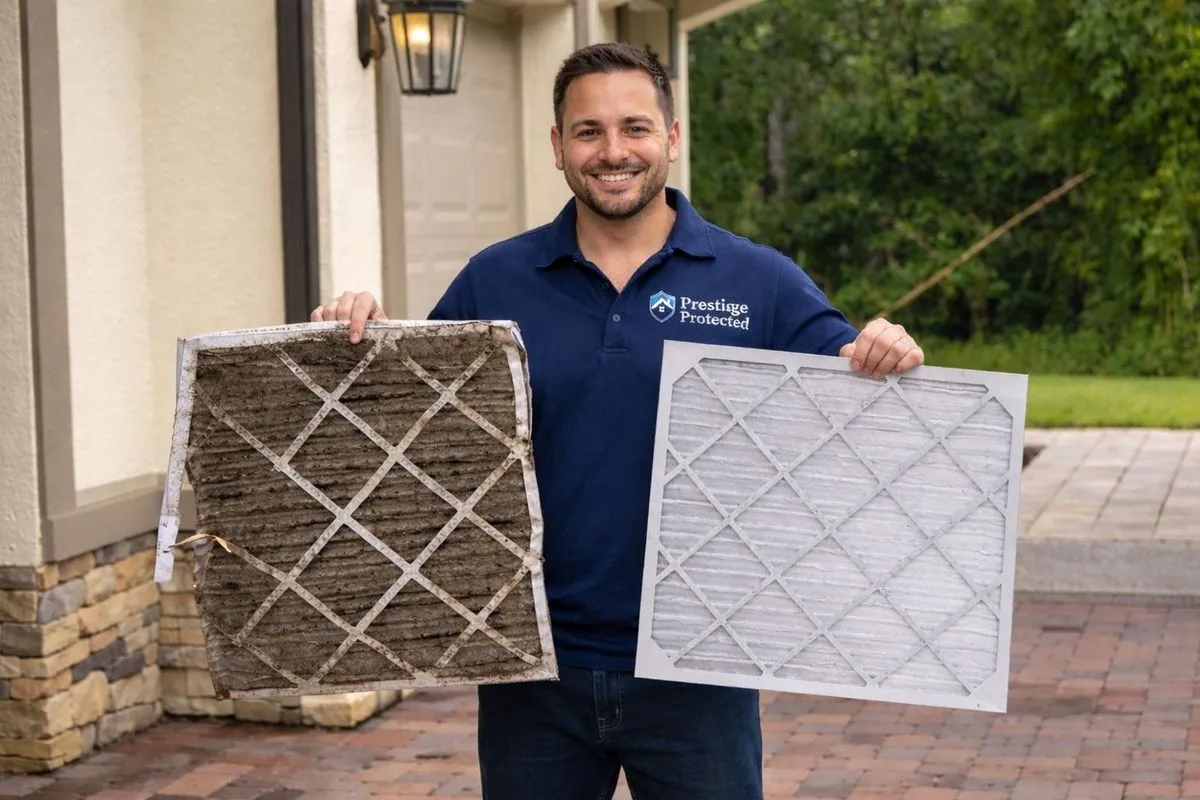
Filtration matters just as much as cleaning. ENERGY STAR recommends inspecting, cleaning or changing air filters once a month; in a pet-heavy home you will likely change it more often. A fresh, correctly-rated filter captures a large share of dander before it reaches the ducts.
Signs your pet-friendly home is due
- Visible hair around return grilles and on registers
- Filters clogging faster than their rated interval
- Lingering pet odor that returns soon after you clean the house
- Allergy flare-ups in family members or guests when the system runs
What actually helps (in order)
Start with the basics: change filters on schedule, groom pets regularly, and vacuum near return vents. When hair and dander have already built up in the system, a professional cleaning that uses source-removal (negative-air) equipment pulls it out of the whole run rather than just the register you can reach. For homes where odor is the main complaint, we can add duct coil cleaning and sanitizing. If someone in the home has allergies, pair cleaning with the steps in our air duct cleaning & allergies guide, and consider indoor air quality testing to confirm what you are dealing with.
Not sure whether your home is actually due? Our team serves Cary and Raleigh and will inspect first, then recommend a sensible interval, with no pressure to clean if the ducts don’t need it.
Hair does not stay where you can see it. The register you can reach is the last few inches of a system that may hold sixty or eighty feet of duct, a blower wheel and an evaporator coil. Knowing where pet hair actually collects is what tells you whether cleaning will change anything.
Where does pet hair actually end up?
- The filter, and the gap around it. Most of the hair is caught here, which is the system working correctly. The problem is the gap: filter slots are rarely airtight, so once the media loads up, air takes the easier path around the frame and carries fine dander past the filter entirely.
- The return runs. Returns pull hard. Anything light enough to lift off the floor near a return grille ends up on the floor of the return duct, and that is where we pull out the visible mats.
- The blower wheel. Dander is greasy. It sticks to the leading edge of every blower blade and builds into a coating that quietly reduces how much air the fan can move. This is the part homeowners almost never see and the part that changes performance most.
- The evaporator coil. Fine hair bridges the aluminum fins like felt across a comb. A matted coil restricts airflow, holds moisture longer, and is the usual source of a smell that comes back within days of cleaning the house. Our coil cleaning addresses that surface directly.
- The supply branches. Less hair reaches here, but what does reach it gets blown back into rooms on every cycle, which is the part you actually notice as dust returning overnight.
What does the EPA actually say about duct cleaning in a pet home?
It is worth reading the agency’s position rather than a paraphrase of it. The U.S. Environmental Protection Agency is deliberately cautious: it states that duct cleaning “has never been shown to actually prevent health problems,” and that studies do not conclusively demonstrate that particle levels in homes rise because of dirty air ducts. We quote that on a page selling duct cleaning because you should hear it from us.
What the same document does say is when cleaning is warranted. The EPA lists three conditions: substantial visible mold growth inside the ducts or on other components of the system; ducts infested with vermin such as rodents or insects; and ducts clogged with excessive amounts of dust and debris, with particles actually being released into the home from the supply registers. A heavy-shedding household is the most common way an ordinary home reaches that third condition, and it is a condition you can verify with your own eyes rather than taking a technician’s word for it.
The EPA also lists animal dander among the biological pollutants commonly found in indoor air. So the honest framing is not that duct cleaning cures pet allergies. It is that dander is a real indoor pollutant, that a system full of it recirculates it, and that removing it at the source is a reasonable step alongside better filtration.
A filter plan that survives a shedding household
Filtration is the lever you control every month, and it is cheaper than anything else on this page. Three rules cover most of it.
- Check monthly, change on condition. ENERGY STAR recommends inspecting, cleaning or changing that filter once a month. In a two-dog household, monthly changes are normal, and a filter that looks grey and furry at week three is telling you the real interval.
- Stay inside your system’s rating. Jumping to the highest MERV number on the shelf is a common mistake. A filter denser than your blower was designed for reduces airflow, which can freeze a coil in summer and crack a heat exchanger’s duty cycle in winter. A mid-range pleated filter changed often beats a high-MERV filter left in for six months.
- Close the bypass. Make sure the filter fills the slot and the access door actually latches. Air that goes around the filter is not filtered, and in a pet home that bypass air is the dander that ends up on the blower and the coil.
How do I stop the pet smell from coming back through the vents?
Smell is a different problem from dust, and it usually has one of three sources. The first is dander and hair on damp surfaces inside the system, most often the coil and the condensate drain pan; that is a cleaning question. The second is moisture: the EPA’s mold guidance is that mold grows wherever there is moisture, and that fixing the water problem is the only durable fix, because treatment applied to a still-damp surface is temporary by definition. The third is that the source is not in the ductwork at all but in carpet, upholstery or a subfloor, in which case the system is simply moving the smell around and cleaning ducts will disappoint you.
We work through them in that order. If a musty or sour smell survives a thorough cleaning and the coil is clean, we say so and point you at the room rather than selling you a treatment. Where a treatment is warranted, our duct sanitizing page explains exactly when it is and is not. If the smell is more musty than animal, the musty-smell diagnostic is the better starting point.
What we do differently in a pet household
- Returns first. We start where the hair concentrates instead of working supply to return, because clearing the returns stops us from pushing loosened dander back into the system.
- Grilles come off, not just get vacuumed. Register and return grilles are removed and cleaned separately. The visible louvres are where hair felts up and where the dust you notice comes from.
- Blower and coil get looked at every time. We photograph both before touching anything. If the coil is matted, we tell you, and we tell you when it is bad enough to be worth adding coil cleaning and when it is not.
- Negative pressure, HEPA capture. The system is sealed and put under negative pressure so the debris we agitate leaves through a HEPA-filtered vacuum rather than through your living room. Why that matters is covered in our DIY versus professional comparison.
- Sanitizing only when there is something to treat. Clean, dry ductwork does not need an antimicrobial, and we will say so.
A ten-minute check to see whether your pet home is due
- Pull the filter and note how long it has been in. Furry and grey in under a month is a yes.
- Remove one return grille and look at the first two feet of duct with a phone light. Visible mats of hair are the EPA’s third condition, in your own house.
- Look at a supply register in a bedroom. Fuzz on the louvres means hair is making the full circuit.
- Run the system for ten minutes with the lights off and a flashlight beam across a sunbeam-sized slice of air. Visible particles streaming out of a supply is the clearest sign there is.
- Smell the air at a supply register in the first minute after the blower starts. That first minute is what the ductwork smells like.
Two or more yeses and a cleaning will show you real debris. None of them and we would rather you spent the money on filters. We serve pet households across Cary and Raleigh, and if allergies are the driver, read ducts, dust and allergies next.
Last updated by the Prestige Protected service team.
Frequently asked questions
How often should pet owners clean their air ducts?
Most pet-friendly homes do well with a check every 2–3 years, versus the longer intervals suggested for pet-free homes. Heavy shedders or multiple animals may warrant more frequent attention. The honest test is what you can see: hair at the registers and fast-clogging filters mean it is time.
Does air duct cleaning reduce pet allergies?
It can help by removing accumulated dander from the system so less recirculates, but it is one piece of the puzzle. Pairing cleaning with a good filter, regular grooming, and source control usually makes a bigger difference than duct cleaning alone.
Will duct cleaning get rid of pet smell?
Cleaning removes the hair and dander that hold odor, and adding a coil cleaning and sanitizing step targets smells that come from the coil and damp areas. If the source is elsewhere (carpet, upholstery), duct cleaning alone won’t fully solve it.
Are certain pets harder on ductwork?
Heavy-shedding breeds and homes with multiple animals load the system fastest. Long-haired cats and double-coated dogs tend to produce the most hair that reaches the return vents.
Should I clean the ducts after rehoming or losing a pet?
It is one of the few times we recommend it without hesitation. Dander keeps recirculating for a long time after the animal is gone, and if the reason for the change was someone’s allergies, removing the reservoir in the system is the step that actually lowers the ongoing exposure.
Does an air purifier do the same job as duct cleaning?
No, they solve different halves of the problem. A portable purifier cleans the air in the room it sits in and does nothing about hair already lying in the ductwork; cleaning removes that reservoir but does not filter the air continuously. Our comparison of duct cleaning and air purifiers goes through the tradeoff in detail.
Do my pets need to leave during the appointment?
They need to be secured in a room away from the work, or crated, or out of the house. There is equipment running, doors propped, and a hose through the hallway, so it is about safety and stress rather than anything in the air. We will tell you when we are moving between areas.
Is duct cleaning worth it if I only have one short-haired cat?
Often not, and we would rather say that than take the job. One low-shedding animal in a house with a filter changed on schedule usually does not reach the point where you can see debris at the registers. Do the ten-minute check above, and if nothing is visible, spend the money on filters instead.
Can heavy pet hair damage my HVAC system?
It does not break parts outright, but it costs you two ways. Dander coating the blower wheel reduces how much air the fan moves, and hair matted into the evaporator coil restricts airflow and keeps the coil wet longer, which is both an efficiency loss and the usual start of an odor problem.
Will you show me what came out of my ducts?
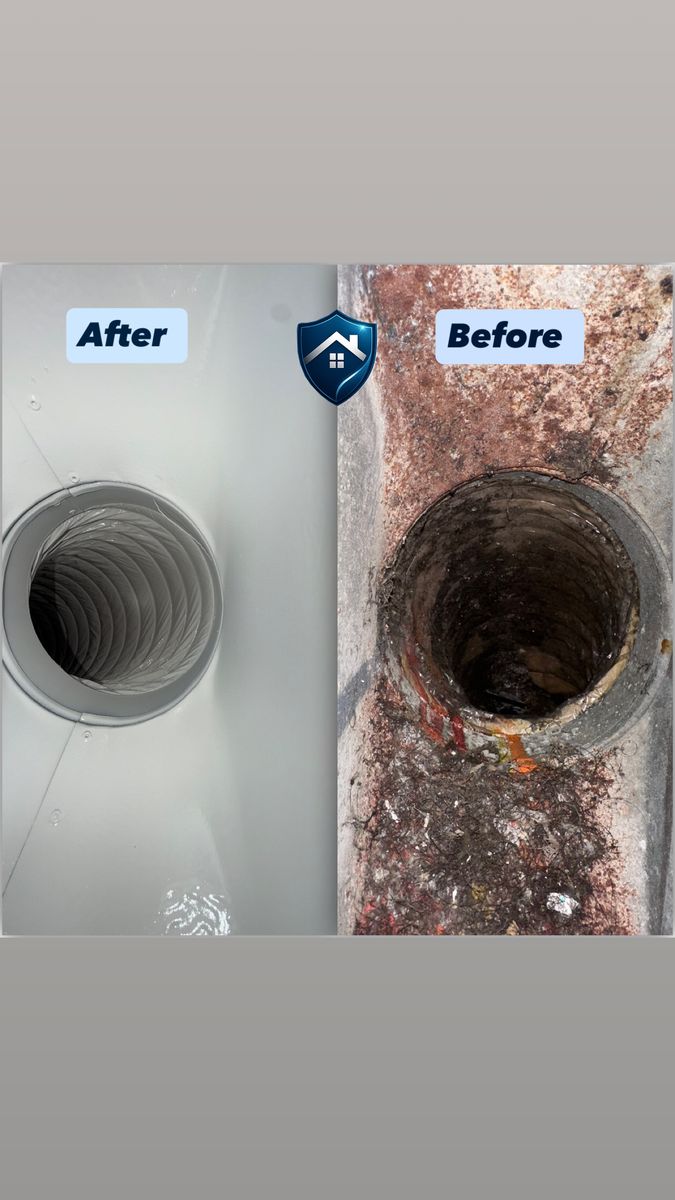
Yes. Every job is documented with before-and-after photos of the actual registers, runs and coil in your house, so you are looking at your own system rather than a stock image. If the photos show it did not need doing, that is what the photos will show.
Pet-friendly home, cleaner air
Related guides
- Why the house is so dusty, pets are only part of it
- Air ducts, allergies and health, what cleaning does and does not change
- How often to clean with pets in the house
- Air quality testing
- Our air duct cleaning service