Quick answer
Air duct cleaning and duct sealing solve two different problems. Cleaning removes dust, debris and allergens from inside your ducts; sealing closes leaks so conditioned air stops escaping. Most homes need one, not both. Prestige Protected performs cleaning, sanitizing and inspection (not sealing) and will tell you honestly which your home actually needs. Call (888) 404-8321.
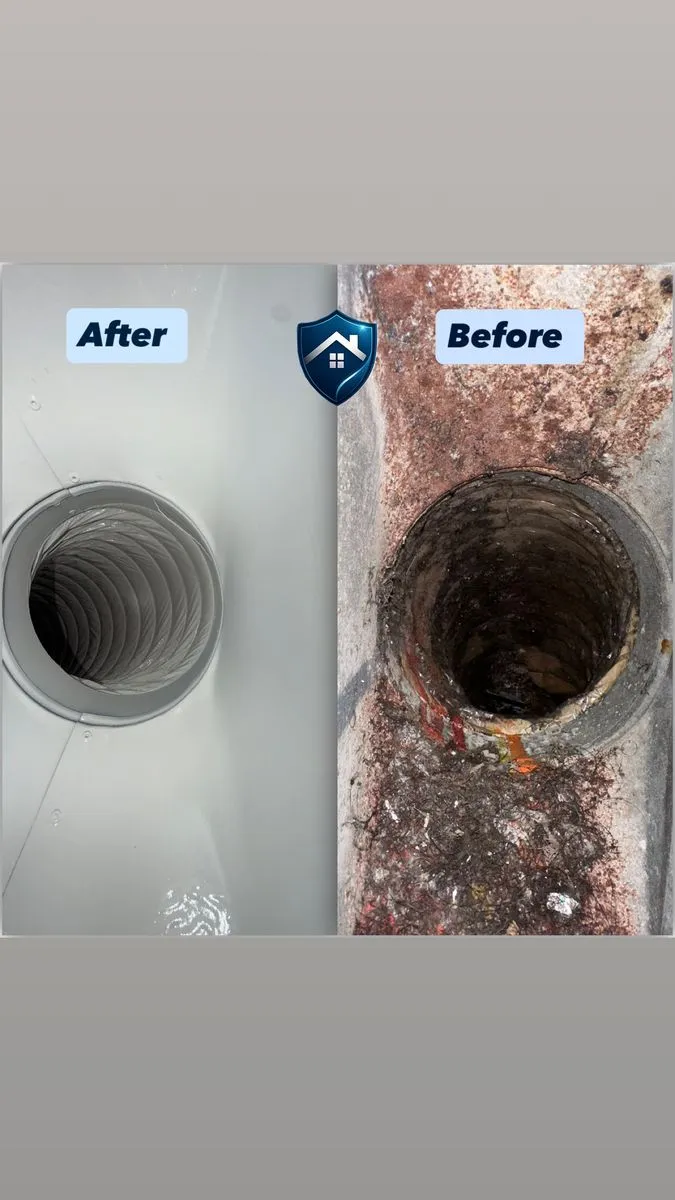
They are two different jobs. Air duct cleaning removes accumulated dust, debris and allergens from inside your duct system. Duct sealing closes gaps and leaks so conditioned air does not escape. One improves what is in your ducts; the other improves how much air actually reaches your rooms.
Quick comparison
| Air Duct Cleaning | Duct Sealing | |
|---|---|---|
| What it fixes | Dust, debris, allergens, musty odors | Air leaks that waste energy |
| Main benefit | Cleaner air, better airflow | Lower energy bills, even temperatures |
| Best when | Visible dust, post-renovation, allergies, mold | Rooms won’t heat/cool, high bills, older ducts |
| Prestige Protected offers it? | Yes | No. We refer you to an HVAC contractor |
Which does your home need?
If you see dust blowing from vents, have allergy flare-ups, or just finished a renovation, start with professional air duct cleaning. If some rooms never seem to heat or cool and your energy bills are climbing, leaky ducts may be the culprit and sealing is worth investigating. The U.S. EPA notes that sealing and insulating ducts can improve heating and cooling efficiency, but only cleaning addresses the dust and contaminants already inside.
An honest note
Prestige Protected specializes in professional air duct cleaning, sanitizing and inspection. We do not perform duct sealing. If our inspection shows your real issue is leakage rather than buildup, we will tell you so you can bring in the right specialist rather than paying for a cleaning you don’t need.
One of these is a cleaning service and the other is a repair. We do the first. We do not sell the second, which is exactly why we are willing to tell you when sealing is the job your house actually needs.
The 20 to 30 percent figure, and where it comes from
Almost every article about duct sealing quotes a number without saying whose it is. It comes from the U.S. Department of Energy, which puts it plainly: “In typical houses, about 20 to 30 percent of the air that moves through the duct system is lost due to leaks, holes, and poorly connected ducts.”
Read that carefully, because it describes a different failure from the one duct cleaning addresses. Air is escaping the system. Nothing about removing dust from the inside of a duct closes a hole in the outside of it. Conversely, sealing a system full of debris seals the debris in. The two jobs answer two different complaints, and the complaint you have tells you which to buy.
- A dirt problem sounds like this: dust returns within days of dusting, the registers blow visible specks when the system starts, there is a smell in the first minute of a cycle, or a camera shows fuzz, hair mats or construction debris in the runs.
- A leak problem sounds like this: one room never reaches the thermostat setting, the system runs far longer than it used to with no change in weather, the attic or crawlspace feels conditioned, or the return closet whistles and collects dust around its edges.
- A moisture problem sounds like a leak problem with a smell. A return leaking in a damp crawlspace pulls humid air into the system all summer. That is a sealing repair with a cleaning consequence, and it is the one case where the two really are linked.
Five checks that separate a leak from a dirt problem
You can do all of these in an afternoon with a phone light and a stick of incense. None of them require a contractor, and doing them first means you can describe an actual symptom instead of asking for a general opinion.
- Compare rooms with a cheap thermometer. Put one in the problem room and one in the hallway near the thermostat and leave them an hour. A gap of three degrees or more in a room at the end of a long run is a strong airflow or leakage signal.
- Hold a lit incense stick at every joint you can reach. At the plenum, the boot connections, the takeoffs and the return seams. Smoke that gets pulled sideways or blown away is showing you a leak. Do this with the fan running.
- Look at the return closet floor. A ring of dust around the filter slot or the door frame means the return is pulling air from the closet, not just from your rooms, and whatever is in that closet is now in your air.
- Touch the flex duct in the attic or crawlspace on a hot day. A cold, sweating run is losing energy through poor insulation. A run that has come apart at a takeoff is losing the air itself, and you can usually hear that.
- Pull one register in the dustiest room and look in with a phone light. This is the dirt check, and it is the only one of the five that duct cleaning answers. Grey film is normal in any lived-in house. Fuzz, matted hair, drywall dust or debris is not.
What duct sealing involves
We are describing this because homeowners get quoted for it constantly and rarely get told what they are buying. This is information, not a service we offer.
- Mastic on accessible joints. A thick paste brushed over the seam, usually with mesh tape on wider gaps. It is the durable answer and the one most HVAC contractors reach for on anything they can get a hand to.
- Foil tape rated to UL 181. Not the fabric-backed product sold as duct tape, which the Department of Energy warns should not be used on ducts because it fails. The rated foil product carries a printed UL 181 mark; if the roll does not, it is the wrong roll.
- Aerosol sealing from inside the duct. The system is pressurized and an atomized sealant is injected, so particles collect at the leaks and bridge them. It reaches joints buried in walls and floors that nobody can touch. It costs considerably more, and it requires a contractor with the equipment and the test gear to verify a result.
- Insulating the runs, which is a separate item. Sealing stops air escaping. Insulation stops energy bleeding through the duct wall. ENERGY STAR recommends insulating the ducts you can access that run through unconditioned attics and crawlspaces, and plenty of Triangle homes have bare or badly sagging insulation out there.
Prestige Protected does not seal ducts, does not replace ductwork and does not quote either. If your house needs it, we photograph what we found, put it in writing and hand it to you to take to a licensed HVAC contractor. We would rather send you away with evidence than sell you a cleaning that does not address your actual complaint.
Where the two jobs meet: the boot, the plenum and the coil
There are three places where a cleaning visit and a sealing repair genuinely touch each other, and knowing them makes the sequencing question easy.
The register boot is the first. It is the metal box behind the grille, and it is both the dirtiest part of a branch run and one of the most common leak points, because it is where sheet metal meets framing and flexible duct meets sheet metal. When we clean a boot, we can see whether it is sealed to the drywall or open to the joist bay behind it. You get that photograph either way.
The return plenum is the second. It is the biggest single leak in a great many homes and it is where debris accumulates, so it is on both lists. The third is the coil and drain pan. A leaking return in a damp space delivers humid air onto a cold coil, and the EPA notes that water-damaged areas and items should be dried within 24 to 48 hours to prevent mold growth. That is the mechanism behind most of the smell complaints we are called out for in July.
Sequence: clean first, then seal
If a house needs both, the order is not arbitrary. Clean first, for three practical reasons.
- Sealing a dirty system encloses the debris permanently, and aerosol sealing in particular will happily bond dust into the joint it is closing.
- Cleaning gives you the camera evidence that tells the sealing contractor where to spend your money, instead of a blanket quote for the whole system.
- The cleaning visit is when a torn, crushed or disconnected run gets discovered. Those need repair, not sealant, and finding them after the sealing work is finished is the expensive way round.
The one exception is a system that is visibly falling apart. If runs are collapsed or the liner is shredded, cleaning first is money spent on ductwork that is on its way out. That decision is the subject of our cleaning versus replacement guide.
Six questions to put to any contractor quoting duct sealing
- Which specific leaks did you find, and where? A quote for “duct sealing” with no locations is a price, not a diagnosis.
- How did you measure it? A duct leakage test gives a number before and after. Without one, nobody can tell you what you bought.
- What product goes on which joint? Mastic, UL 181 foil tape and aerosol sealant are three different jobs at three different prices.
- Does the quote include insulating the runs, or only sealing them? These get conflated constantly.
- Will you photograph the work? Most of it happens in a crawlspace or attic you will never look at again.
- What are you not going to fix? A crushed run, a disconnected takeoff or a sagging belly of flex duct is a repair. Sealant does not solve any of them.
Bring the same standard to us. If we cannot tell you what we found and show you the photograph, do not book the cleaning either. If you want the neutral version first, our inspection visit exists for exactly that, and its most common outcome on a well-kept house is a recommendation to do nothing.
Last updated by the Prestige Protected service team.
Frequently asked questions
Do I need both cleaning and sealing?
Sometimes. If ducts are both dirty and leaky, cleaning first (so sealant isn’t applied over debris) then sealing is the usual order. Many homes only need one.
Does duct cleaning seal leaks?
No. Cleaning removes what is inside the ducts; it does not close gaps. Those are separate services.
Which problem do you actually have?
A simple way to tell them apart is to look at the symptom. If your complaint is about air quality, dust settling on surfaces, stale or musty odors, allergy flare-ups, or visible debris blowing from the vents, that points to cleaning. If your complaint is about comfort and cost, a room that never quite heats or cools, uneven temperatures between floors, or a heating-and-cooling bill that keeps climbing, that points to leakage, which sealing addresses. ENERGY STAR estimates that in a typical house about 20 to 30 percent of the air moving through the duct system is lost to leaks, which is why sealing can pay off on comfort and bills. But sealing does nothing for contaminants already sitting inside the ducts, and cleaning does nothing to stop leaks, which is exactly why the two services are not interchangeable.
Can I seal accessible ducts myself?
Small gaps at joints you can reach are a reasonable DIY job using duct mastic or foil-backed tape rated for HVAC use. Skip standard cloth duct tape; despite the name, it dries out and peels off ductwork within a couple of years. Leaks in hidden runs, or systems losing serious air, are a job for a licensed HVAC contractor.
Should ducts be cleaned before or after sealing?
Clean first. Sealing traps whatever is inside the ducts, so removing years of dust beforehand means you are not locking it in. The camera footage from a cleaning visit also documents exactly where joints have loosened, which gives whoever does the sealing a precise punch list instead of guesswork.
Will duct sealing lower my power bill?
It can, and it depends entirely on how leaky your ducts are to begin with. The Department of Energy figure is that about 20 to 30 percent of the air moving through a typical duct system is lost to leaks, holes and poor connections, so a house at the bad end of that range has real money escaping into an attic. A tight system has almost nothing to gain. This is why the leakage test before the work matters more than the sales pitch.
Can I use duct tape to seal my ducts?
No, and the name is one of the great misnomers in home repair. The Department of Energy specifically advises against using duct tape on ducts because it fails, particularly on hot or cold surfaces where the adhesive dries out and lets go. The correct products are mastic paste or a foil tape carrying a printed UL 181 rating. If the roll in your hand has no UL 181 mark on it, it is the wrong roll.
Is aerosol duct sealing worth the extra cost?
It earns its price in one situation: when the leaks are in joints nobody can reach, buried inside walls, floors or a finished ceiling. If your leaks are at an accessible plenum and a handful of takeoffs in an open crawlspace, mastic by hand does the same job for far less. Ask which of the two describes your house, and ask for the before and after leakage numbers either way.
Do I need a duct leakage test?
If you are paying for sealing, yes. It is the only way anyone can tell you whether the work changed anything, and it also locates the leaks so the money goes where the air is going. A contractor who will not test before and after is asking you to take the result on faith. For a cleaning, no test is needed: a camera shows the condition directly.
Could sealing my ducts make a musty smell worse?
It can, and this catches people out. If the smell is coming from something inside the system, a coil that runs wet, a drain pan holding water, or growth on a damp duct surface, then tightening the envelope keeps more of that air circulating through your rooms instead of leaking away. Find the source first. The EPA notes water-damaged areas and items should be dried within 24 to 48 hours to prevent mold growth, so a wet coil in a Carolina summer is a plausible source rather than an exotic one.
Does Prestige Protected offer duct sealing?
No. We clean air ducts and dryer vents, repair and replace dryer vents, sanitize, clean coils, test indoor air quality and remediate mold. Sealing and replacing ductwork are jobs for a licensed HVAC contractor, and we do not quote them or take a referral fee for them. What we will do is photograph what we found, write down what we think it means, and hand you the file to take wherever you like.
Want an honest assessment?
We’ll inspect and tell you what your ducts actually need.
Related: do you need to replace your ductwork? A Raleigh guide.