
Quick answer
An HVAC inspection is a top-to-bottom check of your heating and cooling system, equipment, coils, ductwork, airflow and safety controls, that catches small problems before they become expensive ones. ENERGY STAR recommends a professional check-up at least once a year. Ours takes about 60–90 minutes and ends with camera photos of your own ducts and a written summary of what we found, with a quote only if work is actually warranted.
HVAC Services · Inspection
An HVAC inspection is a professional check of your heating and cooling system, the unit, coils, ductwork, airflow, electrical, and safety controls, designed to catch small problems before they become expensive failures. ENERGY STAR recommends a professional check-up at least once a year. Prestige Protected inspects HVAC systems across Cary, Raleigh, and the wider NC Triangle.
- Full system, coil, ductwork & airflow check
- Catches efficiency and safety issues early
- Ideal before cooling and heating season
Reviewed by the Prestige Protected Team · Updated June 2026 · Serving Cary, Raleigh & the NC Triangle
What does an HVAC inspection include?
A thorough inspection covers the whole system, not just the thermostat. Ours typically includes:
- Blower motor, fan, and air handler
- Evaporator and condenser coils (a common efficiency drain)
- Airflow, temperature split, and refrigerant indicators
- Ductwork connections, leaks, and obvious contamination
- Thermostat operation, electrical connections, and safety controls
- Air filter condition and condensate drain
When should you get an HVAC inspection?
Schedule one at least once a year, ideally in spring before the AC works hard, and/or fall before heating season. Also inspect when buying a home, if energy bills are climbing, or if some rooms heat and cool unevenly. ENERGY STAR and the U.S. Department of Energy both recommend annual professional maintenance to protect efficiency and equipment life.
How much does an HVAC inspection cost?
A standalone HVAC inspection typically runs about $80–$200, depending on system size and access. It’s often bundled at a lower combined rate with air duct cleaning or a maintenance plan. We’ll give you an exact, itemized quote, just ask.
HVAC Inspection in the NC Triangle
FAQ
Inspection questions people ask first
How often should an HVAC system be inspected?
At least once a year, per ENERGY STAR, ideally before cooling and heating season. Older systems or homes with heavy use may benefit from twice-yearly checks.
Is an inspection the same as a cleaning?
No. An inspection diagnoses the system’s condition; cleaning (ducts, coils) addresses specific contamination found. We often do both, but the inspection comes first.
Sources: ENERGY STAR and U.S. Department of Energy (energy.gov) HVAC maintenance guidance.
Do I get to keep the photos and the written summary?
Yes, both, and they are yours to show anyone. We send the camera photos and a plain-English summary of what we found, what we would do about it and what we would leave alone. Several customers have used ours to get a second opinion on someone else’s quote, which is fine by us.
Will you actually tell me if I do not need anything?
That is the most common outcome of an inspection on a well-kept house, and we would rather say it than manufacture a reason. If your ducts are in normal condition, the summary says so and recommends nothing beyond a filter schedule. We are not able to build a business here on selling cleanings to houses that do not need them.
Can you inspect a system you did not install or service?
Almost every system we inspect is one we have never seen before, so yes. We do not need service history or a particular brand. If you happen to have past invoices or a filter size written down somewhere, bring them out, but nothing about the visit depends on it.
Does the inspection include the dryer vent?
Yes, and it is worth the extra fifteen minutes. We check the run from the machine to the termination, look for a foil or plastic transition hose, and camera the line where access allows. The U.S. Fire Administration identifies failure to clean as the leading cause of home clothes dryer fires, at 31 percent, so a vent that has never been looked at is worth looking at.
What happens if you find that the ductwork itself is failing?
We photograph it, describe it in writing and hand it to you, and then we stop, because replacing or sealing ductwork is not a service we sell. You take our photos to a licensed HVAC contractor for that work. We are happy to tell you what questions to ask them and what a reasonable scope looks like.
How is this different from the free inspection other companies offer?
A free inspection is usually a sales call, and its purpose is to produce a recommendation. We charge for ours, which means the visit can honestly end in no recommendation at all. You are paying for a diagnosis rather than for a pitch, and you leave with the evidence either way.
What we check, point by point
- Ductwork interior, camera inspection of accessible supply and return runs for dust load, debris, moisture and microbial growth.
- Evaporator coil and blower, the damp indoor coil is where most musty-smell and efficiency problems start.
- Airflow at every register, weak rooms usually trace back to a crushed, kinked or leaking run.
- Dryer vent line (on request), from the transition hose behind the dryer to the exterior hood.
- Filter fit and condition, a wrong-size filter lets dust bypass straight into the system.
When an inspection makes sense
The most common reasons Triangle homeowners book one: buying or just moving into a home (you inherit the previous owner’s duct history), finishing a renovation (construction dust ends up in the system), unexplained dust or a musty smell from the vents, allergy flare-ups indoors, or simply not knowing when the system was last looked at. The EPA’s guidance is to base duct cleaning on the condition of the system rather than the calendar, an inspection is how you learn that condition without guessing.
What you get
You get the camera photos of your own system, a plain-English summary of what we found, and, only if something warrants work, an itemized written quote. If the system looks good, the answer is “you’re fine, check again in a couple of years.” Roughly a third of our inspections end exactly that way. If cleaning is warranted, see how the cleaning works and what it costs. We inspect homes across Cary, Raleigh and the Triangle.
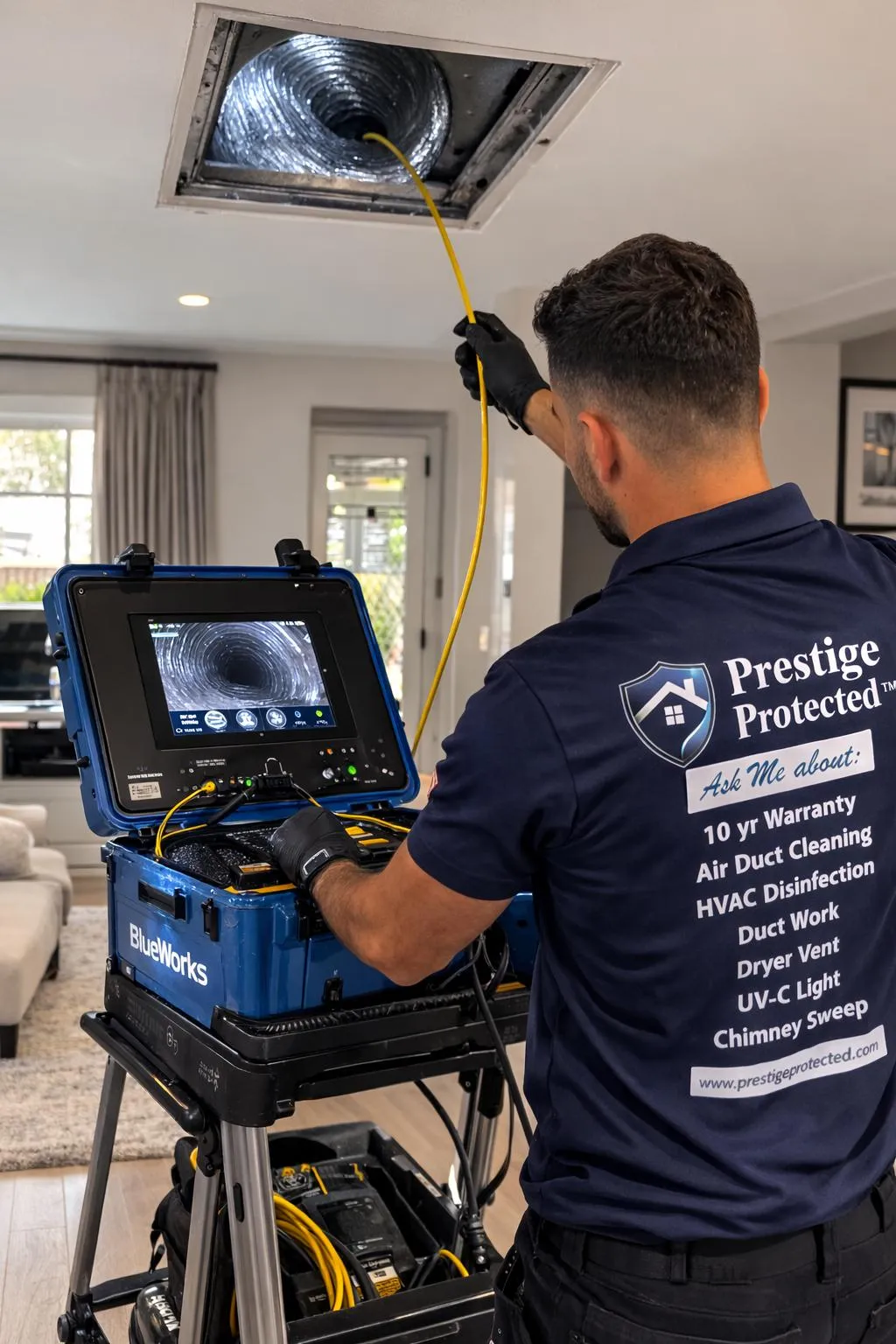
An inspection is a diagnosis, not a sales visit. The whole point is to find out whether you need work at all, which means the honest outcome of some appointments is a set of photos, a written summary and no recommendation to buy anything.
What this inspection is, and what it is not
- It is an air-side condition report. We look at the ductwork, the registers and returns, the filter and its fit, the coil, the drain pan, the blower compartment and the dryer vent, and we photograph what we find.
- It is not a repair visit. We do not carry refrigerant, we do not diagnose compressors and we do not touch the electrical. Those are jobs for a licensed HVAC contractor, and if that is what your findings point to, we will say so.
- It is not a home inspection. A real estate home inspection covers the whole house to a defined standard. Ours goes far deeper on one system and produces camera photos of the duct interior, which a general home inspection almost never includes.
- It is not a duct sealing or replacement quote. We do not sell either service, which is exactly why our opinion on whether your ductwork is failing is worth something.
- It is not free. We charge for the time, and we would rather tell you that up front than bury the cost in work you did not need. What you get for it is evidence.
What the camera actually shows you
This is the part people find most useful, and the part most quotes skip. A camera on a flexible rod goes in at a supply register and again at the return, and the footage answers questions that guesswork cannot.
At the register you see the first few feet of the branch run, which is where a house tells on itself: grey settled film in an ordinary home, hair mats in a house with pets, drywall dust and insulation offcuts in a newer build, and daylight or attic insulation where a flex run has torn loose. Further in you can see whether the interior lining is intact, whether a run is kinked or crushed behind a joist, and whether there is standing debris in the bottom of a trunk line.
At the coil and drain pan you get the answer to the smell question, because a wet coil carrying organic material and a pan holding sludge look nothing like a clean one on camera. And at the dryer vent, a camera down the run shows whether the restriction is a soft lint plug you can clean out or a crushed, disconnected or badly routed line that cleaning will not fix. That difference is the whole subject of our cleaning versus replacement guide.
You keep every photo. If the next contractor tells you something different, you have your own record.
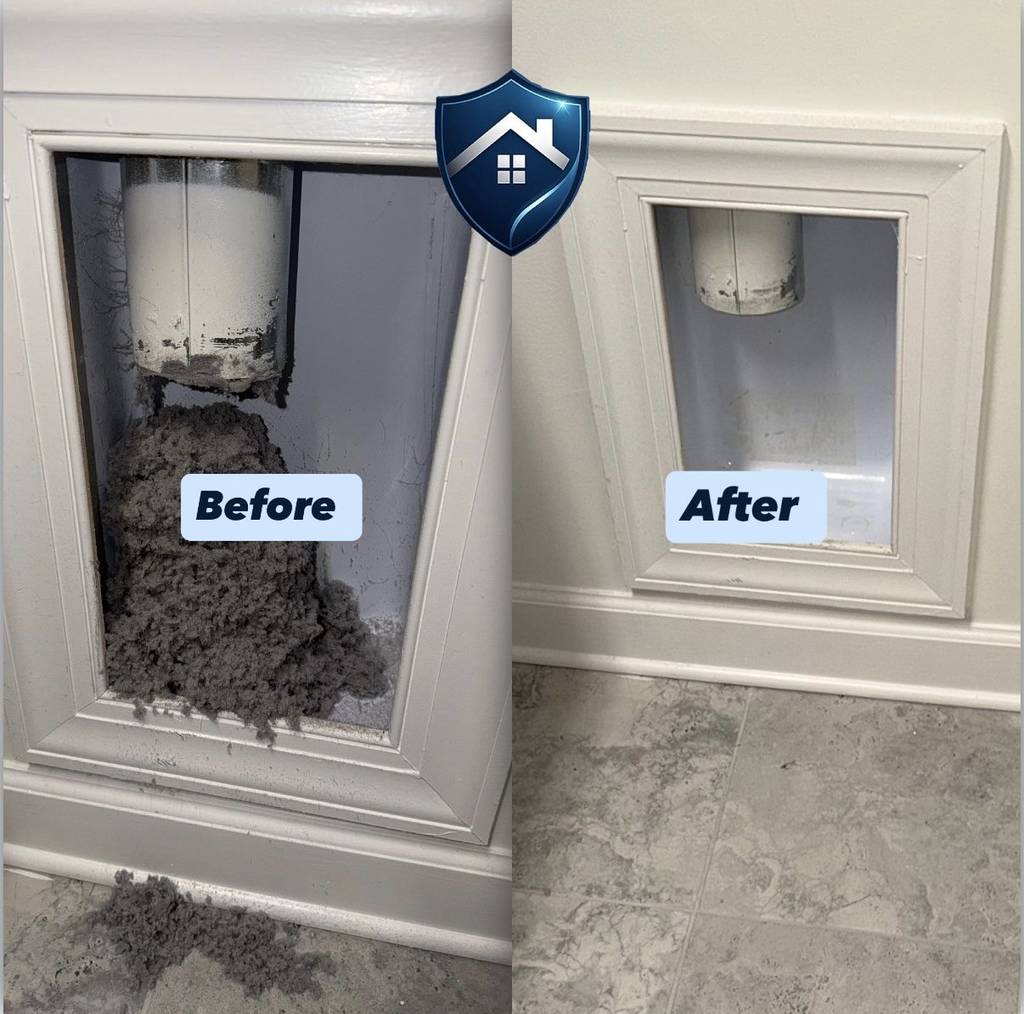
Five findings that come up most often in Triangle homes
- A filter that does not fit its frame. The most common finding by a wide margin, and the cheapest to fix. A finger-width gap at the edge of the filter sends unfiltered air straight to the coil, which is why the coil is dirty in a house where the filter gets changed religiously.
- A dryer vent disconnected or crushed in the attic or crawlspace. Hot, wet, lint-laden air discharging into the structure instead of outside. Homeowners almost never find this themselves because the dryer still runs; it just takes forever. It is common enough that it has its own page on disconnected attic vents.
- Sagging or torn flexible duct in a crawlspace. A run that dips into a belly loses airflow to the rooms at the end of it, and a torn liner turns the crawlspace into part of your return path.
- A condensate pan or drain that is not draining. Standing water in the pan is a real problem and a mold risk. The EPA notes water-damaged areas and items should be dried within 24 to 48 hours to prevent mold growth, and a pan that never dries is damp permanently.
- Construction debris in a house under about five years old. Drywall sanding dust, sawdust and insulation offcuts left in runs that were open during the build. If your new house has a fine grey dust on the furniture that keeps coming back, this is usually why, and our new construction page covers it in detail.
When to book, and which season
The ENERGY STAR maintenance checklist recommends a professional check-up at least once a year, and the practical timing here is a shoulder season: spring before the cooling load arrives, or fall before the first heating night. Booking in the first genuinely hot week of June is the one thing to avoid, because that is when every HVAC contractor in Wake County is already behind.
Beyond the annual rhythm, there are five moments when an inspection pays for itself: right after you buy a house, right after any renovation that produced dust, when a bill jumps with no change in habits, when the air smells different, and before you agree to any quote for duct work. That last one is the most valuable use of this visit. The EPA is clear that duct cleaning has specific justifications, chiefly substantial visible mold, vermin, or ducts clogged with debris that is actually being released into the room, and an inspection is how you find out whether your house meets any of them before you spend money.
Last updated by the Prestige Protected service team.
More inspection questions
How long does an HVAC inspection take?
About 60 to 90 minutes for a typical single-system home. Two-system homes, common in Cary and North Raleigh, take closer to two hours.
Is the inspection just a way to sell me a duct cleaning?
No, and you can hold us to that. The photos belong to you, the findings are written down, and if the system does not need work we say so. We would rather be the company you call back in two years than one that pushed a job you did not need.
What happens if you find mold?
We document it in photos, explain where the moisture is coming from, and quote remediation separately in writing. Mold in ductwork almost always traces to a damp coil or a humidity problem, so fixing the source matters as much as removing the growth.
How often should the system be professionally checked?
ENERGY STAR recommends a professional check-up at least once a year, ideally before the cooling or heating season starts. Duct cleaning itself is condition-based per the EPA, many homes go years between cleanings.