
TL;DR: Quick Answer
Black streaks or dust around your air vents (sometimes called ghosting) are usually soot from candles, cooking, or a fireplace being pulled into the airflow, combined with a filter that is not catching it. It is not usually mold, but persistent dark growth in a damp spot should be inspected.
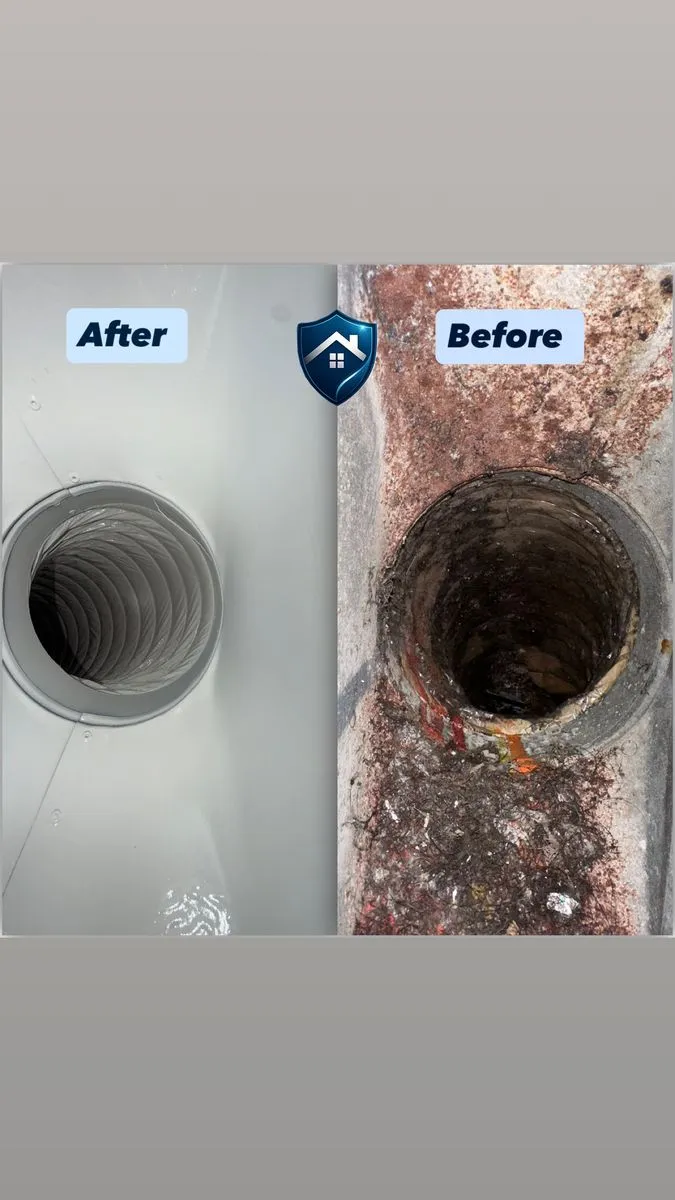
Black dust or streaks around your registers is usually “ghosting.” It happens when fine soot and dust particles are carried by airflow and deposited around vents, often where they meet the ceiling. Common sources are candles, cooking, fireplaces, poor filtration, and sometimes debris or mold inside the ducts themselves.
Common causes
- Soot from candles, cooking or a fireplace circulated by the HVAC system
- A low-quality or overdue air filter letting fine particles through
- Dust and debris inside the ducts being blown out at the registers
- Mold around vents in humid conditions (dark, sometimes fuzzy spots)
How to fix it
- Upgrade to a higher-quality pleated filter and replace it on schedule
- Burn fewer paraffin candles; improve kitchen ventilation
- Have your ducts professionally cleaned to remove circulating debris
- If spots are mold rather than soot, have them assessed and treated
When to call a pro
If the marks keep returning after you change filters and reduce soot sources, the buildup is likely inside your system. Professional air duct cleaning removes it at the source, and sanitizing helps with odors. If you suspect mold, see mold in air ducts. The U.S. EPA emphasizes source control as the most effective way to improve indoor air.
Frequently asked questions
Is black dust around vents mold?
Not always. Most black “ghosting” is soot and dust. Mold tends to look fuzzy or greenish-black and appears in humid areas, if in doubt, have it assessed.
Will cleaning my ducts stop the black marks?
If the source is debris inside the ducts, yes. If it’s candles or a poor filter, you’ll also need to address those to keep it from returning.
Ghosting vs. mold: how to tell the difference
Ghosting is fine black particulate that settles on and around registers where air moves fastest. It usually comes from soot: burning candles, gas cooking, a fireplace, or even scented oil warmers. The particles are tiny and get pulled toward the vents, then stick to the slightly cooler grille. Mold, by contrast, tends to appear as fuzzy or slimy growth in a consistently damp spot and often carries a musty smell.
How to fix and prevent it
Start with the source: burn fewer candles, use lids and the range hood when cooking, and make sure the fireplace is drafting properly. Then upgrade filtration. ENERGY STAR recommends checking your filter monthly and replacing it at least quarterly; a higher-rated filter captures more of the fine soot that causes ghosting. Cleaning the registers and, if the buildup is heavy inside the ducts, a professional duct cleaning removes what has already accumulated.
Is the black dust dangerous?
Soot is fine particulate, and the EPA notes that indoor air can carry more particulate than people expect given that we spend most of our time inside. Reducing the source and improving filtration is the practical response. If the dark material is in a damp area and looks like growth rather than dust, have it inspected for mold.
Will duct cleaning stop the ghosting?
Cleaning removes the buildup already in the system, but ghosting returns if the soot source and filtration are not addressed. Fix the source, improve the filter, then clean. See our Raleigh air duct cleaning page for how the process works.
A simple checklist to track down the source
Work through the likely soot sources one at a time: note how often you burn candles or incense, whether you cook on gas without running the range hood, and how often the fireplace is used. Look for the darkest staining near the highest-airflow vents, which points to particulate in the airstream rather than a duct problem. Check the age and rating of your filter. Addressing the source and the filter together usually clears the ghosting for good, and a one-time cleaning removes what has already built up inside the system.
Seeing black marks at your vents?
We’ll find the source and clean it out, ask us for an inspection.
Where the soot is actually coming from
Ghosting needs two ingredients: fine airborne particles, and a temperature difference at the wall or ceiling surface that makes them stick. You can rarely change the second one, so the fix is finding and removing the source of the first. In Raleigh and Cary homes, these are the usual suspects, roughly in order of how often they turn out to be the answer.
- Candles. The most common single cause, and the most underestimated. Jar candles with a long wick soot heavily, and a scented candle burned a few evenings a week in the same room will mark that room's vents within a season.
- Cooking oils and frequent high-heat cooking, especially in an open-plan kitchen with a weak or unvented range hood. The particles are greasy, which makes them stick harder and pick up more dust.
- A gas fireplace or gas appliance that is not burning cleanly. Worth taking seriously, because incomplete combustion is a safety issue in its own right, not just a cosmetic one.
- Filtration that is too low-grade, or a filter bypass. A cheap filter passes fine particles straight through. A filter that does not seal in its slot lets air go around it entirely, which is worse than a cheap filter fitted properly.
- Printers, laser toner, and heavy incense use, which produce very fine particles that behave the same way soot does.
One diagnostic shortcut: if the marks are worse in one or two rooms rather than uniform across the house, the source is in those rooms. If they are even everywhere, look at filtration and at anything running whole-house, like a fireplace.

The filter question, in specifics
Fixing ghosting usually means capturing finer particles than your current filter catches, without choking the blower. Two rules keep you out of trouble. First, seal matters as much as rating: if air can slip around the edge of the filter, its rating is irrelevant. Second, going too restrictive on a system that was not designed for it starves the blower and creates a new problem, so step up gradually and watch for longer run times or a colder-than-normal supply.
Then keep it clean. ENERGY STAR recommends inspecting, cleaning or changing the filter once a month and notes that keeping filters clean can lower an air conditioner’s energy consumption by 5 to 15 percent, a U.S. Department of Energy figure. A loaded filter is both a filtration problem and an airflow problem at the same time.
The order to do things in
Sequence matters, because cleaning first and fixing the source second means paying twice.
- Find and stop the source. Move the candles, fix the range hood, have the gas appliance checked.
- Fix filtration: right rating, properly sealed in the slot, on a replacement schedule.
- Then clean the system, so the buildup already inside it is removed rather than recirculated. See air duct cleaning in Raleigh for how that process runs.
- Finally, clean the walls and ceilings around the registers. Do this last, because touching up before the source is fixed just gives the soot a fresh surface.
If the marks turn out not to be soot at all, our guides on mold in air ducts and musty smells from vents cover the moisture side, and why your house is so dusty covers the general-dust case.
More questions about black marks at vents
Why is it only around some vents and not others?
Because the source is local to those rooms, or because those particular registers sit on a colder surface. Uneven marking is useful information: start looking in the rooms that are worst.
Can I just paint over it?
You can, and it will come back on the fresh paint if the source is still there. Clean the marks with a dry sponge first, since wiping wet can smear greasy soot into the surface.
Does a gas fireplace cause this?
It can, and it is the one cause on this list worth checking promptly. Soot from a gas appliance suggests incomplete combustion, which is a safety matter. Have it serviced rather than just cleaning the walls.
Would an air purifier solve it?
A portable unit only treats the room it is in and does nothing about what the ducts recirculate. Fixing the source and the filter does more. Our comparison of duct cleaning versus air purifiers covers where each one actually helps.
How long before the marks come back after everything is fixed?
If the source is genuinely gone and filtration is right, they should not return. If they reappear within a few months, the source was not what you thought it was.
Related guides
- Mold in air ducts, how to tell mold from ordinary soot
- Why the whole house is dusty, if the marks are not confined to the vents
- A musty smell from the vents
- Air quality testing, to measure rather than guess
- Air duct cleaning