
Dryer Vent · DIY Guide
You can clean a dryer vent yourself with a vent-brush kit and a vacuum: unplug the dryer, disconnect it, brush out the duct from both ends, and clear the exterior vent. But long runs, rooftop vents, or heavy blockages are safer and more effective for a pro. Here’s the step-by-step, and when to call one.
Reviewed by the Prestige Protected Team · Updated June 2026 · Cary, Raleigh & the NC Triangle
TL;DR (quick answer): A short, straight dryer vent can be cleaned yourself with a drill-powered brush kit and a vacuum: unplug the dryer, disconnect the hose, brush the duct from both ends, clear the exterior hood, then run an air-only cycle to confirm strong airflow. Call a professional for long or second-story runs, roof vents, zero airflow, or if clothes still dry slowly afterward, the lint you cannot reach is the lint that starts fires.
DIY dryer vent cleaning, step by step
- Unplug the dryer (and shut off gas if applicable).
- Pull the dryer out and disconnect the transition hose from the wall duct.
- Use a dryer-vent brush kit on a drill to brush the duct from the inside.
- Go outside and clear the exterior vent flap; brush from that end too.
- Vacuum loosened lint from both ends, reconnect, and run the dryer on air-only to confirm strong airflow.
When to hire a professional
Call a pro if your vent run is long or has many bends, exits through the roof or a second floor, shows no airflow at all (possible bird nest or blockage), or if drying problems persist after a DIY attempt. Professionals use rotary tools and airflow testing to clear the entire run safely.
Don’t skip it: it’s a safety issue
However you do it, keep the vent clear. The U.S. Fire Administration identifies failure to clean as the leading factor contributing to the ignition of home clothes dryer fires. For frequency, see how often to clean your dryer vent.
The four places lint actually collects
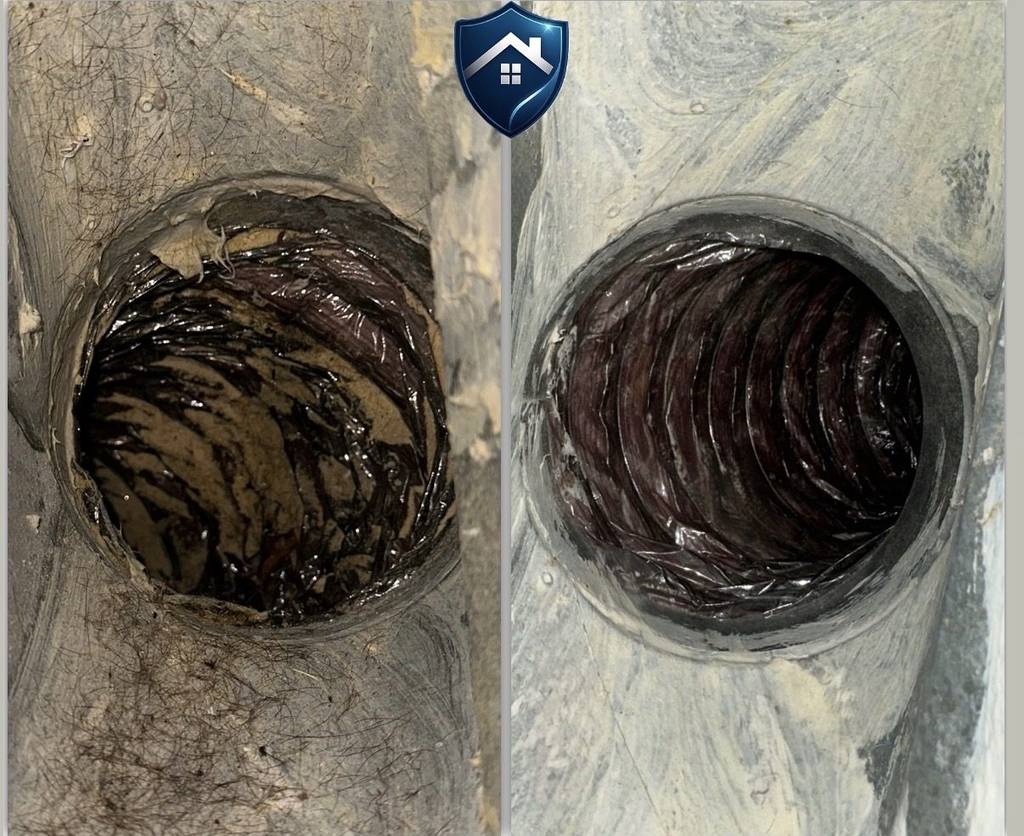
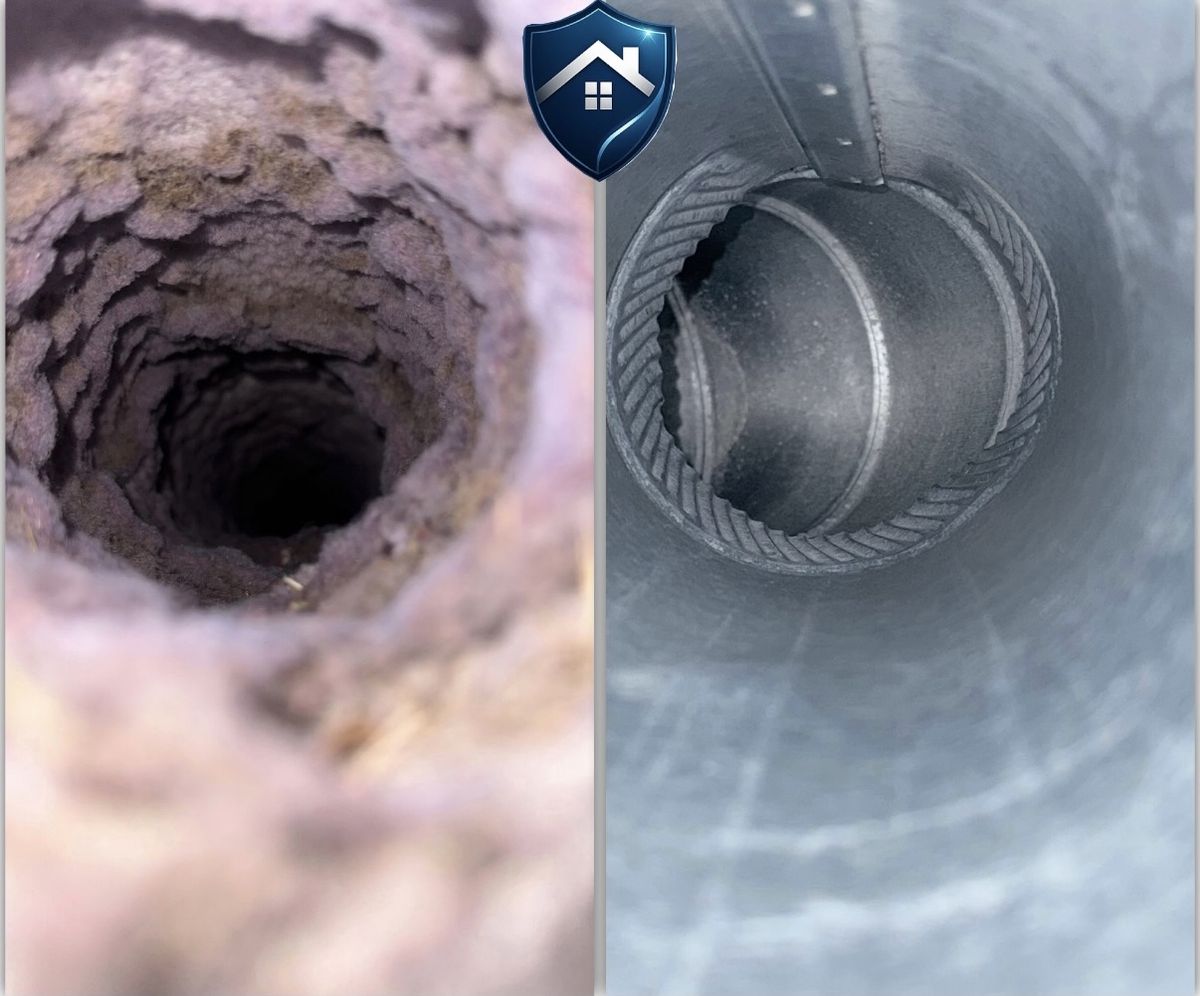
A vent line does not fill up evenly, which is why a run can look clear from both ends and still be badly restricted. In the jobs we do around Cary and Raleigh, the lint is nearly always in one of four places, and only two of them are reachable with a hand brush.
- The transition duct behind the machine. The flexible piece between the dryer and the wall. If it is crushed behind the dryer, or if it is the old white plastic or thin foil type, this is both the most common restriction and the most common fire path. Reachable.
- The first elbow. Air turns, lint does not. There is almost always a ridge of packed lint on the outside of the first bend. Reachable with a brush if the bend is close to the wall.
- The middle of the run, especially at a sag. Flexible duct that dips between joists forms a low spot, and a low spot collects both lint and condensation. This is the plug that hand kits miss, and it is the reason a vent that felt fine from both ends still needed two cycles.
- The exterior hood. A flap that has been painted over, a screen someone added, or a bird nest. We find nests often enough in spring that it is worth checking before anything else.
Tools that work, and tools that waste an afternoon
| Tool | What it is good for | Where it stops |
|---|---|---|
| Shop vacuum with a crevice tool | The lint trap housing and the first foot or two of duct | Loses suction almost immediately past a bend |
| Flexible brush kit, hand turned | Straight runs up to about six feet | Will not negotiate two elbows |
| Brush kit on a drill | Faster on the same six feet | Rods unscrew under reverse torque and the head is left in the duct |
| Leaf blower at the exterior hood | Loose surface lint only | Cannot move a compacted plug, and it can pack it tighter |
| Rotary equipment with vacuum collection | The full run, elbows included, with the debris captured | This is the professional tier, not a rental-counter job |
| Anemometer or airflow gauge | Proving the run is actually clear afterwards | No substitute for it, guessing does not work |
What the code expects of the duct you are cleaning
While the dryer is pulled out you can check the duct against the residential code, which is worth doing once because a duct that does not meet it will not stay clean whatever you do. Section M1502 of the International Residential Code, the model code North Carolina builds from, calls for exhaust ducts of smooth-wall rigid metal with the joints running in the direction of airflow, no screws or fasteners that project into the duct, and a maximum developed length of 35 feet with deductions taken for each bend. Flexible transition duct between the appliance and the wall is expected to be listed to UL 2158A, no longer than eight feet, and it must not be concealed inside construction. Plastic and thin foil accordion hose fails all of that.
Two practical consequences. First, screws through a duct are lint hooks, so if you find them, that section wants replacing rather than brushing. Second, if your total run plus its bends puts you past 35 feet, the run is not code compliant and cleaning it is maintenance on a problem rather than a fix. We handle dryer vent repair and replacement for exactly that case.
The safety case, in the numbers rather than the adjectives
An estimated 2,900 clothes dryer fires in residential buildings are reported to U.S. fire departments each year and cause an estimated 5 deaths, 100 injuries, and $35 million in property loss.
U.S. Fire Administration, topical report on clothes dryer fires in residential buildings, 2008 to 2010 data, read the report (PDF)
The same report identifies failure to clean as the leading factor contributing to ignition, at 34 percent of those fires, and dust, fiber and lint as the first item ignited in 28 percent of them. The U.S. Fire Administration puts the more recent figure at 31 percent for homes from 2018 to 2020. Whichever set you use, the leading factor is the one thing a homeowner fully controls. That is the honest reason to do this job properly rather than quickly.
Related reading: how often to clean a dryer vent, the signs of a clogged vent, why a dryer takes too long to dry, and our dryer vent cleaning service.
If you would rather not do the roof or the long middle section yourself, see Cary or Raleigh dryer vent cleaning.
Frequently asked questions
Can I clean my dryer vent myself?
Yes, with a vent-brush kit and vacuum for a standard, accessible vent. Long, rooftop, or fully blocked vents are safer for a professional.
How do I know it worked?
Run the dryer on an air-only cycle and check for strong airflow at the exterior vent. Clothes should dry in a single cycle again.
How often should I clean my dryer vent myself?
Clean the lint screen every load, and do a full vent cleaning about once a year, the interval fire-safety agencies recommend. Households that dry daily, have pets, or have a long vent run should check more often.
Can I clean a dryer vent with a leaf blower?
We do not recommend it. A blower can compact lint at elbows instead of removing it, blow the joint connections apart inside a wall, or damage flexible duct. A brush kit plus a vacuum is slower but safer and more effective.
How do I know my DIY cleaning actually worked?
Run the dryer on air-only and feel the airflow at the exterior hood, it should be strong enough to flutter a sheet of paper from a foot away. Clothes drying in one cycle again is the other confirmation. If drying times stay long, the blockage is deeper than the brush reached.
Is DIY different for a gas dryer?
Yes. Shut off the gas valve before moving the machine, avoid straining the flexible gas connector, and reconnect carefully. If you are not comfortable moving a gas appliance, have a professional handle the vent, the cleaning itself is the same, but the moving risk is not.
What tools do I actually need?
A screwdriver, a shop vacuum, a flexible lint brush kit long enough to reach past the first bend, and a torch. That is the whole list. The brush kits sold for drill use will get you three to six feet of a straight run. They will not get round two elbows, and they will not clear a compacted plug in the middle of a long run, which is the exact situation that makes clothes take two cycles.
How long should a DIY dryer vent cleaning take?
Budget an hour for a short ground-floor run and expect to spend most of it moving the dryer and putting the connection back together properly. If you are still working after ninety minutes, or if the brush will not pass, that is the point to stop rather than push harder. A brush head that comes off inside a duct turns a cleaning job into a repair job.
Is there anywhere I should not put a vacuum or a brush?
Do not run a brush up into the exterior hood from the inside if the hood is on a second story, and do not force anything past a joint that feels loose. Both are how ducts come apart inside a wall. If the run is concealed and you cannot see both ends, that is the case for equipment that measures airflow rather than guesses.
Does a longer vent run need cleaning more often?
Yes, and more than people expect. A long run moves air more slowly, and slower air drops more of its lint load along the way. Second-floor laundries that exit through the roof are the worst of it, because they are long, they are vertical, and nobody ever looks at the termination. Once a year is the floor for those, not the ceiling.
Talk to a Triangle specialist
FAQ & related
Sources: U.S. Fire Administration, Clothes Dryer Fires in Residential Buildings (2008 to 2010 data) and Appliance and Electrical Fire Safety.
Safety first: before you touch anything
- Unplug the dryer before pulling it away from the wall. For gas dryers, also shut the gas valve and move the machine gently, a strained gas connector is a bigger hazard than a linty vent.
- Never run the dryer with the vent disconnected indoors. An electric dryer will fill the room with lint; a gas dryer will exhaust combustion gases into your home.
- Wear a dust mask. Compacted lint comes out as a fine cloud, and older ducts also hold ordinary house dust and pest debris.
- Check the transition hose while you are back there. If it is white vinyl or badly crushed foil, replace it, rigid or semi-rigid metal is the safe standard.
The exterior hood matters as much as the duct
Half the clogged vents we open up in the Triangle fail at the last twelve inches. The exterior flap gets painted shut, blocked by a pest screen packed with lint, or nested in by birds in spring. After brushing the duct, go outside, open the flap by hand, and run the dryer on air-only: you should feel a strong, steady stream. Weak airflow at the hood with a freshly brushed duct usually means a blockage at a bend you cannot reach, see our guide to common dryer vent problems.
What a professional does that a brush kit cannot
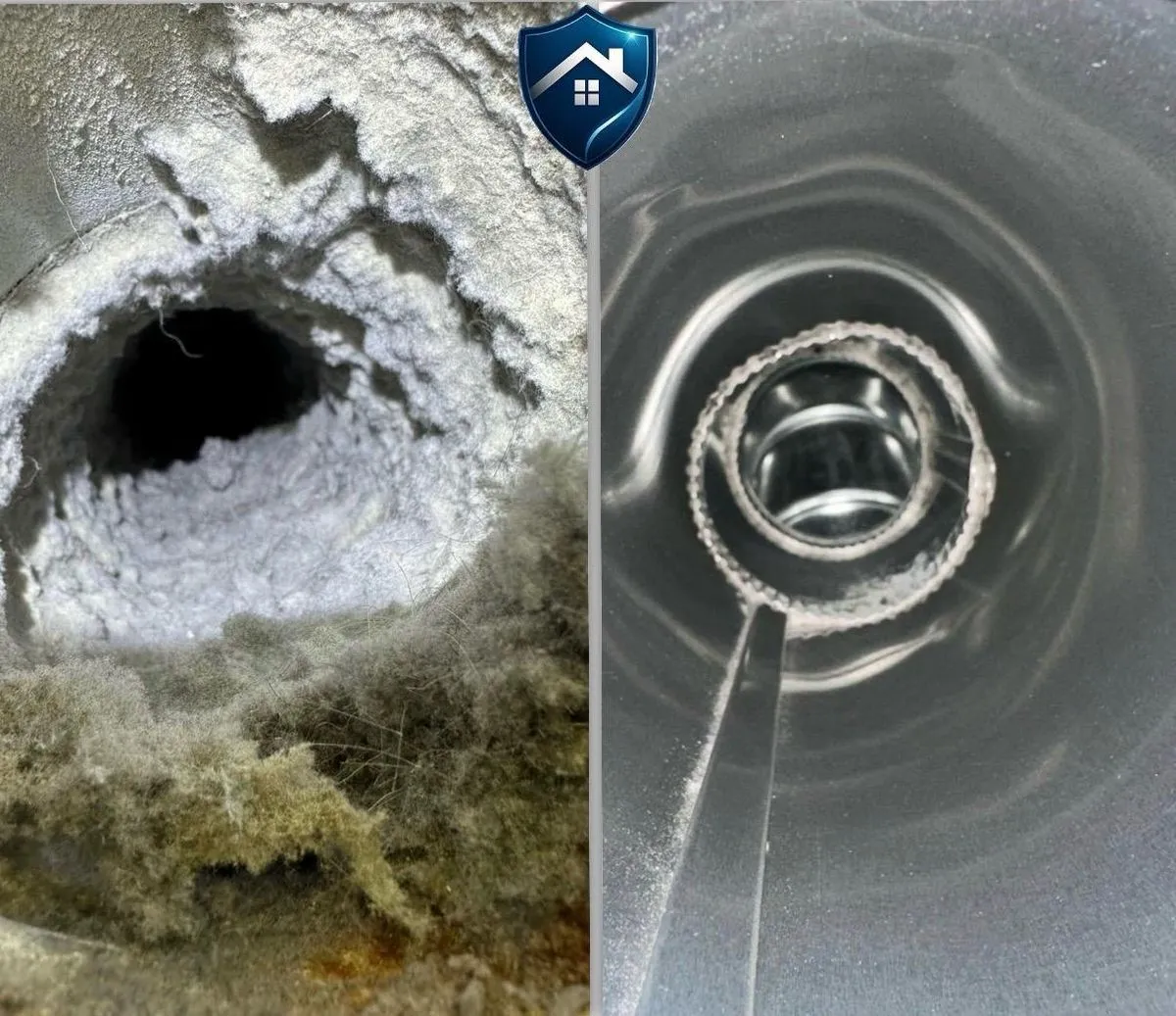
A drill brush cleans the few feet it can reach from each end. Professional rotary equipment cleans the entire run, every bend, vertical rise and rooftop termination, while a vacuum captures the lint, and airflow is measured before and after so the result is verified rather than assumed. That difference matters because of how these fires start: the U.S. Fire Administration reports roughly 2,900 home clothes dryer fires each year, and failure to clean the dryer is the leading contributing factor. If your run is long, rises to a second floor or roof, or your dryer still underperforms after a DIY pass, have it done properly, here is what our dryer vent cleaning includes and what it costs. Not sure yet? Check the signs of a clogged vent and how often cleaning is due.
Last updated by the Prestige Protected service team.