
TL;DR (quick answer): Have your dryer vent cleaned at least once a year, every six months if you have a large household, shedding pets, or a long or vertical vent run. This is a fire-safety schedule, not just an efficiency one: the U.S. Fire Administration reports about 2,900 home clothes dryer fires each year, and failure to clean the vent is the leading contributing factor.
Dryer Vent Cleaning · Maintenance
You should have your dryer vent cleaned at least once a year. Clean it more often, every 6 months, if you have a large household, do frequent loads, own pets, or have a long or winding vent run. The biggest reason isn’t just efficiency: a lint-clogged vent is the leading contributing factor in dryer fires. Here’s how to know when yours is due.
By the Prestige Protected Team · Updated August 2026 · Cary, Raleigh & the NC Triangle
How often should you clean your dryer vent?
- Most homes: once a year.
- Large/active households, pets, or long vent runs: every 6 months.
- Sooner if you notice warning signs (below), don’t wait for the calendar.
Signs your dryer vent needs cleaning now
- Clothes take more than one cycle to dry
- The dryer or laundry feels very hot, or there’s a burning smell
- Lint visible around the dryer or vent opening; the lint trap fills fast
- It’s been more than a year since the last cleaning
More detail: signs of a clogged dryer vent and dryer vent fire risk & prevention.
A schedule by household, not a single number
Once a year is the right default and it covers most homes. What actually sets the interval is how much water goes through the machine and how hard the line is for the lint to get out of. Find yourself on this table rather than averaging.
| Household | Interval | Why |
|---|---|---|
| One or two people, short ground-floor vent run | Every 12 months | Low load count, easy exit path |
| Family of four or more | Every 6 to 12 months | Load count is the single biggest driver |
| Pets that shed indoors | Every 6 months | Hair binds with lint and packs tighter than lint alone |
| Second-floor or roof-terminated laundry | Every 6 to 12 months | Long vertical run, slower air, nobody inspects the termination |
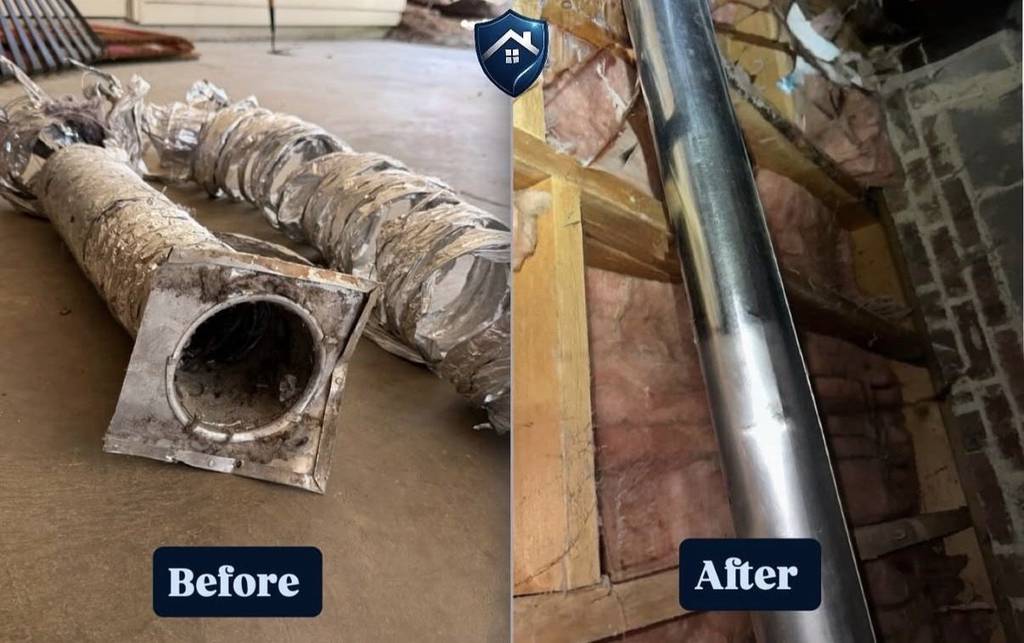
| Vent run longer than about 25 feet, or three or more bends | Every 6 months | Each bend is a deposition point |
| Shared or stacked vent in a condo or townhome | Every 6 months, ideally building wide | One blocked branch affects the stack |
| Rental property | At every turnover, plus annually | No visibility into usage or reported symptoms |
| Anyone with allergies or asthma in the house | Every 6 months | Lint escaping at the machine adds to indoor particle load |
How to tell you are overdue without opening anything
You do not need to pull the machine out to know. Three checks, five minutes, no tools.
- Time one load. A normal mixed load should be dry in roughly 35 to 50 minutes. If that has crept up over the last few months, the line is filling.
- Feel the outside hood while the dryer runs. Steady warm push and a flap held wide open is healthy. A weak trickle is not.
- Put a hand on the dryer casing and the laundry room wall. Heat that used to leave the building and now warms the room is heat that is not carrying moisture out.
If two of those three read badly, you are past due regardless of the date on the last invoice. If all three read fine and it has been eleven months, you are on schedule and there is no urgency.
Why the interval matters more than the technique
An estimated 2,900 clothes dryer fires in residential buildings are reported to U.S. fire departments each year and cause an estimated 5 deaths, 100 injuries, and $35 million in property loss.
U.S. Fire Administration, topical report on clothes dryer fires in residential buildings, 2008 to 2010 data, read the report (PDF)
The same report names failure to clean as the leading factor contributing to ignition, at 34 percent, and the agency's current guidance puts it at 31 percent for homes from 2018 to 2020. Both readings say the same thing: this is a maintenance interval problem rather than an equipment problem. A line cleaned properly once a year does not get to the state that shows up in those statistics. A line cleaned brilliantly once every five years does.
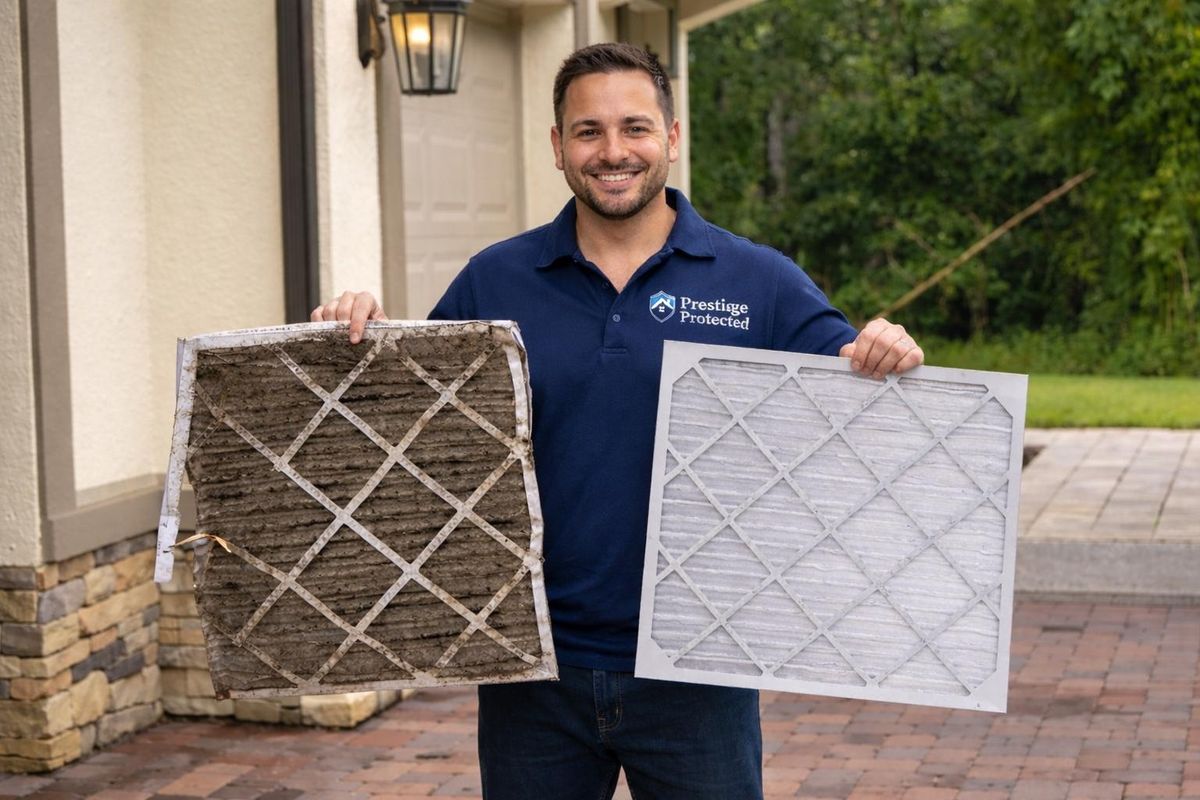
One more thing that belongs on the same calendar. ENERGY STAR's do-it-yourself instruction for a heating and cooling system is to inspect, clean or change air filters once a month, and airflow problems can reduce a system's efficiency by up to 15 percent. Filters monthly, dryer vent annually, ducts when the inspection says so, and you have covered the airflow side of the house.
Related: the signs a vent is clogged, why a dryer takes too long to dry, how to clean a dryer vent yourself, dryer vent fire risk, and booking in Raleigh or Cary.
Ready to book one? Cary and Raleigh dryer vent cleaning.
Frequently asked questions
What happens if you don’t clean your dryer vent?
Lint buildup restricts airflow, makes the dryer overheat, lengthens drying time, and significantly raises the risk of a dryer fire. The U.S. Fire Administration reports roughly 2,900 home dryer fires a year, most caused by failure to clean.
Is cleaning the lint trap every load enough?
No, and this is the most dangerous misconception in dryer safety. The trap catches most lint, but a portion passes through on every cycle and settles in the duct. The trap protects the dryer; the annual vent cleaning protects the house.
What time of year should I schedule a dryer vent cleaning?
Late summer or early fall is ideal. Dryer fires peak in fall and winter when the machine works hardest, so going into the heavy season with a clear vent is the best timing. Practically, though, the right time is whenever it has been more than a year.
Can I clean the dryer vent myself?
You can handle the trap, the area behind the dryer, and a short straight run with a brush kit. Long runs, vertical sections, roof or second-story terminations, and older accordion-style ducting are where DIY kits stall or pack lint tighter, see our honest DIY vs professional guide.
Where does the once-a-year figure actually come from?
It is not written into a code or a federal standard, which is worth saying plainly. It comes from appliance manufacturers' own maintenance instructions, from insurers, and from the fire-service data showing failure to clean as the leading contributing factor in dryer fires. Once a year is the interval at which a normal household's vent does not reach a restriction that changes cycle times. Heavier use gets there sooner.
Does a condenser or ventless heat-pump dryer need this?
It has no vent line, so there is nothing to clean out to the exterior, but it is not maintenance free. Those machines have a lint filter and a condenser or heat exchanger that clogs with fine lint, and a blocked condenser produces exactly the same symptom of clothes not drying. Check the manual for the condenser cleaning interval, which is usually far more often than once a year.
Should a rental property be on a different schedule?
In practice, yes. A landlord has no visibility into how much laundry is being run or whether anyone has reported slow drying, and tenants very rarely report it. Booking the vent at turnover, plus once a year in between, removes the guesswork. It also gives you a dated record of the work, which matters if a claim is ever made.
What if I have just moved in?
Treat it as due. Vent cleaning almost never appears on a seller's disclosure or an inspection report, and a home inspector will note the presence of a dryer vent rather than its condition. The worst runs we clear are usually in houses that changed hands and nobody ever asked.
Related reading
Due for a cleaning? Book an inspection
What the safety data says
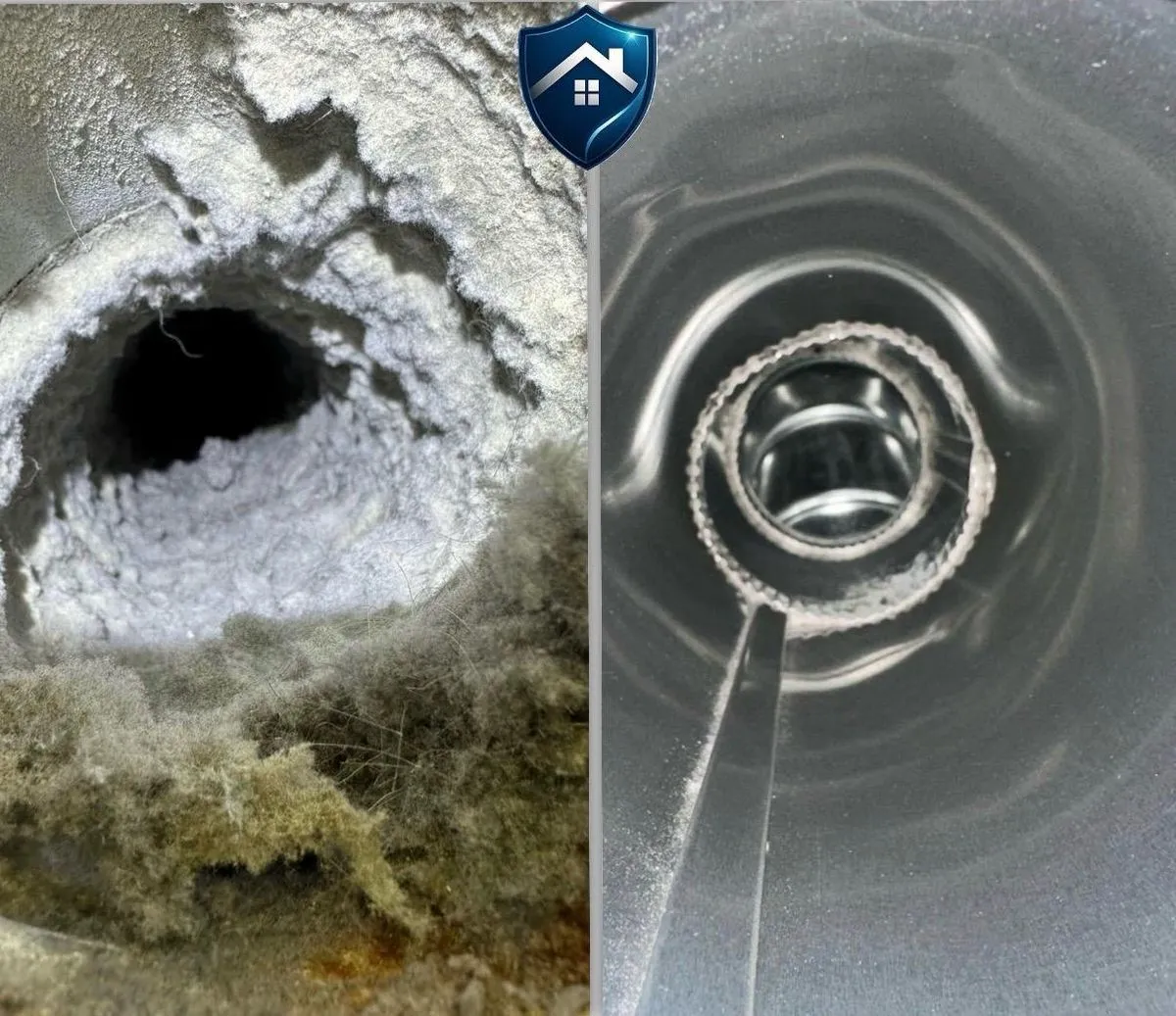
The once-a-year baseline is not a sales pitch, it comes from the fire data. The U.S. Fire Administration reports roughly 2,900 home clothes dryer fires each year, causing deaths, injuries and about $35 million in property loss, and identifies failure to clean the dryer as the leading factor. Lint is dense fuel sitting in a hot exhaust path: as it packs into the duct, airflow drops, temperatures climb, and the lint itself is what ignites. Fires also cluster in fall and winter, when dryers work hardest, which makes late summer and early fall the smart time to schedule.
What shortens the interval for your home
- Household size and laundry volume. A family doing eight loads a week generates lint at several times the rate of a one-person household.
- Pets. Fur that survives the lint trap ends up in the duct.
- Long or vertical runs. Common in two-story Triangle homes where the laundry room sits mid-house, more duct surface and more elbows for lint to pack into.
- Older flexible or foil ducting. The ridges trap lint far faster than smooth metal duct, if you have it, consider a transition hose replacement.
- Gas dryers. The schedule matters doubly, because a blocked vent can also back combustion gases into the home.
What a professional cleaning includes
A proper cleaning covers the full path: the transition hose behind the dryer, the entire duct run to the outside, and the exterior hood and flap, verified with an airflow check at the end. We clean from both ends with a rotating brush and high-powered vacuum, and we tell you honestly what condition the duct is in. If the cleaning reveals crushed sections or disconnected joints, we do repair and replacement too. See a real example on our North Raleigh (27615) job page, or check what a cleaning costs. We serve Cary, Raleigh and the wider Triangle.
Last updated by the Prestige Protected service team.