Commercial Services
Commercial air duct cleaning keeps offices, retail spaces, restaurants, medical suites, and multi-unit buildings healthier, more efficient, and easier to keep compliant. Larger rooftop systems, more occupants, and indoor-air expectations make commercial work different from residential. Prestige Protected serves businesses across the NC Triangle.
Reviewed by the Prestige Protected Team · Updated June 2026 · Cary, Raleigh & the NC Triangle
Quick answer
Commercial air duct cleaning covers the larger rooftop units, long trunk runs and shared returns that offices, retail spaces, restaurants and medical suites rely on. We schedule around your business hours, evenings and weekends included, and every job starts with a camera inspection and ends with before-and-after photos and a written report you can keep on file.
Who needs commercial duct cleaning?
- Offices and coworking spaces (occupant comfort & IAQ)
- Restaurants and food service (grease, odor, code)
- Medical and dental offices (air-quality standards)
- Property managers & multi-unit buildings
- Retail, schools, and gyms
Benefits for your business
Clean commercial ductwork improves indoor air quality for staff and customers, helps the HVAC system run efficiently (lower energy costs on larger systems), reduces odors and dust complaints, and supports compliance and tenant satisfaction. We work around your hours, including after-hours and weekends, to avoid disrupting operations.
What’s involved
Commercial jobs typically involve larger rooftop units (RTUs), longer duct runs, and coordination with your facilities team. We inspect first, scope the work, and follow the source-removal method the EPA describes. Ask for a commercial quote tailored to your building.
Talk to a Triangle specialist
FAQ & related
Frequently asked questions
How often should commercial ducts be cleaned?
It depends on occupancy and use, many offices every 2–3 years, restaurants and high-traffic spaces more often. We’ll recommend an interval after inspecting.
Do you work after hours?
Yes. We schedule commercial cleanings around your operating hours, including evenings and weekends, to minimize disruption.
How commercial work differs from a house call
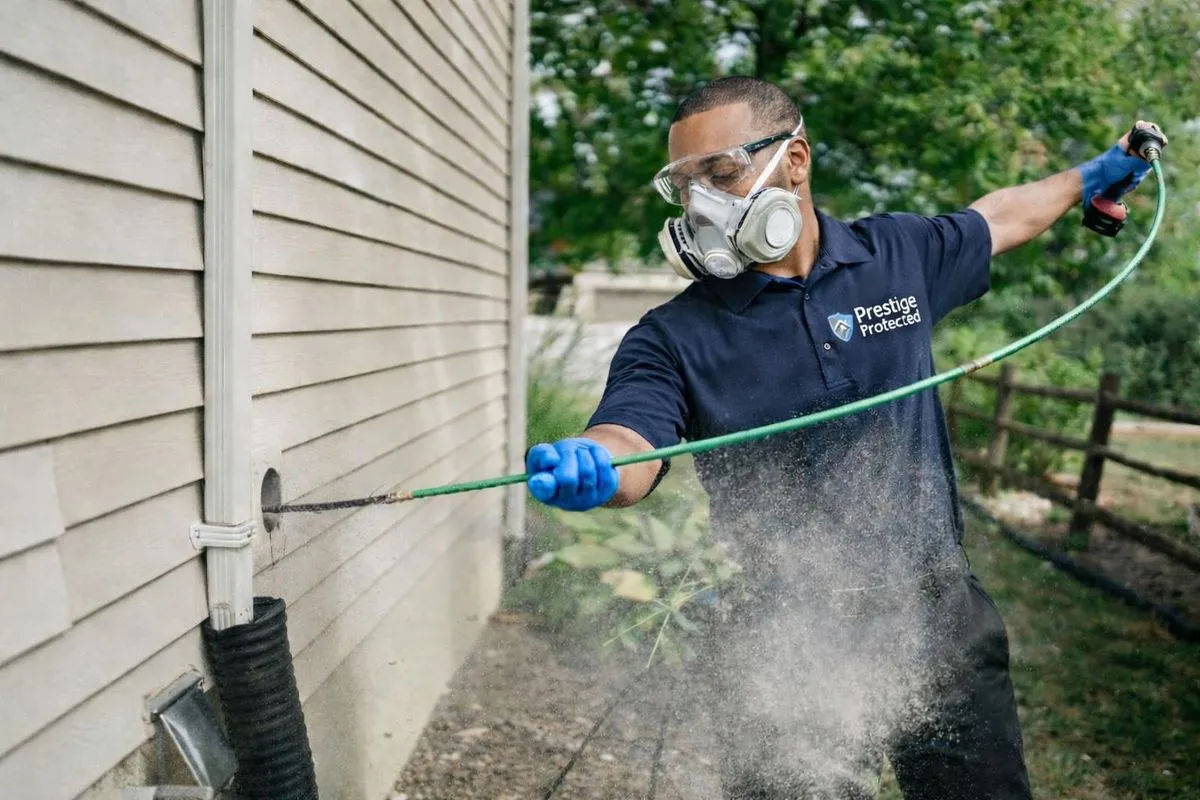
- Bigger equipment, longer runs. Rooftop units and long trunk lines need more containment and more access points than a home system, the inspection maps this before anything is quoted.
- Scheduling around occupancy. Most commercial jobs run after close or over a weekend so staff and customers never see the work, only the result.
- Documentation you can file. Every job ends with before-and-after photos and a written summary, useful for landlords, franchise inspections and facility records.
- One honest boundary: we clean the building’s HVAC ductwork, including the systems serving dining rooms and offices. Restaurant kitchen exhaust hoods are a separate, fire-code-regulated service we do not provide.
When a business should schedule duct cleaning
The EPA’s guidance for ducts is condition-based, and that applies doubly to commercial space: clean when there is visible buildup, microbial growth, pest evidence or renovation debris in the system, not on someone’s sales calendar. The common triggers we see in the Triangle: a tenant fit-out or renovation that filled the returns with drywall dust, persistent dust on desks and merchandise, musty odor complaints from staff, or a lease turnover where the incoming tenant wants a documented baseline. If air quality complaints are vague, indoor air quality testing pins down whether the ducts are actually the problem before you spend money on them.
What you receive
A camera inspection with photos of your own ductwork, an itemized written quote, the price is the price, and, after the work, before-and-after photos taken at the same spots plus a plain-English report. We are fully insured, and a certificate of insurance is available for your property manager on request. See how the cleaning process works, or our home pages for Raleigh and Cary.
Commercial work is a different job, not a bigger version of the same one. The equipment is on a roof, the occupants did not choose to be there, and somebody has to be able to show a record of the work afterward. Those three facts drive everything below.
Which kinds of Triangle businesses actually need this?
- Offices and professional suites. Dense occupancy, a rooftop package unit or two, and complaints that arrive by email rather than by phone. Stale air and visible register dust are the usual triggers.
- Retail and showrooms. Doors opening all day pulls in outdoor dust and pollen, and merchandise sitting under a dusty supply register is a sales problem as much as an air problem.
- Restaurants and food service. Grease-laden air migrates well beyond the cook line and coats return grilles and the dining room diffusers. To be clear about scope: we clean the building’s HVAC ductwork, not kitchen grease exhaust hoods, which is specialist fire-code work for a hood cleaning contractor.
- Medical, dental and veterinary suites. Higher expectations, more filtration, and a real need for documentation that the work was done and when.
- Salons, gyms and studios. Aerosols, humidity and heavy occupant turnover load a system quickly.
- Multi-unit residential and property management. Turnover cleanings between tenants, plus the dryer vents, which is where the liability sits.
- Warehouses, light industrial and schools. Large volumes, long trunk runs and often a decade or more since anyone looked inside.
How does commercial duct cleaning differ from a house call?
Five practical differences, and they are the reason a commercial quote is built differently from a residential one.
- The equipment is usually on the roof. Rooftop package units mean roof access, safety planning and often a longer path from the equipment to the point of work. It also means the return side frequently pulls through a ceiling plenum rather than dedicated ductwork, which changes what can be cleaned and how.
- The system does not stop. A house can be without conditioning for four hours. A restaurant or a medical suite often cannot, so the work is sequenced zone by zone rather than shutting everything down at once.
- Occupants have to be protected. Containment, negative pressure and HEPA capture are not optional niceties in an occupied building. Neither is protecting inventory, workstations and equipment under every register we open.
- Scale changes the method. Long trunk runs need access points, and a proper job means creating and then correctly sealing them where none exist. That is a planned part of the scope, not a surprise on the invoice.
- Somebody needs the paperwork. A property manager, a landlord, an insurer or a health inspector may ask what was done. Every commercial job we do ends with a written report, dated before-and-after photographs of the actual system, and the scope in plain language.
When should a business schedule the work?
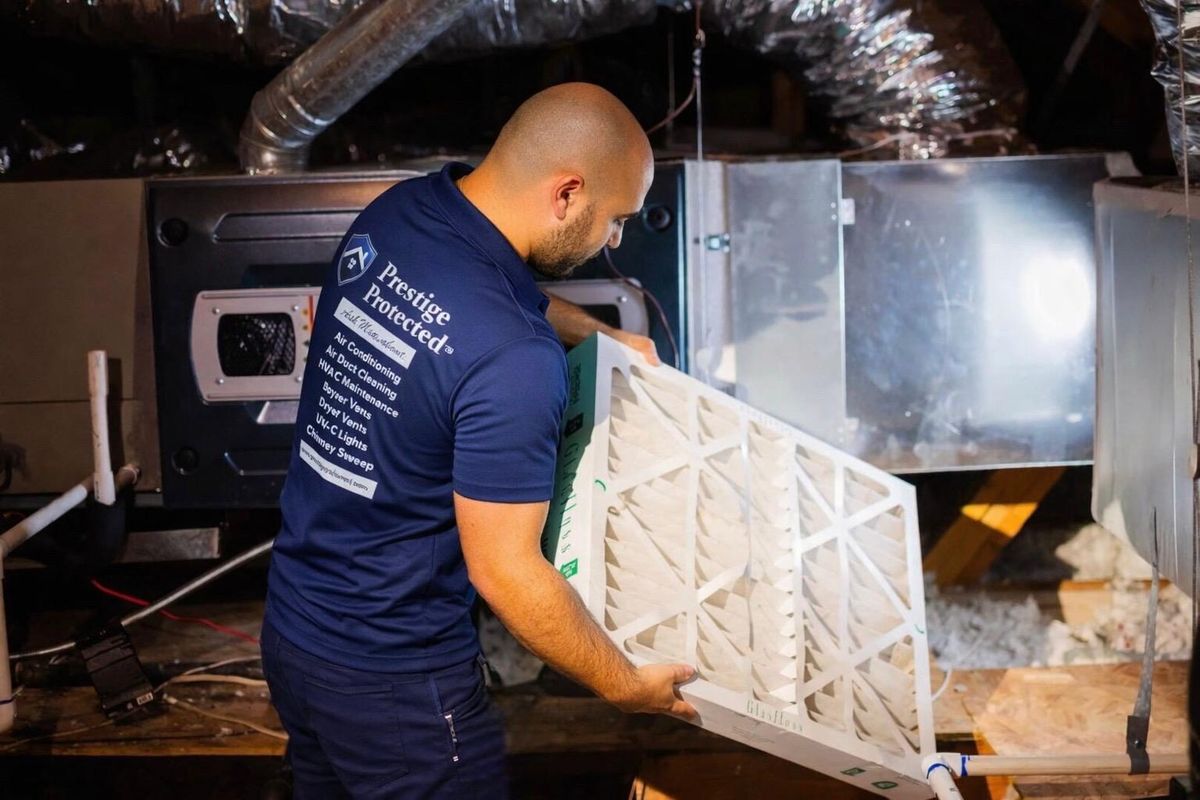
The honest answer is that there is no calendar interval that fits every building, and the U.S. Environmental Protection Agency takes the same position for exactly the same reason: cleaning should happen when there is a reason. The agency’s conditions are substantial visible mold growth inside the ducts or on system components, infestation by vermin, or ducts clogged with excessive dust and debris with particles actually being released into the space. Commercial buildings reach those conditions faster than houses because of occupancy, door traffic and the fact that nobody changes a rooftop filter on a homeowner’s schedule, but the test is the same.
Beyond the EPA conditions, these are the moments when scheduling makes obvious sense:
- After any construction, fit-out or renovation. Drywall dust is the single most common thing we remove from a commercial system, and it keeps circulating for years if the returns were open during the work.
- Before a tenant moves in or after one moves out. Turnover is the only window where the space is empty, and it is the cheapest time to do the job properly.
- When complaints cluster. Several people in one zone reporting stale air, dust or headaches is a pattern worth investigating rather than dismissing.
- After any water event. A roof leak, a burst line or a condensate overflow near ductwork. The EPA notes that water-damaged areas and items should be dried within 24 to 48 hours to prevent mold growth, so the response window is days, not months.
- Ahead of an inspection, a sale or a lease renewal. Having dated photographs and a written report on file is worth more than the cleaning itself in those conversations.
- On a maintenance plan. For buildings where the system loads predictably, a scheduled preventative maintenance interval with coil cleaning is cheaper than reacting to complaints.
Can you work while we are open, or does it have to be after hours?
Both are possible, and the right answer depends on your tolerance for equipment in the space. Zone-by-zone daytime work suits offices and warehouses: we contain one area, work it, restore it and move on, and most of your building keeps running normally. Retail floors, restaurants, medical suites and anywhere the public walks through are usually better done in the evening, overnight or on a weekend, and we price that as part of the job rather than as a premium surprise. Multi-day phasing is normal for larger buildings, and we will give you the phasing plan in writing before we start so you can tell staff and tenants what to expect and when.
What does a business actually get out of it?
We will be careful here, because commercial buyers are quoted a lot of unverifiable numbers. What is defensible:
- Less dust reaching the occupied space. This is source removal, which the EPA identifies as the most effective way to improve indoor air, and it is the thing your occupants actually notice.
- Airflow restored to what the system was designed to move. A clean coil, clean blower and unrestricted returns let equipment reach setpoint on a normal duty cycle instead of running long. We will not promise you a percentage on your utility bill, and you should be wary of anyone who does.
- Documentation you can hand to someone. Dated photos and a written scope, on file, for insurers, inspectors, tenants and buyers.
- Fewer complaint tickets. Not glamorous, but for a facilities manager it is often the whole business case.
- Filter discipline that sticks. ENERGY STAR recommends inspecting, cleaning or changing air filters once a month. Most of the commercial systems we open have not been on that schedule, and setting one up costs almost nothing.
- Dryer vent liability handled. For multi-unit residential, laundromats and any building with shared laundry, the U.S. Fire Administration puts clothes dryer fires at roughly 2,900 a year and states that “Failure to clean (31%) was the leading factor contributing to the ignition of clothes dryer fires in homes from 2018-2020.” Shared vent stacks are the version of that risk nobody owns until someone does.
What we do and do not take on
So you can compare quotes honestly: we clean commercial HVAC ductwork, registers, grilles and diffusers; we clean coils and blowers; we sanitize where a treatment is warranted and say so when it is not; we inspect and document; we test indoor air quality; and we clean and repair dryer vents including shared and rooftop-terminated runs. We do not clean kitchen grease exhaust hoods, we do not replace ductwork, we do not sell duct sealing, and we do not do electrical or gas work. Where a job needs one of those, we tell you and we do not pretend otherwise. For the residential side of the same work, see our Cary and Raleigh pages, and our cleaning process walkthrough covers the method in more detail.
Last updated by the Prestige Protected service team.
Common questions
Can you clean while we are open for business?
Usually we recommend after-hours or weekend work so there is no disruption. Where daytime work is unavoidable, sections of the system are isolated and cleaned zone by zone under negative pressure, so dust stays in the equipment.
Do you clean restaurant kitchen exhaust hoods?
No. Kitchen hood and grease exhaust cleaning is a specialized fire-code service. We clean the building’s HVAC ductwork, the supply and return systems serving dining areas, offices and restrooms.
How often should commercial ductwork be cleaned?
On condition, not on a fixed schedule, per EPA guidance. High-dust tenants (gyms, salons, workshops), post-renovation spaces and buildings with occupant complaints need attention sooner; a camera inspection settles the question for a fraction of the cost of an unnecessary cleaning.
Will the work disturb our inventory or equipment?
The system is under negative pressure while we clean, so dislodged dust is pulled into the vacuum rather than the space. Work areas are protected, and sensitive areas can be scheduled last or isolated entirely.
Do you need to shut our HVAC system down for the whole job?
No. We sequence the work zone by zone so only the area being cleaned is offline, which is usually a matter of hours rather than a day. For buildings that cannot tolerate any interruption during business hours, we phase the work into evenings or a weekend and give you the schedule in advance.
Can you provide a certificate of insurance and a written scope?
Yes, and most property managers ask for both before we are allowed on site. You get a certificate of insurance, a written scope of work before we start, and a dated report with before-and-after photographs of your own system when we finish.
Do you clean rooftop units and the coils inside them?
Yes. Rooftop package units are the most common commercial equipment in the Triangle, and the coil and blower inside them are usually where the measurable restriction sits. We clean the unit, the accessible trunk and branch runs, and the registers and diffusers in the space.
What about buildings where the ceiling acts as the return?
Open ceiling-plenum returns are common in retail and older office fit-outs, and they change the scope. There is no return duct to brush, so the work concentrates on the supply side, the unit, the coil and the grilles, and we will explain that on site rather than quoting you for ductwork that does not exist.
Do you handle shared dryer vent stacks in apartment buildings?
Yes, and it is one of the most neglected items in multi-unit property management. Shared stacks, roof terminations and inline booster fans all collect lint far from any individual unit, so we clean the full run and document where the restriction actually was.
How do we compare two commercial quotes fairly?
Ask both companies for the same four things in writing: which zones and how many units are included, whether coil and blower cleaning is in the price, whether access points will be created and resealed, and what documentation you receive at the end. Most quotes that look far apart differ on one of those, not on the hourly rate.