
How-To · DIY vs Pro
TL;DR: Quick Answer
You can DIY the easy parts, meaning the registers, the filter and the grilles, but a true duct cleaning needs professional negative-air equipment to pull debris out of the whole system. DIY keeps things tidy between cleanings; it does not replace a full service when the ducts are genuinely dirty.
Last updated by the Prestige Protected service team.
It is fair to ask whether you really need to pay someone to clean your ducts. The honest answer: some of it you can absolutely do yourself, and some of it you can’t do well without the right equipment. Here is where the line falls.
By the Prestige Protected Team · Updated August 2026 · Cary, Raleigh & the NC Triangle
What you can safely do yourself
- Change or upgrade your filter on schedule (ENERGY STAR suggests checking monthly)
- Vacuum the visible registers and return grilles with a hose attachment
- Remove and wash grilles and covers
- Vacuum the area around the blower if you can reach it safely with the power off
- Keep the space around your air handler clean and dust-free
These steps genuinely help. A clean filter and clear registers improve airflow and keep dust from reaching the deeper parts of the system. If you are handy, they are worth doing every few months.
What you can’t really DIY
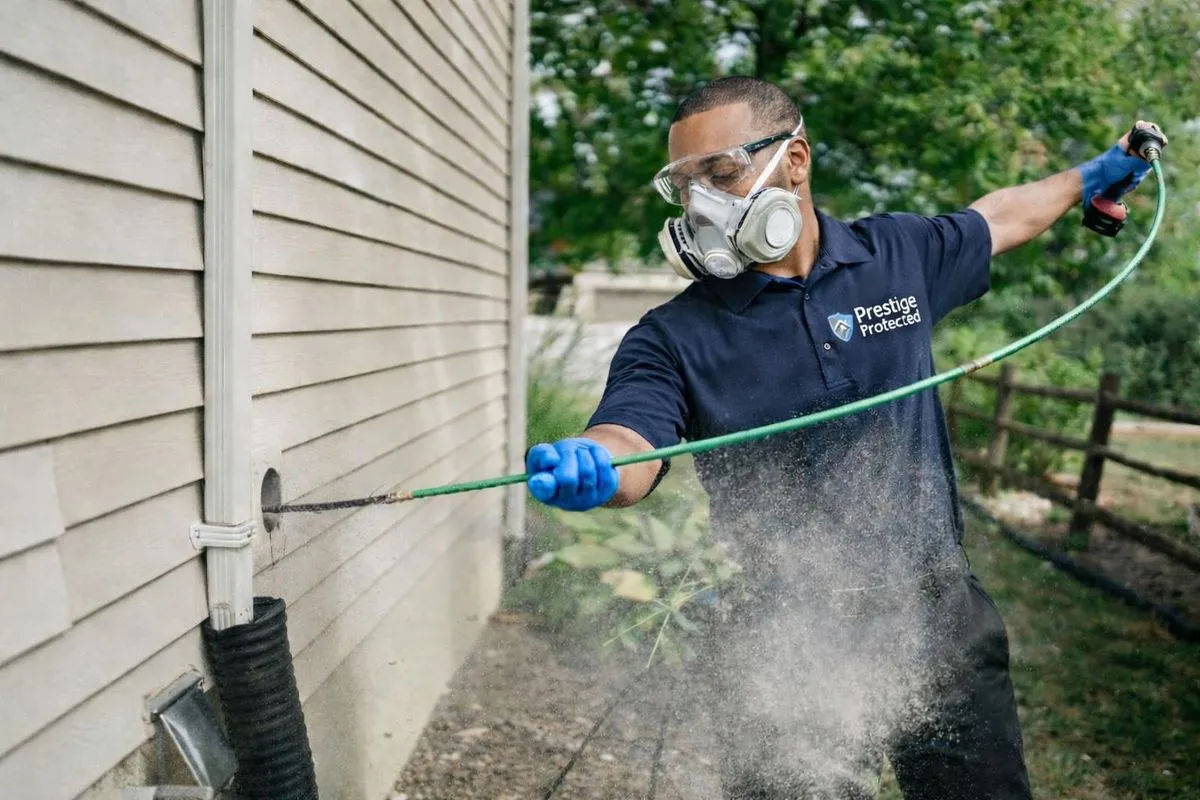
A household vacuum, even a strong shop vac, only reaches a few inches into each vent. The debris that actually matters sits along the main trunk lines, deep in the branch runs, and on the blower and coil, where you cannot see or reach it. The EPA describes proper duct cleaning as source removal: the system is put under negative air pressure while brushes and air tools dislodge debris, so everything is captured and carried out of the house instead of being stirred back into your rooms. That requires truck- or portable-mounted equipment no homeowner owns.
Doing it wrong can also make things worse. Blasting compressed air into dusty ducts without negative pressure just redistributes the dust through your home. That is a big part of why the cheap “blow-and-go” outfits leave homes no cleaner; see scams to avoid.
When it is worth calling a pro
- Visible dust or debris blowing from the registers
- Musty or stale odors when the system runs (see musty smell from vents)
- Visible mold near vents or on the coil
- After a renovation, or in a newly-bought home with unknown history
- Allergy or asthma symptoms that ease when you leave the house
If none of those apply and your filters stay reasonably clean, DIY upkeep may be all you need for now. The EPA does not recommend routine cleaning for its own sake. It recommends cleaning when there is a real reason. When there is, a professional cleaning is the step that actually removes the problem. Not sure which camp you’re in? We serve Raleigh and Cary and will inspect first, then tell you honestly whether a cleaning is worth it.
What a DIY session realistically removes
It helps to be precise about this, because the gap between what people expect from a weekend of duct cleaning and what actually happens is where most of the frustration comes from. With a household vacuum and a brush you will remove the dust on the register faces and grilles, the loose debris in the first several inches of each boot, and whatever has collected around the return grille. That is genuinely worth doing and it is the dust closest to the air you breathe.
What stays behind is everything past arm’s reach: the branch runs, the main supply and return trunks, the plenum above the air handler, the blower wheel and the cooling coil. In a typical home that is well over ninety percent of the interior surface area of the system, and it is where a real reservoir of debris accumulates.
The tools homeowners buy, and what each one actually does
- Shop vac with a crevice tool: useful and safe. Reaches a few inches into each opening. Do this one.
- Vacuum hose brush kits: fine for grilles and boots. The bristles agitate dust, but with no negative pressure on the system, whatever you knock loose deeper in the run just travels somewhere else.
- Drill-powered flexible rod kits: these are sold for dryer vents and get used on ducts. In rigid sheet metal they can work; in flexible duct they catch the inner liner and tear it, and a torn flex duct leaks conditioned air into your crawlspace until somebody replaces it. A spinning rod can also separate a duct connection you cannot see.
- Leaf blower down a register: this is the one to avoid outright. Without the system under negative pressure, you are not removing anything, you are pressurising the duct and pushing years of settled dust out through every other register in the house.
- Canned or compressed air: same problem on a smaller scale, plus a real risk of driving debris into the blower and coil.
There is also a materials issue worth knowing about. A fair number of older Triangle systems use fiberglass duct board or internally lined duct, where the interior surface is the insulation. Aggressive brushing erodes that surface and releases fibers into the airstream, which is the opposite of what you were trying to do. Knowing what your ducts are made of before you put a tool in them matters.
What a professional cleaning includes that DIY cannot
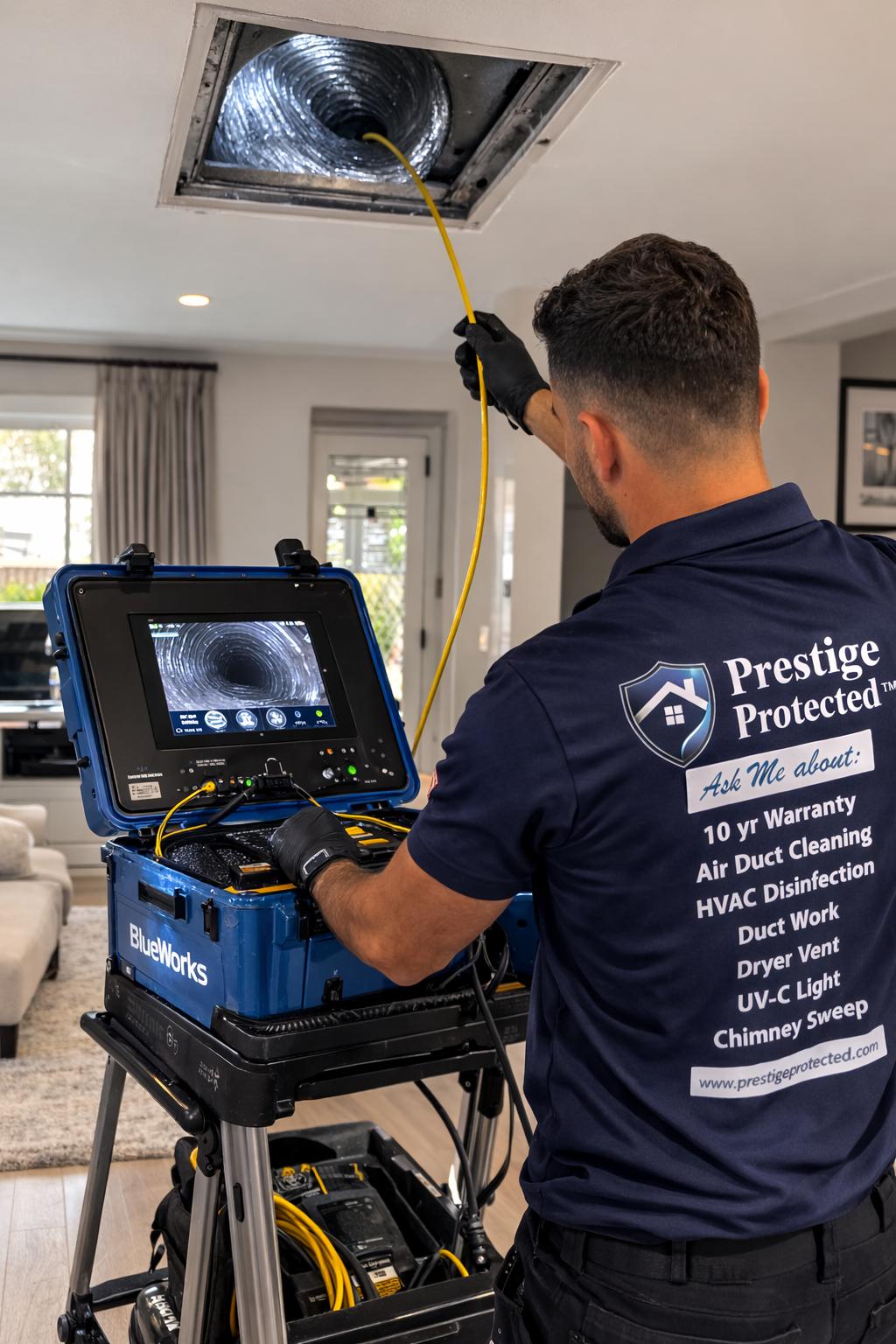
- Negative pressure on the whole system. A truck- or portable-mounted vacuum is connected to the trunk line so that everything dislodged anywhere in the system travels one direction: out of the house.
- Agitation matched to the duct material. Rotary brushes in rigid metal, air whips and skipper balls in flex duct, hand work on fragile older sections.
- The return side and the trunks, not just the supply registers you can see. The return side is usually dirtier and it is the side homeowners never reach.
- The blower compartment and, where accessible, the coil and drain pan. The EPA notes that cleaning these components may improve system efficiency and operating life, which is a separate benefit from the ductwork itself.
- Before-and-after camera images, so the decision about whether it was worth doing is based on evidence rather than a sales pitch.
How to check that a pro actually did the work
Hold anyone you hire, including us, to this list. It takes five minutes and it is the difference between a cleaning and a visit.
- Ask to see photographs from inside the duct, taken before and after, not photographs of the register covers.
- Ask which trunk lines were connected to the vacuum and how many access points were cut. A whole-house cleaning through one opening is not a whole-house cleaning.
- Ask whether the return side was done. If the answer is vague, it was not.
- Look for a new filter installed at the end of the job, and ask what was found at the coil and blower.
- Get the findings in writing, including anything that was damaged or already failing. An honest report sometimes says the ducts did not need cleaning.
Frequently asked questions
Can I clean my air ducts myself?
You can clean the parts you can reach, meaning registers, grilles and the filter, and that helps. You cannot clean the full run of ductwork or the blower and coil without professional negative-air equipment, so DIY complements a professional cleaning rather than replacing it.
What equipment do professionals use?
A proper cleaning uses truck- or portable-mounted vacuums that put the system under negative pressure, plus brushes and air whips that dislodge debris so it is captured and removed. This is what the EPA calls source removal.
Is a shop vac enough to clean ducts?
No. A shop vac only reaches a few inches into each vent and has nowhere near the airflow to pull debris from the trunk lines and branches. It is useful for the registers, not the system.
How often should I DIY versus hire a pro?
Do the DIY upkeep (filters, registers) every one to three months. Bring in a professional only when there is a real reason such as visible debris, odors, mold, or a recent renovation, rather than on a fixed schedule.
Can I use a leaf blower to clean my air ducts?
No. Without the system under negative pressure, a leaf blower does not remove debris, it relocates it, pushing years of settled dust out of every other register in the house. It can also drive material into the blower and cooling coil, which is a more expensive problem than the one you started with.
Will DIY cleaning damage flexible ductwork?
It can. Flexible duct has a thin plastic inner liner supported by a wire helix, and a spinning rod or a stiff brush catches that liner and tears it. A torn flex run leaks conditioned air into the crawlspace or attic and pulls dust back in, so the repair costs more than the cleaning would have.
How much of my duct system can I actually reach myself?
Realistically the registers, the grilles and the first few inches of each boot. In a typical home that is a small fraction of the interior surface of the system. The trunk lines, branch runs, plenum, blower and coil all sit beyond the reach of any household vacuum.
Should I change the filter before or after a duct cleaning?
After. A cleaning stirs up whatever is in the system, so the filter that was in place during the work has done its job by the end of it. Put a fresh pleated filter in at the finish, and make sure it seats without gaps around the frame.
Does the EPA recommend routine air duct cleaning?
No. The EPA states that “duct cleaning has never been shown to actually prevent health problems” and offers no blanket recommendation for routine cleaning. It suggests considering cleaning in three specific situations: substantial visible mold growth in the system, an infestation of rodents or insects, or ducts clogged with excessive dust and debris that is actually being released into the home.
Is a shop vac and brush enough between professional cleanings?
Yes, for upkeep. Vacuuming the registers and return grille every month or two and staying on top of the filter keeps the visible dust down and slows how quickly the system reloads. It is maintenance rather than a substitute for source removal when there is genuine buildup.