Quick answer
Yes, get the ducts cleaned after a renovation, but wait until the work and the final clean are finished. Sanding and cutting produce fine dust that passes straight through a builder-grade filter and settles in the duct runs, where it keeps recirculating for months. A single post-project cleaning, with the coil checked at the same time, is the point at which it stops.
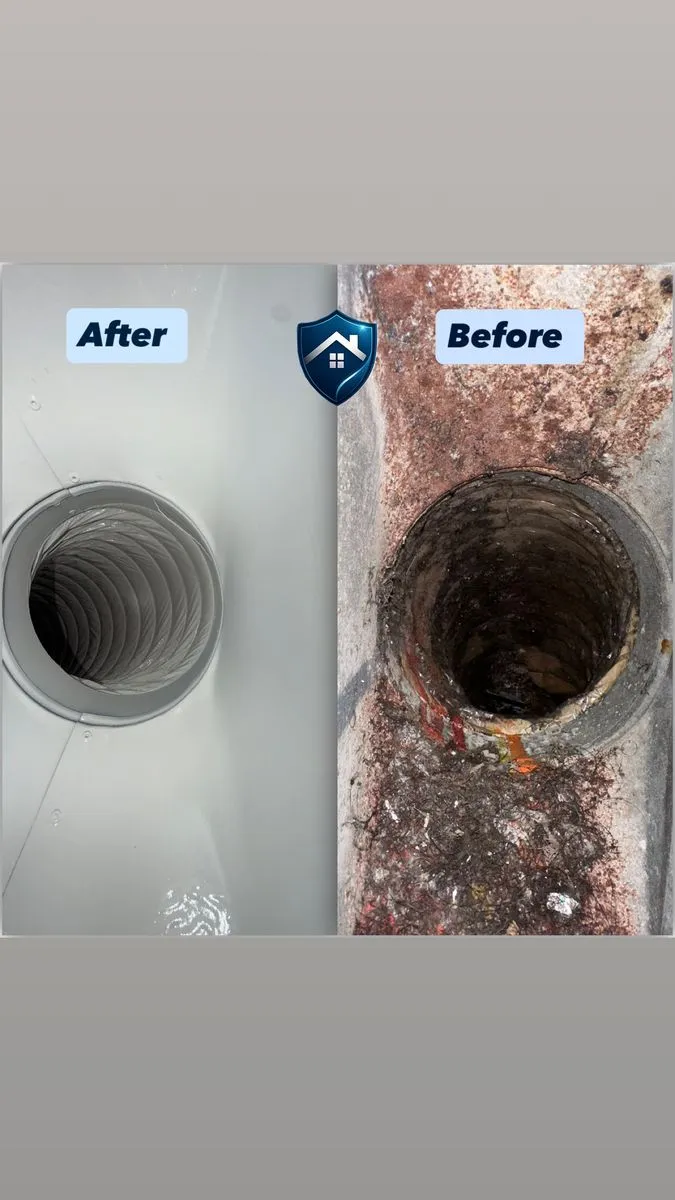
Yes, after a renovation is one of the few times the EPA-recognized reasons to clean air ducts almost always apply. Drywall dust, sawdust and insulation fibers settle inside the ductwork during construction, and the first time the system runs it blows them into every room. A post-renovation duct cleaning removes that debris at the source before it clogs filters, coats furniture and irritates lungs.
Air duct cleaning after renovation removes fine construction dust, debris, and irritants from your HVAC system before they spread through your home. Remodeling work can leave behind drywall dust, sawdust, paint odors, and other particles that regular cleaning may miss.
Read our complete maintenance guide to understand how proper duct care helps prevent long-term buildup and airflow problems. Keep reading to learn how renovation dust affects your air, your equipment, and your family’s comfort.
Why Is Construction Dust Bad for Your HVAC System
Construction dust is heavier and more abrasive than normal household dust. It can settle inside your ductwork, clog filters quickly, and force your heating and cooling system to work harder.
Normal household dust often includes skin cells, pet dander, and fabric fibers. Renovation dust differs because it may contain drywall dust, wood particles, insulation fibers, and residue from new building materials.
When contractors sand drywall, cut wood, or remove old materials, small particles can enter the air. If return vents pull those particles into the HVAC system, the debris may spread through the ductwork and settle on important components.
- Drywall dust and silica can slip past standard air filters and collect inside the system.
- Volatile organic compounds, or VOCs, may come from new paint, adhesives, flooring, and other materials.
- Wood shavings and sawdust can restrict airflow, forcing the blower motor to work harder.
When these materials collect on the evaporator coil or inside air pathways, they can reduce airflow and lower system efficiency. Over time, this buildup may lead to longer run times, uneven comfort, and increased strain on your equipment.
How Does Remodeling Debris Impact Your Health
Breathing leftover construction dust can irritate your throat, lungs, eyes, and nose. Fine dust from drywall, paint, adhesives, and woodwork may continue moving through your home whenever the HVAC fan turns on.
Families with asthma, allergies, or sensitive lungs may notice these effects faster. The indoor air quality can drop when return vents pull contaminated air into the duct system and push it back into living areas.
This is why cleanup should go beyond wiping surfaces. Removing debris from inside the ductwork helps reduce lingering dust, stale odors, and airborne irritants after a renovation.
Can You Just Change the Air Filter Instead
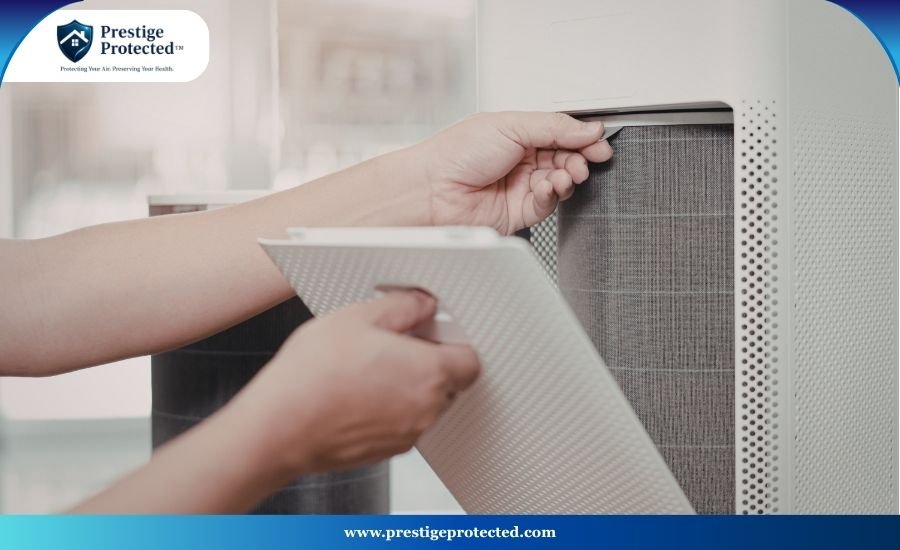
Changing your air filter is a smart first step, but it does not fully solve the problem. Standard filters cannot capture every fine particle created during construction work.
Tiny drywall particles can pass through basic filter media. The dust that does get trapped may clog a new filter within a short time, especially after major remodeling.
Because the dust source may already be inside the ductwork, filter replacement alone may not stop the cycle. A full system cleaning removes debris from the ducts rather than just catching particles as they move through the system again.
What Is the Right Way to Clean Ducts After a Remodel
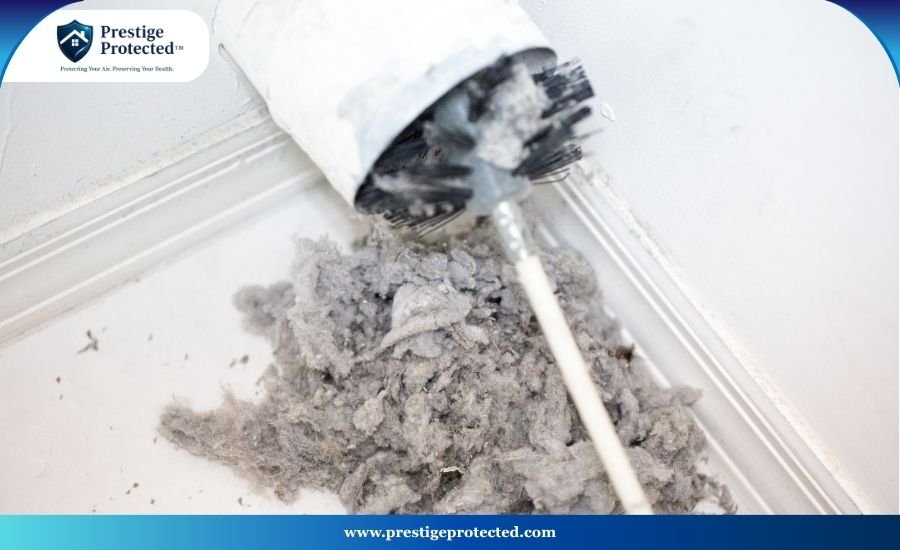
A professional post-renovation duct cleaning uses negative air pressure and physical agitation tools. A regular household vacuum cannot reach or remove heavy debris from deep inside the duct system.
A proper post-construction cleaning is a two-part job, and both parts have to happen for it to hold:
- Negative Air Pressure: The system is sealed and connected to a powerful vacuum unit that pulls dust and debris from the ductwork. This helps keep particles from blowing back into freshly cleaned rooms.
- Source Removal: Technicians use brushes, air whips, and compressed-air tools to loosen dust that has become stuck in the ducts. The vacuum then safely pulls the debris out of the system.
This process targets the source of the dust rather than just cleaning vent covers or visible surfaces.
When Should You Schedule the Cleaning Service
Schedule duct cleaning after contractors finish sanding, cutting, painting, and final cleanup. This timing helps remove leftover dust before it continues circulating through your HVAC system.
Do not wait too long if you notice dusty vents, lingering odors, weak airflow, or repeated dust buildup on new surfaces. A timely cleaning helps protect your renovated space and supports cleaner indoor air.
Protect Your Home After Renovation Work
Air duct cleaning after renovation helps remove hidden dust, debris, and irritants before they keep moving through your HVAC system. Proper cleaning can also improve airflow, reduce lingering odors, and keep your newly updated space cleaner for your family.
Prestige Protected is a professional indoor air quality company serving the Cary, NC area, specializing in air duct cleaning, dryer vent cleaning and HVAC cleaning for local homeowners. Book a thorough system extraction today to help protect your home after renovation work.
Frequently Asked Questions
Is post-renovation duct cleaning legally required for homes?
Homeowners are usually not legally required to clean residential HVAC ducts after remodeling. However, removing heavy debris can help protect system performance and indoor air quality.
How soon after remodeling should I schedule duct cleaning?
Schedule service after the final sanding, cutting, painting, and cleanup work is complete. This helps remove dust before it circulates through your home.
Will duct cleaning damage my new floors or walls?
Professional cleaners use protective coverings, corner guards, and carefully placed equipment. These steps help protect freshly renovated surfaces during service.
Why is construction dust worse than normal household dust?
Construction dust may contain drywall powder, silica, sawdust, insulation fibers, and chemical residue. These particles can irritate the breathing and strain HVAC equipment.
Can I just change my furnace filter instead?
Changing the filter helps, but it may not remove dust already inside the ductwork. Fine renovation dust can bypass basic filters and continue moving through the system.
Related guides & next steps
Last updated by the Prestige Protected service team.
Book a visit in Cary, Raleigh or the wider Triangle
We inspect first, quote before we start, and show you photos of your own system before we leave.