
TL;DR (quick answer): If clothes need two or more cycles to dry, the most likely cause is a lint-clogged vent line restricting airflow, not a broken dryer. A restricted vent traps heat and moisture, doubles energy use per load, and raises fire risk; the U.S. Fire Administration counts an estimated 2,900 clothes dryer fires in residential buildings a year and identifies failure to clean as the leading contributing factor. A full-line vent cleaning solves most slow-drying complaints in about an hour.
Dryer Vent · Troubleshooting
If your clothes take two or more cycles to dry, the most common cause is a clogged dryer vent restricting airflow, not a failing dryer. Lint builds up in the vent line, traps heat and moisture, and forces longer cycles that waste energy and raise fire risk. Here’s how to pinpoint and fix it.
Reviewed by the Prestige Protected Team · Updated August 2026 · Cary, Raleigh & the NC Triangle
Why is my dryer taking so long?
Your dryer dries by pushing hot, moist air out through the vent. When lint clogs that path, the moisture has nowhere to go, so clothes stay damp and the dryer runs again and again. The most common culprits are:
- A lint-clogged vent line (the #1 cause)
- A blocked exterior vent flap (lint or a bird nest)
- A long or kinked transition hose
- An overloaded drum or a full lint screen
How to fix it
Clean the lint screen before every load, then have the full vent line professionally cleaned (see how to clean a dryer vent). If drying time doesn’t improve after a vent cleaning, the issue may be the heating element or thermostat, at that point it’s a repair, not a vent problem. Most slow-drying complaints, though, are solved by clearing the vent.
When slow drying is a safety issue
A clogged vent isn’t just inefficient, the U.S. Fire Administration identifies failure to clean as the leading factor contributing to the ignition of home clothes dryer fires. If the dryer or laundry room gets very hot or you smell burning, stop using it and have the vent cleaned. See dryer vent fire risk & prevention.
The two-number test, before anyone comes out
You can narrow this down in one load with a stopwatch and a hand. It takes no tools and it is the same thing a technician does first.
- Number one, the cycle time. Run a normal mixed load on a heat setting and time it from start to actually dry. Write it down. Under about 50 minutes is normal. Ninety minutes or a second cycle is not.
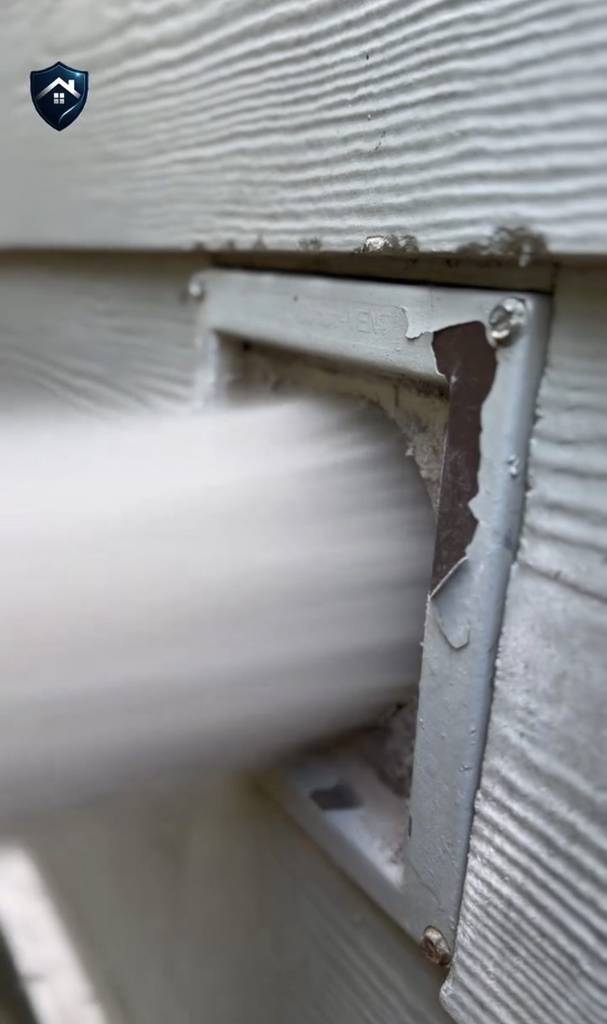
- Number two, the airflow. With that load running, go outside to the vent hood and hold your hand about six inches away. You want a steady push of warm, humid air and a flap held fully open. A trickle, a twitching flap, or air leaking around the edges of the hood instead of out of it means restriction.
Long cycle plus weak airflow is a blocked or restricted line, and that is the common case by a wide margin. Long cycle plus strong airflow moves the suspicion to the appliance, usually a heating element, a thermostat or a moisture sensor. Short cycle with damp clothes at the end is a moisture sensor cutting the cycle early, which on a restricted line is the sensor doing its job.
The six causes, most likely first
| Cause | How common | How you recognize it | Fix |
|---|---|---|---|
| Lint restriction in the vent line | Most of what we see | Long cycles, weak airflow at the hood, hot laundry room | Full-line cleaning |
| Crushed or kinked transition hose behind the machine | Common | Dryer sits very close to the wall, hose visibly flattened | Replace with listed transition duct, reposition |
| Blocked exterior hood | Common, seasonal | Flap will not open, nest or screen visible | Clear and refit the hood |
| A run that is simply too long or has too many bends | Underdiagnosed | Repeated clogs within months of a cleaning | Reroute or shorten the run |
| Overloading, or washer leaving clothes too wet | Occasional | Only happens on big loads, or clothes come out dripping | Smaller loads, check the washer spin cycle |
| Heating element, thermostat or moisture sensor | Less common than assumed | Strong airflow at the hood but still no drying | Appliance repair |
What the extra cycle is costing you while you wait
We are not going to invent a dollar figure for your house, because it depends on your rate, your machine and how much laundry you do. What we can do is be specific about the mechanism, which is enough to make the decision.
A dryer is one of the highest-draw appliances in a home, and running every load twice roughly doubles that draw. On top of the energy, a restricted line keeps the machine cycling on and off its high-limit thermostat, which is the failure most commonly reported to us in the year after a bad clog. And the humid air that cannot get outside ends up in the room instead. The EPA notes that water damaged areas and items should be dried within 24 to 48 hours to prevent mold growth, which is worth remembering for a closet laundry that never gets a dry window.
Airflow problems can reduce your system's efficiency by up to 15 percent.
ENERGY STAR, Heating and Cooling Maintenance Checklist
That figure is for a heating and cooling system rather than a dryer, and we are quoting it as the principle rather than the number: restricted airflow costs energy in any forced-air appliance. On the same checklist, the do-it-yourself instruction is to inspect, clean or change air filters once a month, which is the cheapest maintenance in the house.
When slow drying stops being an inconvenience
Failure to clean (31%) was the leading factor contributing to the ignition of clothes dryer fires in homes from 2018-2020.
U.S. Fire Administration, citing National Fire Incident Reporting System data, Appliance and Electrical Fire Safety
The agency's topical report on clothes dryer fires puts the annual figure at an estimated 2,900 fires in residential buildings, causing on average 5 deaths, 100 injuries and about $35 million in property loss, using 2008 to 2010 data. If you are smelling anything burning during a cycle, stop using the dryer and have the line cleared before the next load. Slow drying is the warning that arrives first.
Related: signs of a clogged dryer vent, how often to clean it, doing it yourself, dryer vent repair and replacement, and service in Raleigh and Cary.
If the vent turns out to be the cause, see dryer vent cleaning in Cary or in Raleigh.
Frequently asked questions
Why does my dryer take 2 or 3 cycles to dry?
Almost always a clogged dryer vent restricting airflow. Lint traps moisture and heat, so clothes stay damp. A professional vent cleaning usually fixes it.
Will cleaning the dryer vent fix slow drying?
In most cases, yes, restricted airflow is the leading cause. If it doesn’t, the heating element or thermostat may need repair.
Why does my dryer get hot but the clothes stay damp?
That combination is the signature of a vent problem, not a heat problem. The dryer is producing heat, but the moist air cannot escape through the restricted vent, so moisture recirculates in the drum. A failing heating element produces the opposite pattern: a dryer that never gets properly warm.
Could it be the dryer itself and not the vent?
Yes, in the minority of cases, typically a worn heating element, a faulty thermostat, or a lint-coated moisture sensor that shuts the cycle down early. The exterior-airflow check above is the quickest way to tell. If airflow is strong and drying is still slow, book an appliance repair, not a vent cleaning.
How much faster will drying be after a vent cleaning?
Homes that were running two cycles per load typically return to one full cycle immediately, the improvement is obvious the same day. If drying does not improve after a verified-airflow cleaning, the remaining suspects are inside the machine, and we tell you so plainly.
How long should a normal dryer cycle take?
For a regular mixed load in a full-size residential dryer, roughly 35 to 50 minutes on a heat setting. Towels and jeans run longer, up to about an hour. If a mixed load is taking 90 minutes or needs a second run, the machine is not getting rid of the moisture it is producing, and in the great majority of cases that is the vent line rather than the appliance.
Why did this happen suddenly rather than gradually?
A sudden change usually points at something mechanical rather than accumulation. The three we see most are a bird nest or debris in the exterior hood, a transition hose that got crushed when the machine was pushed back after a repair or a floor being replaced, and a duct joint that pulled apart in an attic or crawlspace. Accumulation, by contrast, creeps up over months and people rarely notice until they compare notes with a neighbor.
Can I just run the load twice and live with it?
You can, and it costs more than people assume. You are doubling the run time on the single biggest electrical load in most laundry rooms, and you are holding the appliance at a higher operating temperature than it was built for, which shortens the life of the heating element and the thermostat. You are also keeping the condition that the U.S. Fire Administration identifies as the leading contributing factor in dryer fires.
Will a vent cleaning help if the real problem is the dryer?
It will tell you, which is worth something on its own. Once the line is confirmed clear and airflow is measured at the hood, a load that still takes two cycles points squarely at the appliance, and you can call an appliance technician knowing what to tell them. Diagnosing in the other order means paying for a service call to be told the vent is blocked.
Talk to a Triangle specialist
FAQ & related
Sources: U.S. Fire Administration, Clothes Dryer Fires in Residential Buildings (2008 to 2010 data) and Appliance and Electrical Fire Safety.
In Cary and your dryer is slow? See certified dryer vent cleaning in Cary, NC (same-week service).
A five-minute check before you call anyone
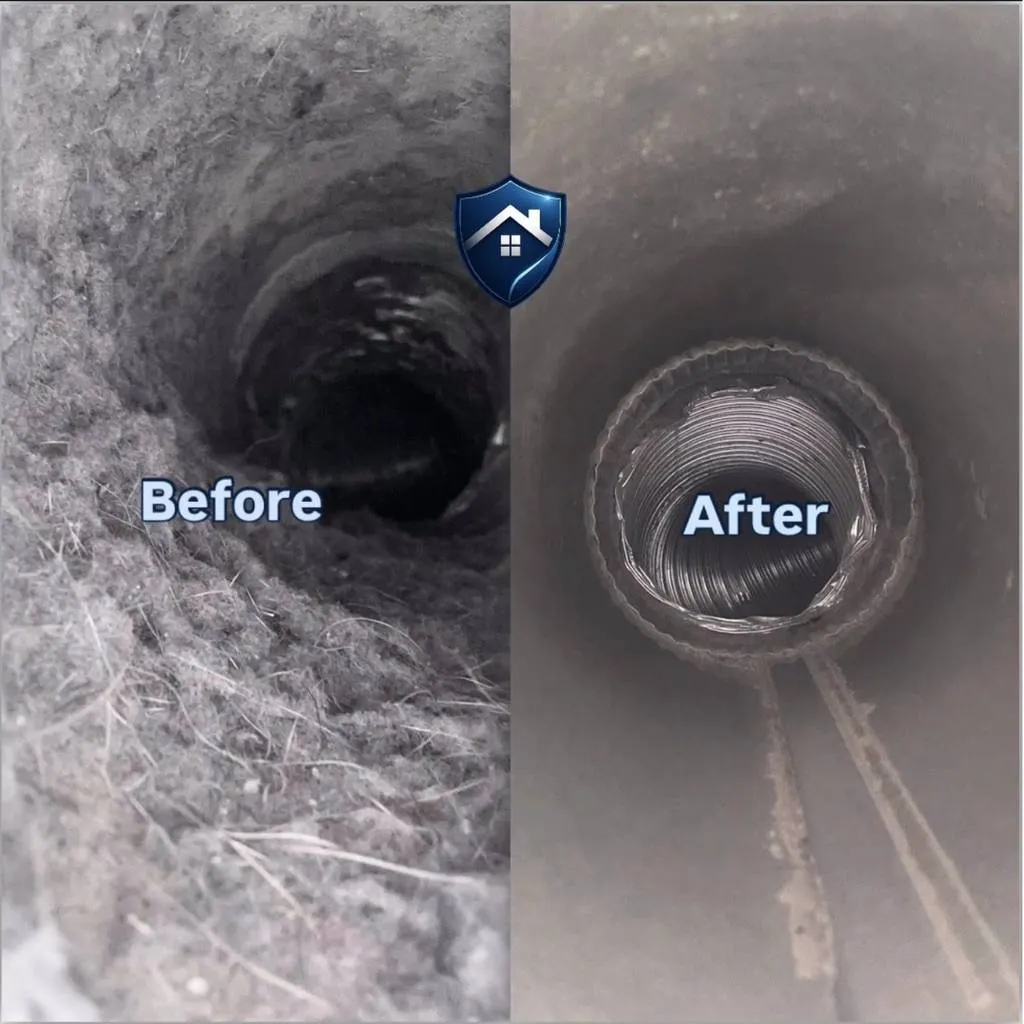
You can narrow the diagnosis yourself. Run the dryer on high and go look at the exterior hood: you should feel a strong, steady stream of warm air and see the flap held fully open. Weak airflow, a flap barely moving, or moisture beading around the hood all point to a restriction in the line. Then check behind the machine, a crushed or kinked transition hose is the one cause you can fix by hand. If the airflow is strong and the hose is clear but drying is still slow, the problem is likelier inside the dryer (heating element, thermostat, or moisture sensor), and you need an appliance tech rather than a vent cleaning.
What a restricted vent costs you while you wait
- Energy: every extra cycle roughly doubles the electricity per load, ENERGY STAR notes clothes dryers are among the most energy-hungry appliances in the home, so running each load twice adds up fast.
- The dryer itself: trapped heat cycles the thermal safety switches and cooks components; slow-drying dryers die young.
- Safety: lint restricting a hot exhaust path is the textbook setup for the dryer fires the U.S. Fire Administration documents, about 2,900 a year, peaking in fall and winter.
- Time: a family doing eight loads a week loses hours to second cycles.
The fix for the common case is a full-line dryer vent cleaning, both ends of the duct, the transition hose, and the exterior hood, with airflow verified afterward. If the cleaning uncovers a crushed section, a disconnected joint or a failed hood, repair and replacement is the follow-on, and long runs that clog repeatedly may be candidates for rerouting. Related reading: signs of a clogged dryer vent and how often to clean it. We serve Raleigh, Cary and the Triangle.
Last updated by the Prestige Protected service team.
Related guides
- Signs of a clogged dryer vent, the first thing to rule out
- How long a dryer vent cleaning takes
- How often the vent needs cleaning
- Common dryer vent problems, and which repair each one needs
- Our dryer vent cleaning service