
Safety Guide · Dryer Fires
TL;DR (quick answer): Clogged dryer vents cause thousands of house fires every year. The U.S. Fire Administration reports an estimated 2,900 clothes dryer fires annually, and failure to clean the dryer is the leading factor. Cleaning your vent about once a year, using rigid or semi-rigid metal transition duct, and acting on warning signs dramatically lowers the risk.
A dryer fire is one of the most preventable home fires there is, and one of the most overlooked. The heat is already there; all it needs is a bed of dry lint and restricted airflow. Here are the numbers, the warning signs, and the exact steps that keep your home safe.
By the Prestige Protected Team · Updated August 2026 · Cary, Raleigh & the NC Triangle
The numbers
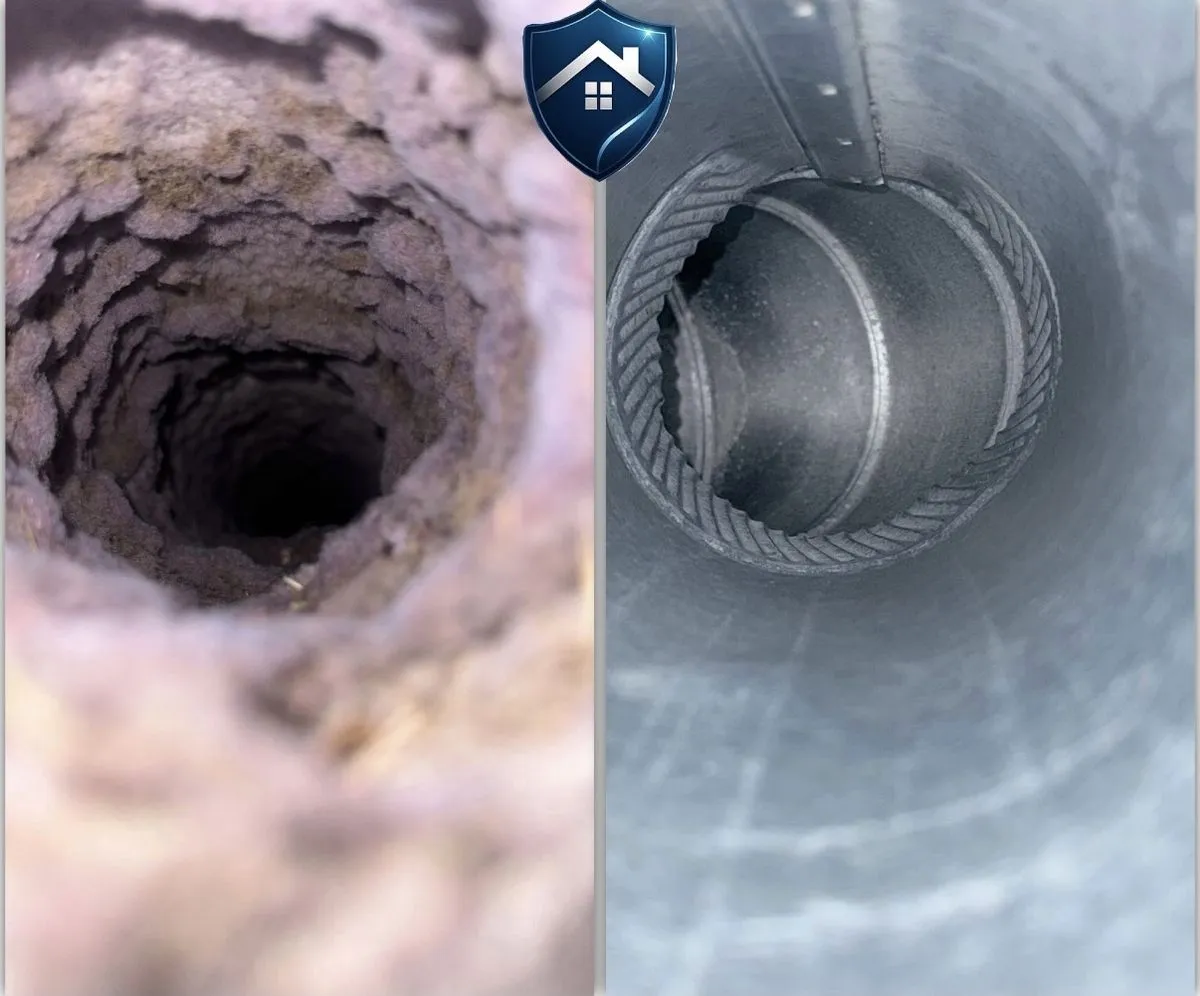
According to the U.S. Fire Administration (USFA/FEMA), an estimated 2,900 residential clothes dryer fires are reported each year, causing roughly five deaths, 100 injuries and about $35 million in property loss annually. The single most common cause the USFA identifies is failure to clean the dryer, specifically, lint building up in the vent and around the appliance. In other words, the leading contributing factor in dryer fires is also the easiest one to eliminate.
Why lint is so dangerous
Dryer lint is fine, dry and highly combustible. As it collects in the vent it restricts airflow, so heat that should be carried outside instead builds up inside the dryer and the duct. That combination, a fuel source plus trapped heat, is exactly what a fire needs. Long or crushed vent runs, plastic or foil transition hoses, and roof terminations that are hard to reach all make buildup worse.
Warning signs to act on
- Clothes take longer than one cycle to dry, or come out hot and still damp
- The dryer or laundry room is unusually hot during a cycle
- A burning smell when the dryer runs (see dryer overheating or burning smell)
- The exterior vent flap doesn’t open fully, or lint is visible around it
- It has been more than a year since the vent was last cleaned
Your prevention checklist
- Clean the vent about once a year (more often for large households or long runs), see how often to clean your dryer vent
- Clean the lint screen every load, the simplest habit with the biggest payoff
- Use rigid or semi-rigid metal transition duct, not plastic or thin foil, which sag and trap lint
- Keep the vent run as short and straight as practical and make sure the exterior flap moves freely
- Don’t run the dryer while asleep or away if you suspect restricted airflow
The USFA and fire-safety authorities note that metal transition ducting is preferred over plastic or foil because it resists crushing and doesn’t sag into lint-catching low spots. If your vent is damaged, disconnected or improperly routed, that is a repair issue, not just a cleaning one.
When to bring in a professional
If your dryer shows the warning signs above, or the vent hasn’t been cleaned in over a year, a professional cleaning removes lint from the full run and confirms airflow is restored, the part that actually reduces risk. If we find crushed or disconnected duct during the cleaning, we can handle the repair too. We serve Raleigh, Cary and the surrounding Triangle. For cost context, see our dryer vent cleaning cost guide.
Booking pages: dryer vent cleaning in Cary and in Raleigh.
Frequently asked questions
How common are dryer fires?
The U.S. Fire Administration estimates about 2,900 residential clothes dryer fires each year in the U.S., causing roughly five deaths, 100 injuries and about $35 million in property loss annually.
What causes most dryer fires?
The leading factor identified by the U.S. Fire Administration is failure to clean the dryer, lint building up in the vent and around the appliance, which restricts airflow and traps heat.
How do I prevent a dryer fire?
Clean the lint screen every load, have the vent cleaned about once a year, use rigid or semi-rigid metal transition duct rather than plastic or foil, keep the run short and the exterior flap clear, and act on warning signs like long drying times or a hot dryer.
How often should I clean my dryer vent?
For most homes, once a year. Large households, homes with pets, or long or roof-terminated vent runs may need it more often. If clothes are taking longer to dry, clean it sooner.
Lower your dryer fire risk this week
What the national data actually says
Two organizations publish the figures everyone else quotes, and it is worth seeing them side by side because they count slightly different things.
- The U.S. Fire Administration, in its topical report on clothes dryer fires in residential buildings, estimated about 2,900 such fires per year, with an annual average of 5 deaths, 100 injuries and roughly $35 million in property loss.
- Failure to clean is the leading factor contributing to ignition in home clothes dryer fires, at roughly a third of them, in the U.S. Fire Administration’s analysis.
- In the same U.S. Fire Administration report, dust, fiber and lint were the first item ignited in 28 percent of home clothes dryer fires. That is the specific material a vent cleaning removes.
Read plainly, that says something useful: the most common cause of a dryer fire is not a defective appliance or bad wiring. It is accumulated lint, in a system nobody looked at. That is the one variable a homeowner fully controls.
How a lint fire actually starts
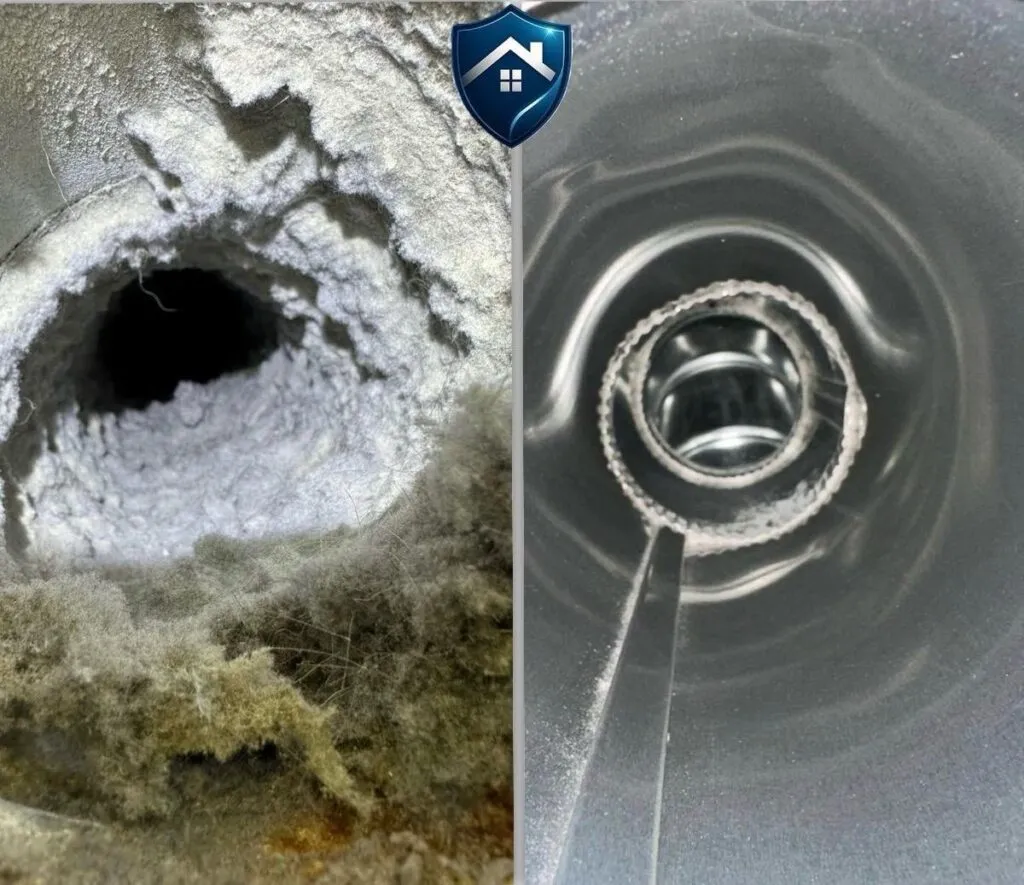
It is a slow sequence, not a sudden event, which is why there is normally time to catch it. Lint escapes past the screen and settles in the duct, heaviest at the first elbow and at the termination. As the passage narrows, exhaust heat stops leaving the house efficiently, so temperatures inside the drum and the duct climb. The dryer's high-limit thermostat trips, the machine cools, it resets, and the cycle repeats. Each repetition bakes the lint sitting in the hottest section a little more, driving off moisture and leaving material that ignites more readily than it did a year ago. Add one more restriction, a crushed hose or a blocked flap, and the temperature in that section can reach ignition.
The practical implication: the warning signs are the same symptoms as poor drying performance. Longer cycles, a hot laundry room, hot laundry at the end of a load, a burning or musty smell, or weak airflow at the outside flap. Those are not just an inconvenience. They are the early part of the sequence above. Our page on dryer overheating and burning smells covers what to do the day you notice one.
Which homes carry more risk
Risk is not evenly spread. These factors raise it, and they stack:
- Long or vertical runs. Second-floor laundry rooms venting through the roof are common in Triangle two-story homes. Lint falls back down a vertical run and compacts.
- Multiple elbows. Every turn is a place lint packs. A run with four bends behaves like a much longer straight run.
- Vinyl or ribbed foil transition hose. White vinyl should be replaced. Ribbed foil crushes when the dryer is pushed back and traps lint at the crush point. See transition hose replacement.
- A termination you cannot see or reach. If nobody has looked at the exterior flap in years, assume it is partly blocked. Bird nests are a genuine and regular finding, covered in dryer vent problems.
- A disconnected duct in the attic or crawlspace. This vents hot, moist, lint-laden air into the structure. It is the one finding we treat as urgent. See a disconnected vent in the attic.
- High laundry volume. A family of five generates several times the lint of a single occupant on the same run.
Habits that lower the risk between cleanings
None of these replace clearing the duct, but together they slow how fast it fills again.
- Clean the lint screen every load, and wash it with warm water a few times a year to remove fabric-softener residue that blocks airflow through the mesh.
- Vacuum the lint trap housing and the area behind the dryer a couple of times a year.
- Never run the dryer while you are asleep or out of the house.
- Do not push the dryer flush to the wall. Leave room so the transition hose is not crushed.
- Keep the area around and behind the dryer clear of boxes, laundry and cleaning products.
- Check the exterior flap once a season with the dryer running. Feel for strong warm airflow.
- Do not dry anything that has been in contact with cooking oil, solvent or gasoline. Oil-soaked fabric can self-heat.
When it is time to clear the run properly, see dryer vent cleaning or dryer vent repair and replacement in Raleigh if the line itself is damaged. For how often, our guide on cleaning frequency works through the variables above.
More questions about dryer fire risk
Do gas dryers carry more fire risk than electric ones?
Both have a heat source and both need a clear exhaust path, and lint accumulation is the leading contributing factor either way. Gas dryers add combustion byproducts to the exhaust, which makes a blocked or disconnected run a carbon monoxide concern as well as a fire one, so a gas dryer venting into an attic or crawlspace should be treated as urgent.
Are the lint traps you can buy for indoor venting safe?
Venting a dryer indoors is not an acceptable substitute for a duct to the outside. It puts moisture and fine lint into the living space, and it is not code-compliant for a gas dryer under any circumstances. If a run cannot reach an exterior wall on its current path, the answer is rerouting it, not venting inside. See dryer vent rerouting.
Does homeowners insurance cover a dryer fire?
Policies vary and we are not in a position to interpret yours. What we can say is that maintenance records and dated before-and-after photographs of a vent cleaning are the kind of documentation adjusters ask for, which is one practical reason to keep them.
Is a screen or cage over the exterior vent a good idea?
Mesh screens intended to keep birds out also catch lint and clog quickly, which creates the restriction you were trying to avoid. A properly functioning flap or a purpose-built pest guard designed for dryer exhaust is the right approach, checked seasonally.
If my dryer is new, can I skip the vent for a few years?
No. The vent run is usually as old as the house, and a new appliance does nothing about lint already sitting in it. New dryers are also frequently installed onto whatever hose was already behind the old one.
What should I do if I smell burning right now?
Stop the cycle, unplug the dryer, and do not restart it. If you see smoke or feel heat at the wall, call 911. Otherwise, leave it off until the vent run has been inspected and cleared.