Quick answer
Air duct cleaning is worth it when the system’s condition calls for it, visible buildup, mold, pest evidence, renovation dust, or worsening dust and allergies, and not worth it on a fixed calendar. That is the EPA’s own guidance. A camera inspection with photos of your ducts answers the question for your home honestly; most homes that do need it are on a three-to-five-year cycle.
Air Duct Cleaning · Honest Guide
Air duct cleaning is worth it when there’s a real, visible reason, mold growth, a vermin or insect infestation, or heavy debris and dust being pushed into your home. For an ordinary, reasonably clean home it isn’t something you need every year, and the U.S. EPA does not recommend routine cleaning “just because.” Below is the honest version: when it genuinely pays off, when to save your money, and how to tell which situation you’re in.
Reviewed by the Prestige Protected service team · Last updated September 2026 · Serving Cary, Raleigh & the NC Triangle
When is air duct cleaning worth it?
Air duct cleaning is worth the cost when one of these conditions is present, the same situations the EPA specifically flags as good reasons to clean:
- Visible mold growing inside the ducts or on other HVAC components (not just at a single register).
- Vermin or insect infestation, evidence of rodents or pests living in the duct system.
- Heavy debris or clogging, ducts packed with dust and particles that are actually being released into the home (you see dust puffing from vents).
- After a renovation or new construction, drywall dust, sawdust, and debris commonly end up in the system.
- You just bought the home and don’t know its history (smokers, pets, or years of neglect).
- Persistent musty or stale odors from the vents that cleaning the rest of the house hasn’t fixed.
- Allergy or asthma symptoms that worsen when the HVAC runs, combined with visible dust buildup at the registers.
If any of these describe your home, cleaning is a sound investment. Not sure? We offer a inspection, we’ll show you what’s actually inside your ducts before you spend anything.
When is air duct cleaning not necessary?
We’d rather keep your trust than sell you a service you don’t need. Cleaning is usually not worth it when:
- Your home is reasonably clean, with no visible dust at the registers, no mold, and no odors.
- Your ducts were professionally cleaned within the last 3-5 years and nothing has changed.
- A company is pushing a recurring “annual” duct cleaning with no inspection and no specific problem to point to.
- You’re being quoted a suspiciously low “whole-home” price (often a “$99 blow-and-go” upsell trap). A thorough, source-removal cleaning takes hours and proper equipment.
What does the EPA actually say about duct cleaning?
The U.S. Environmental Protection Agency (EPA) takes a measured position, and it’s worth reading honestly:
- The EPA does not recommend cleaning air ducts routinely, only when there is a specific need.
- It does recommend cleaning if there is substantial visible mold, an infestation of vermin/insects, or ducts clogged with debris that’s actually entering your living space.
- Duct cleaning has not been proven to prevent health problems on its own, so be skeptical of any company promising guaranteed health “cures.”
- Done improperly, cleaning can even do harm, which is why technique and equipment matter more than price.
Source: U.S. EPA, “Should You Have the Air Ducts in Your Home Cleaned?” Our recommendations follow this guidance, we clean when there’s a reason, not on a sales schedule.
Real benefits vs. overblown claims
Here’s an honest look at the common claims you’ll see advertised, and what the evidence actually supports.
| Common claim | The honest reality |
|---|---|
| “Removes dust & allergens from your home” | Partly true. It removes buildup inside the ducts. If there’s heavy debris at the source, that’s a genuine improvement; for an already-clean system the day-to-day difference is small. |
| “Cures allergies and asthma” | Overblown. The EPA says cleaning hasn’t been shown to prevent health problems by itself. It can help when mold or heavy debris is present, but it’s not a medical cure. |
| “Lowers your energy bills dramatically” | Usually modest. A badly clogged system or dirty coil can restrict airflow; clearing it can restore efficiency. “Dramatic” savings claims are marketing. |
| “Every home needs it every year” | False. Most homes need it every 3-5 years at most, and only when there’s a real reason. Annual upsells without an inspection are a red flag. |
| “Eliminates musty odors” | True when the source is in the ducts (mold, debris, pests). If the smell is from elsewhere, cleaning ducts won’t fix it, which is why we inspect first. |
How often is it worth doing?
For most NC Triangle homes, every 3-5 years is a sensible interval, sooner if you have pets, allergy sufferers, recent renovations, high humidity, or a smoker in the home. For the full breakdown, see our guide on how often to clean air ducts, and the 7 signs your air ducts need cleaning.
The honest bottom line for Cary & Raleigh homeowners
In our experience across the Triangle, most homes we inspect are in reasonable shape, but the ones that truly benefit usually have a clear trigger: post-renovation debris, mold from our humid NC summers, pests, or years of pet dander and pollen buildup. Our approach is simple: we inspect first, show you what’s actually in your ducts, and only recommend cleaning when it’s genuinely worth it.
Explore our air duct cleaning service, or see local details for Cary, NC and Raleigh, NC.
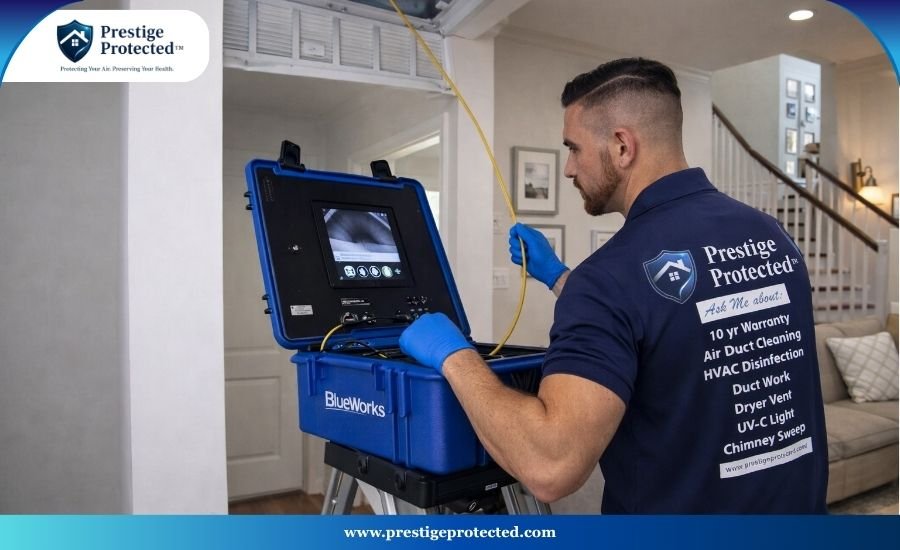
How to tell in ten minutes whether your ducts qualify
You do not need a technician to answer the first question. Every one of the three EPA conditions is something you can look for yourself with a screwdriver and a phone light, and it takes about ten minutes in an average Triangle house.
- Take the cover off one supply register in a bedroom. Shine a light straight down the run. You are looking for loose debris sitting in the bottom of the duct, not a light film on the metal.
- Do the same at the largest return grille, usually in a hallway or near the air handler. Returns collect far more than supplies do, so if anything is going to look bad, it is this one.
- Open the filter slot. Pull the filter and look at the face of the coil behind it. A coil you cannot see daylight through is restricting airflow, and that is a real problem whatever the ducts look like.
- Look at the seams where flex duct meets the boot at the ceiling or floor. Insulation shedding into the airstream, or a run that has pulled loose, is a repair question rather than a cleaning question.
- Photograph anything that looks wrong. If you call anyone out afterwards, that photo is the thing that keeps the conversation honest.
If all five checks come back clean, your money is better spent on a better filter and a coil check than on a duct cleaning. We would rather tell you that now than after we have taken payment.
Duct cleaning has never been shown to actually prevent health problems. Neither do studies conclusively demonstrate that particle (dust) levels in homes increase because of dirty air ducts.
U.S. Environmental Protection Agency, Should You Have the Air Ducts in Your Home Cleaned?
We quote that on our own service page on purpose. It is the single most useful sentence a homeowner can read before booking, and any company that hides it is selling you something other than the work.
The number that puts this in proportion
EPA exposure studies found indoor levels of about a dozen common organic pollutants running two to five times higher inside homes than outside, in rural and industrial areas alike, and people spend approximately 90 percent of their time indoors. Those two figures are the honest case for taking indoor air seriously.
They are not, by themselves, a case for cleaning your ducts, and you will see them used that way in a lot of advertising. Filtration, ventilation and moisture control move those numbers in every house. Duct cleaning moves them in the specific houses where there is something in the ducts to remove. That is the whole distinction, and it is the reason this page exists.
Before you book anything, it is worth reading our plain guide to which HVAC filter to use in a Cary or Raleigh home. Getting the filter right first is cheaper than a cleaning and it answers the question for a lot of houses.
Frequently asked questions
Is air duct cleaning a waste of money?
No, when there’s a real reason (mold, pests, heavy debris, post-renovation dust). It’s a waste only when it’s sold on a routine schedule with no inspection and no problem to address.
Does air duct cleaning really improve air quality?
It improves the air when the ducts contain a genuine source of contamination, mold, debris, or pests. For an already-clean system the effect is modest. The EPA notes cleaning hasn’t been proven to prevent health problems on its own.
How do I know if my air ducts actually need cleaning?
Look for visible dust pushing from registers, musty odors, recent renovation, mold, or pest activity. The most reliable way is a visual inspection, we offer an inspection before recommending any work.
Why are some air duct cleaning prices so cheap?
Very low “whole-home” prices are typically a “blow-and-go” that doesn’t properly clean the system and is used to upsell on site. A thorough, source-removal cleaning takes time and professional negative-air equipment.
How often should air ducts be cleaned?
Every 3-5 years for most homes, and sooner with pets, allergies, renovations, or high humidity. See our full guide on how often to clean air ducts.
Does air duct cleaning help with allergies?
Not on its own. Allergy symptoms in Triangle homes usually track pollen coming in through doors, windows and the return side of the system, plus dust generated indoors. A cleaning removes what is sitting in the ducts, which helps if there is a lot of it, but the filter you run afterwards does more day to day. If allergies are the main reason you are calling, ask about filtration and coil condition first.
Is duct cleaning worth it in a brand new home?
Often yes, and for a different reason than in an older house. Drywall dust, sawdust and insulation fibers get into open ductwork during construction and stay there. A post-construction cleaning before you move in is one of the few cases where the timing genuinely matters.
Will cleaning my ducts lower my power bill?
Do not count on it from the ducts alone. What does measurably restrict airflow is a loaded filter or a dirty evaporator coil, and ENERGY STAR is direct about the filter: a clogged one makes the system work harder to move the same air. If saving energy is the goal, start with the filter and the coil.
What should I check before I hire a duct cleaning company?
Ask for an itemized written quote before the visit, ask whether the price covers every supply and return or a set number of vents, and ask to be shown the inside of your own system on camera before and after. A company that will not put the scope in writing is not quoting, it is advertising.
Related reading
- Air duct and dryer vent cleaning in Cary, NC
- Air duct and dryer vent cleaning in Raleigh, NC
- What air duct cleaning costs in the Triangle
- Signs your air ducts actually need cleaning
- Duct cleaning scams and how the $99 offer works
Last updated by the Prestige Protected service team.
Not sure if your ducts need cleaning?
Get a no-pressure quote. We’ll show you what’s inside and give you an honest recommendation.
FAQ