
Air Duct · New Construction
New homes almost always have construction debris left inside the ductwork, drywall dust, sawdust, and small materials that get sealed in during the build and then circulate once the HVAC runs. Cleaning the ducts after construction (ideally before move-in) removes that debris at the source. In the fast-growing Triangle, it’s one of the most worthwhile times to clean.
Reviewed by the Prestige Protected Team · Updated June 2026 · Cary, Raleigh & the NC Triangle
Quick answer
Newly built homes routinely have drywall dust, sawdust and packaging debris sealed inside the ductwork during the build. A post-construction duct cleaning removes it at the source, ideally scheduled after the builder’s final clean and before move-in. One visit, three to five hours for a typical single-system home, with before-and-after photos of your own ducts included.
Why do newly built homes need duct cleaning?
During construction, ducts are often open while drywall is cut and sanded, lumber is trimmed, and dust settles everywhere. Even with covers, fine particulate ends up deep in the supply and return runs. When you move in and the system starts cycling, that debris recirculates as household dust and can aggravate allergies.
What we typically find in new homes
- Drywall dust and joint-compound powder
- Sawdust and wood shavings
- Nails, screws, drink caps, and other small debris
- Insulation fragments near registers
When should you clean a new home’s ducts?
The best time is after construction is fully complete and before or just after move-in. Booming Triangle towns like Apex, Holly Springs, Wake Forest, and Rolesville see the most new-build cleanings. See our air duct cleaning service and the cleaning process.
Talk to a Triangle specialist
FAQ & related
Frequently asked questions
Do new homes really need air duct cleaning?
Yes, construction leaves drywall dust and debris in the ducts that recirculates after move-in. Cleaning it once at the start is genuinely worthwhile.
When should I clean ducts in a new build?
After all construction is finished and before or right after move-in, so you start with a clean system.
Why the builder’s final clean does not cover the ducts
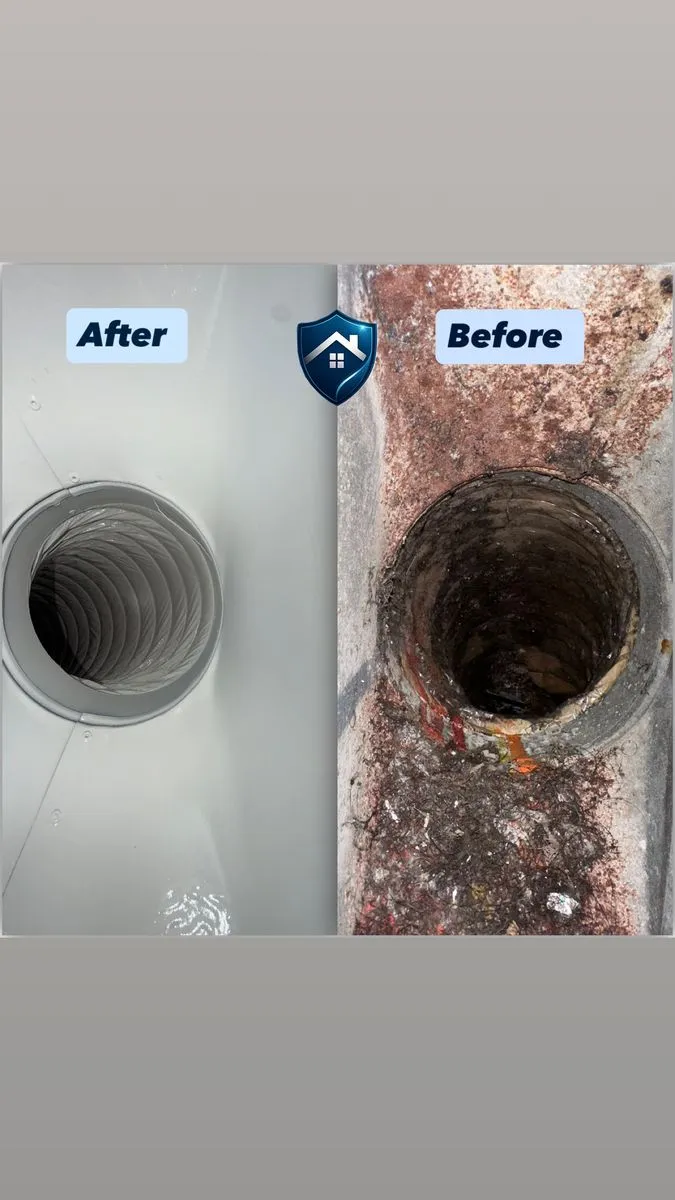
A construction final clean handles what you can see: floors, counters, windows, fixtures. But for weeks before that, the duct openings sat uncovered while drywall was cut and sanded overhead, and drywall dust is exactly the fine, silica-heavy particulate you do not want recirculating through a new HVAC system. The filter cannot help, because the debris is downstream of it, sitting in the supply runs between the air handler and your registers. The EPA lists significant renovation and construction debris among the conditions that actually warrant a duct cleaning, and a brand-new build is the clearest case of it.
When to schedule it
- Best: after the builder’s final clean and before move-in, the crew works in an empty house and you start with a verifiably clean system.
- Also good: in the first weeks after move-in, especially if you notice a fine white dust resettling on surfaces you just wiped.
- Worth pairing: a quick dryer vent check, new-build vent runs are sometimes crushed or disconnected behind the wall before the first load ever runs.
What the visit includes
The same source-removal process we use on every job: a camera inspection that photographs the debris (builders are sometimes surprised too), negative-air containment so nothing escapes into your new finishes, mechanical agitation of every supply and return run, washed registers, and after photos taken at the same spots as the before photos. See the step-by-step process, what a cleaning costs, or the related guide to duct cleaning after a renovation. We serve new construction across Raleigh, Cary, Apex, Wake Forest and the wider Triangle.
The ductwork was open for months. That is the whole story of a new house. Every trade that generated dust worked in a building whose supply and return openings were sitting there uncovered, and a lot of that dust is still in the system on the day you get the keys.
What actually gets into the ducts during construction
It helps to walk the build in order, because each stage contributes something different and none of it is speculation. This is the sequence we see in the camera footage.
- Rough-in. Trunk lines and branch runs go in early, long before there is a filter, a grille or a door. Offcuts of duct board, insulation fluff, screws and the odd soda can go in at this stage. We have pulled all of those out of five-year-old houses.
- Drywall hang and sand. The single largest contributor. Joint compound sanding produces an extremely fine dust that travels everywhere and settles on every horizontal surface, including the inside floor of a duct run. It is also the dust most likely to keep reappearing on your furniture for a year.
- Flooring, tile and trim. Saw cuts produce wood dust and, with tile or stone, silica dust. Both are heavier than drywall dust and tend to sit in the first few feet of a run near the room where the cutting happened.
- Paint and finish. Overspray and sanding dust, plus the solvent smell that a lot of new-home owners notice for the first few weeks and blame on the carpet.
- Temporary conditioning. This is the step most homeowners never hear about. The HVAC system is often run during the finish stages to control temperature and humidity so the drywall and flooring behave. If it ran without a filter, or with a cheap builder filter, the system spent weeks actively pulling construction dust into itself.
- The final clean. Cleaners vacuum floors, wipe surfaces and wash windows. They do not open the ductwork. That boundary is the reason this page exists.
The five-minute test for a new house
You do not need us to tell you whether your house has this problem. You can find out yourself this afternoon.
- Take one supply register off in an upstairs bedroom. Phone light in. Fine pale grey powder, chalky to the touch, is drywall dust. Curls of insulation or a wood offcut settle the question completely.
- Pull the filter. On a house under two years old, a filter that is grey rather than tan and looks caked after only a month or two is being fed by the ducts, not by your living.
- Run a finger along the top of a door frame or a high shelf. If a chalky film keeps coming back a week after you dusted, something is still supplying it.
- Look at the return grille. Fuzz on the outside is normal household lint. A grey powder line along the louvers is construction dust circulating.
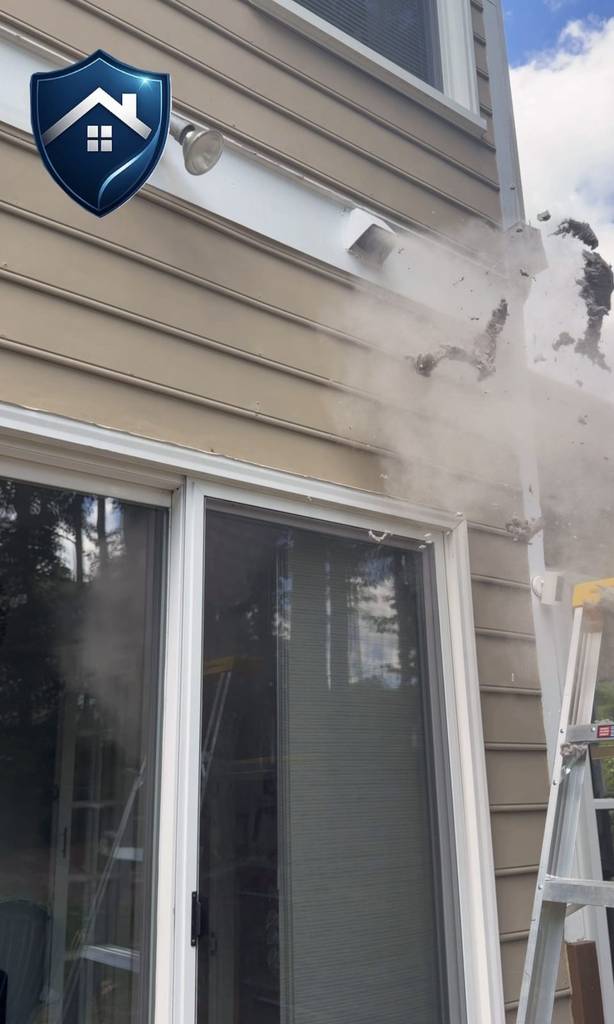
- Check the laundry line while you are at it. New builds are the most common place we find a dryer vent that was never connected properly, or one still holding the plastic shipping plug behind the wall cap.
Before you move in, or after?
Before, if you have the choice, and the reason is purely practical: an empty house is faster to work in, we can pull every register without moving furniture, and any dust we disturb settles on a floor rather than on your sofa. If your closing schedule allows a day between the walk-through and the moving truck, that is the ideal window.
After is completely fine, and it is what most people end up doing. The work is no less effective; it just takes a little longer and we spend more time protecting your things. What we would not do is tell you to rush a closing over this.
One timing note that matters more than the move-in question: if you are having any additional work done after you take possession, built-ins, a closet system, a bathroom change, wait until that dust-producing work is finished. Cleaning the ducts and then sanding drywall in the same house is money spent twice.
What the EPA says, so you can decide honestly
We would rather you make this decision on the evidence than on a sales pitch. The U.S. Environmental Protection Agency does not recommend routine duct cleaning, and states plainly that duct cleaning “has never been shown to actually prevent health problems.” What it does identify are specific conditions that justify the work: substantial visible mold growth inside the ducts, vermin, or ducts that are clogged with excessive amounts of dust and debris such that particles are actually being released into the home from the registers.
A new house with construction debris in the runs is the clearest real-world example of that third condition we encounter. That is why this is one of the few jobs we will actively recommend rather than talk you out of. Equally, if you take the registers off and find nothing but a clean galvanized surface, we will tell you to keep your money and put a decent filter in.
The follow-up habit matters too. ENERGY STAR recommends inspecting, cleaning or changing air filters once a month. In the first year of a new house, monthly is not overkill, because the drywall dust that settled in the wall cavities and above the ceilings keeps working its way into the air for a while.
Warranty, the builder, and what to ask
- Ask in writing whether the ducts were cleaned before handover. Most contracts do not include it. A one-line email answer is worth having either way.
- Ask whether the system was run during construction and with what filter. This is the question that predicts what we will find.
- Ask about the dryer vent termination. Whether the cap flap operates, whether the shipping plug was removed, and whether the run matches the plans. New builds fail on this surprisingly often.
- If your builder warranty covers an air quality complaint, our photos and written findings are what you would attach to that claim. Several customers have used them exactly that way.
- Know what we do not do. We clean, inspect, sanitize and document. We do not seal ducts and we do not replace ductwork. If your new house has a genuine duct design or installation defect, that is a builder and licensed HVAC contractor problem, and our report is the evidence you hand them.
Last updated by the Prestige Protected service team.
More new-construction questions
My home is brand new: can the ducts really be dirty?
Yes, and it surprises most buyers. The ducts are installed early and sit open through drywall sanding, flooring cuts and paint prep. The camera inspection settles it in minutes with photos of your own system, and if your builder protected the ducts well and they are clean, we tell you that instead of selling you a cleaning.
Should I clean the ducts before or after moving in?
Before move-in is ideal: the house is empty, nothing needs covering, and the system starts clean on day one. After move-in works fine too, the negative-air containment keeps dust out of your living space either way.
Does the builder’s warranty cover duct cleaning?
Usually not, construction dust in ducts is treated as normal, not a defect. Some buyers negotiate it into the final walkthrough list instead. Bring photos from a camera inspection and you have a much stronger case with the builder.
How long does a new-construction duct cleaning take?
Three to five hours for a typical single-system home, similar to any thorough cleaning. Larger two-system homes, common in newer Triangle subdivisions, take longer, the written quote states it up front.
The builder said the house was professionally cleaned. Does that include the ducts?
Almost never, and it is worth asking in writing rather than assuming. A construction final clean is a surface clean: floors, windows, fixtures and countertops. Opening the supply and return runs and removing what settled inside them is a separate scope that very few builder contracts include.
How new is too new to bother?
There is no minimum age, because the debris arrives during the build rather than accumulating afterward. We have cleaned houses that were three weeks old and found more in them than in a well-kept twenty-year-old home. The question is not how old the house is, it is what the registers show when you look inside.
Will cleaning void my builder or HVAC warranty?
Nothing about brushing and vacuuming the interior of a duct affects equipment warranty coverage, and we do not open the sealed refrigerant circuit or alter the equipment. If your paperwork contains an unusual clause, send it to us before the appointment and we will read it rather than guess.
How long does a new-construction cleaning take?
Most Triangle homes run about two to four hours depending on the number of registers, the number of systems and how much material is actually in there. Houses with two air handlers and thirty-plus registers take the longer end. We give you a time estimate after we have looked, not before.
My house is three years old and the grey dust keeps coming back. Is that the ducts?
It is the most likely single explanation, and it is testable in five minutes with a register off and a phone light. Construction dust does not all settle in the ducts; plenty of it sits above ceilings and in wall cavities and migrates for years. Cleaning the ducts removes the part that the system keeps recirculating, which is usually the part you notice.
Should I get the dryer vent checked in a new house too?
Yes, and we would rather you did it now than after a year of long drying cycles. New-build vent problems are usually installation errors rather than lint: a crushed section behind drywall, a run that is longer than the code allows, a cap whose flap does not open, or a shipping plug left in place. The U.S. Fire Administration identifies failure to clean as the leading cause of home clothes dryer fires at 31 percent, and a brand-new blocked run counts.