TL;DR: Quick Answer
Mold in a Cary HVAC system or air ducts spreads spores and a musty smell through the whole house every time the unit runs. Prestige Protected finds the source, physically removes the mold with HEPA-filtered equipment, treats the surfaces with EPA-registered products, and corrects the moisture problem so it does not simply grow back. We serve all of Cary, NC, usually with same-day or next-day scheduling. Call (888) 404-8321. The EPA’s practical dividing line is about 10 square feet, roughly a three-foot by three-foot patch: below that most homeowners can clean up safely, above it the work should be professional.
What indoor humidity level keeps mold from coming back in a Cary home?
Below 60 percent relative humidity, and ideally between 30 and 50 percent, which is the range the EPA publishes. In a Cary summer that usually needs a dehumidifier in the crawlspace or basement rather than the air conditioner alone, because the air conditioner only dehumidifies while it is running. Put a hygrometer in the problem area and read it for a week before buying equipment.
Is mold removal the same thing as mold remediation?
They get used interchangeably, but remediation is the broader job. Removal describes taking the growth off or out. Remediation covers finding and fixing the water, containing the area, removing the affected material, treating what stays, drying to a verified reading, and documenting it. A quote for removal that says nothing about the moisture source is quoting half the work.
How big does a mold patch have to be before I should stop cleaning it myself?
The EPA draws a practical line at about 10 square feet, roughly a three-foot by three-foot patch. Below that, a homeowner using proper gloves, goggles and an N-95 can often handle it. Above that, or after significant water damage, containment and worker protection start to matter and the EPA points people to professional remediation guidance.
Can I just run a dehumidifier and skip the remediation?
A dehumidifier stops new growth by removing the conditions for it, which is why it belongs in the plan. What it will not do is remove what is already there, and dead or dormant mold still holds the allergen. Drying is half the answer. Removing the affected material is the other half.
Why does my Cary house smell musty in July but not in January?
Because the driver is outdoor dew point rather than temperature. Through the summer, humid outside air reaches cooler surfaces under the floor and inside unconditioned spaces and condenses on them. In winter the outdoor air holds far less moisture, the condensing stops, and the smell fades without anything having been fixed. A smell that returns every summer is a moisture problem on an annual timer.
Do you have to open up walls to do mold remediation?
Only where the affected material is inside them, and that should be established before the drywall saw comes out. Moisture meter readings, a borescope, or a thermal pass will normally tell you whether the cavity is wet. If a company proposes opening walls without having taken a reading, ask what the reading was.
Will my homeowners insurance pay for mold removal in Cary?
It depends on the cause and on your policy. Most policies treat a sudden event such as a burst pipe differently from damage caused by long-term humidity or a leak left unaddressed. Photograph everything before work starts, note when you first noticed it, and call your insurer before the remediation begins. We provide the written scope and photographs an adjuster asks for, but the coverage decision is theirs.
Can the mold come back after you have treated it?
If the water source is corrected and the humidity stays in range, it should not return in the same place. If it does come back, that is information rather than bad luck, and it means the moisture was never fully found. The EPA is direct that a cleanup cannot be considered finished until the water problem has been completely fixed, which is why we treat the moisture reading as part of the job rather than an extra.
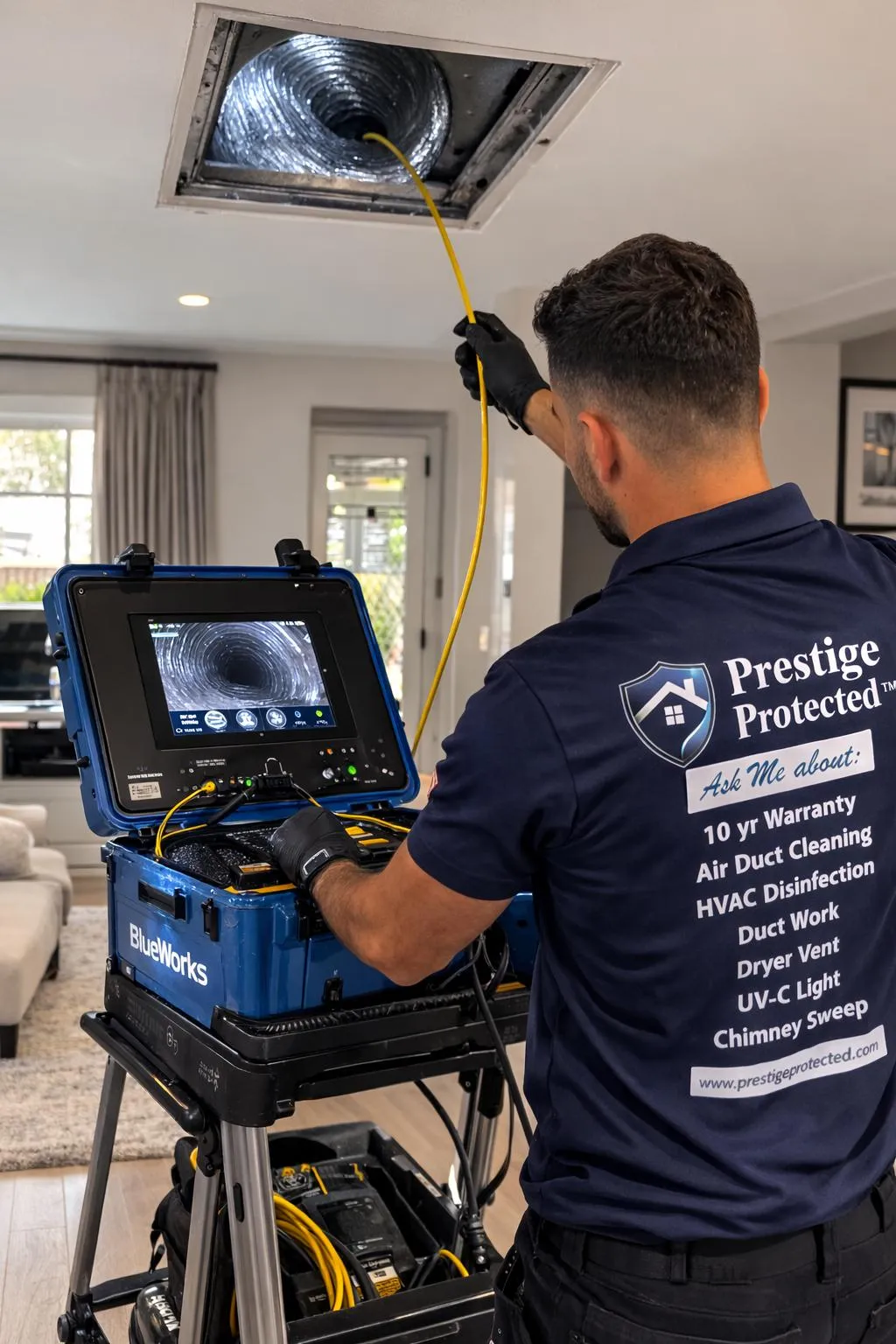
Yes, mold in your ducts or HVAC equipment can be removed, but the job is only done right when the moisture that caused it is fixed at the same time. Prestige Protected provides professional mold removal and remediation for homes across Cary, NC, with a focus on the air handler, coil, drain pan and ductwork where mold most often takes hold. We inspect the source, contain the area, physically remove the contamination, treat surfaces with EPA-registered products, and then address the water problem so the mold does not return.
Why mold shows up in Cary HVAC systems
Cary’s warm, humid climate is close to ideal for mold. When warm, moist summer air meets the cool surfaces inside an air conditioner (the evaporator coil, the drain pan and the nearby ductwork), condensation forms, and any dust already sitting there becomes food for mold. The U.S. Environmental Protection Agency notes that water-damaged areas and items should be dried within 24 to 48 hours to prevent mold growth, which is why a small drainage clog or a stretch of high indoor humidity can turn into a visible, smelly problem faster than most homeowners expect.
Because the air handler pushes air through the whole house, mold that starts at the coil or in a single duct branch does not stay put. Every time the system cycles on, it can carry spores and that unmistakable musty odor into every room, which is why treating the problem at the source matters more than masking the smell.
Signs of mold in your ducts or HVAC
- A persistent musty or earthy smell that gets stronger when the system runs
- Visible mold around vents, on the air handler, or on the coil and drain pan
- Allergy-like symptoms, such as sneezing, congestion and itchy eyes, that ease when you leave the house
- Standing water or heavy condensation near the indoor unit
- A recent leak, water damage, or a long stretch of high indoor humidity
Our mold removal process
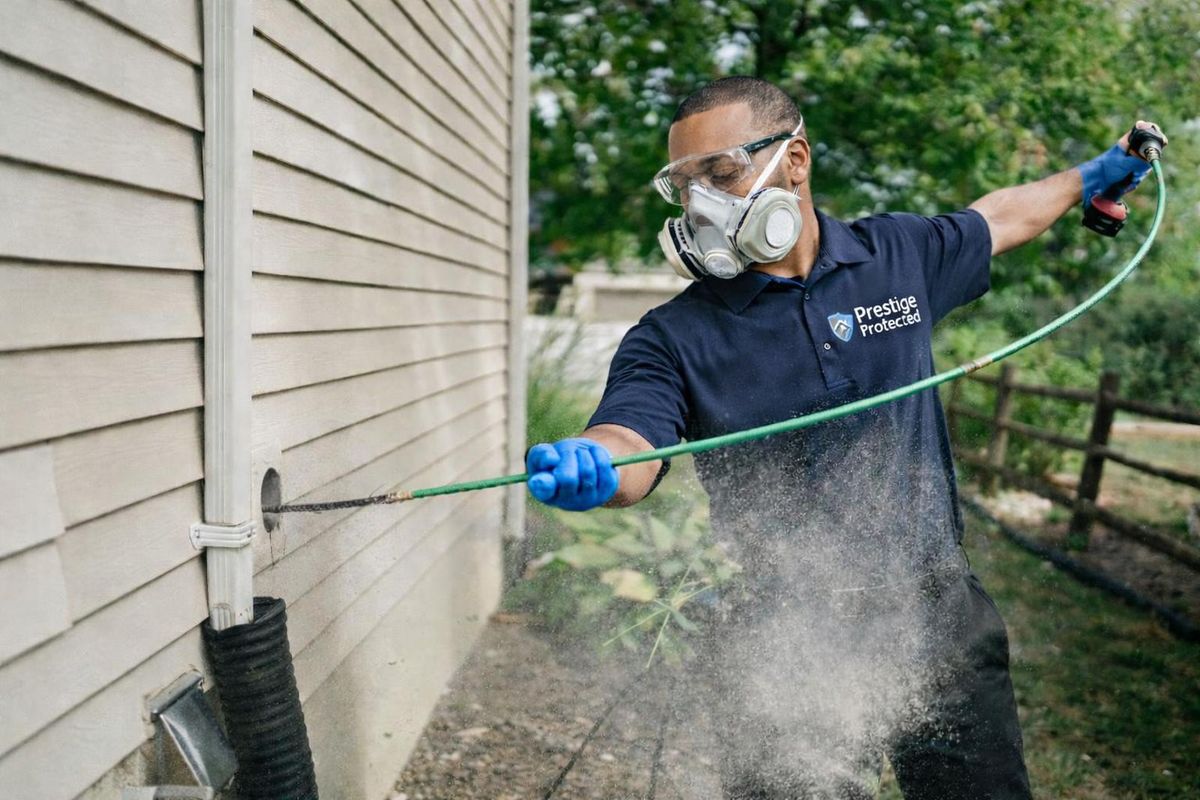
We start with an HVAC inspection and an indoor air quality assessment to find where the mold is and why it is there. We then contain the work area, physically remove the contamination using HEPA-filtered, source-removal air duct cleaning equipment, and apply an EPA-registered antimicrobial to the affected surfaces. Finally, we address the underlying moisture, whether that is drainage, condensation or humidity, because the EPA is clear that mold control comes down to moisture control. Removing mold without fixing the water problem only invites it back within weeks.
Why fixing the moisture is the real fix
Scrubbing or fogging away visible mold feels like a solution, but if the coil keeps sweating onto a clogged drain pan or the home stays above roughly 60 percent humidity, the mold has everything it needs to return. That is why every job includes checking the condensate drain, confirming the pan drains cleanly, and talking through humidity control, from a properly sized system to a dehumidifier where one makes sense. The goal is a system that dries out between cycles instead of staying damp, which is the single most reliable way to keep mold from coming back in Cary’s climate.
What does mold removal cost in Cary, and what drives the price?
Nobody can give you an honest mold remediation price over the phone, and any company that does is quoting a job it has not seen. What we can do is tell you exactly what moves the number, so you can read the quotes you receive instead of guessing at them.
Four things account for most of the difference between a modest bill and a large one:
- How much surface is affected. The EPA draws a practical line at roughly 10 square feet, about a three-foot by three-foot patch. Below that, a homeowner can often handle it. Above that, or after significant water damage, the EPA points people to professional remediation guidance because containment and worker protection start to matter.
- Where it is. Mold on an evaporator coil and drain pan is a contained, mechanical job. Mold that has moved into duct insulation, subfloor, or crawlspace framing means more removal, more containment and more drying time.
- Whether the water is still there. A remediation that does not stop the moisture is a temporary one. If there is a live leak, a failed condensate drain or a wet crawlspace, that repair is part of the real cost of solving the problem, whether we do it or another trade does.
- What has to be removed rather than cleaned. Hard surfaces can be cleaned. Porous materials that stayed wet, such as saturated insulation or affected drywall, generally come out instead.
We inspect first, then give an itemized written quote that separates the remediation from any moisture repair, so you can see what you are paying for and take the quote to a second company if you want to compare it. If we look at your system and think a straightforward cleaning solves it, we will say so rather than sell you a remediation.
What should I do about black mold in a Cary crawlspace?
Crawlspace growth is the most common mold call we get in Cary, and it is almost always a humidity story rather than a mystery. Vented crawlspaces pull in warm, wet Piedmont summer air, that air hits cool surfaces under the floor, and the moisture condenses on joists, subfloor and duct insulation. Add a slow supply-line drip or poor grading outside, and growth follows quickly. The EPA notes that water-damaged areas and items should be dried within twenty-four to forty-eight hours to prevent mold growth.
Three things are worth doing before you take a single quote:
- Do not disturb it. Scrubbing or spraying visible growth pushes spores into the air and into your ducts. Photograph it and leave it alone.
- Find the water. Look for a dripping supply line, a disconnected dryer duct venting into the crawlspace, standing water after rain, or a vapor barrier that is torn or missing. Whatever put the water there will put it back.
- Check whether the ductwork runs through it. In most Cary homes with a crawlspace it does. If the duct insulation is damp or the flex duct is sagging into a wet area, the crawlspace problem is now an indoor air problem, because the system carries it upstairs every time it runs.
Being straight about scope: we remediate mold and we handle everything on the air side, including the air handler, coil, drain pan, ductwork and registers. We do not do structural repair, foundation drainage or crawlspace encapsulation, and we do not replace ductwork or perform duct sealing. If your crawlspace needs any of those, we will tell you plainly and you will want a waterproofing or general contractor for that part. Cleaning the air side while a crawlspace stays wet is money spent twice.
Musty smell after a water leak? Here is the order of operations
A musty smell that shows up in the days after a leak, an overflowed pan or a burst line is the single most reliable early warning of mold you will get. Smell arrives before you can see anything, because growth usually starts inside a wall cavity, under flooring or in duct insulation where nobody is looking.
What to do, in order: stop the water, then dry the space aggressively with fans and a dehumidifier, then keep the fan on your HVAC system off if you suspect the equipment or ducts were involved, since running it spreads spores through the house. Once the source is dry, have someone look at the coil, the drain pan and any ductwork near the leak. If the smell only appears when the system runs, the system is where the problem lives.
One caution worth repeating: a mold smell that gets covered by an air freshener or a scented fogger has not gone anywhere. Odor treatment without source removal is a red flag, whoever is offering it.
Urgent situations and same-day assessments
Some situations genuinely should not wait a week. Standing water in a crawlspace or basement, a leak that ran for days before anyone noticed, visible growth spreading across a wall, or a household member with asthma reacting to the air all move to the front of the schedule.
For Cary homes we can usually get out for an assessment the same day or the next day. When you call, say up front that there is active water or a recent flood, because that changes how we sequence the visit: drying comes before remediation, and remediation before any cosmetic repair. Doing those in the wrong order is the most common way a mold job has to be redone.
Mold testing, clearance reports and what each is actually worth
Testing is useful in specific situations and a waste of money in others. If you can see growth and you know where the water came from, a lab result rarely changes the plan: it is already a moisture problem and it already needs removing. Testing earns its place when people are having symptoms and nobody can find a source, when you need documentation for a property sale or an insurance claim, or when you want an independent check that a completed job actually worked.
That last one is what a clearance report is. After remediation, an independent assessor inspects the area and samples the air, then issues a written report stating whether conditions have returned to normal. The important word is independent. A clearance test carried out by the same company that did the removal is marking its own homework, which is why we recommend a separate third-party industrial hygienist or environmental consultant for it when a formal report matters.
We offer indoor air quality testing and inspection as part of our own work, and we are happy to coordinate around a third-party clearance test if your sale, lease or insurance claim requires one.
How to compare mold removal companies in Cary
Homeowners usually get three quotes and find they cannot compare them, because each one describes a different job. These five questions make quotes comparable, and you should ask us the same ones.
- Did you inspect before quoting? A number given before anyone has seen the space is a guess, and guesses go up once work starts.
- What is your plan for the moisture? If the answer is only about killing mold and never about water, the mold comes back. The EPA is explicit on this point:
The key to mold control is moisture control.
- What are you actually removing versus treating? Physical removal of the growth is the work. Chemical treatment is a finishing step, not a substitute.
- What training do your technicians have, and can you put it in writing? North Carolina does not issue a state mold remediation license, so the phrase “licensed mold remediator” carries no state meaning here. The recognized industry training in this trade is the IICRC framework. Ask any company, including us, what its people are trained in and get the answer in writing rather than as a badge on a website.
- What does the written scope include, line by line? Containment, removal, disposal, treatment, drying and any repairs should each be visible on the page.
On our own side of that: we publish no certification logos we cannot document, we do not advertise a flat phone price for remediation, and we put what we found and what we did in writing with photographs. If a competing quote is dramatically cheaper, read the scope before you read the number, because the gap is almost always in what was left out.
Is bleach the right way to treat mold?
Homeowners often ask for the strongest chemical available. The EPA advises the opposite. Its guidance states: The use of a chemical or biocide that kills organisms such as mold (chlorine bleach, for example) is not recommended as a routine practice during mold cleanup.
It also notes that dead mold may still cause allergic reactions in some people, which is why physically removing the growth matters more than chemically killing it. Source: EPA, Mold Cleanup in Your Home. Bleach on a porous surface also mostly leaves water behind, which is the one thing mold wanted in the first place.
Our sequence is containment, HEPA-filtered physical removal of the growth and the dust it lives in, then an EPA-registered antimicrobial applied to hard surfaces as a finishing step, then the moisture correction. Products are applied according to their labels, and we will tell you what we are using and how long to stay out of the area. That matters most in homes with young children, pets or anyone with respiratory sensitivity, so tell us about them when you book.
The humidity number that decides whether Cary mold comes back
Every mold job in Cary eventually comes down to one measurement: relative humidity. The EPA states the target plainly:
“Keep indoor humidity low. If possible, keep indoor humidity below 60 percent (ideally between 30 and 50 percent) relative humidity.”
U.S. EPA A Brief Guide to Mold, Moisture and Your Home
A Cary summer makes that harder than the sentence suggests. Outdoor air here sits at a high dew point for months, so any part of the house cooler than the incoming air becomes a condensing surface: a crawlspace floor, a duct run in an unconditioned space, the back of a closet on an exterior wall, a supply boot in a slab. A hygrometer costs less than a takeout meal, and the EPA notes these instruments run roughly ten to fifty dollars at hardware stores. Put one in the room that smells and one in the crawlspace, and read them for a week before spending anything.
This is why a remediation quote that says nothing about humidity is incomplete. If the reading stays above sixty percent, the same growth will return on whatever surface is cheapest for it, and the second visit will look exactly like the first.
The first 48 hours after you find mold or water
The window matters more than the product you spray. The EPA is specific about the timescale:
“It is important to dry water-damaged areas and items within 24-48 hours to prevent mold growth.”
U.S. EPA A Brief Guide to Mold, Moisture and Your Home
If you have just found a wet patch, a musty closet or growth behind a piece of furniture, this is the order that gives you the best outcome and the smallest bill.
- Stop the water. Shut the supply to a leaking fixture, clear a blocked condensate drain, move the downspout. Nothing else you do matters until this is done.
- Photograph everything before you touch it. Wide shot, close shot, and something in frame for scale. This is the evidence an insurer asks for and it cannot be recreated later.
- Get air moving and water out. Fans, a dehumidifier, and wet material lifted off the floor. Twenty-four hours of drying beats any spray.
- Leave the HVAC off if you suspect the system is involved. The EPA warns against running a system you know or suspect is contaminated, because it can spread mold throughout the building.
- Do not paint or caulk over it. The EPA is explicit that paint applied over moldy surfaces is likely to peel, so it buys you weeks and costs you the repair twice.
- Measure the patch. Roughly three feet by three feet is the line the EPA draws between a homeowner job and a professional one. Write the number down before you call anyone.

Where mold hides in a Cary home when you cannot see it
A house that smells musty with nothing visible is the most common call we take. The EPA lists the usual hiding places: the back side of drywall, wallpaper or paneling, the top side of ceiling tiles, the underside of carpets and pads, inside walls around leaking or condensing pipes, wall surfaces behind furniture where condensation forms, inside ductwork, and roof materials above ceilings. Mapped onto the way houses here are built, that becomes a short list of places to look first.
| Where | What it usually means | What normally has to happen |
|---|---|---|
| Crawlspace framing and subfloor | Ground moisture and summer humidity condensing on cool wood, often with a failed or missing vapor barrier | Moisture source corrected, affected framing treated, humidity controlled before anything is closed up |
| Evaporator coil and drain pan | A blocked or slow condensate drain leaving standing water inside the air handler | Coil and pan cleaned, drain cleared, then the duct downstream assessed |
| Duct insulation and flexible liner | Condensation on a run passing through an unconditioned space | Porous liner sections cut out and replaced, insulation replaced |
| Attic roof sheathing | Bathroom or dryer exhaust discharging into the attic, or a ventilation shortfall | Exhaust re-routed outdoors, sheathing treated, ventilation reviewed |
| Behind a closet or wall on an exterior corner | Warm humid air meeting a cold surface, frequently with furniture blocking airflow | Surface treated, airflow and humidity corrected, contents kept off the wall |
| Under carpet after a slow leak | Water tracked along the pad and stayed there past the drying window | Pad discarded, subfloor dried and verified, carpet assessed separately |
Investigating a hidden problem is one of the few places we counsel against curiosity. The EPA warns that removing wallpaper can release a large volume of spores if growth is on the underside. If the smell is strong and the source is not obvious, have someone open it up who arrives with containment equipment.
What gets cleaned, and what has to be thrown away
Homeowners are often surprised that a remediation involves a dumpster. The line runs between hard and porous. Hard surfaces are scrubbed and dried. Porous materials are a different matter, and the EPA puts it this way:
“Absorbent or porous materials, such as ceiling tiles and carpet, may have to be thrown away if they become moldy. Mold can grow on or fill in the empty spaces and crevices of porous materials, so the mold may be difficult or impossible to remove completely.”
U.S. EPA A Brief Guide to Mold, Moisture and Your Home
In practice, in the houses we work in, that means carpet pad, fiberglass duct liner, saturated insulation, cardboard storage in a crawlspace and the lower edge of affected drywall usually leave the property. Framing, sheet metal, plenum surfaces, tile and finished wood usually stay and get treated. One more point that catches people out: the EPA notes that dead mold can still cause allergic reactions, so killing growth is not the same as removing it. A treatment that only sterilizes leaves the material and the allergen behind.
There is a related trap in the other direction. A quote that proposes gutting a room to solve a smell, without ever having measured the humidity or found the water, is solving the wrong problem expensively. Ask what the moisture reading was and where the water came from. If nobody can answer, nobody has finished diagnosing.

The order of work on a mold job, and why it matters
The order is the part that gets skipped. Finding and stopping the water comes before any treatment, because a remediation that leaves the moisture in place is a temporary one. Containment protects the rest of the house while affected material comes out. Porous material is removed rather than cleaned. Hard surfaces are treated and dried. Then the equipment stays on site until the readings confirm the area is dry, and the whole thing is written up with photographs. A quote that starts at step five is quoting a fraction of the job.
How long does a Cary mold remediation take?
A contained job on a coil, a drain pan and the duct immediately downstream is usually a single visit. A crawlspace with affected framing and subfloor normally runs across several days, because drying equipment has to stay on site until the readings come down, and no honest company will call it finished before then. The variable is almost never the treatment. It is the drying.
What that means for scheduling: ask for the expected number of days and what the exit reading is, and expect a written answer. If a company quotes a mold job in a crawlspace as a two-hour visit, it is quoting a spray rather than a remediation.
Frequently asked questions
Can you remove mold from air ducts and HVAC systems?
Yes. HVAC and duct mold is one of our specialties. We remove mold from ductwork, the air handler, the coil and the drain pan, treat the surfaces with EPA-registered products, and then correct the moisture source so it does not return.
Will cleaning the ducts get rid of the mold for good?
Cleaning removes the existing mold, but lasting results depend on fixing the moisture that caused it. That is why every job includes checking drainage, condensation and humidity, as well as cleaning the growth you can see.
Is mold in air ducts dangerous?
Mold can affect indoor air quality and trigger allergy or asthma symptoms in sensitive people, according to the U.S. EPA. If you can see or smell mold around your HVAC system, it is worth having it inspected and removed promptly.
Do you serve all of Cary?
Yes. We cover all of Cary and the surrounding Triangle communities, typically with same-day or next-day scheduling.
How soon can you come out?
In most cases we can schedule an inspection the same day or the next day. If you have standing water or a recent leak, let us know when you call so we can prioritize it before the mold spreads further.
How much does mold remediation cost in Cary, NC?
It depends on how much surface is affected, where the growth is, and whether the water that caused it still needs fixing. We inspect first and give an itemized written quote instead of a flat phone price. Mold confined to a coil and drain pan is a far smaller job than growth that has reached duct insulation or crawlspace framing.
Do you offer same-day mold assessments in Cary?
In most cases yes, same day or next day for Cary addresses. Tell us when you call if there is standing water or a recent leak, because active water changes the order of the work: drying comes first, then remediation, then any repair.
Is the mold in my crawlspace why my house smells musty?
Very often, yes. Most Cary crawlspaces carry ductwork, and a vented crawlspace in a humid summer condenses moisture on cool duct surfaces. Once the air handler runs, that smell moves through the house. If the odor is stronger when the system is running, the air side is involved.
Do you provide mold testing and a clearance report?
We provide inspection and indoor air quality testing. For a formal post-remediation clearance report we recommend an independent third-party assessor with no stake in the outcome, since a clearance test should not be run by the people being cleared. We coordinate around that testing when a sale, lease or insurance claim requires it.
Are your mold treatments safe around children and pets?
We use EPA-registered products applied strictly to label directions, and the bulk of the work is physical HEPA-filtered removal, with chemistry doing very little. Tell us about young children, pets or anyone with asthma when you book, and we will explain what we are using and how long to keep the area clear.
What certifications should a mold removal company in Cary have?
North Carolina does not issue a state mold remediation license, so that phrase means nothing here. The recognized training framework in this trade is IICRC. Ask any company what its technicians are trained in and ask for it in writing. We do not display credential badges we cannot document.
Does cleaning the air ducts count as mold remediation?
Not by itself. Duct cleaning removes what is inside the ducts. If the growth is on the coil, in the drain pan, in duct insulation or on building materials, that is remediation work, and if the moisture source is still active neither one holds. We look for the water first and tell you which job you actually need.
Related reading: mold in air ducts: signs & what to do and musty smell from air vents. Serving Cary from our full air duct & dryer vent cleaning team; we also offer mold removal in Raleigh.
Last updated by the Prestige Protected service team.
Get mold removal in Cary, NC
Inspection, source removal and moisture fixes. Call or request a quote.