Category: Uncategorized

Air duct, dryer vent, and HVAC cleaning tips, guides, and updates from Prestige Protected, serving Cary, Raleigh, Durham, and the North Carolina Triangle.

  • How to Prepare for Air Duct Cleaning: What to Do Before We Arrive

    How to Prepare for Air Duct Cleaning: What to Do Before We Arrive

    Air duct cleaning needs about fifteen minutes of preparation from you. Not two hours of moving furniture, and nothing you need to buy. But the fifteen minutes matter, because the most common cause of a slow or partial cleaning is a technician who cannot physically reach half the vents.

    Here is exactly what to do before we arrive, and what you can safely ignore.

    The short version

    Clear a three-foot path to every supply and return vent. Clear the door of the closet, attic hatch or crawlspace where your air handler lives. Put pets in a room we will not be working in. Plan for someone to be home. Expect two to five hours and real noise.

    That is the whole list. The rest of this page explains why each one matters.

    1. Clear access to every vent

    This is the one that actually changes the outcome. A typical Triangle home has between eight and twenty supply registers plus one or two large returns, and every one has to be opened, brushed and vacuumed.

    Walk the house and look at floor level. Sofas and beds pushed over floor registers, boxes stacked in front of a return, a chest of drawers against a wall vent, rugs laid across floor vents. You do not need to move heavy furniture out of the room, just far enough that the grille can be unscrewed and a brush fed into the duct.

    Ceiling registers are usually fine, but if a tall bookcase sits directly beneath one, shift it.

    2. Clear the way to the air handler

    The air handler is where the negative-air machine connects, and it needs a working space rather than a gap. In Triangle homes it is normally in a hallway closet, the garage, the attic or the crawlspace.

    Closet: empty the floor. Attic: clear the hatch and anything stacked under it. Crawlspace: unlock the access door and move whatever is parked in front of it. Garage: leave a clear route from the driveway.
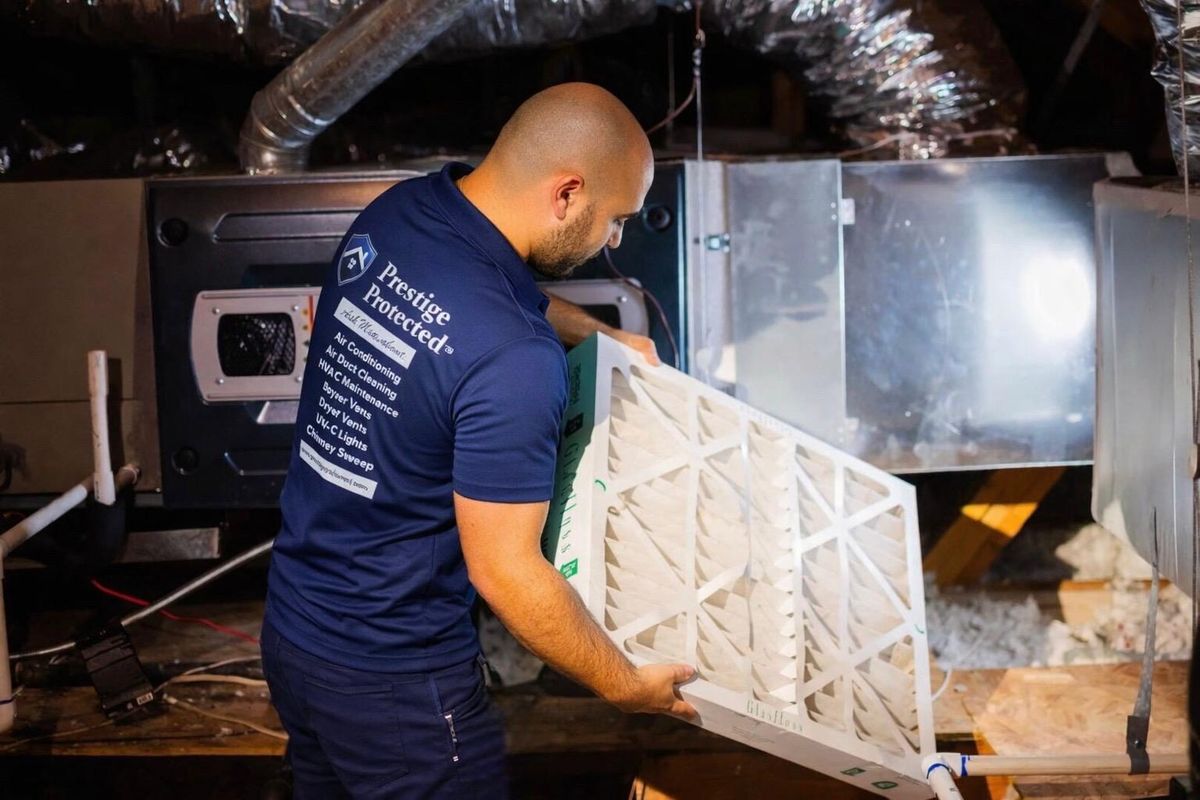
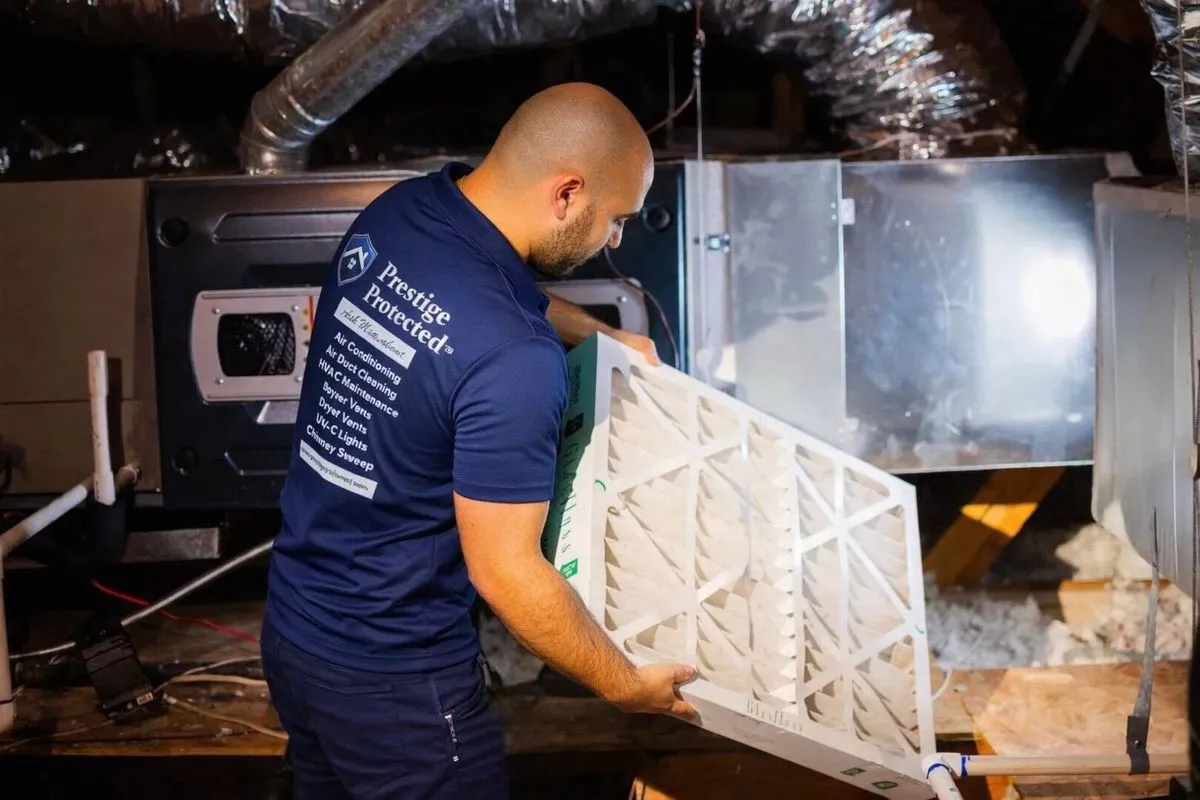
    Prestige Protected technician servicing an HVAC air handler in a home attic
    An air handler in an attic. Clearing the hatch and the space beneath it before we arrive is what keeps the appointment on schedule.

    3. Plan for pets and small children

    The equipment is loud, doors get propped open, and hoses run through the house for hours. Put pets in a room we will not be working in and tell us which one.

    This matters more with cats than dogs, because an open exterior door and a startled cat is the one genuinely bad outcome of a duct cleaning appointment.

    4. Does someone need to be home?

    Yes, for the start and the end at minimum. At the start we walk the house with you and confirm what is included. At the end we show you photographs of your own ducts, before and after.

    If you cannot be there the whole time, be there for those two moments. The handover is the part that tells you whether you got what you paid for.

    5. How long, and how loud

    Two to five hours for most single-system Triangle homes. Two systems, or a house over about 3,000 square feet, can run longer. Our air duct cleaning process page breaks down how long each stage takes.

    It is genuinely loud. The vacuum is a truck-mounted or cart-mounted unit, not a shop vac. If you work from home, schedule calls around it or plan to be out. If there is a baby napping, tell us and we will sequence the rooms around it.

    6. What we bring, and how we protect your home

    Negative-pressure containment, so debris is pulled into a sealed unit instead of into your rooms. Rotary brushes and air whips sized to your ducts. Drop cloths at the air handler and at every access point. Shoe covers. This is what a full air duct cleaning service includes as standard.

    You should not need to clean up after us. If you do, something went wrong, so tell us before we leave.

    7. What you do not need to do

    Do not vacuum or dust beforehand, because we are about to disturb far more than you could. Do not buy a new filter; ask us what size you need and fit it after. Do not turn the system off in advance, as we will shut it down and isolate it ourselves. And do not move heavy furniture. Just clear the vents.

    8. Crawlspace and attic systems in Triangle homes

    A lot of Cary and Raleigh housing stock runs ductwork through a vented crawlspace or an unconditioned attic, and two things follow from that.

    Access is the variable that moves the timeline most. A crawlspace with low clearance and a locked door adds time before any cleaning starts, so unlocking it in advance genuinely shortens the appointment.

    And in our humidity, crawlspace ducts are where we most often find moisture damage or disconnected runs. That is a repair conversation rather than a cleaning one. If that is your setup, expect us to photograph what we find and talk to you before doing anything else.

    Frequently asked questions

    Is it messy? It should not be. Negative pressure means debris goes into a sealed vacuum rather than into your rooms. Some dust at the register faces is normal, and we wipe those down before we leave.

    Do I need to be home the whole time? No, but be there at the start and at the finish.

    Can you work around a nap or a work call? Yes, if you tell us at the walkthrough. We can sequence the rooms.

    Should I change my filter before you come? After, not before. Ask us the size while we are there.

    How do I know it was done properly? Ask for photographs of the inside of your own ducts, before and after.

    Booking from our Cary or Raleigh office

    We run two Triangle offices. Our Cary office is at 150 Preston Executive Dr and covers Cary, Apex, Morrisville and Holly Springs. Our Raleigh office is at 4913 Professional Ct and covers Raleigh, Garner, Wake Forest, Knightdale and Durham. Both reach us on (888) 404-8321.

    Not sure where your air handler is, or how many vents you have? Send a photo of the closet or the crawlspace hatch and we will tell you what access we will need before the appointment, so nothing slows the job down on the day.
  • The Importance of Dryer Vent Cleaning in Cary, NC and Raleigh Areas

    The Importance of Dryer Vent Cleaning in Cary, NC and Raleigh Areas

    Dryer vent cleaning matters for two big reasons: safety and efficiency. A lint-clogged vent is the leading cause of home dryer fires, and it also forces your dryer to run hotter and longer, wasting energy and wearing the appliance out faster. For Cary and Raleigh homeowners, an annual cleaning is inexpensive protection. Here’s why it’s worth it.

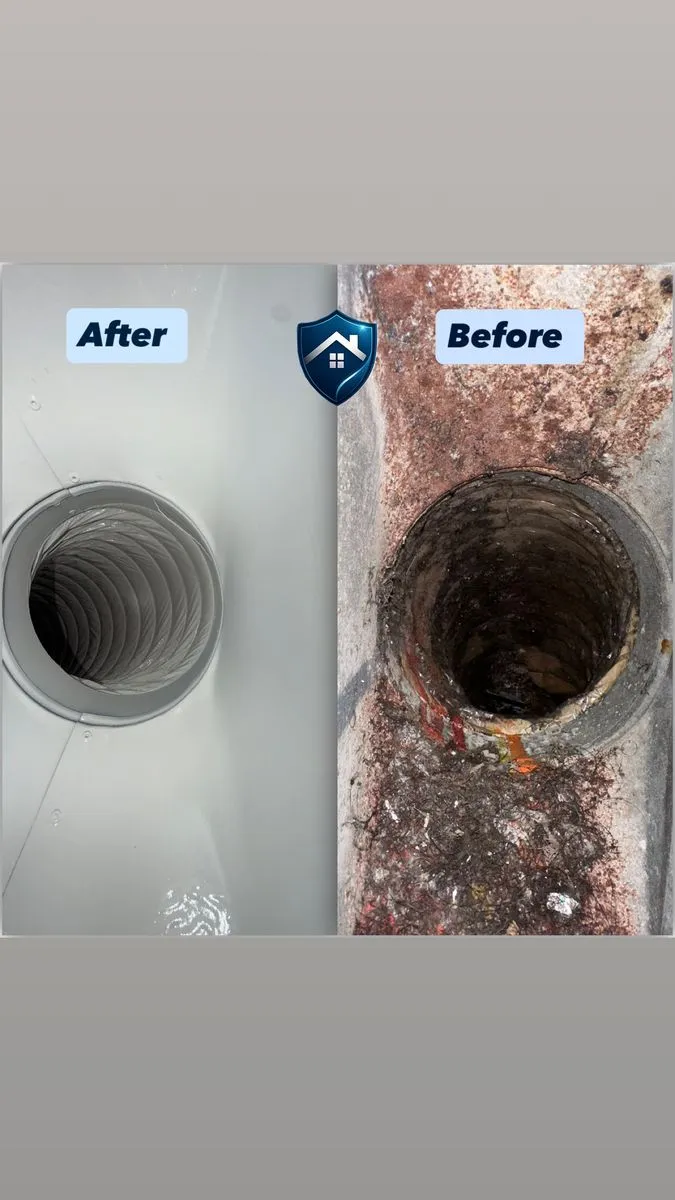
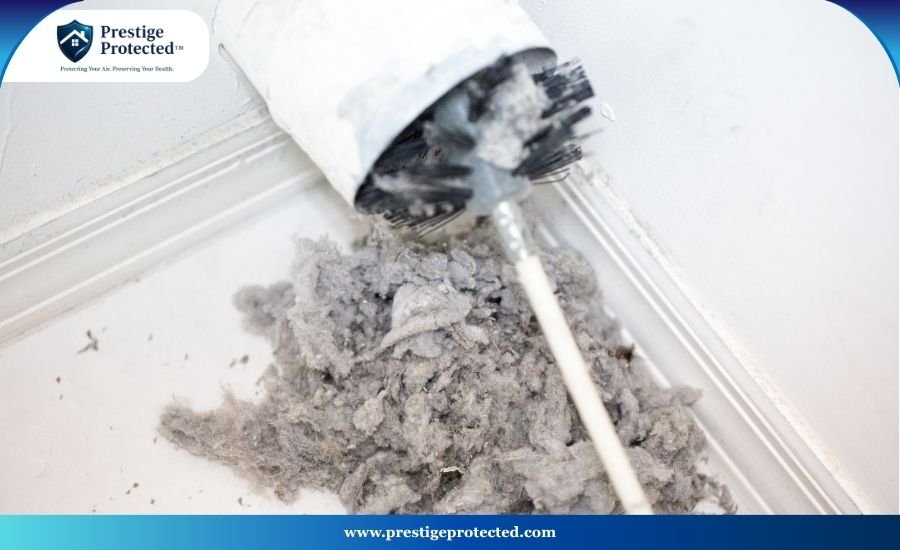
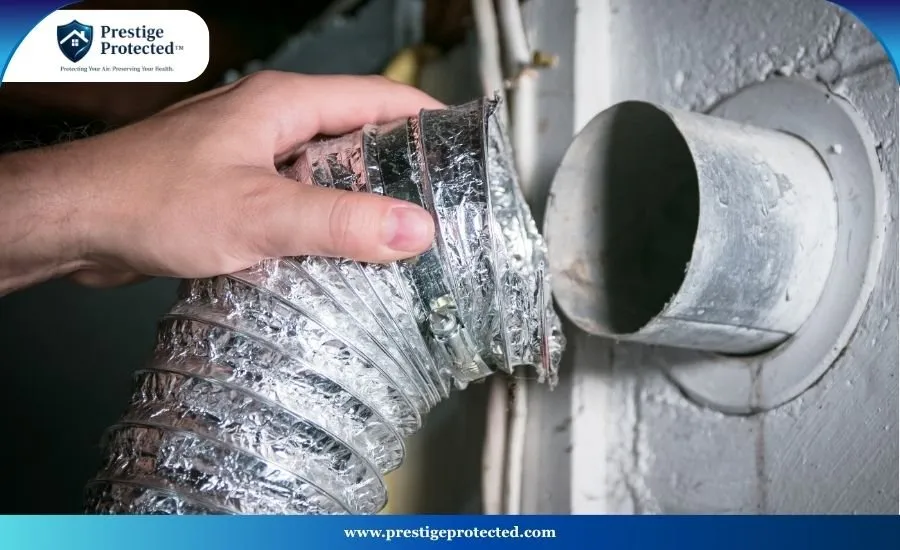
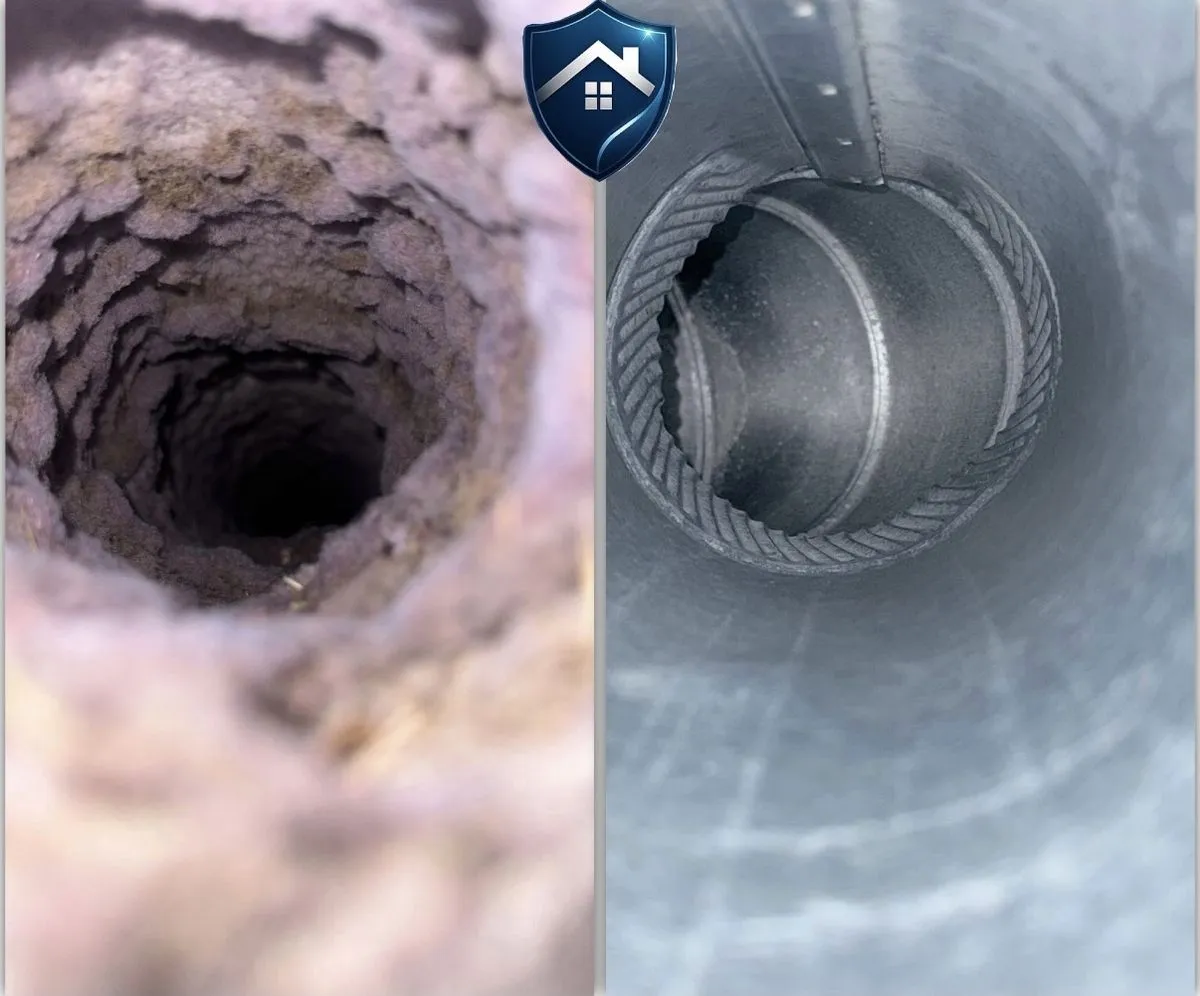
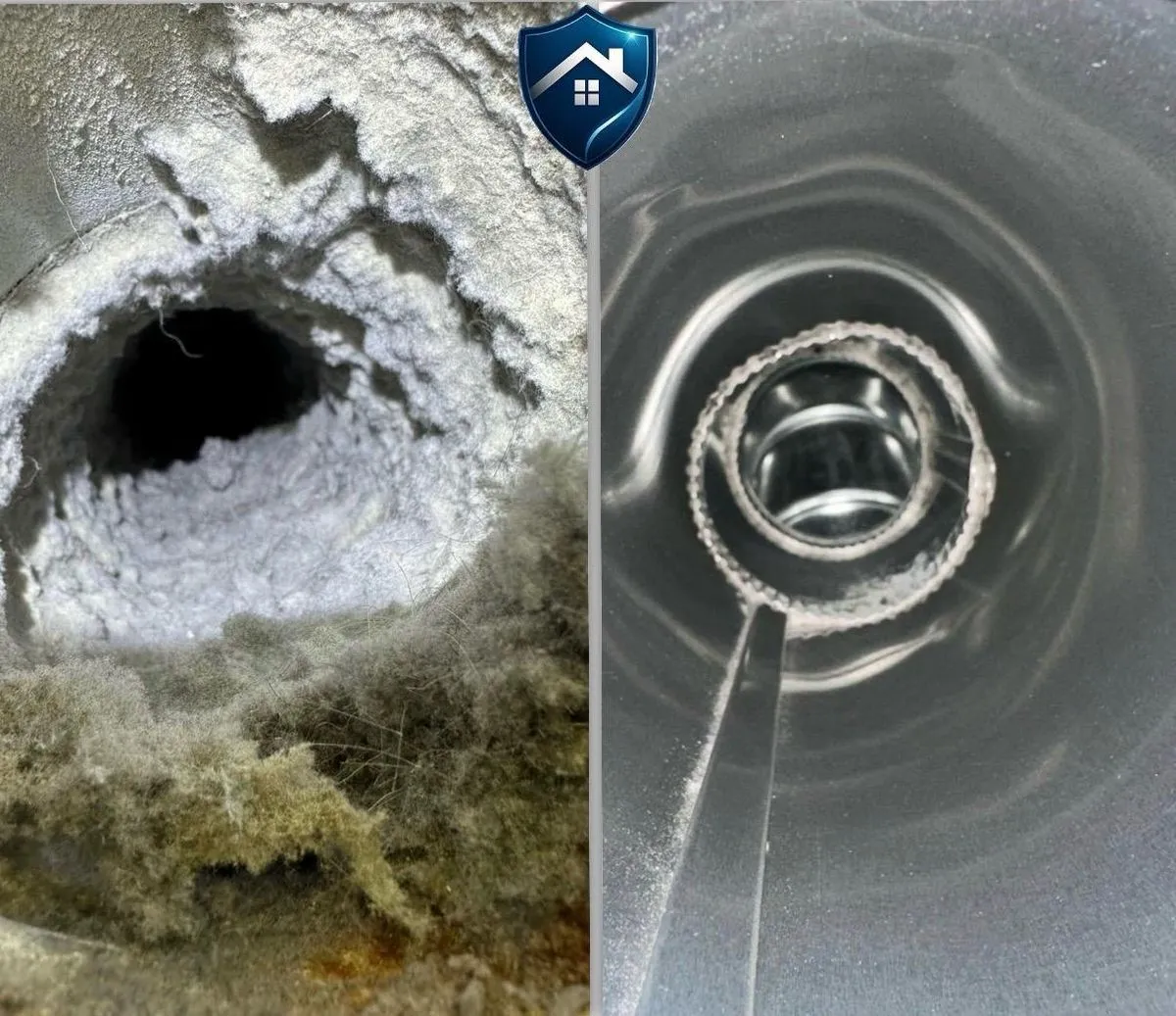
    Before and after: a dryer vent duct packed solid with lint, then fully cleared after a professional cleaning in the Raleigh area
    A real job: the same vent line before and after cleaning. Lint packed this tightly is what turns a dryer into a fire risk.

    Most Cary and Raleigh homeowners never think about the dryer vent until clothes start taking two cycles to dry. By then the vent line is usually well on its way to being packed with lint. Homeowners often overlook this essential aspect of home maintenance, but neglecting it can lead to significant safety risks, increased energy bills, and diminished air quality.

    Understanding the necessity of dryer vent cleaning is the first step towards ensuring a safer, more efficient household. This guide will outline the importance of this service, signs that indicate your dryer vents need attention, and practical tips for maintaining optimal dryer performance.

    The Risks of Neglected Dryer Vents

    Clogged dryer vents can pose serious fire hazards. Lint buildup is highly flammable, and according to the U.S. Fire Administration, clothes dryers are behind roughly 2,900 home fires each year, and failing to clean the vent is the leading cause. The risk increases significantly if the dryer vent is not cleaned regularly. The potential for a fire, coupled with the fact that many homeowners are unaware of the dangers, makes it critical to prioritize dryer vent maintenance.

    Additionally, blocked vents can lead to inefficient dryer performance. When airflow is restricted, dryers must work harder to remove moisture from clothes, leading to longer drying times. This inefficiency not only wastes energy but can also increase utility bills significantly. Regular maintenance ensures that your dryer operates efficiently, saving you money in the long run.

    Benefits of Regular Dryer Vent Cleaning

    Investing in regular dryer vent cleaning offers numerous advantages, particularly for residents in Cary and Raleigh. These benefits include:

    • Enhanced Safety: Regular cleaning reduces the risk of fire caused by lint buildup. Keeping vents clear ensures that heat can escape, minimizing the chance of ignition.
    • Improved Energy Efficiency: A clean dryer vent allows for better airflow, meaning your dryer won’t have to work as hard to dry clothes. This efficiency leads to lower energy consumption and reduced utility costs.
    • Better Indoor Air Quality: Clogged vents can lead to poor air quality in your home. Dust, allergens, and other pollutants can circulate throughout your living space. Regular cleaning helps to eliminate these harmful particles, contributing to a healthier home environment.
    • Extended Appliance Lifespan: A dryer that operates under optimal conditions is likely to have a longer lifespan. Regular maintenance can help you avoid costly repairs or premature replacements.
    • Time Savings: Clean dryer vents lead to faster drying times, allowing you to complete laundry tasks more efficiently.

    Signs Your Dryer Vents Need Cleaning

    Recognizing the signs that your dryer vents need cleaning is essential for preventing issues before they escalate. Here are some indicators that it’s time to schedule a professional cleaning:

    1. Longer Drying Times: If your clothes are taking significantly longer to dry than usual, this can indicate a blockage in the vent.
    2. Burning Smell: A burning smell when using your dryer is a serious warning sign. This can indicate overheating due to restricted airflow, which poses a fire risk.
    3. Excess Lint Accumulation: If you notice lint accumulating around the dryer’s lint trap or on nearby surfaces, it’s a clear sign that your vent may need cleaning.
    4. The Outside Vent Flap Does Not Open: When your dryer is running, the vent flap should open to allow moisture and heat to escape. If it remains closed, airflow is likely restricted.
    5. Hot Clothes or Dryer: If your clothes feel excessively hot after a drying cycle, or if the dryer itself is hot to the touch, this may indicate a clogged vent.
    6. Increased Energy Bills: A sudden spike in your energy bills can be a sign that your dryer is working harder due to a blocked vent.

    Staying vigilant about these signs can help you address issues early, preventing more severe problems in the future. For more information on signs that your air ducts need cleaning, check out our 7 Signs Your Home’s Air Ducts Need Professional Cleaning.

    How to Maintain Your Dryer Vents

    Maintaining your dryer vents is essential for ensuring their efficiency and safety. Here are some proactive measures you can take:

    • Regular Professional Cleaning: Schedule a professional dryer vent cleaning at least once a year, or more often if you have a large household or use your dryer frequently. Professionals can remove lint buildup and ensure that your venting system is functioning correctly.
    • Clean the Lint Trap: Always clean the lint trap after every use. This simple action can significantly reduce lint buildup in the vent.
    • Inspect the Venting System: Periodically check the venting system for any visible signs of blockage or damage. Look for kinks or sharp bends in the ductwork that could hinder airflow.
    • Use the Right Ducting Material: Ensure that your dryer vent duct is made of a smooth metal material rather than plastic or foil. These materials are less prone to lint accumulation and are more durable.
    • Minimize the Length of the Duct: Keep the duct as short as possible to reduce the chances of lint buildup and improve airflow.
    • Consider Upgrading Your Dryer: If your dryer is old and inefficient, consider investing in a newer model with better energy efficiency ratings. Newer dryers often have better lint filters and ventilation systems.

    By following these maintenance tips, you can help ensure that your dryer operates safely and efficiently, reducing the risk of fire and prolonging the life of the appliance. For more on our cleaning services, visit our services page.

    The Role of Professional Services

    While homeowners can perform some maintenance tasks, professional dryer vent cleaning is critical for thorough lint removal and system inspection. Trained technicians have the tools and expertise to clean vents efficiently and safely. They can also identify potential issues that may not be visible to the untrained eye.

    If you’re in the Cary or Raleigh areas, consider reaching out to Prestige Protected for your dryer vent cleaning needs. With over 14 years of experience, we specialize in air quality services, ensuring that your home’s environment is safe, clean, and healthy. Our commitment to quality and customer satisfaction makes us a trusted partner in maintaining your home.

    Final Thoughts on Dryer Vent Cleaning

    A clean dryer vent is cheap insurance: it cuts the fire risk, shortens drying times and keeps lint dust out of your laundry room air. By being aware of the signs that indicate a need for cleaning and taking proactive maintenance steps, you can protect your household and improve the performance of your dryer.

    For residents in Cary and Raleigh, ensuring that your dryer vents are clean and well-maintained can lead to a healthier home environment and peace of mind. If you suspect your vents need attention, don’t hesitate to contact a professional service to get your dryer back in optimal condition. Protect your home and family by making dryer vent cleaning a routine part of your household maintenance. Schedule your next cleaning today!

    Frequently asked questions

    Why is dryer vent cleaning important in Cary and Raleigh?

    Clogged dryer vents are a leading cause of home dryer fires and also lengthen drying time and strain the appliance. Regular cleaning reduces fire risk and improves efficiency.

    How often should dryer vents be cleaned?

    Once a year suits most households, and more often for large families, homes with pets, or long or winding vent runs.

    Do you clean dryer vents in both Cary and Raleigh?

    Yes. We run crews out of both offices and cover the whole Triangle. See the Cary dryer vent cleaning page or the Raleigh service page to book on your side of town.

  • Air Duct, Dryer Vent & Indoor Air Quality Services in Cary & Raleigh: A Homeowner’s Guide

    Air Duct, Dryer Vent & Indoor Air Quality Services in Cary & Raleigh: A Homeowner’s Guide

    This guide covers the four services that keep the air in a Triangle home clean and the dryer safe: air duct cleaning, dryer vent cleaning, system inspections and indoor air quality testing. It explains what each one actually does, when it is worth scheduling, and how they fit together, whether you are in Cary, Raleigh or anywhere in between.

    Before and after inside a residential air duct in the Triangle: heavy dust and debris lining the duct, then clean bare metal after cleaning
    Inside a local duct line before and after cleaning, this is the buildup your system pushes air across every day.

    The air inside a Triangle home passes through the duct system several times an hour, every hour, all year. Whatever is in those ducts, dust, pollen, mold, lint, is in the air your family breathes. That is the problem our work solves. With over 14 years of experience, our commitment to integrity and excellence drives us to deliver high-quality air duct cleaning, dryer vent cleaning, HVAC inspections, and indoor air quality solutions. This guide will explore the importance of our services and how they can benefit you and your family.

    Understanding Indoor Air Quality

    Indoor air quality (IAQ) refers to the condition of the air inside buildings and structures, particularly as it relates to the health and comfort of building occupants. Poor IAQ can lead to a variety of health problems, including allergies, respiratory issues, and even chronic illnesses. Common culprits of poor indoor air quality include dust, allergens, mold, and volatile organic compounds (VOCs) that can be emitted from household products. The EPA reports that indoor concentrations of some pollutants are often two to five times higher than outdoor levels.

    Regular maintenance and cleaning of your home’s air systems are vital to ensuring that the air you breathe is clean and safe. Our services focus on removing contaminants from your air ducts, dryer vents, and HVAC systems, contributing to a healthier indoor environment.

    The Importance of Air Duct Cleaning

    Air ducts play a critical role in your home’s HVAC system. They are responsible for circulating air throughout your living spaces, but over time, they can accumulate dust, dirt, and allergens. This buildup can significantly impact the efficiency of your HVAC system and the quality of the air you breathe.

    Regular air duct cleaning is essential for several reasons:

    • Improved Air Quality: Removing dust, debris, and allergens from your air ducts helps to enhance indoor air quality, reducing allergy symptoms and respiratory issues.
    • Energy Efficiency: Clean ducts allow your HVAC system to operate more efficiently, which can lead to lower energy bills. When your system doesn’t have to work as hard, it reduces wear and tear on the equipment, extending its lifespan.
    • Odor Elimination: Accumulated dust and debris can lead to musty odors in your home. Cleaning your air ducts can help eliminate these odors, creating a fresher living environment.

    For detailed insights on when to schedule air duct cleaning, refer to our guide on How Often to Clean Air Ducts.

    Benefits of Dryer Vent Cleaning

    Dryer vents are often overlooked, but they are crucial for home safety and efficiency. When lint accumulates in your dryer vent, it not only impacts the efficiency of your dryer but also poses a significant fire hazard. Regular dryer vent cleaning is necessary to ensure safe operation.

    Consider the following advantages of scheduling regular dryer vent cleaning:

    • Fire Prevention: Lint buildup is a leading cause of dryer fires. Regular cleaning dramatically reduces this risk, protecting your home and family.
    • Increased Efficiency: A clean dryer vent allows your dryer to operate more efficiently, saving you time and energy. Clothes will dry faster, reducing wear and tear on the appliance.
    • Extending Appliance Lifespan: By minimizing the workload on your dryer, you can extend its lifespan, avoiding costly repairs or replacements.

    For more information on recognizing the signs of a clogged dryer vent, check our article on What Are the Signs of a Clogged Dryer Vent?.

    Comprehensive HVAC Inspections

    Regular HVAC inspections are critical for maintaining the efficiency and safety of your heating and cooling systems. During an inspection, our trained technicians will evaluate your system for any potential issues, ensuring that everything is functioning correctly.

    • Key benefits of HVAC inspections include:
    • Early Problem Detection: Identifying issues early can prevent costly repairs down the line and ensure your system operates efficiently.
    • Optimized Performance: Regular maintenance helps your HVAC system run at peak performance, providing consistent comfort in your home.
    • Enhanced Longevity: An inspected and maintained system will last longer, reducing the need for premature replacements.

    To learn more about the importance of HVAC inspections, visit our services page.

    Enhancing Indoor Air Quality: Testing and Solutions

    It’s essential to understand the specific pollutants affecting your home. Our indoor air quality testing services are designed to identify allergens, mold, and other harmful substances present in your environment.

    After the testing process, we provide tailored solutions to improve your indoor air quality, including:

    • Air Purifiers: Installing air purifiers can help eliminate airborne pollutants, providing cleaner air for your family.
    • Humidity Control: Managing humidity levels can prevent mold growth and create a more comfortable living environment.
    • Ventilation Improvements: Enhancing your home’s ventilation can help reduce indoor air pollutants, ensuring that fresh air circulates throughout your living spaces.

    Improving your indoor air quality is a proactive step toward creating a healthier home.

    Next Steps for Your Family’s Health

    If you are not sure where to start, start with an inspection: it tells you what your system actually needs, and what it does not. Here are the steps to get started:

    1. Schedule an Inspection: Contact us to book an HVAC inspection and air quality assessment.
    2. Regular Maintenance: Commit to regular air duct and dryer vent cleaning to protect your home from allergens and fire hazards.
    3. Implement Solutions: Follow our recommendations for air quality improvements, ensuring a cleaner and healthier indoor environment.
    4. Stay Informed: Keep yourself updated with tips and insights on maintaining your home’s air quality by checking our blog and resources.

    By prioritizing air quality in your home, you can create a safe and comfortable environment for your family. Reach out to us today at Prestige Protected and take the first step towards a cleaner, healthier home.

    Frequently asked questions

    Which areas does Prestige Protected serve?

    We serve the North Carolina Triangle, including Cary, Raleigh, Durham, Chapel Hill, Apex, Holly Springs, Garner, and Wake Forest, from our Cary and Raleigh offices.

    What services does Prestige Protected provide?

    Air duct cleaning, dryer vent cleaning, HVAC inspection, air quality testing, coil cleaning, and preventative maintenance for homes across the Triangle.

    How often should these services be scheduled?

    Dryer vents: once a year for most households. Air ducts: when there is visible mold, pests, heavy dust or after a renovation, see our full scheduling guide. Inspections and air quality tests are worth doing whenever something seems off: musty smells, uneven cooling or unexplained allergy flare-ups.

  • Air Duct Cleaning After Renovation Protects Your Home

    Air Duct Cleaning After Renovation Protects Your Home

    Yes, after a renovation is one of the few times the EPA-recognized reasons to clean air ducts almost always apply. Drywall dust, sawdust and insulation fibers settle inside the ductwork during construction, and the first time the system runs it blows them into every room. A post-renovation duct cleaning removes that debris at the source before it clogs filters, coats furniture and irritates lungs.

    Air duct cleaning after renovation removes fine construction dust, debris, and irritants from your HVAC system before they spread through your home. Remodeling work can leave behind drywall dust, sawdust, paint odors, and other particles that regular cleaning may miss. 

    Read our complete maintenance guide to understand how proper duct care helps prevent long-term buildup and airflow problems. Keep reading to learn how renovation dust affects your air, your equipment, and your family’s comfort.

    Why Is Construction Dust Bad for Your HVAC System

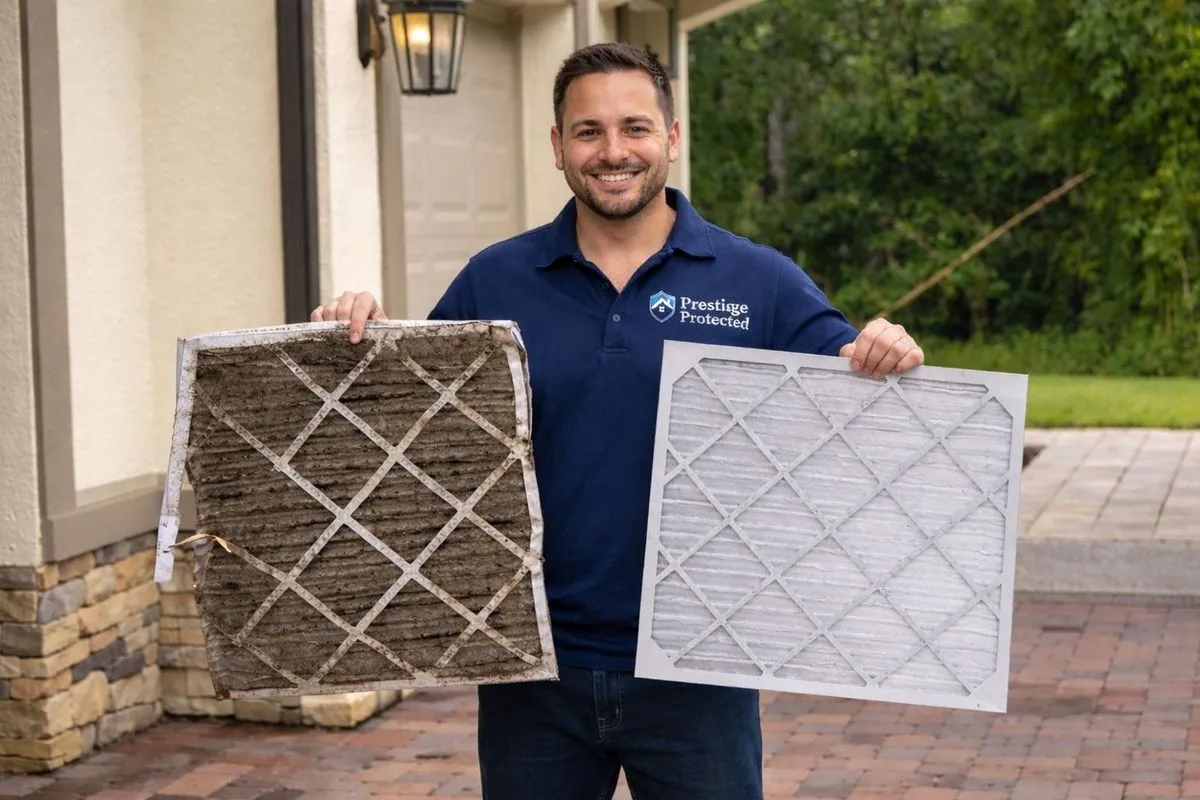
    A close-up of a heavily clogged HVAC air filter covered

    Construction dust is heavier and more abrasive than normal household dust. It can settle inside your ductwork, clog filters quickly, and force your heating and cooling system to work harder.

    Normal household dust often includes skin cells, pet dander, and fabric fibers. Renovation dust differs because it may contain drywall dust, wood particles, insulation fibers, and residue from new building materials.

    When contractors sand drywall, cut wood, or remove old materials, small particles can enter the air. If return vents pull those particles into the HVAC system, the debris may spread through the ductwork and settle on important components.

    • Drywall dust and silica can slip past standard air filters and collect inside the system.
    • Volatile organic compounds, or VOCs, may come from new paint, adhesives, flooring, and other materials.
    • Wood shavings and sawdust can restrict airflow, forcing the blower motor to work harder.

    When these materials collect on the evaporator coil or inside air pathways, they can reduce airflow and lower system efficiency. Over time, this buildup may lead to longer run times, uneven comfort, and increased strain on your equipment.

    How Does Remodeling Debris Impact Your Health

    Breathing leftover construction dust can irritate your throat, lungs, eyes, and nose. Fine dust from drywall, paint, adhesives, and woodwork may continue moving through your home whenever the HVAC fan turns on.

    Families with asthma, allergies, or sensitive lungs may notice these effects faster. The indoor air quality can drop when return vents pull contaminated air into the duct system and push it back into living areas.

    This is why cleanup should go beyond wiping surfaces. Removing debris from inside the ductwork helps reduce lingering dust, stale odors, and airborne irritants after a renovation.

    Can You Just Change the Air Filter Instead

    Changing your air filter is a smart first step, but it does not fully solve the problem. Standard filters cannot capture every fine particle created during construction work.

    Tiny drywall particles can pass through basic filter media. The dust that does get trapped may clog a new filter within a short time, especially after major remodeling.

    Because the dust source may already be inside the ductwork, filter replacement alone may not stop the cycle. A full system cleaning removes debris from the ducts rather than just catching particles as they move through the system again.

    What Is the Right Way to Clean Ducts After a Remodel

    A certified HVAC technician using professional negative air pressure

    A professional post-renovation duct cleaning uses negative air pressure and physical agitation tools. A regular household vacuum cannot reach or remove heavy debris from deep inside the duct system.

    Certified technicians may follow industry standards to safely and thoroughly clean the system. A proper post-construction cleaning usually includes these two main steps:

    • Negative Air Pressure: The system is sealed and connected to a powerful vacuum unit that pulls dust and debris from the ductwork. This helps keep particles from blowing back into freshly cleaned rooms.
    • Source Removal: Technicians use brushes, air whips, and compressed-air tools to loosen dust that has become stuck in the ducts. The vacuum then safely pulls the debris out of the system.

    This process targets the source of the dust rather than just cleaning vent covers or visible surfaces.

    When Should You Schedule the Cleaning Service

    Schedule duct cleaning after contractors finish sanding, cutting, painting, and final cleanup. This timing helps remove leftover dust before it continues circulating through your HVAC system.

    Do not wait too long if you notice dusty vents, lingering odors, weak airflow, or repeated dust buildup on new surfaces. A timely cleaning helps protect your renovated space and supports cleaner indoor air.

    Protect Your Home After Renovation Work

    Air duct cleaning after renovation helps remove hidden dust, debris, and irritants before they keep moving through your HVAC system. Proper cleaning can also improve airflow, reduce lingering odors, and keep your newly updated space cleaner for your family.

    Prestige Protected is a professional indoor air quality company serving the Cary, NC area, specializing in comprehensive air duct, dryer vent, and HVAC cleaning services for local homeowners. Book a thorough system extraction today to help protect your home after renovation work.

    Frequently Asked Questions

    Is post-renovation duct cleaning legally required for homes?

    Homeowners are usually not legally required to clean residential HVAC ducts after remodeling. However, removing heavy debris can help protect system performance and indoor air quality.

    How soon after remodeling should I schedule duct cleaning?

    Schedule service after the final sanding, cutting, painting, and cleanup work is complete. This helps remove dust before it circulates through your home.

    Will duct cleaning damage my new floors or walls?

    Professional cleaners use protective coverings, corner guards, and carefully placed equipment. These steps help protect freshly renovated surfaces during service.

    Why is construction dust worse than normal household dust?

    Construction dust may contain drywall powder, silica, sawdust, insulation fibers, and chemical residue. These particles can irritate the breathing and strain HVAC equipment.

    Can I just change my furnace filter instead?

    Changing the filter helps, but it may not remove dust already inside the ductwork. Fine renovation dust can bypass basic filters and continue moving through the system.

  • 7 Signs Your Home’s Air Ducts Need Professional Cleaning

    7 Signs Your Home’s Air Ducts Need Professional Cleaning

    The clearest signs your air ducts need cleaning are visible dust puffing from the registers, a musty smell when the system runs, worsening allergy symptoms, visible mold around vents, evidence of pests, or debris left over from a recent renovation. If you notice one or more of these, it’s worth an inspection. Below are the seven signs we tell Triangle homeowners to watch for.

    You rely on your heating and cooling system to keep your home comfortable, but it is easy to forget about the hidden network of vents acting as the lungs of your house. When these airways get bogged down with dust and debris, you might notice degraded indoor air quality, higher utility bills, and poor temperature control, which are clear signs air ducts need cleaning. In this guide, we will break down exactly what to look for, what you can handle yourself, and when it is time to call in an expert.

    A thick layer of gray dust settling on a dark wooden living room coffee table.

    Here 7 Signs That Your Air Ducts Need Cleaning

    It can be tough to know what is going on inside your vents without a camera. If you are experiencing any of the following issues, it is time to take a closer look at your ductwork:

    1. Constant Dust Buildup: You wipe down your living room furniture, and a new layer of dust resettles within two days.
    2. Spiking Energy Bills: Your system has to work much harder to push air through clogged passages, which drives up your monthly utility costs.
    3. Musty Odors: A smell like a damp basement when the AC kicks on points to moisture and potential mold growth inside the vents.
    4. Uneven Room Temperatures: Large differences in room temperatures may indicate airflow blockages or duct obstructions. Minor variations can be normal.
    5. Pest Infiltrations: Mice and insects love to nest in warm ducts, leaving behind droppings and bacteria that blow straight into your rooms.
    6. Recent Home Renovations: Sanding floors and hanging drywall sends abrasive construction dust straight into your return vents.
    7. Worsening Allergies: If allergy symptoms appear mostly indoors, ducts could be circulating dust and allergens, though other indoor sources may also contribute
    Common SymptomLikely CauseRecommended Action
    Rapid Dust ReturnBypassed filters or impacted debrisReplace the HVAC filter and inspect the vents
    Musty SmellsTrapped moisture or microbial growthSchedule professional remediation
    Uneven AirflowPhysical blockages or crushed linesClear the lines to restore full airflow
    Pest EvidenceRodents or insects nesting in ductsHire pest control and extract biohazards
    A homeowner using a microfiber cloth to wipe down a metal wall vent grille.

    DIY Temporary Air Duct Cleaning

    You should never stick a vacuum hose deep into your vents because you risk tearing the fragile materials inside. However, you can safely perform a few basic maintenance steps to keep the air flowing cleanly near the surface:

    1. Change Your Filters: Swap out your HVAC filters every 30 to 90 days to trap particles before they enter the system.
    2. Vacuum the Registers: Use a brush attachment to clean the dust off the outside of your supply and return vent covers.
    3. Wipe Down the Grilles: Take a damp microfiber cloth and wipe away any sticky residue on the metal or plastic slats.
    4. Clear the Area: Keep furniture and curtains at least a foot away from your vents to prevent airflow restriction.
    5. Check the Outdoor Unit: Keep leaves, grass, and debris cleared away from your exterior condenser to ensure the system breathes easily.

    How a Professional Air Duct Cleaning Service Can Help

    A certified contractor brings commercial equipment that can safely extract years of compacted dirt without ruining your system. Hiring a qualified indoor air quality expert provides several major benefits that go far beyond a simple surface dusting:

    • Negative Pressure Extraction: Professionals use massive vacuums to pull air out of the system so dust does not blow back into your living room.
    • Safe Agitation Tools: They use specialized soft whips and brushes designed to dislodge dirt without ripping apart your flexible plastic ductwork.
    • Biological Hazard Removal: Certified technicians can safely remove mold and pest waste using approved antimicrobial treatments.
    • Improved System Lifespan: Clearing out the blower motor and coils stops the machinery from overworking and prevents expensive, premature breakdowns.
    • Visual Proof: Reputable companies use cameras to show you the inside of your ducts before and after the job is done.
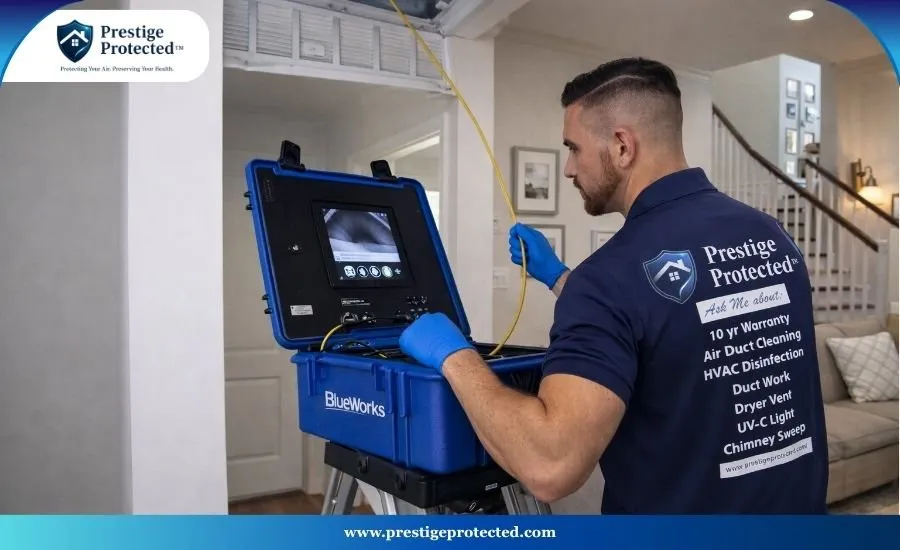
    An indoor air quality technician using a specialized inspection camera inside a metal air duct line.

    Making the Right Call for Your Home’s Air Quality

    Your ductwork is a major investment that directly impacts how well your family breathes and how efficiently your heating and cooling equipment runs. Staying proactive about filter changes and surface cleaning will buy you time, but heavy buildup requires commercial tools. Prestige Protected is a professional indoor air quality company serving the Cary, NC area, specializing in comprehensive air duct, dryer vent, and HVAC cleaning services for local homeowners.

    Improve your air. Connect with our professional air duct cleaning service for a thorough inspection.

    Frequently Asked Questions

    How do I know if my air ducts are dirty?

    You will usually notice rapid dust buildup on your furniture, uneven airflow from your vents, or higher-than-normal energy bills. Unexplained allergy flare-ups indoors are also a strong indicator that your system needs attention.

    Why is there black dust around my air vents?

    Black dust may come from soot, fibers from duct insulation, or normal dirt accumulation. Occasionally, it could indicate mold growth if moisture is present.

    Can dirty air ducts make my house smell musty?

    Yes, they absolutely can. When moisture mixes with dust inside the dark environment of your ductwork, it creates a perfect breeding ground for mold and mildew that spreads a damp smell whenever the AC runs.

    Should I see dust blowing out of my vents?

    Large amounts of visible dust or debris coming from vents is unusual and may indicate heavy buildup. Small particles are normal and not necessarily a problem.

    What do air ducts look like when they need cleaning?

    If you remove a vent cover and shine a flashlight inside, dirty ducts will have thick coats of gray or black fuzz clinging to the metal walls. You might also spot pet hair, construction debris, or dark, spotted patches indicating mold.

  • What Are the Signs of a Clogged Dryer Vent?

    What Are the Signs of a Clogged Dryer Vent?

    The most common signs of a clogged dryer vent are clothes that take more than one cycle to dry, a dryer or laundry room that feels unusually hot, a burning smell, and lint collecting around the dryer or the outside vent. A clogged vent isn’t just inconvenient, it’s the leading cause of dryer fires. Here’s what to watch for and what to do about it.

    The most obvious signs of a clogged dryer vent include clothes taking multiple cycles to dry, an unusually hot laundry room, heavy lint accumulation around the door seal, and a faint burning smell during operation. Addressing these physical warning signs early, along with scheduling routine HVAC services, prevents dangerous residential fires and keeps your exhaust system functioning safely.

    Many homeowners ignore restricted airflow until the appliance stops working completely. That delay causes thermal damage and creates a severe fire risk. Identifying these early warning signs gives you a straightforward way to protect your property and extend the lifespan of your machine.

    What Are the Top Signs of a Clogged Dryer Vent?

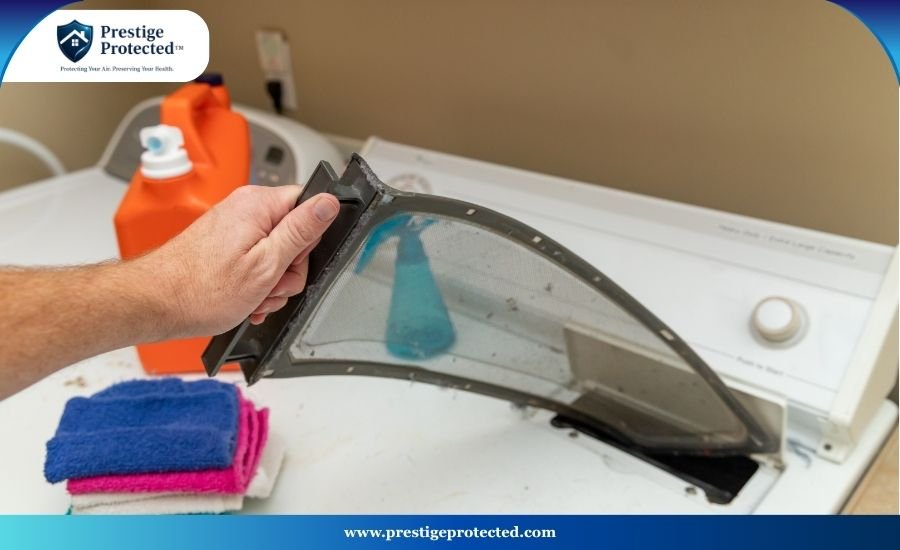
    A close-up of a dryer lint screen overflowing with thick lint buildup, highlighting a major warning sign of restricted airflow.

    A restricted exhaust system leaves clear physical evidence. You will notice lint building up around the door seal or feel extreme heat radiating from the top of the dryer housing. Often, the exterior vent flap fails to open properly while the machine forces air outward.

    Review the table below to identify the most common warning signs. Catching these mechanical issues early helps you avoid costly component repairs and serious safety hazards.

    Warning SignPhysical Evidence
    Extended drying cyclesA standard load requires multiple cycles to dry because moisture cannot escape.
    Excessive room heatA blocked duct forces exhaust heat back into the room, raising the temperature.
    Burning smellsTrapped lint overheats and begins to smolder due to severely restricted airflow.
    Heavy lint accumulationLint gathers around the door seal or behind the machine instead of venting outside.
    Stuck exterior flapThe outside exhaust flap fails to open fully when the dryer operates.

    How Does a Clogged Dryer Vent Cause a Fire?

    A blocked dryer vent traps heat and moisture inside your home. This obstruction leads to overheating inside the appliance chassis, creating a dangerous environment where internal temperatures rise beyond safe limits.

    According to the U.S. Fire Administration, clothes dryers cause roughly 2,900 home fires each year, and failure to clean the vent is the leading cause. Lint acts as a highly flammable kindling. When it accumulates inside the exhaust duct, it ignites rapidly at high temperatures.

    Modern dryers include a safety component called a thermal fuse. This fuse shuts the heating element down if internal temperatures climb too high. However, repeated overheating degrades this component over time. Once the thermal fuse fails, the risk of a structural fire increases immediately. Organizations like the National Fire Protection Association provide specific fire prevention guidelines to help homeowners manage these hazards.

    Why Should You Hire a Professional Dryer Vent Cleaner?

    A professional HVAC technician using specialized diagnostic tools to clean the exhaust ducting behind a residential dryer.

    You can manually clean the internal lint trap and the short transition hose behind your dryer. However, clearing deep obstructions requires specialized diagnostic tools. A professional technician utilizes anemometers to measure airflow, high-powered negative air vacuums, and flexible rotary brushes to scour the entire duct run.

    Long vent runs that stretch more than ten feet trap heavy debris deep inside the walls. Vents with multiple 90-degree elbows or tight bends collect wet lint much faster than straight runs. Cleaning these hidden areas without commercial-grade tools is difficult and leaves dangerous buildup behind.

    Safety remains the primary factor. Exterior exhaust terminals located on steep roofs or second-story siding are dangerous to access. A trained technician handles these elevated points safely and ensures the external flapper operates without restriction.

    What Are the Building Code Requirements for Dryer Vents?

    Proper installation dictates how safely your exhaust system operates. Building codes exist to ensure dryer vents exhaust toxic gases and flammable lint efficiently.

    Most municipalities follow the International Code Council’s guidelines for dryer vent installation. These standards require rigid, smooth-walled metal ducting instead of ribbed plastic or foil transition hoses. Smooth metal walls reduce lint friction and maximize exhaust velocity.

    In multi-story homes, builders must install fire-resistant barriers where the ducting penetrates between floors. These physical barriers slow the spread of oxygen and flames. For landlords and property managers, code compliance is mandatory. Housing habitability laws require all supplied appliances to operate safely. Ignoring warning signs leads to strict liability issues and heavy financial penalties.

    How Can Regular Vent Maintenance Protect Your Home?

    Keeping your exhaust duct clean remains the most effective method to protect your home from appliance fires. Routine maintenance restores proper exhaust velocity, lowers monthly energy costs, and prevents thermal damage to your dryer’s internal sensors.

    Prestige Protected is a professional indoor air quality company serving the Cary, NC area, specializing in comprehensive air duct, dryer vent, and HVAC cleaning services for local homeowners. Schedule your dryer duct cleaning today to keep your home safe and your exhaust system operating at peak efficiency. Our certified technicians verify proper airflow and ensure your equipment meets all residential safety standards.

    Frequently Asked Questions

    Is dryer vent maintenance legally required for landlords?

    Yes. North Carolina habitability laws dictate that landlords must maintain all provided appliances, including the dryer exhaust systems. Ignoring these safety risks results in legal liability and financial penalties.

    What are the penalties for dryer vent code violations?

    Insurance providers regularly deny fire damage claims if they discover a history of poor maintenance. Landlords also face civil lawsuits or fines from local code enforcement agencies for permitting unsafe housing conditions.

    How often should you get a dryer vent professionally cleaned?

    Most residential homes require annual vent cleaning. Larger households or homes running multiple loads daily should schedule diagnostic service every six months to prevent heavy lint accumulation.

    Can a clogged dryer vent increase your energy bills?

    Yes. Restricted exhaust flow forces the dryer’s heating element to run twice as long. This extended run time increases electricity or gas usage and drives up your monthly utility costs.

    Why is my laundry room unusually hot?

    Excessive ambient heat indicates that the exhaust duct is failing to vent hot air outside. Turn off the dryer immediately and check the exterior vent for blockages. Operating the machine in this condition creates an immediate fire hazard.

  • How Often to Clean Air Ducts: A Homeowner’s Maintenance Guide

    How Often to Clean Air Ducts: A Homeowner’s Maintenance Guide

    TL;DR (quick answer): Most homes do well with air duct cleaning every three to five years. Go sooner, every one to two years, with shedding pets, allergy or asthma sufferers, smokers, recent renovation, or humidity problems. The EPA’s official guidance is condition-based: clean when there is visible mold, pest activity or excessive debris in the system, not on a fixed calendar. A quick look behind a supply register tells you most of what you need to know.

    Most homes should have their air ducts cleaned every 3–5 years. Clean sooner, every 1–2 years, if you have pets, allergy or asthma sufferers, recent renovations, high humidity, or a smoker in the home. The EPA recommends cleaning when there’s visible mold, pest activity, or excessive debris rather than on a fixed schedule. Here’s how to decide what’s right for your home.

    Most homeowners should clean their air ducts every three to five years. This standard baseline prevents excess dust, pet dander, and debris from restricting airflow and reducing your HVAC system’s efficiency. While your ventilation system moves air, small particulates inevitably settle inside the ductwork. Over time, this buildup forces your equipment to work harder and affects your indoor air quality. Understanding how often to schedule air duct cleaning is a practical way to protect your system from mechanical wear.

    Note: These are general industry guidelines. Your specific timeline may vary based on your home, system use, and environment.

    Recommended Air Duct Cleaning Frequency

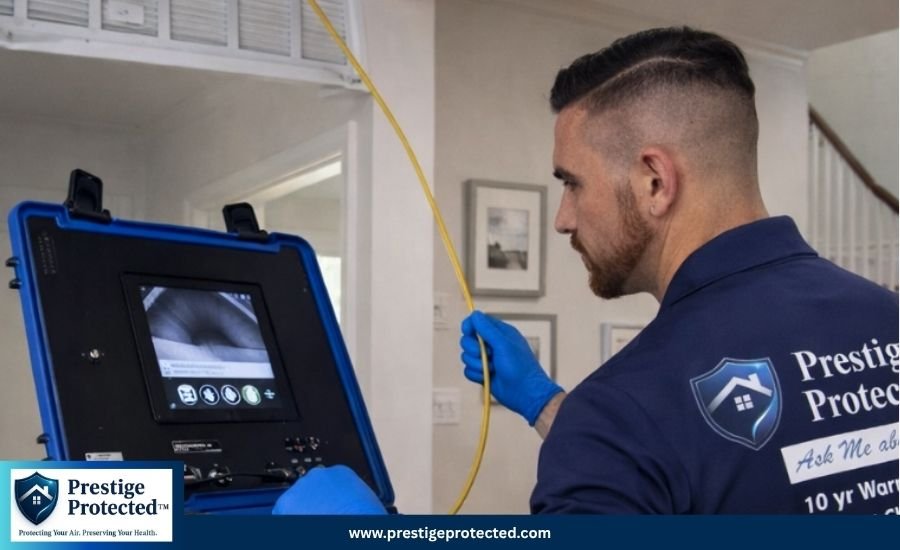
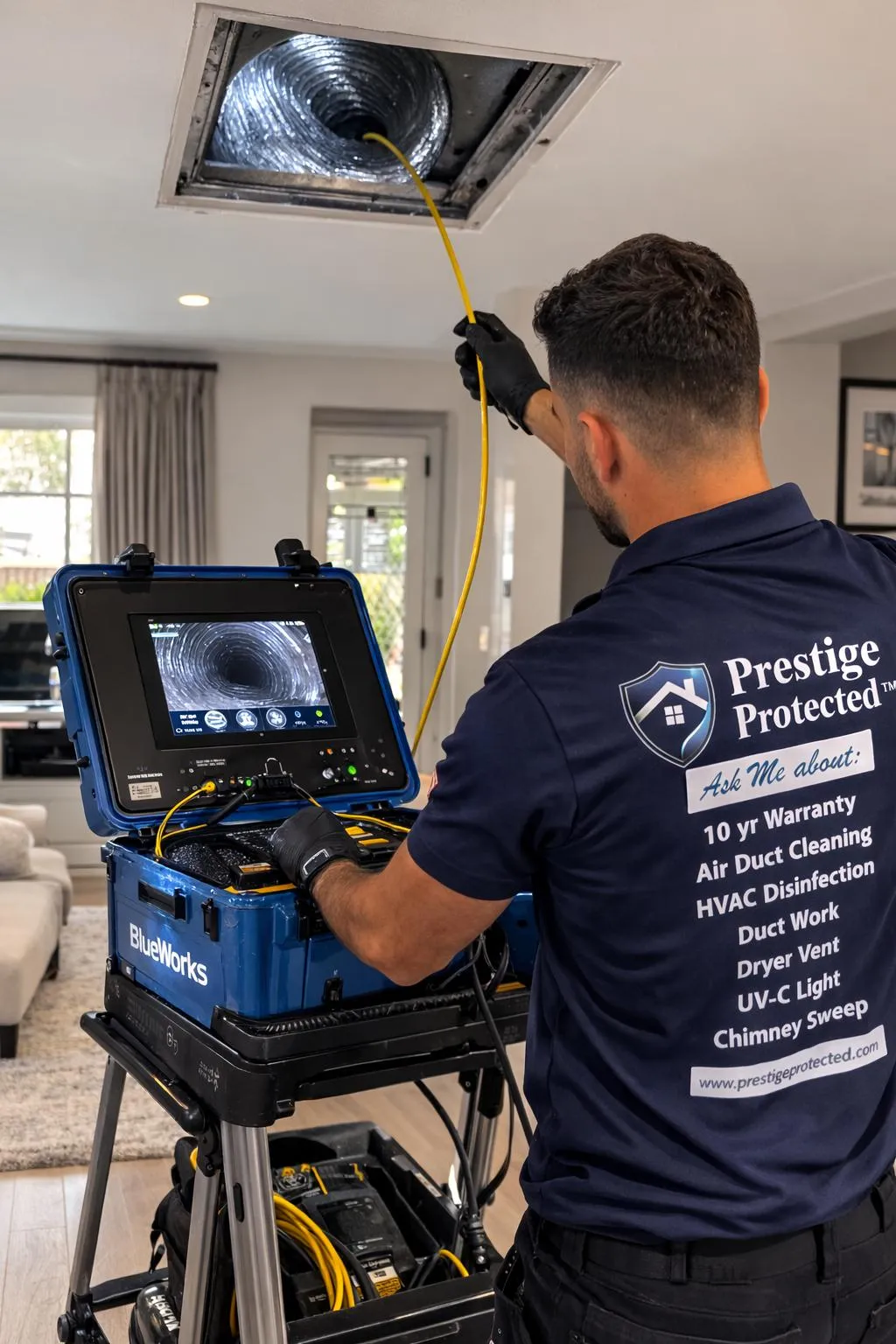
    An air duct cleaning professional using a video inspection camera to examine the inside of a home's ventilation system.

    Every home accumulates debris at a different rate. Your daily habits, local environment, and system use dictate your timeline. The table below outlines the recommended vent cleaning frequency for common household scenarios:

    Household TypeRecommended FrequencyPrimary Reason
    Standard (No Pets)Every 3 to 5 YearsBaseline dust accumulation.
    Pet OwnersEvery 2 to 3 YearsFur and dander buildup.
    Allergy/Asthma SufferersEvery 1 to 2 YearsReducing airborne triggers.
    New Home Move-InImmediatelyClearing the previous owner’s debris.
    Post-RenovationImmediatelyDrywall dust and sawdust removal.

    Why HVAC System Cleaning Matters for Indoor Air Quality

    Maintaining clear ductwork goes beyond removing visible dust. Trapped debris impacts your HVAC components and your home’s air quality.

    • Energy Savings: Restricted airflow forces systems to run longer cycles to meet the thermostat setting. This increases energy consumption and monthly utility costs.
    • Equipment Longevity: Dust accumulation insulates heat exchangers and clogs evaporator coils. This restricts heat transfer and accelerates mechanical wear.
    • Allergy Relief: Removing concentrated dander and pollen from the ductwork reduces airborne particulate matter. This helps minimize common triggers for respiratory distress.
    • Odor Removal: Organic matter trapped in dark ventilation spaces creates musty odors. Clinical cleaning extracts this material, removing the source of the smell.

    Key Factors That Change How Often to Clean Air Ducts

    A rigid timeline does not fit every property. You must evaluate your specific living conditions to determine how often to clean air ducts.

    • The 3-5 Year Rule: This serves as the industry baseline for homes with no indoor pets and strict adherence to regular filter changes.
    • Pet Ownership: Dogs and cats shed fur and dander continuously. Homes with indoor pets require extraction every two to three years to prevent airflow restriction.
    • Post-Construction: Remodeling projects generate fine particulate matter. Drywall dust easily bypasses standard filters. Immediate cleaning prevents these particles from recirculating.
    • Health Needs: Immunocompromised individuals or those with severe respiratory conditions benefit from annual inspections to maintain strict home hygiene.
    • Moisture Intrusion: High humidity or water leaks can introduce moisture into the ducting. This requires immediate inspection to identify and mitigate potential mold growth.

    How Professionals Handle Dust Removal and Vent Cleaning

    Homeowners can change filters and wipe down registers, but deep extraction requires specialized tools. Professional technicians use a systematic approach to safely remove debris without cross-contaminating your living space.

    • High-Volume Vacuum Systems: Technicians connect specialized vacuums to the main trunk line. This places the entire system under negative pressure, ensuring particulate matter is extracted directly outside or into a HEPA-filtered containment unit.
    • Mechanical Agitation: Air whips and rotary brushes dislodge adhered debris from the rigid or flexible duct walls. This pushes the material into the vacuum stream.
    • System-Wide Care: Comprehensive service includes cleaning the blower motor housing, evaporator coils, and drip pans to restore full system efficiency.
    • Safe Sanitation: Technicians apply EPA-registered sanitizers formulated specifically for HVAC systems. These products mitigate microbial growth without damaging fiberglass liners or introducing harmful VOCs into the air stream.

    Setting a Proactive HVAC Maintenance Schedule

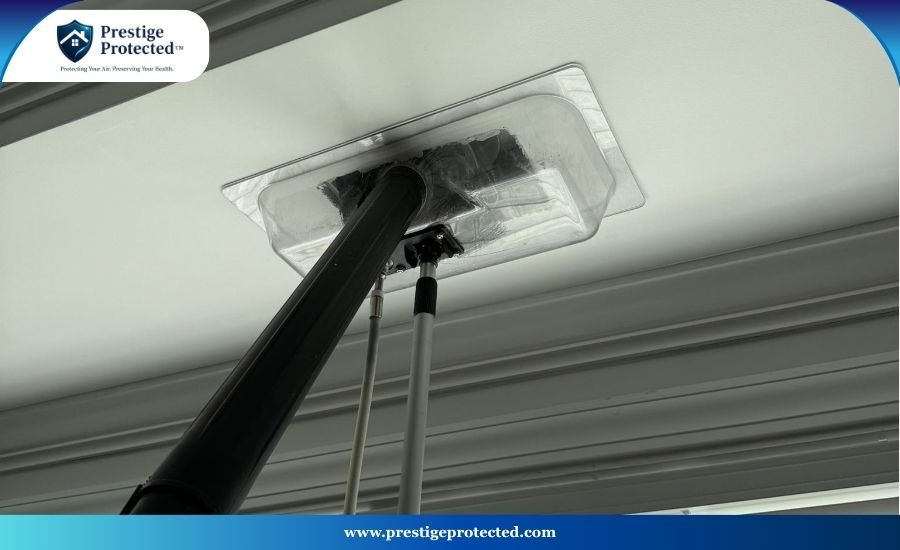
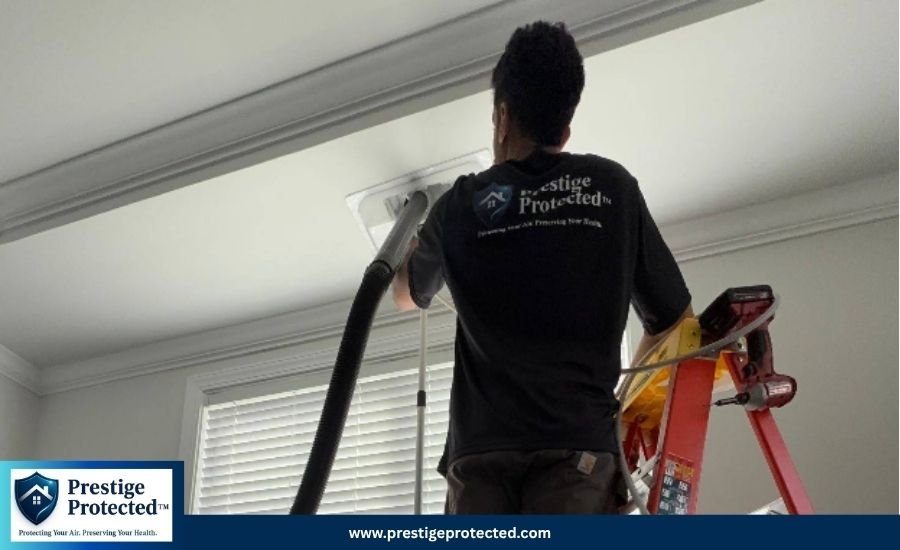
    An air duct cleaning technician standing on a ladder to vacuum a ceiling vent using professional equipment.

    Maintaining a clean ventilation network ensures optimal HVAC performance. By adhering to a calculated maintenance schedule, you prevent excessive buildup and mechanical strain. Proactive duct care lowers energy expenditure, extends the lifespan of your furnace and air conditioner, and improves the overall air quality of your home.

    Prestige Protected is a professional indoor air quality company serving the Cary, NC area, specializing in comprehensive air duct, dryer vent, and HVAC cleaning services for local homeowners.

    Ensure your air is clean and your system operates at peak efficiency. Contact us today to schedule your comprehensive air duct cleaning service.

    Frequently Asked Questions

    How many years should you go between air duct cleanings?

    The industry standard recommends professional extraction every three to five years. This interval prevents heavy accumulation from restricting airflow or degrading indoor air quality.

    Do you need to clean air ducts every year?

    No. Annual cleaning is unnecessary for standard households. An annual HVAC inspection combined with cleaning every three to five years provides the most effective maintenance strategy.

    Does having pets change how often air ducts need cleaning?

    Yes. Pets introduce a high volume of hair and dander into return vents. Homes with multiple or heavy-shedding pets require professional cleaning every two to three years to maintain proper airflow.

    Should air ducts be cleaned after a home renovation?

    Yes. Construction generates fine particulates like drywall dust and sawdust. These particles easily bypass standard residential filters. Immediate extraction prevents this dust from circulating through the home and damaging HVAC components.

    Does the EPA recommend a specific duct cleaning schedule?

    The EPA does not mandate a fixed schedule. They recommend extraction when there is visible mold, pest infestation, or excessive debris obstructing airflow. Following the three to five-year baseline helps identify and resolve these issues early.

    Check for yourself in five minutes

    You do not have to guess or take a salesperson’s word for it. Unscrew one supply register and one return grille, and photograph the inside of the duct with your phone and a flashlight. A thin film of grey dust is normal and harmless. A carpet of matted dust, black flecks, pet hair mats or any speckled growth means it is worth a professional camera inspection. This is the same condition-based logic the EPA recommends, the calendar is a rough guide, the duct’s actual condition is the answer. If what you find looks bad, compare it against the signs air ducts need cleaning, see what a cleaning costs, or read how the process works before you call anyone, including us.

    Common questions

    Do homes with pets need duct cleaning more often?

    Usually yes. Shedding dogs and cats push the practical interval toward every one to two years, because dander and hair accumulate in return runs and on the coil. The five-minute register check is the honest way to know whether your home is on the fast schedule.

    Do new or newly renovated homes need it sooner?

    Yes, construction and renovation are the strongest cases for cleaning. Drywall dust and debris get into open ducts during the work and recirculate afterward. The EPA lists renovation debris among the conditions that warrant cleaning regardless of when the ducts were last done.

    Is annual air duct cleaning necessary?

    For most homes, no, and a company that pushes an automatic annual duct cleaning is a red flag. Yearly service makes sense for the HVAC system itself (a maintenance check), while the ducts only need cleaning when their condition calls for it. The exception is the dryer vent, which genuinely should be cleaned about once a year.

    What happens if I never clean my air ducts?

    Buildup narrows airflow, makes the system run longer for the same comfort, feeds dust back into rooms faster than you can clean them, and gives mold a foothold if humidity is high. None of that fails overnight, it just quietly costs efficiency and air quality every month.