Quick answer
Prestige Protected provides air duct and dryer vent cleaning throughout Falls River in North Raleigh, near Falls Lake off Raven Ridge and Durant Road. We use HEPA-filtered, source-removal equipment, clear the full dryer run to the exterior, and document every job with before-and-after photos. Serving Falls River with same-day or next-day scheduling. Call (888) 404-8321.
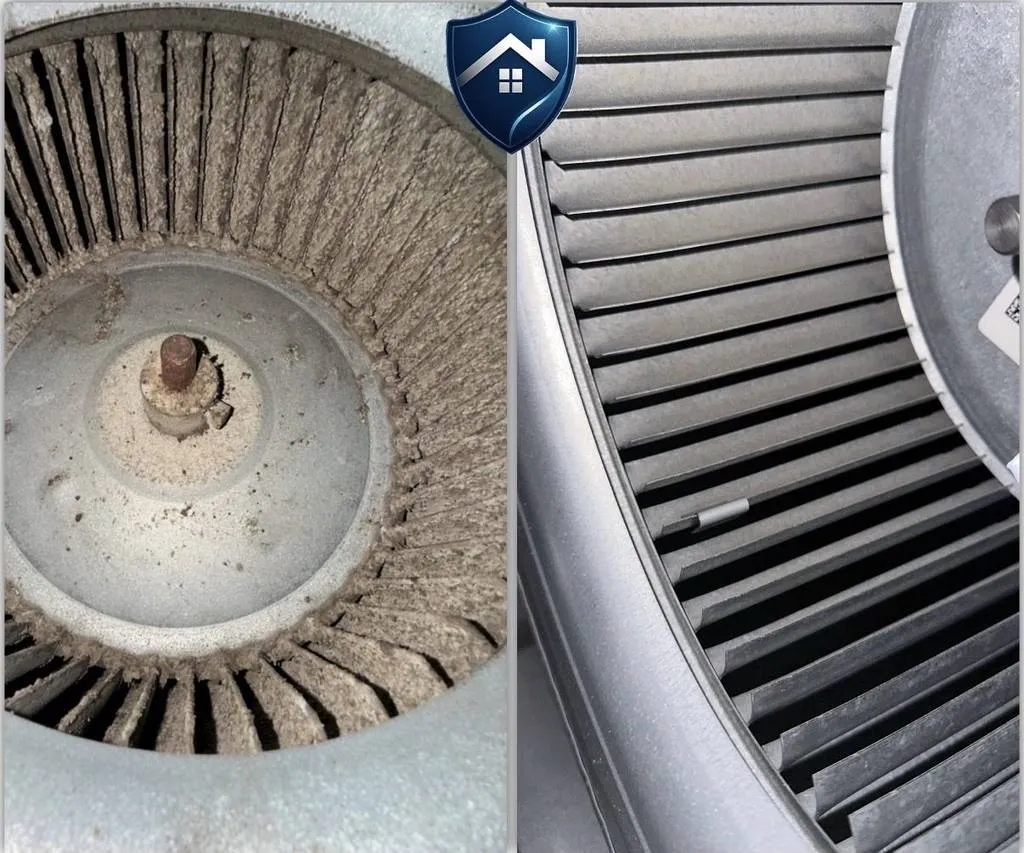
Prestige Protected cleans air ducts and dryer vents throughout the Falls River community in North Raleigh, from the homes off Raven Ridge Road to the streets near Durant Nature Preserve and Falls Lake. Our technicians use HEPA-filtered, source-removal equipment and photo-document every job, so you can see what was removed from your system.
Why Falls River homes benefit
Falls River is an established North Raleigh neighborhood of two-story family homes built largely in the late 1990s and 2000s, many with second-floor laundry rooms and longer dryer runs that vent up through the roof or out a long exterior wall. Those longer runs collect more lint over time, and the buildup is easy to miss because it is out of sight. With the Triangle’s heavy spring pollen and humid summers, the U.S. Environmental Protection Agency notes indoor air can be two to five times more polluted than outdoor air, and that source removal is the most effective way to improve it.
Humidity plays a role too. When damp summer air meets the cool coil and duct surfaces of a running air conditioner, moisture settles on any dust present, and the EPA notes water-damaged areas and items should be dried within 24 to 48 hours to prevent mold growth. Keeping the ducts and coil clean helps the system dry between cycles and keeps musty odors from taking hold.
Signs it is time for a cleaning
- Visible dust or debris blowing from your vents
- A musty or stale smell when the system runs
- Allergy or asthma symptoms that get worse indoors
- Longer dryer times or a hot laundry room, common with second-floor laundry
- Several years since your last cleaning
What we clean in a Falls River home
We clean the supply and return ducts, the registers, the coil and drain pan when accessible, and the full dryer vent run, with extra attention to the long second-floor and roof-vented runs common in the neighborhood. Services include air duct cleaning, dryer vent cleaning, sanitizing, coil cleaning, inspection and maintenance. Clearing the dryer run matters for safety: long runs trap more lint, and the U.S. Fire Administration links clogged dryer vents to roughly 2,900 home fires a year. See our full Raleigh air duct and dryer vent cleaning, the 27614 service area, our Wakefield service, our North Raleigh service, and the Raleigh cost guide.
What to expect on the day
The technician locates your air handler, returns and dryer run, then sets up HEPA-filtered negative air so debris is captured rather than scattered. Supply and return ducts are cleaned to the source, registers are wiped down, and the dryer line is cleared from the appliance all the way to the exterior vent, where we confirm the flap opens and airflow is restored. For Falls River’s second-floor laundry rooms, that full-run clearing is where the lint causing long dry times usually hides. Every visit ends with before-and-after photos.
What we typically find in Falls River homes
Falls River was built out mostly between the mid 1990s and the mid 2000s, which puts the average system somewhere in its second or third decade. That age matters more than square footage. A twenty-year-old air handler has usually been through several filter regimes, at least one change of ownership, and often a remodel or two, and each of those leaves a signature inside the ductwork: drywall dust from a kitchen project, pet dander from a previous owner, or a stretch of flex duct that was crushed behind stored boxes in the attic.
The dryer runs are the other recurring theme. Many Falls River floor plans put the laundry upstairs, which means the vent has to travel through the attic or up an interior chase before it reaches an exterior wall or roof cap. Long, elevated runs collect lint faster than a short ground-floor run, and they are much harder for a homeowner to inspect. The U.S. Fire Administration attributes roughly 2,900 home clothes dryer fires a year, and failure to clean the vent is the leading contributing factor, so a run you cannot see is the one worth having checked.
The Falls River service visit, step by step
- Walk the home to locate the air handler, every return, and the full dryer run including the exterior cap.
- Set HEPA-filtered negative air on the system so material is captured rather than pushed into living space.
- Agitate and remove debris from supply and return trunks and branches back to the source.
- Clean registers and grilles, and address the coil and drain pan where they can be safely reached.
- Brush the dryer line end to end, confirm the exterior flap opens freely, and verify airflow at the cap.
- Photograph before and after so the result is documented rather than described.
Homes near the Neuse River greenway sit in a damp pocket, and the EPA notes water-damaged areas and items should be dried within 24 to 48 hours to prevent mold growth. If a crawlspace or attic in that part of Falls River runs humid, cleaning the ducts is worth pairing with a look at why moisture is present in the first place. Related pages: 27614, Wakefield, North Raleigh, and the Raleigh cost guide.
The EPA’s own three tests for whether you need this
Before you book anything, it is worth knowing the standard the federal guidance uses. The EPA does not tell homeowners to clean their ducts on a schedule. It lists three conditions that make a cleaning worth considering, and all three are things that can be seen rather than assumed.
- Substantial visible mold growth inside hard surface ducts, such as sheet metal, or on other components of the heating and cooling system.
- Ducts infested with vermin, meaning rodents or insects.
- Ducts clogged with excessive amounts of dust and debris, or particles actually being released into the home from the supply registers.
Knowledge about air duct cleaning is in its early stages, so a blanket recommendation cannot be offered as to whether you should have your air ducts in your home cleaned.
U.S. EPA, Should You Have the Air Ducts in Your Home Cleaned? epa.gov
We quote against those conditions rather than against a calendar. The EPA adds a caution we take seriously: much of a duct system cannot be seen without opening it, so ask any company to show you what it claims is in there. That is why we photograph the trunk and a branch run before giving you a number, and why we will tell you when the system looks fine.
It also matters who calls it mold. The EPA points out that a substance may look like mold but a positive determination can only be made by an expert, sometimes with laboratory analysis. We will say what we see and what it looks like; we will not put a name on it we cannot support. If it does turn out to be mold, our Raleigh mold remediation page explains the process, and mold in air ducts covers how it starts.
Crawlspace systems and North Raleigh summer moisture
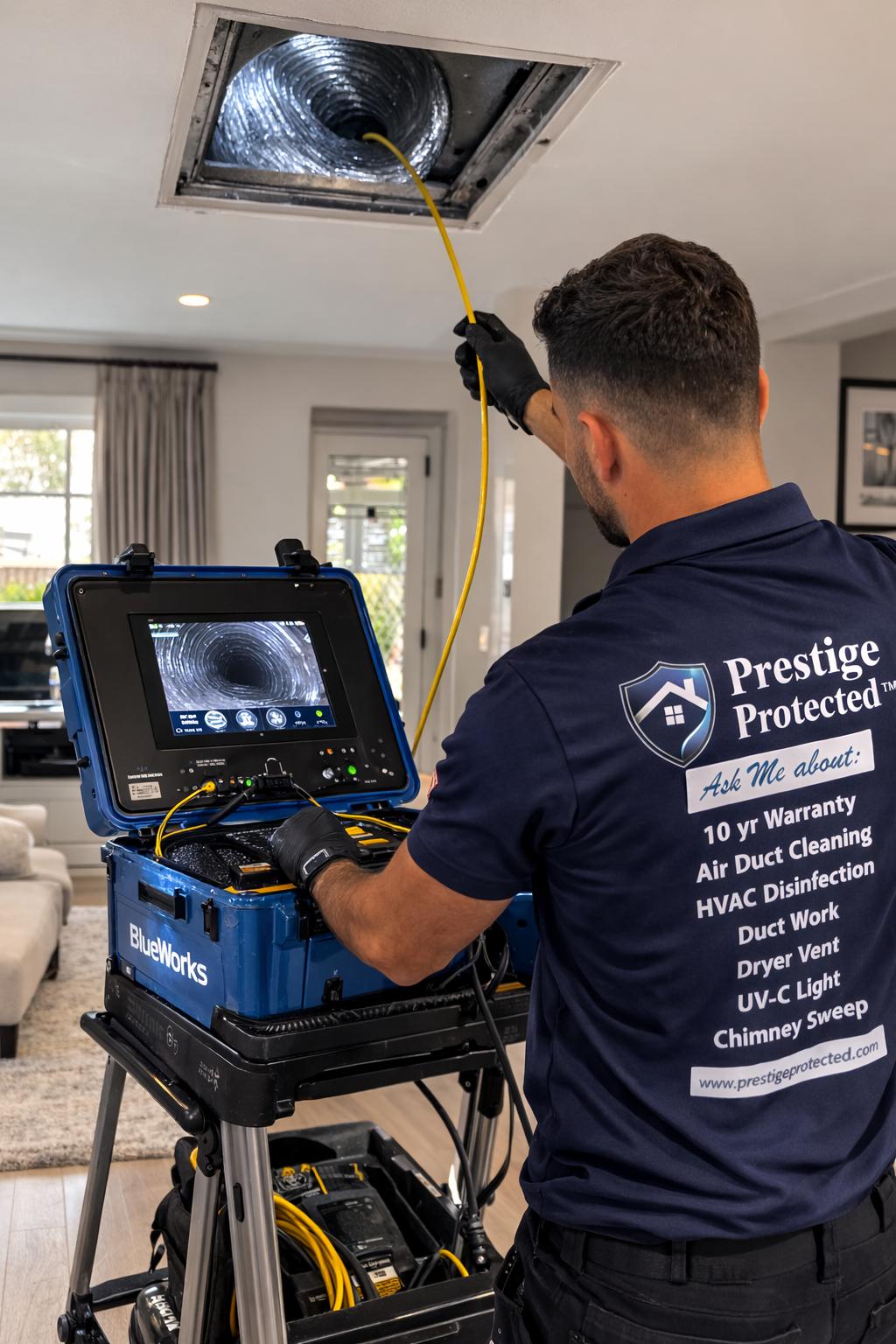
A good share of Falls River homes run ductwork through a crawlspace, and that changes what a summer does to the system. Crawlspace air is cooler and damper than the air in your living room. Ducts passing through it sweat on the outside and stay cool on the inside, so any dust already in the run has moisture to work with rather than staying dry. That is the mechanism behind a house that smells fine in April and wrong in July.
The EPA’s mold guidance gives the useful number here: water-damaged areas and items should be dried within 24 to 48 hours to prevent mold growth. Nothing in a damp crawlspace dries in 48 hours on its own. That is why we check the coil, the drain pan and the condensate drain on every visit where they can be reached. ENERGY STAR flags the same drain, noting that when it plugs it can cause water damage in the house and affect indoor humidity levels.
- A musty smell only when the air conditioning runs usually points at the coil or the pan, not the duct walls.
- Standing water in the drain pan means the drain needs clearing before anything else is worth doing.
- Sagging or torn flex duct in a crawlspace pulls damp crawlspace air straight into the system.
- Indoor humidity that stays high with the system running can be a drainage fault rather than a sizing fault.
More on the local picture: North Raleigh service, the 27614 area page, coil cleaning and diagnosing a musty smell.
Full detail on the service is on our Raleigh dryer vent cleaning page.
Frequently asked questions
How long does a Falls River home usually take?
Two to four hours for a single-system home. Two-system homes and homes with an upstairs laundry running through the attic sit at the longer end of that range.
Can you reach a roof-terminated dryer vent?
In most cases yes. Roof and second-story terminations need different equipment and take longer than a ground-floor sidewall vent, and we confirm that on the phone before the visit so there are no surprises on the day.
Do you serve the Falls River neighborhood?
Yes. Falls River and the surrounding North Raleigh area are part of our core Raleigh service area, usually with same-day or next-day availability.
Can you reach a second-floor or roof-vented dryer run?
Yes. Many Falls River homes have upstairs laundry rooms with long runs that vent through the roof, and we clear the full length to the exterior and confirm airflow is restored.
How often should ducts and dryer vents be cleaned?
Most duct-cleaning professionals suggest air ducts every three to five years, sooner for homes with pets, allergies or recent renovation. Dryer vents should be cleaned about once a year; ENERGY STAR recommends keeping the lint trap and vent clear to keep the dryer efficient and safe.
How long does the service take?
Air-duct cleaning is typically two to four hours; dryer vents are usually 30 to 90 minutes, longer for roof-vented or second-floor runs. We confirm the time after a quick look at your system.
How do I know if I actually need duct cleaning?
Use the EPA conditions: substantial visible mold on hard duct surfaces, pests in the ducts, or ducts clogged with excessive dust and debris with particles coming out of the registers. If none of those apply, a cleaning may not change anything you would notice, and we will say so.
Why does my Falls River home smell musty in summer but not in spring?
Because ductwork running through a crawlspace stays cool and damp once the humidity arrives, so dust in the run has moisture to work with. The EPA notes water-damaged areas should be dried within 24 to 48 hours to prevent mold, and a crawlspace does not manage that on its own.
Can you confirm whether what you find is mold?
We can show you what we see and describe it accurately, but the EPA is clear that a positive determination takes an expert and sometimes a laboratory. We will not label something mold to win a job.
Last updated by the Prestige Protected service team.
Book a cleaning in Falls River
Serving Falls River and North Raleigh. Call (888) 404-8321 or request a quote.