
Quick answer
Prestige Protected cleans air ducts and dryer vents for MacGregor Downs homes in central Cary, off Kildaire Farm Road. Trained technicians use HEPA-filtered, source-removal equipment, clear the dryer lint that drives up fire risk, and leave you before-and-after photos of every job. Same-day and next-day appointments are usually available. Call (888) 404-8321.
MacGregor Downs is one of Cary’s established golf-course neighborhoods, and many of its homes have had decades of Triangle pollen, dust and pet dander cycling through the ductwork. A thorough air duct and dryer vent cleaning pulls that buildup out of the system so it stops recirculating through your vents, helps your HVAC run more efficiently, and removes the lint that makes a dryer a fire hazard.
Why MacGregor Downs homes benefit
The homes around MacGregor Downs Country Club and Kildaire Farm Road were largely built from the 1970s through the 1990s, so a lot of them are working with original or long-serving ductwork. Over that many seasons, ducts collect a steady layer of settled dust, drywall fines from past remodels, and the fine yellow-green pollen the Triangle is known for every spring. The U.S. Environmental Protection Agency reports that indoor air can be two to five times more polluted than the air outdoors, and that removing the source of contamination is the most effective way to improve it. Cleaning the ducts is exactly that: source removal, not masking.
Cary’s hot, humid summers add a second reason. When damp air meets the cool coil and duct surfaces inside a running air conditioner, moisture settles on any dust that is present. The EPA notes that water-damaged areas and items should be dried within 24 to 48 hours to prevent mold growth, which is how a system that smells fine in April can develop a musty odor by July. Keeping the ducts and coil clean helps the system dry out between cycles and keeps that smell from taking hold.
What a professional cleaning includes
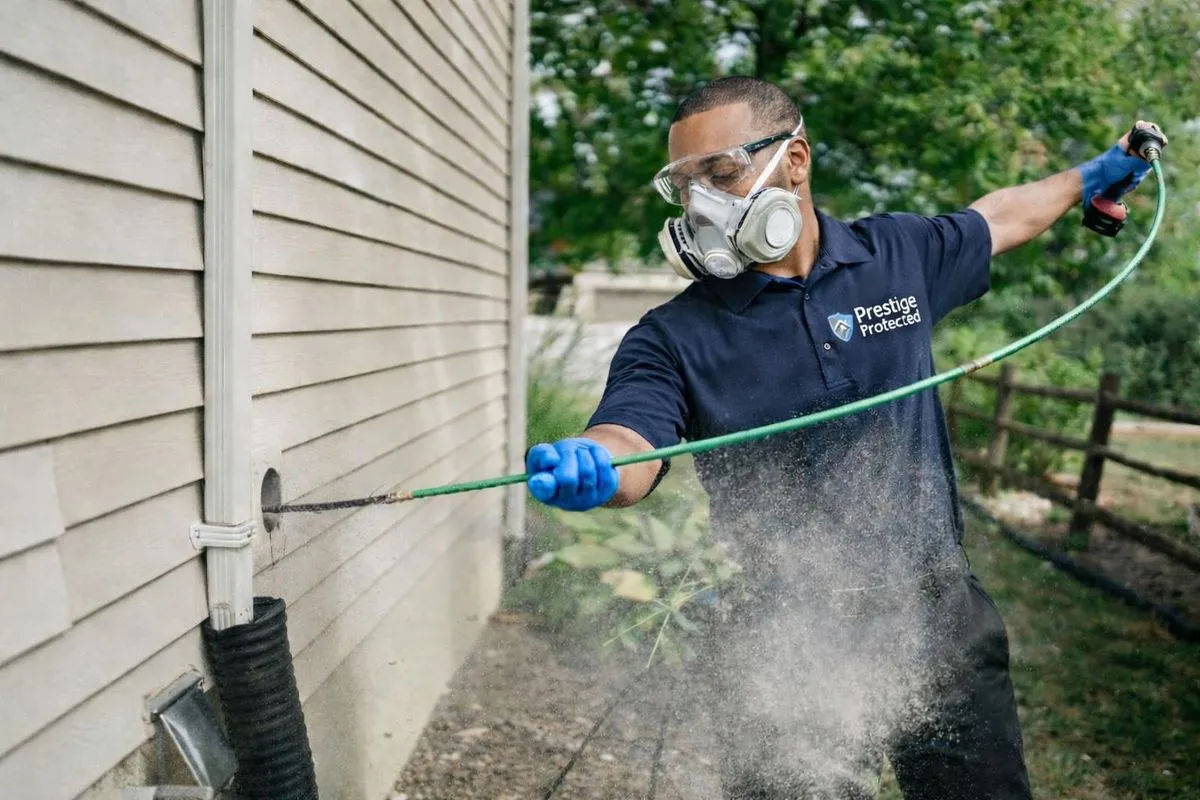
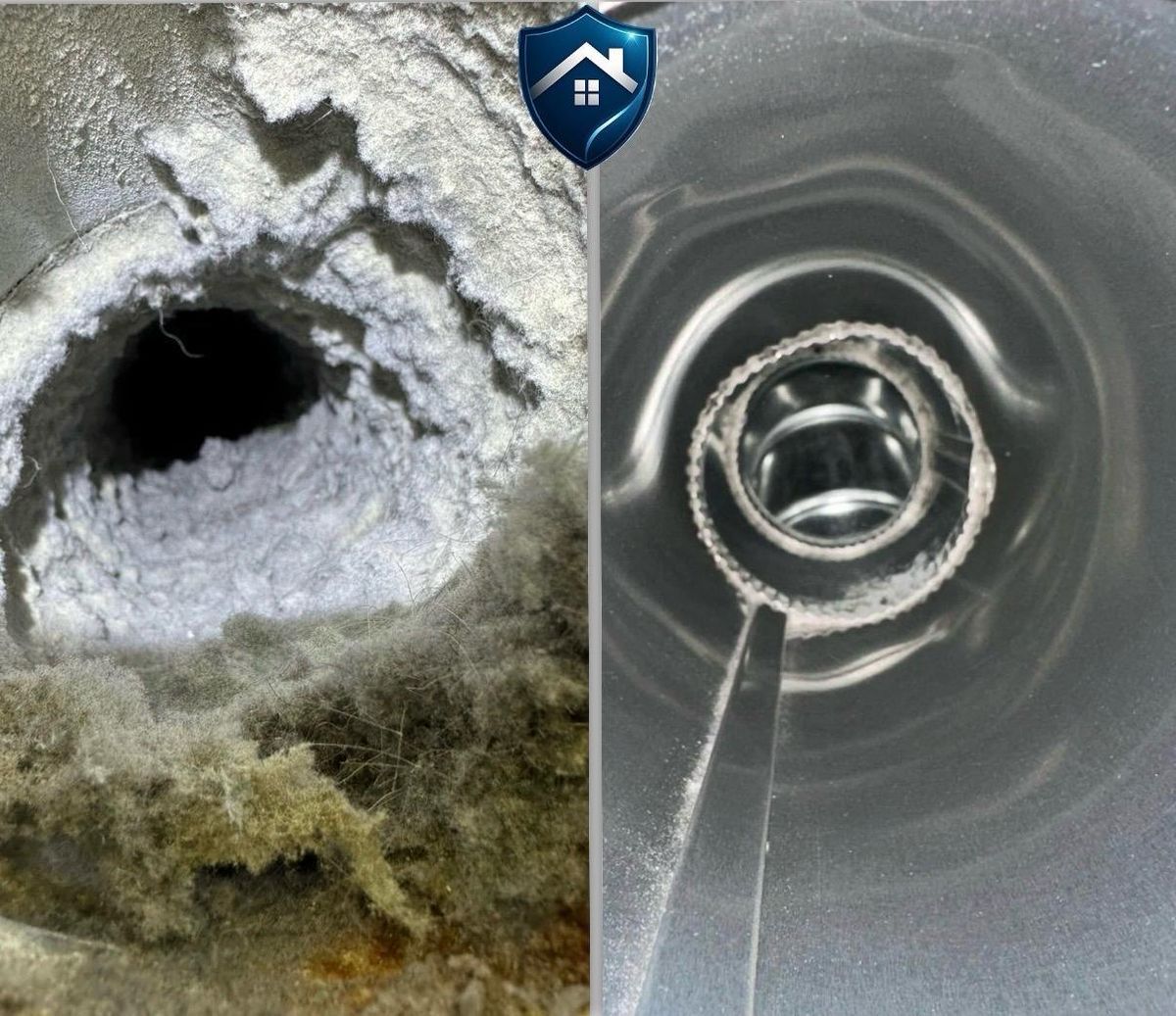
A full visit starts with a look at your system so we can quote the time honestly before any work begins. We seal the vents, put the duct system under negative pressure, and use rotating brushes and compressed-air tools to dislodge debris while a HEPA-filtered vacuum captures it. Supply and return registers are cleaned, and if you add sanitizing we apply an EPA-registered antimicrobial to treat odor-causing growth. On the dryer side, we clear the full vent line from the drum connection to the exterior hood and confirm the flap opens freely. You get before-and-after photos so you can see what actually came out.
Signs it is time for a cleaning
- Visible dust or debris blowing from your vents
- Musty or stale odors when the system runs
- Allergy or asthma symptoms that get worse indoors
- A dryer that takes more than one cycle, or a hot laundry room
- Several years (or an unknown amount of time) since the last cleaning
Our services in MacGregor Downs
We provide air duct cleaning, dryer vent cleaning, sanitizing and odor treatment, AC coil cleaning, HVAC inspection, indoor air quality testing and preventative maintenance. Clearing the dryer vent matters for safety as much as speed: the U.S. Fire Administration attributes about 2,900 home dryer fires each year to clogged vents, with failure to clean being the leading cause. Between visits, ENERGY STAR recommends inspecting, cleaning or changing air filters once a month, which keeps far less dust reaching the ducts in the first place. For more on service and pricing, see our main Cary air duct and dryer vent cleaning page, our Cary service overview, and the Cary cost guide.
What older Cary ductwork is actually made of. Most of the homes between Kildaire Farm Road and Cary Parkway were framed between the mid-1970s and the late 1990s, which puts them in the era of sheet-metal trunk lines feeding insulated flexible branch runs. Those two materials age differently, and the difference matters when you are deciding whether cleaning will help.
What does decades-old ductwork look like inside a MacGregor Downs home?
- Sheet-metal trunks hold up well but collect a firm, felted layer of dust on the bottom of the run, especially in the first few feet after the air handler where air slows down.
- Insulated flex branches have a ribbed inner liner. Every rib is a shelf, so flex holds noticeably more settled pollen and drywall fines than smooth metal of the same age.
- Crawlspace runs in this part of Cary often sag between hangers. A sagging low spot becomes the collection point for everything the airstream drops, and it is the first place we look with a camera.
- Old remodel debris. Kitchen and bath renovations from the 1990s and 2000s regularly left sanding dust and even cut-off pieces of insulation inside open returns. That material never leaves on its own.
- Failed joint tape. Cloth duct tape from the original build dries out and lets the joint leak. We photograph it and tell you, but to be clear about our scope: we clean, inspect and document ductwork. We do not replace ductwork and we do not sell duct sealing. If you want to understand that decision, our cleaning versus duct sealing comparison walks through it without a sales angle.
A fifteen-minute check you can do before you book
You do not need us to tell you whether something is obviously wrong. Five checks, in this order, will tell you most of what an inspection would:
- Pull the filter. Hold it up to a light. If you cannot see light through it, or if the frame is bowed toward the blower, airflow has been restricted for a while and fine dust has been bypassing around the edges.
- Take off one supply register in the dustiest room and look in with a phone light. A light grey film is normal. Visible fuzz, mats of hair, or debris you could pick up with your fingers is not.
- Look at a return grille at floor level. Returns pull harder than supplies push, so this is where hair, pollen and pet dander concentrate first.
- Go outside to the dryer hood while a load is running. You should feel a strong, warm push of air and see the flap standing fully open. Weak flow, or a flap that only flutters, points at a restriction.
- Open the crawlspace or attic door and look at the ducts you can see from the hatch. Sagging, crushed sections, or a branch that has pulled loose from a boot are all things you want to know before anyone quotes you.
If three or more of those come back bad, cleaning is very likely worth doing. If none of them do, tell us that on the phone and we will say so rather than sending a truck.
Golf-course living, mowing dust and the Cary pollen calendar
Homes backing up to the MacGregor Downs course and the greenways off Kildaire deal with a specific seasonal load. Late February through April is pine and oak, the fine yellow-green film that coats cars and gets pulled straight into any return near a door. May and June bring grass pollen and mowing dust from the course and from every lawn on the street. Late August into October is ragweed. In between, Cary’s humidity keeps everything that lands inside the system slightly damp.
That combination is why the EPA’s point about source removal is the practical one for this neighborhood. The agency reports that indoor air can be two to five times more polluted than outdoor air, and that the most effective way to improve it is to remove the source rather than to filter or mask it. Pollen that has already settled on the bottom of a duct run is a source, and it gets stirred up every time the blower starts.
The other half is keeping new dust out. ENERGY STAR recommends inspecting, cleaning or changing that filter once a month. In a pollen-heavy spring in Cary, monthly is closer to the real interval. A clean, correctly sized filter is the cheapest thing you can do between visits, and it does more than any add-on service we sell.
Why does the dryer take two cycles in a home like this?
Many MacGregor Downs floor plans put the laundry room away from an exterior wall, which means the vent travels a long horizontal path through the crawlspace or the ceiling before it exits. Long runs with several elbows lose airflow, and lost airflow means the lint that should be leaving the house settles instead. Once a run is partly packed, drying time climbs, the laundry room gets warm and humid, and the dryer works harder for the same result.
It is also the fire question. The U.S. Fire Administration puts clothes dryer fires at roughly 2,900 per year in the United States and identifies the leading cause plainly: “Failure to clean (31%) was the leading factor contributing to the ignition of clothes dryer fires in homes from 2018-2020.” Clearing the full line, not just the four feet you can reach behind the machine, is what actually removes that risk. If the routing itself is the problem, rerouting is sometimes the permanent answer, and a crushed or disconnected section is a repair rather than a cleaning.
Last updated by the Prestige Protected service team.
MacGregor Downs has some of the oldest duct in Cary, so replacement quotes are common here. Our Cary ductwork replacement guide covers what genuinely needs replacing and what a cleaning solves.
Frequently asked questions
Do you serve MacGregor Downs and central Cary?
Yes. MacGregor Downs and the surrounding Kildaire Farm Road and Cary Parkway neighborhoods are part of our core service area, usually with same-day or next-day availability.
How long does a cleaning take in a MacGregor Downs home?
Most air-duct cleanings run about two to four hours depending on the size of the home and number of systems. Dryer vents are typically 30 to 90 minutes. We confirm the time after a quick look at your setup.
How often should Cary homes have their ducts cleaned?
There is no fixed schedule that fits every house. The U.S. Environmental Protection Agency takes the position that ducts should be cleaned when there is a reason to clean them: substantial visible mold growth, vermin, or ducts clogged with dust and debris that is actually being released into the room from the registers. In practice, most MacGregor Downs homes with pets, allergy sufferers or recent renovation dust hit one of those conditions every few years, and homes without any of them can go much longer. We inspect first and tell you which camp you are in.
Will cleaning help with the pollen and musty summer smells?
It helps with both. Removing settled pollen and dust stops the system from recirculating it, and cleaning the coil and ducts lets the system dry properly between cooling cycles, which is what keeps musty odors from developing.
Do you leave proof of the work?
Yes. Every job is documented with before-and-after photos so you can see the debris that was removed rather than taking it on faith.
Do you clean ducts that run through a crawlspace?
Yes, and in this part of Cary most of them do. Crawlspace runs are where we find sagging low spots and disconnected boots, so we camera the accessible runs before and after and send you the images with the job photos.
Can flexible ductwork be cleaned, or does it have to be replaced?
Sound flex duct can be cleaned. The ribbed inner liner holds more dust than smooth metal, so it needs brushing rather than vacuuming alone, but the liner is not damaged by correct source-removal equipment. Flex that is torn, crushed or has a wet, deteriorating liner is a replacement question, and replacement is not a service we offer, so you would get an honest photo and a recommendation to call an HVAC contractor.
Do you offer duct sealing or ductwork replacement?
No. We clean, sanitize, inspect and document duct systems, and we clean and repair dryer vents. Duct sealing and ductwork replacement are outside what we do, which is why our guides on those subjects are informational rather than sales pages.
Will a duct cleaning lower my power bill?
We will not promise a number, and anyone who does is guessing. What is defensible is the mechanism: a system with a clean coil, a clean blower and unrestricted returns moves the air it was designed to move, and a system fighting restriction runs longer for the same comfort. The larger and more measurable saving usually comes from keeping the filter fresh.
Do I need to be home for the whole appointment?
Someone needs to let us in and to be there at the walkthrough at the end, but you do not need to follow the crew. Most air duct visits in a MacGregor Downs home run two to four hours depending on the number of systems.
Can you do the dryer vent and the ducts in the same visit?
Yes, and it is the efficient way to do it. The crew and equipment are already on site, so combining the two costs less than two separate appointments and you get one set of before-and-after photos covering both.
Nearby ZIP codes we serve
- Cary 27511 (downtown Cary and Kildaire)
- Cary 27518 (Lochmere, Regency Park and Tryon Road)
- Kildaire Farms, Cary
Book air duct & dryer vent cleaning in MacGregor Downs
Same-day availability across central Cary. Call or request a quote.