
TL;DR: Quick Answer
Dryer vent repair and replacement in the NC Triangle is priced by the job, not a flat rate. Cost depends on the length of the run, the number of bends, whether the vent exits through a wall or the roof, the materials used, and whether a single section or the whole line needs replacing. Prestige Protected gives an itemized, upfront quote for your specific vent, no bait pricing. Call (888) 404-8321 or get a quote.
What does dryer vent repair or replacement cost? There’s no single flat rate, the price depends on your specific vent. Below are the factors that drive it, and how Prestige Protected keeps pricing transparent and itemized (no bait pricing) across the NC Triangle. For an exact figure, get a quote.
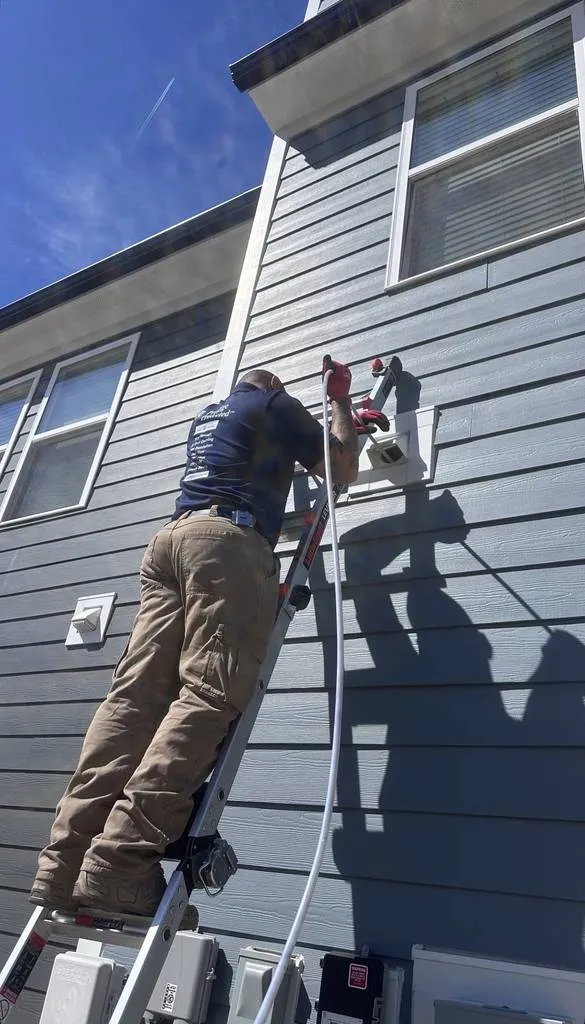
What drives the cost
- Length of the run and how much duct must be replaced
- Number of bends and how complex the path is
- Wall vs. roof termination (roof/2nd-story work takes more)
- Materials, rigid metal duct, hood, fasteners
- Whether it’s a repair/section replacement or a full line replacement
- Emergency / same-day response when needed
Repair vs. full replacement
A short damaged section can sometimes be replaced on its own, but a run that’s crushed, too long, rusted, or built from foil/plastic is usually better replaced end to end with rigid metal, it lasts longer and passes code. We’ll tell you honestly which your vent needs.
See the service details for Cary or Raleigh, or compare with a standard dryer vent cleaning.
Why a failing dryer vent is worth repairing
A crushed, disconnected, or undersized dryer vent is not just an efficiency problem, it is a safety and cost problem. The published data makes the case for fixing it properly rather than patching it:
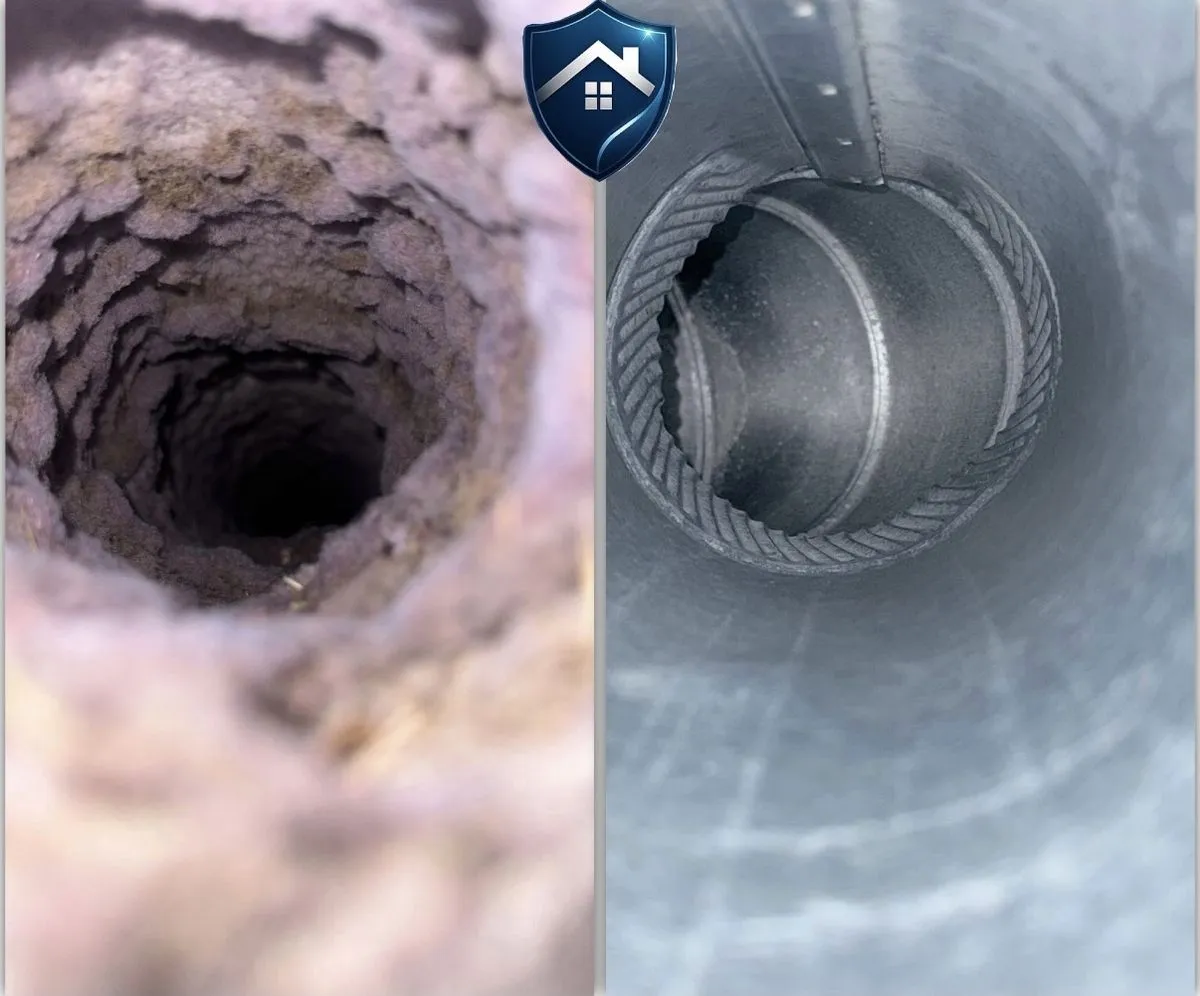
- Fire safety. The U.S. Fire Administration reports that clothes dryers are involved in an estimated 2,900 residential building fires each year in the U.S., and the leading contributing factor is failure to clean them. Clearing the full lint path is the single best way to lower that risk.
- Efficiency. ENERGY STAR notes that a clogged vent makes a dryer work harder and run longer, which wastes energy and shortens the appliance’s life. A clear vent lets hot, moist air escape so loads dry in one cycle.
- Indoor air. The EPA reports indoor air can hold pollutant levels two to five times higher than outdoor air, and it recommends cleaning ducts when there is visible mold, vermin, or substantial debris. When ducts are visibly dirty, cleaning removes that material at the source.
Signs your vent needs repair, not just cleaning
- Clothes still damp after a full cycle, or the dryer feels very hot
- A vent line that is crushed, kinked, torn, or made of thin foil/plastic
- The exterior flap does not open, or no air comes out when the dryer runs
- A disconnected line dumping warm, lint-laden air into an attic or wall cavity
We replace failed runs with rigid metal duct, which lasts longer, resists crushing, and meets code. See service details for Cary or Raleigh, or compare with a standard dryer vent cleaning.
Before the numbers, the scope. Knowing exactly which parts of a dryer vent system we repair or replace, and which we do not touch, is what lets you compare our quote against anyone else’s.
What do we repair and replace, and what do we not touch?
- We do: replace the flexible transition hose behind the dryer, replace crushed or damaged sections of vent line, replace the full run end to end, replace the exterior wall or roof termination and its flap, reconnect runs that have separated in an attic or crawlspace, seal joints along the vent line, add or replace wall and roof caps, and reroute a run where the routing itself is the problem.
- We also do: clean the full line as part of any repair, and inspect and photograph the whole run so you can see what you are paying for.
- We do not: service or repair the dryer appliance itself, do electrical or gas work, replace HVAC ductwork, or sell duct sealing. If the fault is in the machine rather than the vent, we tell you and we do not charge you for finding out.
That last line matters for cost, because a slow dryer is sometimes a slow dryer. If the vent is clear end to end and the termination flap opens freely, the problem is the appliance, and the right answer is an appliance technician rather than a bigger vent job. Our slow-drying diagnostic walks through separating the two.
Repair, replace or reroute: which one do you actually need?
| Situation | Usual answer | Why |
|---|---|---|
| Plastic or vinyl flexible transition hose behind the dryer | Replace the hose | Ribbed plastic and vinyl trap lint and are not an acceptable material for a dryer transition. This is the cheapest and highest-value item on the list. |
| One crushed section behind or under the machine | Repair that section | A single accessible crushed length can be cut out and replaced without disturbing the rest of the run. |
| Run separated in an attic or crawlspace | Repair and re-support | Reconnecting is straightforward; the real fix is adding support so it does not pull apart again. See our guide to a vent disconnected in the attic. |
| Exterior flap broken, missing or seized | Replace the termination | A cap that will not open chokes airflow even when the duct behind it is perfectly clear, and an open one lets pests in. |
| Foil flex used for the whole concealed run | Replace end to end | Ribbed foil sags between supports and collects lint at every low point. A rigid metal replacement is the durable answer. |
| Very long run with many elbows, or one that keeps re-clogging | Reroute | If the geometry is the problem, cleaning it again in six months is the expensive option. Rerouting to a shorter, straighter path fixes the cause. |
| Vent terminates into an attic, crawlspace or soffit | Reroute to outside | Warm, wet, lint-laden air discharged into a building cavity causes moisture damage. This is not a cleaning question at all. |
Which materials belong in a dryer vent?
- Rigid metal duct. Smooth-wall galvanized or aluminum. This is what a concealed run should be. Smooth interior means lint keeps moving instead of catching.
- Semi-rigid aluminum. Acceptable for a short, visible transition where a bend is unavoidable. Better than foil flex, still not as good as rigid.
- Foil or plastic flexible duct. The ribbed accordion style. Every ridge is a lint shelf and it crushes behind a dryer that gets pushed back against the wall. When we find it inside a wall or ceiling, replacement is the recommendation.
- Screws through the joint. A screw point inside a dryer duct catches lint and builds a plug around itself. Joints should be taped and supported, not screwed through into the airstream.
- The termination. A cap with a freely moving flap and no bird or pest screen across the opening. Screens sound sensible and clog with lint fast.
Why a failing vent costs money on every load
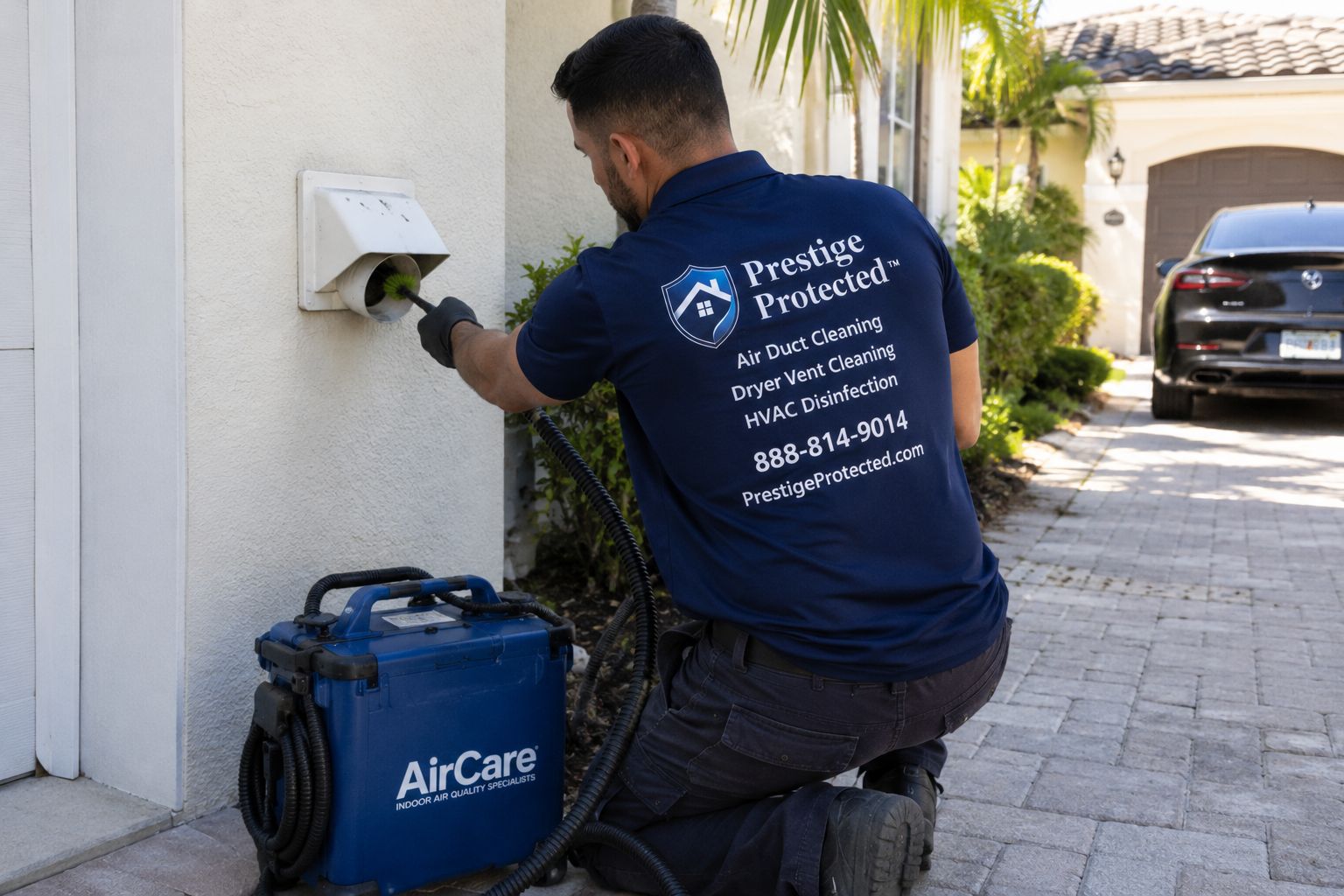
There are three costs, and only one of them is the repair. The first is time and electricity: a restricted run means the dryer cannot exhaust the moisture it is removing, so cycles run long or repeat, and the machine works against itself. The second is the appliance: high-temperature operation with poor exhaust is hard on a heating element and a thermal fuse. The third is the one that justifies the whole page. The U.S. Fire Administration puts clothes dryer fires at roughly 2,900 a year in the United States and names the cause without hedging: “Failure to clean (31%) was the leading factor contributing to the ignition of clothes dryer fires in homes from 2018-2020.” A damaged run is a run that cannot be kept clean.
How do you get three quotes you can actually compare?
- Ask each company to state the total length of the run and the number of elbows. If they have not measured it, they are pricing a guess.
- Ask what material they will install and get it in writing. Rigid metal and foil flex are not the same job at the same price.
- Ask whether the exterior termination is included or quoted separately. This is the most common difference between two quotes that look far apart.
- Ask whether cleaning the line is included with the repair. Ours is.
- Ask for photos of the damaged section before and the finished work after. Any company willing to do the work should be willing to show it.
- Ask what happens if they open it up and find more. The answer you want is that they stop, show you, and requote before continuing rather than billing the surprise.
We give a written, itemized quote for your specific vent after looking at it, and we would rather lose a job to a fair competitor than win one on a number that changes later. Related reading: common dryer vent problems, how often a vent needs cleaning, and our dryer vent cleaning service across Cary and Raleigh.
Last updated by the Prestige Protected service team.
For the cleaning itself, see Cary or Raleigh.
Frequently asked questions
How much does dryer vent repair cost in the NC Triangle?
It varies by run length, bends, wall vs. roof exit, and materials. We provide an itemized quote up front for your specific vent rather than a flat rate.
Is repair or full replacement cheaper?
A small damaged section may be cheaper to replace alone, but crushed, over-long, rusted, or foil/plastic runs are usually better (and safer) replaced end to end. We advise honestly.
Want an exact dryer vent quote?
Call (888) 404-8321 or request an itemized quote.
Do you repair the dryer itself?
No. We work on the vent system: the transition hose, the duct run, the joints, the supports and the exterior or roof termination. If the run is clear and the flap opens freely and the dryer is still slow, the fault is in the appliance and you need an appliance technician. We will tell you that rather than selling you vent work you do not need.
Is it cheaper to repair one section or replace the whole run?
It depends on what the run is made of. Replacing one damaged length of otherwise sound rigid metal is the cheaper and correct answer. If the concealed run is ribbed foil flex, patching one section leaves the same problem everywhere else, and replacing end to end costs less than doing it twice.
Does a repair include cleaning the line?
Yes. There is no sense in reconnecting a clean fitting onto a packed duct, so clearing the full run is part of any repair we do. You get before-and-after photos of both the repair and the cleaning.
Can you reroute a vent that keeps clogging?
Often yes, and it is sometimes the only fix that lasts. If the run is very long, has several elbows, or terminates somewhere it should not, cleaning it repeatedly is the expensive option. We look at what the building allows and quote a shorter, straighter path.
My vent discharges into the crawlspace. Is that a problem?
Yes, and it is worth acting on quickly. A dryer exhausts a large volume of warm, moist, lint-carrying air, and discharging that into a crawlspace, attic or soffit puts moisture where you do not want it. That is a rerouting job rather than a cleaning, and it is one of the few things on this page we would call urgent.
Will you give me a price over the phone?
We will tell you honestly what the job usually involves and what drives the cost, but a number for your specific vent comes after someone has seen the run, the elbows and the termination. A firm phone price on a vent nobody has looked at is a number that changes later, and we would rather not start that way.
How long does a dryer vent repair take?
Most repairs, reconnecting a separated joint, replacing a crushed transition hose, or swapping a broken exterior hood, are finished the same visit, usually within one to two hours. A full reroute of a long or badly designed vent run can take longer, and we confirm the scope and exact price after the on-site inspection, before any work starts.
Can I just keep cleaning a damaged vent instead of repairing it?
Cleaning removes lint but cannot fix a crushed, disconnected, or leaking duct. The U.S. Fire Administration reports about 2,900 home clothes dryer fires each year, and failure to clean the dryer is the leading contributing factor, a damaged vent that traps lint keeps recreating that risk after every cleaning, so repairing it once is usually the safer and cheaper path.
What each dryer vent repair actually involves
Because we quote per job rather than from a price list, the table below shows scope and time instead of a figure. It is here so you can see what a technician is actually doing on your vent, and so you can compare two quotes on like for like rather than on the headline number alone.