Quick answer
Prestige Protected cleans air ducts and dryer vents for homes, townhomes and condos in North Hills and the Midtown Raleigh area (27609). Trained technicians use HEPA-filtered, source-removal equipment and photo-document every job, usually with same-day or next-day scheduling. Call (888) 404-8321.
North Hills is a dense, established Midtown district with a mix of older single-family homes and newer condos and townhomes, and each benefits from cleaning for a different reason. Older ducts hold years of settled dust and pollen; multi-unit and newer construction can trap construction debris and share air across units. A professional cleaning removes the source rather than masking it.
Why North Hills homes benefit
North Hills sits in the 27609 ZIP code at the center of Midtown Raleigh, where redevelopment has put new condos and townhomes right alongside decades-old homes. In the older houses, ducts have collected many seasons of Triangle pollen and dust. In newer and multi-unit buildings, the concern is often leftover construction debris and, in shared systems, contaminants that move between spaces. The U.S. Environmental Protection Agency identifies source removal as the most effective way to improve indoor air, and reports indoor air can be two to five times more polluted than outdoor air. Raleigh’s humidity adds to it: the EPA notes water-damaged areas and items should be dried within 24 to 48 hours to prevent mold growth, so a moist, dusty system can turn musty fast.
Cleaning condos and townhomes
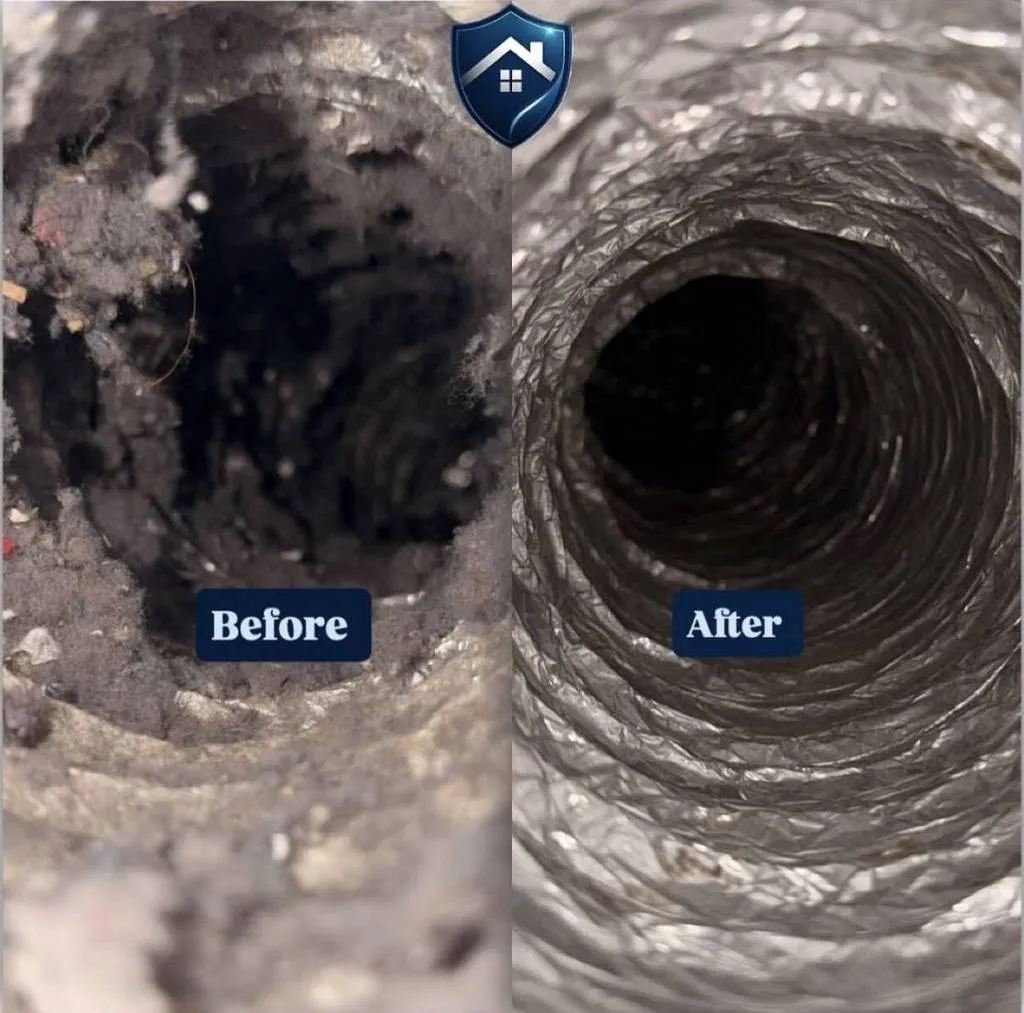
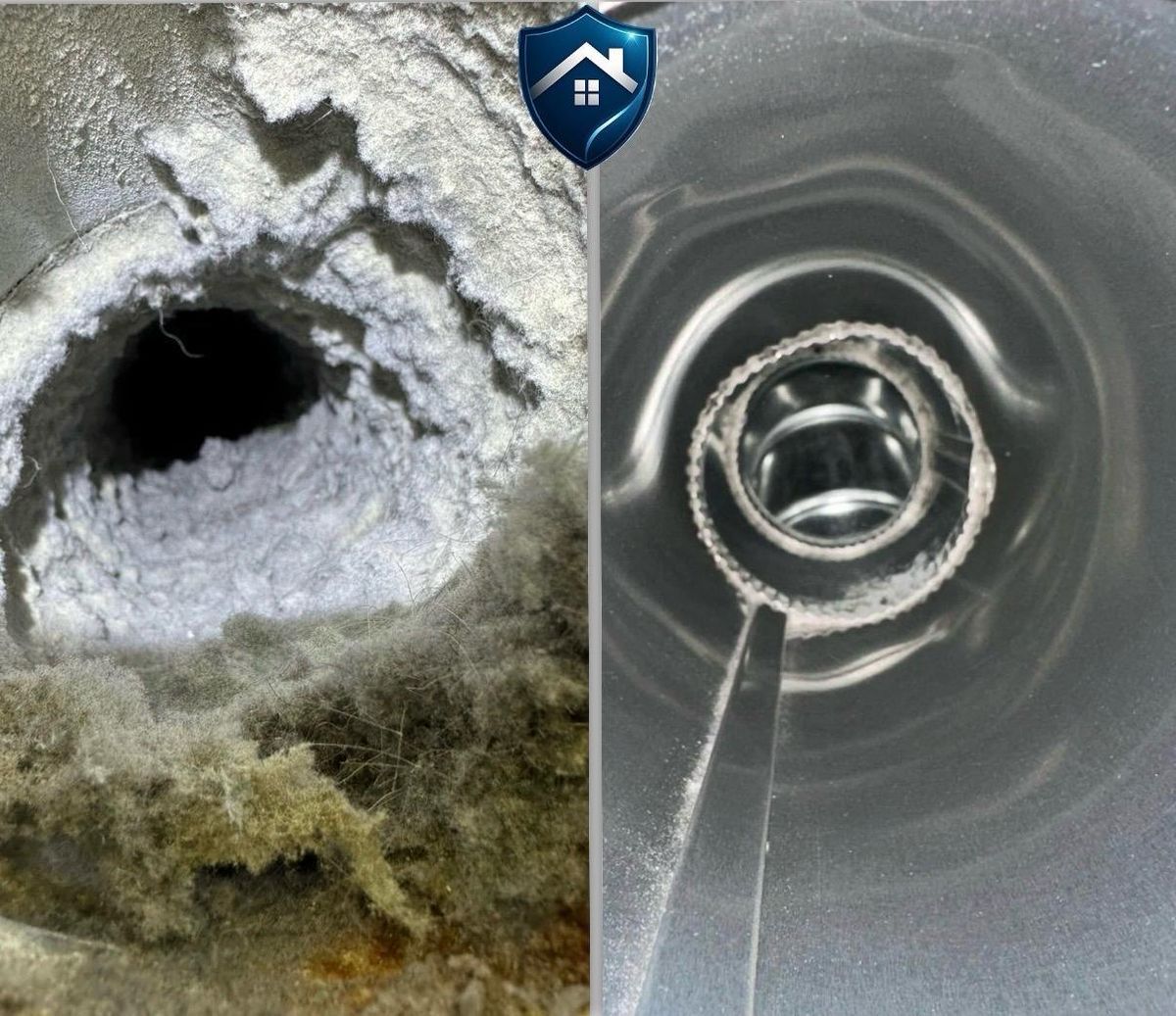
Multi-unit buildings come with their own rules and layouts, and we work with what your building and system allow. For a single unit with its own air handler, the process is the same as a house: seal the registers, put the system under negative pressure, brush and vacuum the debris out with HEPA-filtered equipment, and document the result. For shared or rooftop systems, we coordinate access and clean the portions your unit controls. Either way, you get before-and-after photos.
Signs it is time for a cleaning
- Visible dust or debris blowing from your vents
- Musty or stale odors when the system runs
- Allergy or asthma symptoms that get worse indoors
- Longer dryer times or a hot laundry area
- A recently purchased unit with an unknown cleaning history
Our services in North Hills
We provide air duct cleaning, dryer vent cleaning, sanitizing, coil cleaning, inspection and maintenance. Clearing the dryer vent matters for safety too: the U.S. Fire Administration links clogged vents to roughly 2,900 home fires a year. Explore our full Raleigh air duct & dryer vent cleaning service, our 27609 page, and the Raleigh service overview.
27609 is not one kind of building. Within a mile of North Hills you can find a 1955 brick ranch, a 1990s townhome and a 2022 tower, and the honest answer to what your system needs depends on which one you live in.
Which North Hills building type do you live in?
- The 1950s and 60s ranch off Six Forks. Often on its second or third HVAC system, with ductwork in a crawlspace or a low attic. Expect decades of settled dust, sagging flex runs added during a system swap, and a dryer vent that was rerouted at some point and nobody remembers where it goes. This is the profile where cleaning shows the most dramatic before-and-after photos.
- The 1990s and 2000s townhome. Compact runs, interior laundry closet, and a dryer vent that travels a long horizontal path above the ceiling before it reaches an outside wall. Ductwork is usually in reasonable shape; the dryer vent is usually the actual problem.
- The recent condo or mid-rise. Short duct runs, sometimes a rooftop or corridor-fed system, and construction debris left in the runs from the build. Drywall dust and cut insulation from construction is the most common thing we pull out of a five-year-old unit, which is why our new construction guide exists.
- The renovated older home. Midtown teardowns and gut renovations are common now. If work happened while the system was running or the returns were open, the ductwork holds the sanding dust. That is the clearest case for cleaning there is.
What does a rooftop or shared system mean for your unit?
This is the question that decides what is even possible in a multi-unit building, so it is worth understanding before you call anyone.
If your unit has its own air handler inside a closet, you own the whole system and the work is the same as it would be in a house: seal the registers, put the ductwork under negative pressure, brush and vacuum the debris out through HEPA-filtered equipment, and photograph the result. You do not need building permission for anything beyond the appointment itself.
If your building uses a rooftop unit, a corridor-fed system or a shared vertical stack, the boundary between what you control and what the association controls matters. We clean the portions your unit controls and we tell you plainly where that boundary sits, because a homeowner should not be paying to clean common equipment that the association is responsible for. In shared arrangements we are happy to talk to the management company directly and put the scope in writing so nobody is guessing.
Dryer vents in these buildings are their own subject. Shared stacks, roof terminations and booster fans all mean the blockage is frequently nowhere near your dryer. Where the routing itself is the problem, rerouting is occasionally the permanent fix, and a crushed or disconnected section is a repair rather than a cleaning.
What can you check yourself before you call the building?
Half the calls we get from Midtown condos turn out to be something the owner could confirm in ten minutes. Work through these in order:
- Clean the lint screen and run the dryer empty for two minutes. If it now feels normal, the screen was the problem. If nothing changes, keep going.
- Put your hand on the laundry closet wall or door during a load. Warm and humid means heat and moisture are not leaving the unit, which points at the vent line rather than the machine.
- Check the exterior or roof termination if you can see it. A flap that does not open, or a cap packed with felted lint, is a blockage even when the duct behind it is clear.
- Pull the HVAC filter. Hold it to a light. If no light passes, restriction has been in place long enough for fine dust to bypass the frame.
- Take one supply register off in the dustiest room and look in with a phone light. Grey film is normal; visible fuzz, hair mats or construction debris is not.
- Ask the management office one question: when was the building’s dryer stack or rooftop unit last serviced. If the answer is never, that is useful for you and for your neighbors.
Why does this matter beyond drying time?
Two reasons, and both are documented rather than sales copy. On the dryer side, the U.S. Fire Administration puts clothes dryer fires at roughly 2,900 per year and states the leading cause directly: “Failure to clean (31%) was the leading factor contributing to the ignition of clothes dryer fires in homes from 2018-2020.” In a building where the vent runs above a ceiling you cannot see, that is a stronger argument than convenience.
On the air side, the EPA reports indoor air can be two to five times more polluted than the air outside, and identifies removing the source of contamination as the most effective way to improve it. Raleigh’s humidity adds urgency: the agency’s mold guidance notes that water-damaged areas and items should be dried within 24 to 48 hours to prevent mold growth, which is how a system that was fine in April smells musty by July. Between visits, ENERGY STAR recommends inspecting, cleaning or changing air filters once a month, which is the cheapest thing on this page and the one that does the most.
Last updated by the Prestige Protected service team.
Full detail on the service is on our Raleigh dryer vent cleaning page.
North Hills has a mix of eras and a matching mix of moisture problems. Our Raleigh mold removal page covers what each one needs.
Frequently asked questions
Do you serve North Hills and Midtown Raleigh?
Yes. North Hills and the surrounding Midtown / 27609 area are part of our core Raleigh coverage, typically with same-day or next-day scheduling.
Can you service condos and townhomes?
Yes. We clean ducts and dryer vents in single-family homes, townhomes and condos. For shared systems we work with what your building allows and document the results.
How often should this be done?
There is no interval that fits every unit. The U.S. Environmental Protection Agency position is that ducts should be cleaned when there is a reason: substantial visible mold, vermin, or ducts clogged with dust and debris that is being released into the room from the registers. Dryer vents are different, because lint accumulates continuously; annual is a sensible baseline and more often for a large household or a long Midtown run.
I just bought a condo in North Hills. Should I clean the ducts?
It is often worth it when the cleaning history is unknown, especially before you move in, so you start with a clean system rather than the previous owner’s buildup.
Will it help with a musty smell in my unit?
It often does. Removing dust and cleaning the coil lets the system dry properly between cycles, which addresses the moisture-and-dust combination that causes most musty odors.
Do I need HOA or building approval before you come?
Usually only for access rather than for the work itself. Most buildings want a certificate of insurance on file and a scheduled service-entrance or elevator window. Tell us the building and we will handle that paperwork and scheduling with the management office directly.
Who pays when the dryer vent problem is in a shared stack?
That is an association question rather than ours, and we will not guess at your governing documents. What we will do is document exactly where the blockage is with photos, so you can hand the management company evidence rather than a complaint. If the restriction is inside your unit, that part is yours.
My condo is only a few years old. Is there anything in the ducts?
Frequently yes, and it is not household dust. Construction leaves drywall sanding dust, insulation offcuts and sawdust inside runs that were open during the build. A new-build unit with a persistent fine grey dust on the furniture is the most predictable cleaning job there is.
Can you work in a unit with a rooftop or corridor-fed system?
Yes, for the portion your unit controls. We clean your registers, your branch runs and your own air handler where you have one, and we tell you plainly where the association’s equipment begins so you are not paying to clean common property.
How long does an appointment take in a North Hills condo?
Most single-unit air duct cleanings run about two to three hours, and a dryer vent alone is usually 30 to 90 minutes. Long horizontal condo runs and roof terminations add time, and we confirm the estimate after looking at your setup rather than before.
Is there parking and access for your equipment?
Our equipment is self-contained and comes in on a cart, so we work from a service entrance or a loading area rather than needing a truck at your door. Tell us the building when you book and we will sort out where to park and which entrance to use.
Why condo dryer vents in Midtown clog faster
In a detached house, the dryer usually sits on an exterior wall with a short, straight vent. In North Hills condos and mid-rise buildings, the laundry closet is often in the middle of the unit, so the vent runs a long horizontal path above the ceiling before it reaches an exterior wall or the roof. Every foot of that run, and every bend in it, slows airflow and gives lint a place to settle. Some buildings add a booster fan partway along the run, and a lint-caked booster fan quietly stops helping years before anyone notices. If your dryer takes two cycles or the closet gets warm and humid, the vent is the first suspect, and if the routing itself is the problem, rerouting is sometimes the permanent fix.
Working inside a managed building
We regularly work in North Hills’ condo and apartment buildings and are happy to coordinate scheduling and access with your HOA or building manager, including any paperwork the building requires before contractors come on site. Our equipment is self-contained with HEPA filtration, we protect floors and shared hallways on the way in and out, and we leave nothing behind but the before-and-after photos on your phone.
My dryer vents to the roof. Can you clean that?
Yes. Roof terminations are common in Midtown’s newer buildings. We clean the full run and inspect the roof cap, which is often where the blockage actually sits, since caps clogged with compacted lint or seized flaps choke airflow even when the duct itself is passable.
Do you coordinate with HOAs or building managers?
Yes. Tell us the building and we will handle scheduling windows, elevator or service-entrance access and any notice the management office needs. For neighbors across Six Forks, our Midtown Raleigh page covers the wider area.
Book a cleaning in North Hills
Serving Midtown Raleigh. Call (888) 404-8321 or request a quote.