
Quick answer
Most standard dryer vents take 30 to 90 minutes. A short, direct run through an outside wall is often done in 30 to 60 minutes. A long run, one with several bends, a second-floor laundry or a vent terminating on the roof can take up to about two hours. Anyone quoting a flat fifteen minutes is cleaning the opening, not the run.
Why the answer is a range and not a number
Dryer vents differ enormously from house to house, and the length of the job is set almost entirely by the shape of the duct rather than by the size of the home. A ranch-style house in Cary with the laundry on an exterior wall might have a four-foot run straight out. A two-story home in North Raleigh might have thirty feet of duct climbing through an interior wall to a roof cap. Those are the same service and nowhere near the same job.
So rather than give you a single figure that will be wrong for half of readers, here is what the time is actually spent on and what pushes it up.
What the time is spent on
- Locating and assessing the run. Finding where the duct goes, and where it terminates outside. On some homes this is the slowest part, because the route is not obvious from either end.
- Pulling the dryer out and disconnecting it. Needed to reach the duct properly. A stacked or closeted unit takes longer than one with clear space around it.
- Cleaning the run mechanically. Rotating brush and vacuum worked through the full length, not just the visible ends.
- Checking the transition hose. The flexible section behind the dryer, which is where crushing and tears usually are.
- Clearing the termination and checking the flap. A flap held open by lint or blocked by a nest is a common find.
- Reconnecting, testing airflow and photographing. Confirming it actually moves air, and documenting the before and after.
What makes it take longer
- Length of the run. Beyond about twenty-five feet, airflow drops and lint accumulates faster, so there is more to remove.
- Number of elbows. Every ninety-degree bend slows the air and collects lint. Bends also have to be worked through carefully rather than forced.
- Roof termination. Common on two-story Triangle homes and the most demanding configuration, because the run is long, vertical, and gravity pulls loosened lint back down it.
- Second-floor or interior laundry. A longer, less accessible route than a ground-floor exterior wall.
- Never cleaned before. Years of accumulation in a home that has changed hands once or twice. These are the jobs that surprise people.
- Something is broken. A crushed hose, a separated joint or a missing cap turns a cleaning into a cleaning plus a repair.
- A nest in the vent. Removing it and fitting a proper cap adds time, and it means the cap was missing or broken to begin with.
This is not the same as cleaning the lint trap
Emptying the lint screen is a thirty-second job you do yourself after every load, and it is worth doing. But the screen catches only some of the lint. The rest travels into the duct and settles there, which is the part you cannot reach and the part that causes the problems. Cleaning the trap does not clean the vent, and a spotless trap tells you nothing about the condition of the run behind it.
If you want to do what you safely can between visits, our guide on how to clean a dryer vent covers it, including where the sensible limit of a DIY attempt is.
Why it is quoted separately from air duct cleaning
They are two different systems. Your HVAC ductwork circulates conditioned air around the house through supply and return runs. The dryer vent is a single one-way exhaust duct that serves one appliance. Different equipment, different access, different amount of work, so they are priced as separate services even when we do both on the same visit.
Doing them together on one visit does save you a second appointment. You can see what each costs on our dryer vent cleaning cost and air duct cleaning cost pages.
Do you need to be home?
Someone needs to let us in and show us where the dryer is, and we would rather walk you through what we found at the end than leave a report you have to interpret. You do not need to hover while we work. Nothing in the job requires the water or power to be shut off, and the disruption is limited to the laundry area plus a short trip outside to the termination.
How to make the appointment go faster
- Clear a path to the dryer, and move laundry baskets and storage out of the way
- If you know where the vent exits outside, tell us, it saves a hunt
- Make sure the outside termination is reachable and not behind a locked gate or dense shrubs
- Run a load beforehand if you can, so we can feel the airflow at the termination before we start
- Mention anything you have noticed, longer cycles, a smell, a hot dryer, so we know what to look for
What you should be shown before we leave
Photographs of the run before and after, the lint that came out, and airflow confirmed at the termination. If nobody shows you evidence, you have no way of knowing whether the duct was cleaned or the opening was tidied. That is the single most useful question to ask any company you hire, and it is why we document every job.
A very short appointment with no photographs and no equipment brought inside is the pattern described on our page about how to spot air duct cleaning scams, the same warning signs apply to dryer vents.
How often it needs doing
Once a year suits most households. Go more often if you run several loads a week, if you have pets that shed, or if the run is long, bent or roof-terminated, all of which give lint more chance to settle. A vent kept on that schedule also cleans faster each time, because there is less to remove. Our page on how often to clean a dryer vent goes through the factors, and the signs of a clogged dryer vent covers what to watch for in between.
Booking
We will give you a realistic time estimate when you describe the run, where the laundry is, roughly how far the duct travels and whether it exits a wall or the roof. If we find on arrival that it is a bigger job than expected, we tell you before we start rather than after.
See what the service includes on our dryer vent cleaning page, or check the symptoms first on common dryer vent problems. We cover Cary, Raleigh and the surrounding Triangle, call (888) 404-8321 or request a quote.
How long it takes on a typical Cary house
Cary housing stock splits fairly cleanly into three kinds of dryer vent run, and each one lands in a different part of the range. The table below is what we actually see on the schedule.
| Type of run | Typical Cary example | What it usually takes |
|---|---|---|
| Short exterior wall run, 4 to 10 feet | Ranch or one-story home, laundry on an outside wall | 30 to 60 minutes |
| Medium interior run with two or three bends, 10 to 25 feet | Two-story home with laundry off the hallway | 60 to 90 minutes |
| Long or vertical run terminating on the roof | Newer two-story in west Cary or a second-floor laundry | 90 minutes to about 2 hours |
| Cleaning plus a repair found on arrival | Crushed transition hose, separated joint, missing cap | Add 30 to 60 minutes |
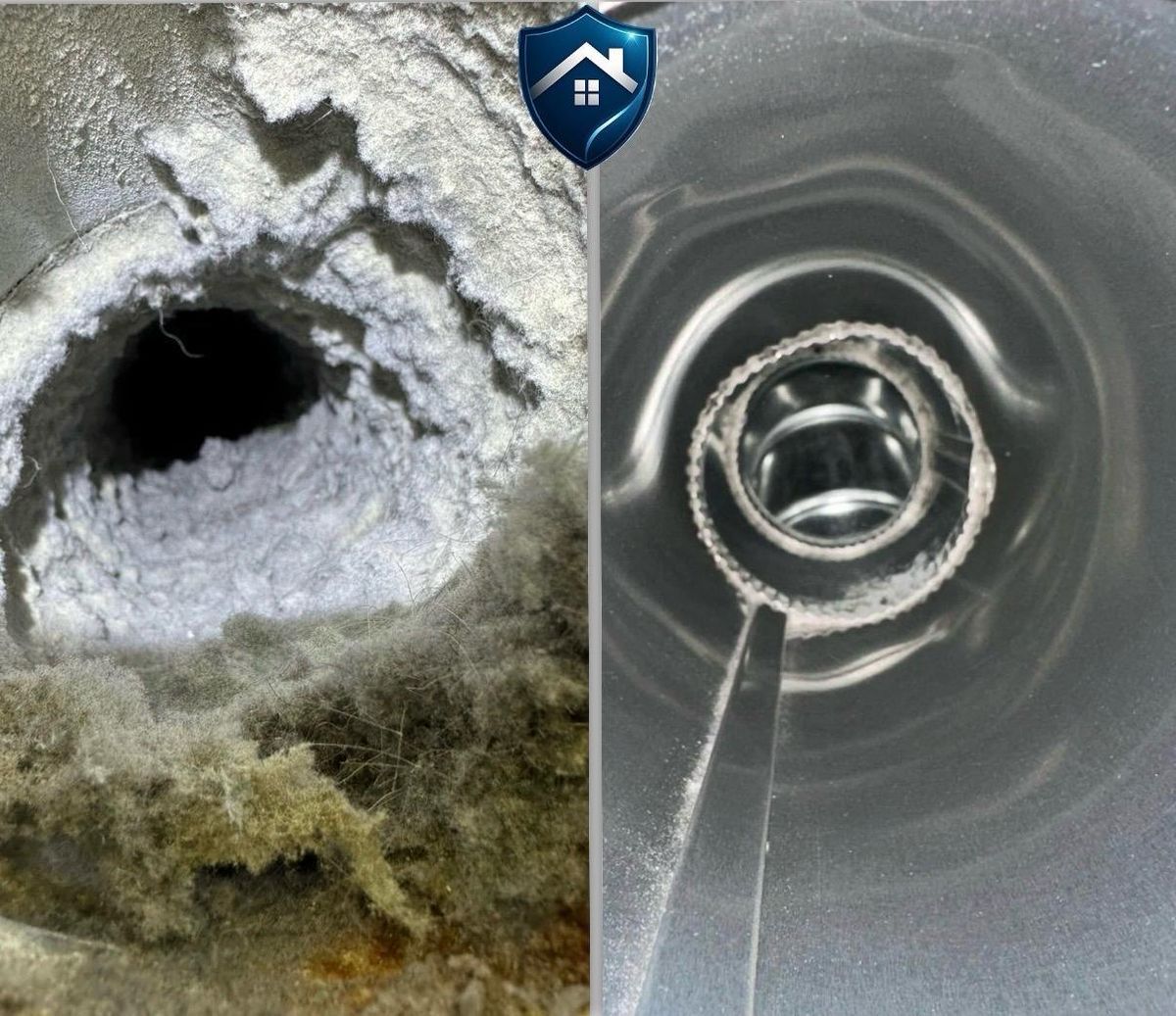
If the vent has never been cleaned, add time regardless of which row you are in. A duct that has been collecting lint since the house was built holds far more of it than an annual clean does, and all of it has to come out instead of being pushed further along.
Why an annual visit is quicker than a rescue visit
There is a practical argument for not letting it slide. The U.S. Fire Administration reports that fire departments respond to an estimated 2,900 clothes dryer fires in residential buildings each year, and that failure to clean is the leading factor contributing to ignition. A vent on an annual schedule has less to remove, so the appointment is shorter and cheaper, and the risk never has time to build.
The air exhaust vent pipe should not be restricted and the outdoor vent flap should open when the dryer is operating. Lint should be cleaned out of the vent pipe at least once a year.
U.S. Consumer Product Safety Commission, Electric and Gas Clothes Dryers (PDF)
That once-a-year interval is the baseline we work to for Cary households, and it is why we book the annual visits into shorter slots than the first-time jobs.
One number puts the time in context. According to U.S. Fire Administration data, failure to clean is the leading factor contributing to ignition in home clothes dryer fires, accounting for roughly a third of them. A 30 to 90 minute appointment once a year is what removes that factor.
Booking in Cary and the wider Triangle
We give you a time estimate on the phone once you describe the run, and if the job turns out bigger than described we tell you before we start. See what the visit covers for air duct and dryer vent cleaning in Cary, NC, or for Raleigh and the rest of the Triangle. If you would rather start with the cost, our dryer vent cleaning cost page sets out what drives it, and dryer vent repair in Cary covers what happens when the run needs fixing rather than just clearing.
Frequently asked questions
How long does dryer vent cleaning take?
Most dryer vents take 30 to 90 minutes. A short run straight through an outside wall is often finished in 30 to 60 minutes, while a long run with several bends, a second-floor laundry or a roof termination can take up to about two hours.
Why do some companies say fifteen minutes?
Because fifteen minutes is roughly how long it takes to vacuum the opening and the first few feet of duct. The lint that matters sits further along the run, at the elbows and at the termination, and reaching it takes equipment, access and time.
Does a roof vent really take longer?
Yes. A roof termination means a long, mostly vertical run, and gravity pulls loosened lint back down it, so the duct has to be worked in stages. Roof terminations are common on two-story Cary and Raleigh homes and are the most demanding configuration we deal with.
Can you clean the dryer vent and the air ducts in one visit?
Yes, and doing both on one visit saves you a second appointment. They are separate systems with separate equipment, so they are quoted separately, but they are routinely done together.
Do I need to be home for the appointment?
Someone needs to let us in and point out the dryer, and we would rather walk you through the photographs at the end than leave a report to interpret. You do not need to stay in the room while we work.
How do I know the whole run was actually cleaned?
Ask for photographs of the duct before and after and for airflow to be confirmed at the outside termination. We document every job that way, and a company that cannot show you evidence has not given you a reason to believe the run was cleaned.
Last updated by the Prestige Protected service team.
Book dryer vent cleaning in Cary or Raleigh
Tell us where the laundry is and roughly how far the duct travels, and we will give you a realistic time estimate before we arrive.