
Quick answer
Yes, but only if your dryer runs on gas. A gas dryer burns fuel and has to push those combustion gases outside through the vent. If the vent is blocked, some of that exhaust can back up into the laundry room, and carbon monoxide is part of it. If your dryer is electric, there is no combustion and no carbon monoxide risk. A blocked electric dryer vent is still a fire risk, because trapped heat sits against accumulated lint.
First: is your dryer gas or electric?
This is the whole answer, so it is worth two minutes to check. Most homes in Cary and Raleigh have electric dryers, and for those the carbon monoxide question simply does not apply.
- Look behind the dryer. A gas dryer has a black or yellow gas supply line running to it, usually with a shut-off valve. An electric dryer has only a thick power cord.
- Look at the plug. An electric dryer uses a large three- or four-prong 240-volt plug. A gas dryer plugs into an ordinary household outlet, because it only needs power for the drum and controls.
- Check the label. The data plate inside the door or on the back states the fuel type.
If it is electric, you can stop worrying about carbon monoxide. The section on electric dryers explains why a blocked vent is still worth clearing.
How a gas dryer is supposed to vent
A gas dryer heats air by burning natural gas or propane in a combustion chamber. That burn produces heat, water vapor and combustion by-products, including carbon monoxide. A blower pushes the hot, damp air through the drum, through the lint trap, and then out through the vent duct to a termination on an outside wall or roof.
The vent is not an optional extra on a gas dryer. It is the only path those combustion gases have out of your house. Everything depends on that path staying clear.
Why a blockage causes gases to back up
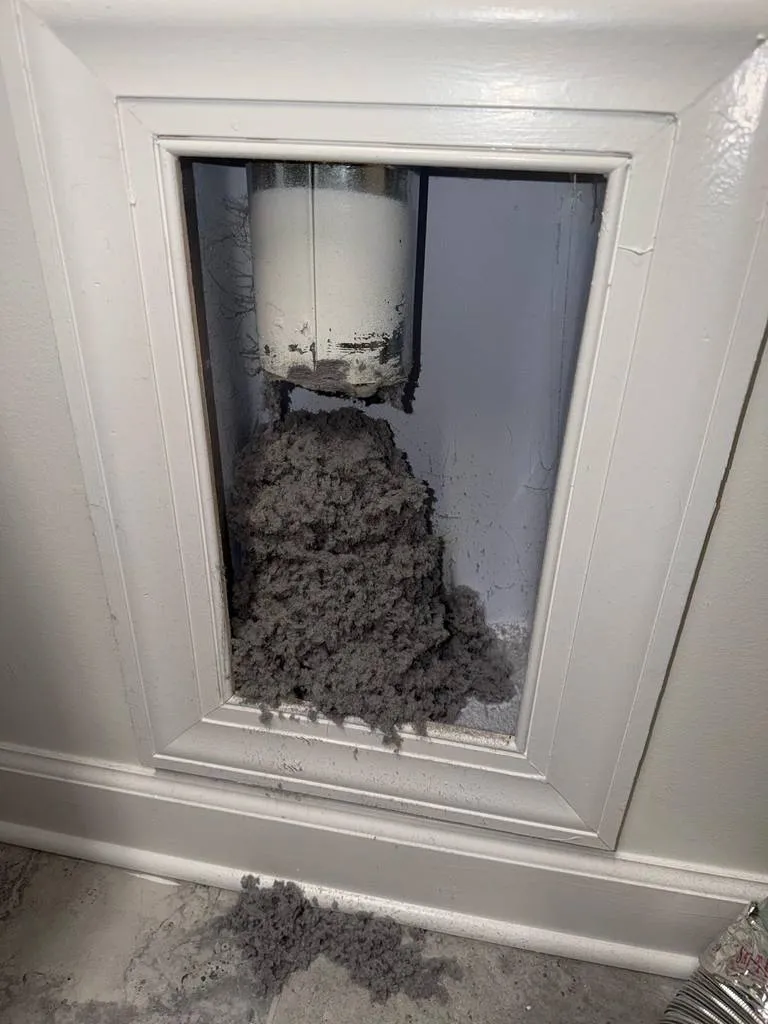
Lint gets past the trap. It always does, the trap catches most of it, not all of it. Over years, what gets through settles along the duct, and it settles fastest where the air slows down: at elbows, at low spots, and at the termination flap. Add a crushed transition hose behind the dryer, or a bird nest built in the outside vent, and the opening narrows further.
As the duct narrows, the blower can no longer move air out at the rate the dryer needs. The exhaust has to go somewhere, so some of it takes the only other route available, back into the room. On an electric dryer that means heat and humidity. On a gas dryer it means heat, humidity and combustion gases.
This is why the risk is cumulative rather than sudden. A vent does not block overnight; it closes gradually over years, and the venting gets worse the whole time.
Warning signs your dryer vent is restricted
- Clothes are still damp after a full cycle, or need two cycles to dry
- The laundry room gets noticeably hot or humid while the dryer runs
- The outside vent flap barely moves, or you feel little air coming out
- A burning or scorched smell during a cycle
- Lint collecting around the outside termination, or visible at the back of the dryer
- The dryer surface is hot to the touch, or the unit shuts off mid-cycle on its thermal limit
Longer drying times are the sign people notice first, and the one most often shrugged off as the dryer getting old. There is more detail in our guide to the signs of a clogged dryer vent and on why a dryer takes too long to dry.
Symptoms of carbon monoxide exposure
Carbon monoxide has no color and no smell, which is why a detector matters more than your senses. Early symptoms are easy to mistake for something ordinary: headache, nausea, dizziness, fatigue, shortness of breath, confusion. A pattern worth paying attention to is symptoms that improve when you leave the house and return when you come back, or that affect more than one person in the household at the same time.
If you suspect carbon monoxide right now
Do not call us first. Get everyone out of the house into fresh air, and call 911 or your gas utility from outside. If a CO alarm is sounding, treat it as real. We clean and repair dryer vents, we are not an emergency service, and a suspected carbon monoxide situation needs the fire department or the utility, not a cleaning appointment.
Once the situation has been made safe and someone has confirmed where the gas was coming from, that is the point at which clearing or repairing the vent becomes useful.
A CO detector belongs near a gas laundry
If you have any gas appliance, dryer, furnace, water heater, range, you should have working carbon monoxide detectors, and one of them should cover the area near the appliances. Test them, and replace them at the interval the manufacturer states, because the sensors have a service life and an old detector can pass a test button while no longer sensing reliably.
To be plain about it: cleaning your dryer vent is not a substitute for a carbon monoxide detector. The vent is the cause you can remove; the detector is the warning you keep regardless.
If your dryer is electric, this still matters
No combustion means no carbon monoxide. But a blocked vent on an electric dryer traps heat against accumulated lint, and lint is extremely flammable. Clothes dryers are a well-documented cause of house fires, and failure to clean the vent is the leading contributing factor. So the fix is the same even though the reason is different. Our guide to dryer vent fire risk and prevention covers that side of it.
How often a gas dryer vent should be cleaned
Once a year is the sensible baseline for most households. Clean more often if you run several loads a week, if you have pets that shed, if the vent run is long or has several bends, or if it terminates on the roof, all of which give lint more opportunity to settle. Our page on how often to clean a dryer vent goes through the factors.
What the safety agencies actually say
This is one of those questions where it helps to quote the source rather than paraphrase it. The U.S. Consumer Product Safety Commission is direct about what a gas dryer needs:
The air exhaust vent pipe should not be restricted and the outdoor vent flap should open when the dryer is operating. Lint should be cleaned out of the vent pipe at least once a year.
U.S. Consumer Product Safety Commission, Electric and Gas Clothes Dryers (PDF)
The CPSC also urges annual professional inspection of every fuel-burning appliance in the house, and recommends a carbon monoxide alarm in every home. A gas dryer is a fuel-burning appliance, even though people rarely think of it in the same breath as the furnace and the water heater. The EPA makes the same point about carbon monoxide indoors: the gas is colorless and odorless, so the only reliable warning is a working detector.
How we check the venting on a Raleigh house
- Confirm the fuel type at the appliance, because the answer to the carbon monoxide question depends entirely on it.
- Check the transition hose behind the dryer for crushing, tears and disconnected joints. Behind a dryer pushed tight to the wall, this is the most common single fault we find.
- Work the full duct run with a rotating brush and vacuum collection, instead of clearing the first few feet from the opening.
- Clear the outside termination and check that the flap opens freely under airflow, and not only by hand.
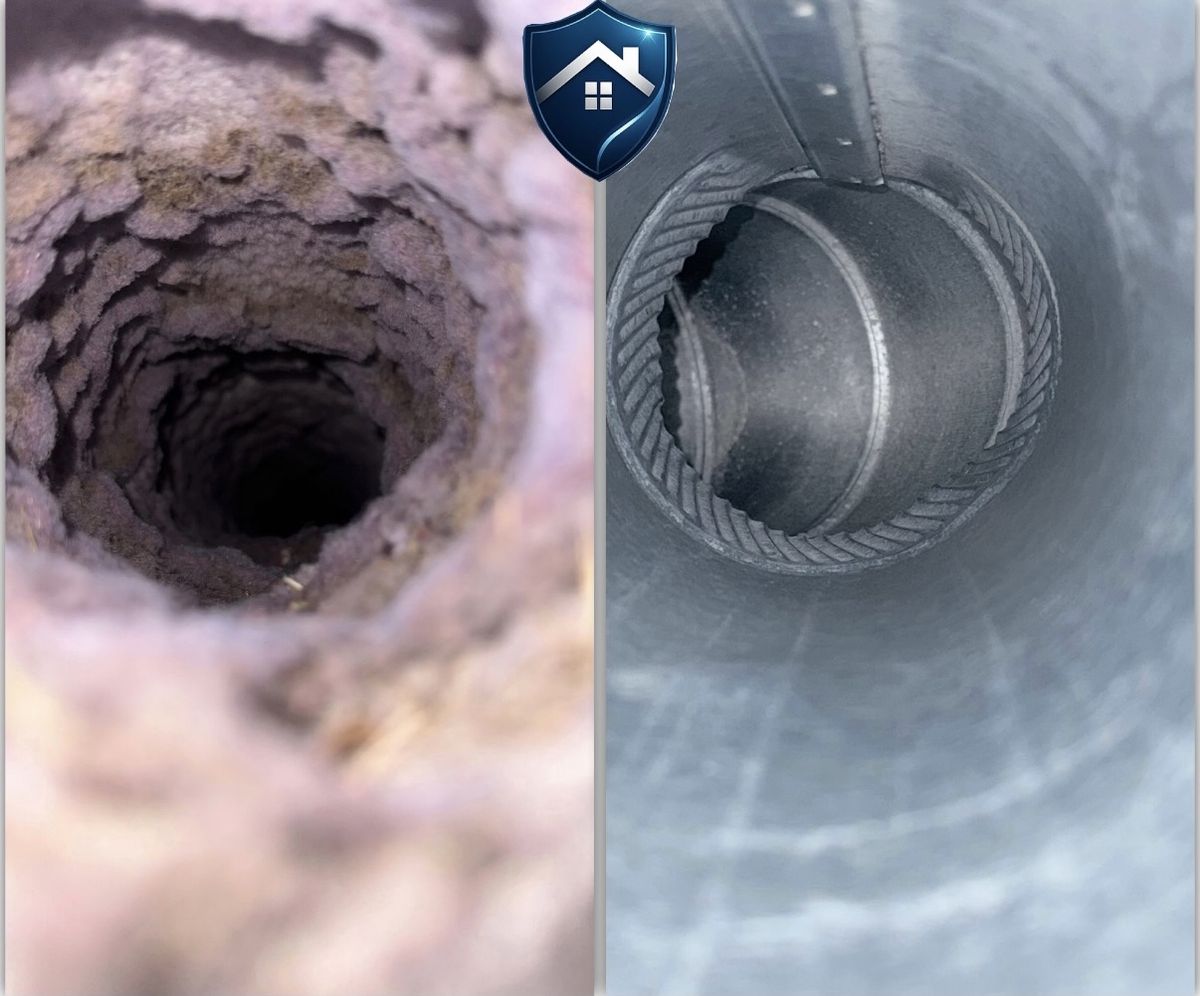
- Run the dryer and confirm air is actually moving at the termination, then photograph the before and after so you can see what changed.
If the run itself is damaged, the fix is a repair and clearing it will not hold. That is covered on dryer vent repair in Raleigh, and the two faults we find most often have their own pages: a vent disconnected in the attic and a crushed transition hose.
The Consumer Product Safety Commission recommends a carbon monoxide alarm in every home, and urges annual professional inspection of every fuel-burning appliance. A gas dryer is a fuel-burning appliance, so it belongs on that list alongside the furnace and the water heater, even though it rarely gets mentioned in the same sentence.
Raleigh houses where this comes up most
Gas dryers are the minority here, but they are not rare, and they cluster. Older homes inside the Beltline that already have gas service to the furnace and water heater often have a gas laundry hookup as well. Newer two-story homes in North Raleigh more often have an upstairs laundry with a long vertical run to a roof cap, which is the configuration where restriction builds fastest. Either pattern is worth an annual look. You can see what a visit covers on our Raleigh air duct and dryer vent cleaning page, in North Raleigh, or for Cary and the rest of the Triangle.
Electric dryer, same fix, different reason
If your dryer is electric there is no combustion and no carbon monoxide, but the blocked vent is still worth clearing. The U.S. Fire Administration reports that fire departments respond to an estimated 2,900 clothes dryer fires in residential buildings each year, and that failure to clean is the leading factor contributing to ignition. Trapped heat against accumulated lint is the mechanism. Dryer vent fire risk and prevention goes through it in detail.
Frequently asked questions
Can a clogged dryer vent cause carbon monoxide?
Only on a gas dryer. A gas dryer burns fuel, so its exhaust contains carbon monoxide and the vent is the only route that exhaust has out of the house. If the vent is blocked, some of it can back up into the laundry room. An electric dryer has no combustion and produces no carbon monoxide.
How do I tell whether my dryer is gas or electric?
Look behind it. A gas dryer has a gas supply line with a shut-off valve and plugs into an ordinary household outlet. An electric dryer has only a thick cord with a large three- or four-prong 240-volt plug. The data plate inside the door states the fuel type either way.
What should I do if the carbon monoxide alarm is sounding?
Get everyone outside into fresh air and call 911 or your gas utility from outside. Treat the alarm as real. We clean and repair dryer vents and are not an emergency service, so clearing the vent is something to arrange after the situation has been made safe.
Does cleaning the vent replace a carbon monoxide detector?
No. The vent is the cause you can remove; the detector is the warning you keep regardless. If you have any gas appliance, the CPSC recommends a carbon monoxide alarm in the home, and one of them should cover the area near the appliances.
How often should a gas dryer vent be cleaned?
Once a year is the baseline, and the CPSC states lint should be cleaned out of the vent pipe at least annually. Clean more often with several loads a week, shedding pets, a long or bent run, or a roof termination.
Would I smell the carbon monoxide?
No. Carbon monoxide has no color and no smell. Early symptoms look like something ordinary: headache, nausea, dizziness, fatigue, confusion. A pattern worth noticing is symptoms that ease when you leave the house and return when you come back.
Get the vent checked in Raleigh
We inspect the full run, clear it mechanically and show you photographs and confirmed airflow before we leave. Serving Raleigh, Cary and the Triangle.
Last updated by the Prestige Protected service team.